Stepping out in a beautiful new wig can be an incredibly empowering experience. But as many new alternative hair wearers quickly discover, purchasing the wig itself is only half the journey. The true secret to the longevity, comfort, and realism of any piece depends entirely on the accessories and maintenance regimen supporting it.
If you’ve recently explored our guide to the best wig stores in Raleigh NC, you likely already know that securing the perfect wig is a great feeling. However, navigating the world of specialized styling tools, safe adhesives, fiber-specific cleansers, and proper storage stands can feel like learning a completely new language. Whether you’re trying to figure out if regular shampoo will ruin your synthetic strands, or you’re simply trying to track down a specialized adhesive locally before an event, we’ve got you covered.
Let’s demystify the science of wig maintenance and map out exactly where to find the tools you need—from navigating Raleigh’s local beauty corridors to sourcing professional-grade wig care supplies online.
Foundation: The Beginner’s Essential Tool Kit
When you’re just starting out, it’s easy to get overwhelmed by the sheer volume of products available. Here is what you actually need to protect your investment and ensure maximum comfort.
Cap Essentials: Mesh, Nylon, and Bamboo Liners
What goes under your wig is just as important as the wig itself. Standard nylon caps are great for holding natural hair flat, but they aren’t always the most breathable option. If you are wearing medical wigs due to hair loss, your scalp is likely highly sensitive. In these cases, investing in seamless bamboo comfort liners is a game-changer. Bamboo naturally wicks away moisture, regulates temperature, and prevents the friction that can irritate a bare scalp.
Security Mechanics: Grips, Tapes, and Adhesives
How you secure your wig depends on your cap construction and lifestyle.
- Velvet Wig Grips: These are perfect for daily wearers who want to avoid adhesives altogether. The directional velvet creates friction against your scalp or hair, locking the wig down comfortably.
- Double-Sided Tapes: Ideal for polyurethane strips inside the wig cap, offering a strong, skin-safe hold that is relatively easy to clean.
- Liquid Adhesives: Best for lace front wigs where a seamless, invisible melt into the skin is required.
The Geometry of Brushing: Why Your Regular Hairbrush is Causing Damage
Here is a major “aha moment” for many beginners: you cannot use a standard hairbrush on a wig. Standard brushes have little nylon ball-tips on the bristles. When you drag these through a wig, those tiny balls snag the delicate, hand-tied knots at the base of the cap, leading to shedding. Furthermore, they pull and stretch synthetic fibers, causing permanent frizz.
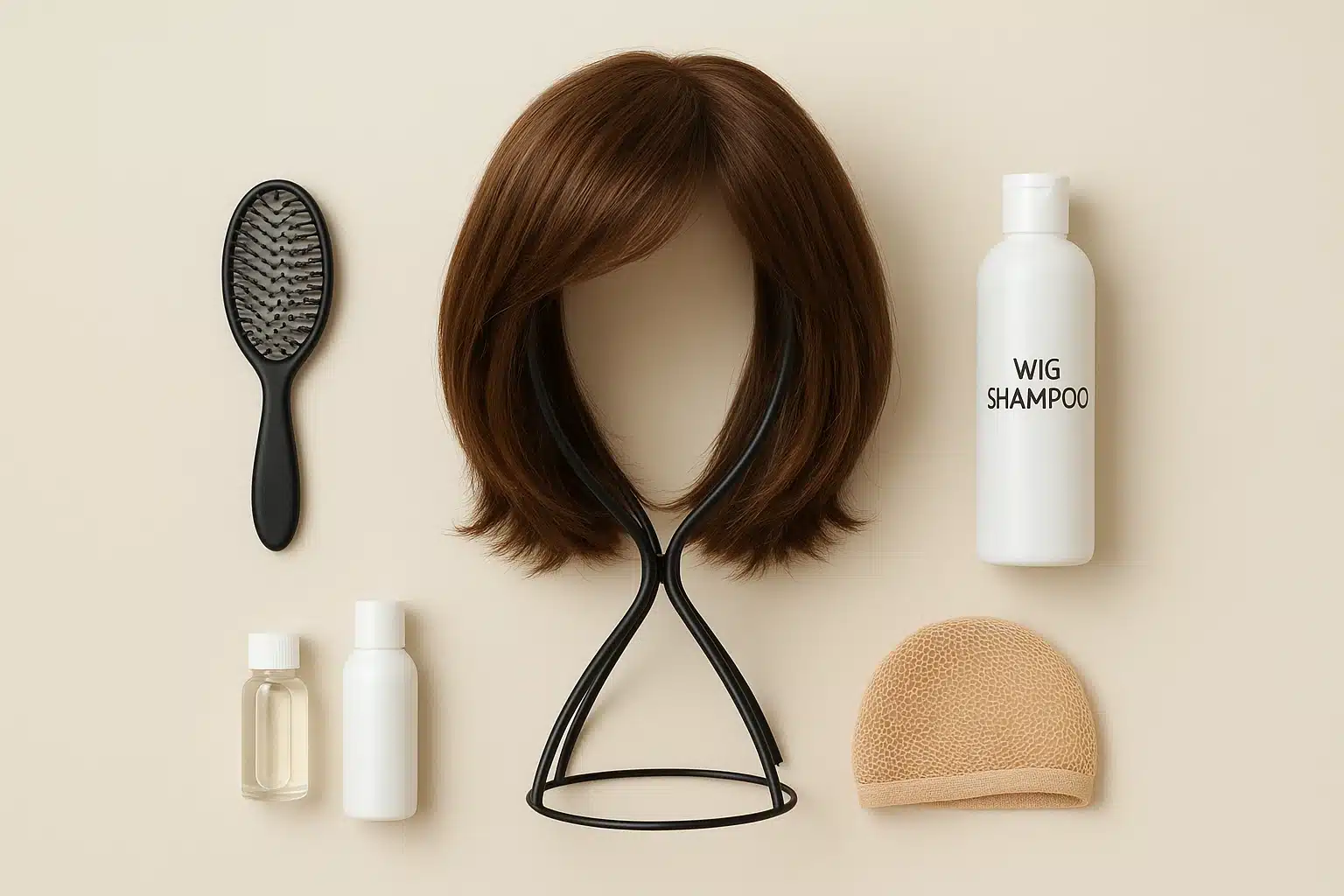
Instead, you need a looped-bristle brush or a wide-tooth comb. The bristles on a loop brush literally loop back into the cushion, allowing them to glide effortlessly through synthetic and human hair fibers without catching on the foundational mesh.
Building: The Science of Cleansing & Maintenance
A solid wig care routine is the difference between a wig that lasts two months and one that looks flawless for a year. The golden rule? Preservation is always cheaper than restoration.
Chemistry Breakdown: Why Biological Hair Products Damage Synthetic Fibers
It is incredibly tempting to use your favorite drugstore shampoo on your new wig, but doing so is a recipe for disaster. Regular biological shampoos are formulated to strip natural sebum (scalp oils) and deposit heavy moisturizing silicones.
Synthetic wigs are made of specially formulated polymers (like modacrylic fibers). They don’t produce natural oils, and they don’t have cuticles to absorb moisture. Washing a synthetic wig with standard shampoo leaves a dulling, heavy film on the fibers, causing them to tangle and clump. You must use cleansers specifically formulated for synthetic fibers to gently lift away environmental dust and styling products without degrading the polymer.
The Air-Drying Rules: Ventilated Stands vs. Solid Mannequins
One of the most common—and costly—mistakes in wig maintenance is washing a wig and placing it on a solid Styrofoam mannequin head to dry.
When you place a dripping wet wig onto a solid dome, you trap moisture inside the closed cap. This not only stretches out the elastic (ruining the fit of your wig), but the trapped dampness can quickly promote mildew and stubborn odors.
The Rule of Thumb:
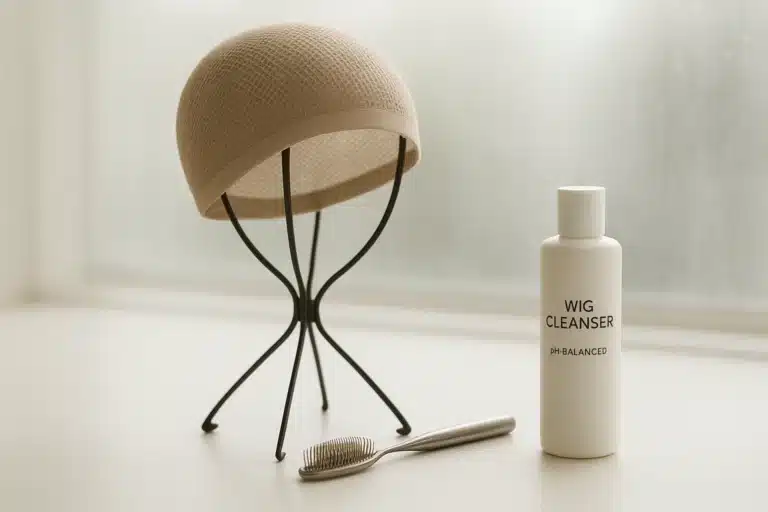
- Collapsible Wire or Plastic Stands: Mandatory for air-drying. Their open design allows 360-degree airflow, drying the cap quickly without stretching it.
- Canvas Block Heads: Used strictly for styling, pinning, and steaming.
- Styrofoam Heads: Excellent for short-term dry storage and maintaining the style’s shape between wears.
Mastery: Adhesives, Solvents, & The Raleigh Climate
If you wear lace front wigs that require adhesive, you need to understand how the local climate impacts your routine.
Weatherproofing Your Install in Wake County Humidity
Raleigh’s subtropical summer humidity is notorious for wreaking havoc on wig glue. Water-soluble, skin-friendly adhesives are fantastic for short-term wear, but high humidity and scalp perspiration cause them to soften and slip prematurely.
To combat Raleigh summers, you need to prep the skin properly. Wiping your hairline with 99% isopropyl alcohol removes surface oils, and applying a specialized antiperspirant scalp protector creates a barrier that stops sweat from breaking down your adhesive bond.
Solvent Pairing: Safe Adhesive Removal
Never just pull your lace front wig off at the end of the day. Ripping the lace stretches the delicate mesh and pulls hairs straight out of the knots. You must use the correct base solvent to dissolve the glue.
- Water-based adhesives usually break down easily with gentle, alcohol-based removers.
- Silicone or acrylic waterproof bonds require specialized citrus or hydrocarbon-based oil solvents to safely melt the glue away before you lift the lace.
Action: Where to Source Wig Accessories (Raleigh Stores vs. Online)
When you need supplies, you are faced with a choice: run to a local beauty supply store or order online? Both have their strategic advantages.
Navigating Raleigh’s Local Supply Hubs
Sometimes, you run out of wig glue hours before a major event, or you desperately need a wide-tooth comb today. Luckily, Raleigh has several distinct beauty supply corridors you can rely on for emergency essentials:
- The Capital Boulevard Corridor: Stores like The Capital Beauty Supply and Beauty En.V are heavily stocked with immediate necessities. You can typically find basic wig glues, standard wig caps, and Styrofoam heads here.
- South Raleigh & Downtown: Heading down S. Wilmington St., spots like Beauty World Discount serve as great hubs for emergency adhesive removers and basic synthetic care sprays.
- Western & Eastern Raleigh: iBeauty Supply on Avent Ferry Rd and various shops along New Bern Ave cater well to quick, grab-and-go styling tools.
What local stores often lack: While fantastic for quick fixes, general beauty supply stores rarely carry specialized, fiber-specific shampoos, medical-grade bamboo liners, or premium looped brushes. Their staff are usually generalists, meaning you might not get the specialized educational guidance needed to protect a high-end alternative hair investment.
The Online Advantage for Complete Wig Maintenance
For your foundational, long-term wardrobe maintenance, dedicated online channels like Wig Superstore offer a vastly superior experience.
When you shop online with a dedicated wig specialist, you gain access to:
- Complete Care Systems: Matching shampoos, leave-in conditioners, and detanglers chemically formulated for exact fiber types (heat-friendly synthetic, human hair, etc.).
- Medical-Grade Accessories: Gentle, hypoallergenic tapes and bamboo caps designed specifically for alopecia and chemotherapy patients.
- Uncompressed Stock: Wigs and accessories stored properly in climate-controlled environments, ensuring adhesives haven’t degraded on a hot store shelf.
- Transparent Pricing: Direct access to premium, salon-certified supplies without the heavy boutique retail markups.
By blending the immediate convenience of Raleigh’s local shops with the comprehensive, professional-grade selections available online, you can build a maintenance toolkit that keeps your hair looking flawless, natural, and beautiful wear after wear.
***
Frequently Asked Questions (FAQ)
How often should I wash my wig?
A good rule of thumb is to wash your wig every 8 to 12 wears. Washing it too frequently can prematurely degrade the fibers, while waiting too long allows natural scalp oils, makeup, and environmental dust to break down the cap materials.
Can I use a blow dryer on my wig?
It depends entirely on the fiber. You should never use heat on standard synthetic wigs, as the fibers will literally melt. Heat-friendly synthetic wigs and 100% human hair wigs can be blow-dried, but you should always use a low heat setting and apply a heat protectant spray first.
How do I safely remove dried wig glue from my lace?
Do not pick at the glue with your fingernails, as this will tear the lace. Spray a citrus-based adhesive remover directly onto the lace, let it sit for a few minutes to emulsify the glue, and gently wipe it away with a microfiber towel or an old toothbrush with very soft bristles.
What is the best way to travel with a wig?
Turn the wig inside out, tuck the hair inside the cap to protect the styling, and place it in a silk or satin wig bag. When you arrive at your destination, immediately take it out, give it a gentle shake, and place it on a collapsible travel wig stand to help it regain its shape.