Stepping out in a beautiful new wig for the first time is an incredible feeling. But if you’re new to the world of alternative hair, you’ve likely discovered that the day-to-day reality of wearing a wig introduces a whole new set of questions. Suddenly, you’re wondering why your synthetic fibers are tangling at the nape, why your lace edge is lifting in the Oregon drizzle, or how to keep a delicate cap from irritating a sensitive scalp.
While finding the perfect hairpiece is your vital first step—and if you’re still in that phase, we highly recommend reading up on the local landscape by exploring portland wig stores—the true secret to long-term comfort lies in your maintenance ecosystem. Many wearers waste money on the wrong products simply because they don’t know what they actually need. Today, we’re going to demystify wig accessories, break down the science of alternative hair care, and give you a complete field manual for finding the right supplies right here in the Portland metro area.
The “First 72 Hours” Triage: What Do You Actually Need?
When you first dive into wig care, the sheer volume of available products can be incredibly overwhelming. Do you need a canvas block? What about lace tint? Before you buy everything on the shelf, let’s break down your accessories into a simple, stress-free triage:
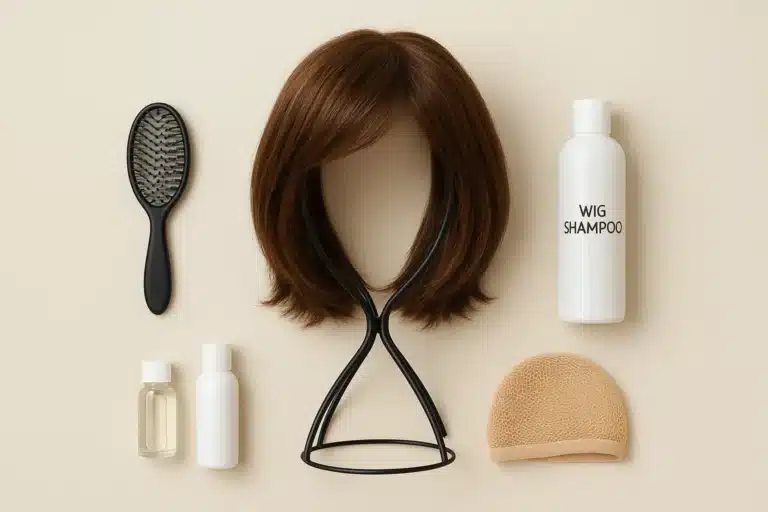
- Tier 1: Day-One Non-Negotiables: You only need three things to start—a specialized detangling tool (like a wide-tooth comb or a metal loop brush), a collapsible wire drying stand, and two breathable wig liners.
- Tier 2: Security & Fit Adjusters: Once you’re comfortable, you can explore velvet wig grips to prevent sliding, or specialized adhesives to secure lace fronts.
- Tier 3: Advanced Styling: Later down the road, you might invest in a 21-to-23-inch canvas block head, a table clamp, and T-pins to hold your wig securely while you practice heat styling or custom plucking.
Deep Dive: Protecting Your Scalp and Your Investment
To keep your wig looking natural and your natural hair or scalp healthy, you need to understand the tools of the trade.
Wig Caps & Scalp Liners
Not all wig caps are created equal, and choosing the wrong one can cause friction dermatitis or snap fragile hair regrowth.
- Nylon Stocking Caps: These are the industry standard for securing thick biological hair under a wig. However, the friction can be damaging to fragile regrowth.
- Open-Weave Mesh: Perfect for high-intensity activities or hot weather, these caps allow maximum airflow to the scalp.
- Antimicrobial Bamboo Rayon: If you are navigating chemotherapy or radiation, bamboo is a game-changer. It is cooling, hypoallergenic, and incredibly soft against a sensitive scalp.
- Silicone Perimeter Caps: Designed for individuals with total alopecia or those wearing a cranial prosthesis, these caps use the gentle grip of silicone to stay perfectly in place without any need for glue.
The Security Spectrum: Grips, Tapes, and Glues
Choosing how to secure your wig is a delicate balance of lifestyle, skin sensitivity, and the local climate.
If you want a tension-free, chemical-free option, velvet wig grips and silicone bands are fantastic. They use directional friction to lock your wig in place for 12 hours straight without any residue.
If you prefer a seamless lace-front melt, you’ll be looking at tapes and glues. But here is where the Pacific Northwest microclimate matters: water-based polymer glues (like Ghost Bond) need a full 24 hours to cure. If you step out into the Portland mist or rain before it’s cured, the glue can turn white and lift. For our damp climate, many locals prefer high-grade hairpiece adhesives like double-sided polyurethane tapes (such as Walker Tape Ultra Hold) which offer powerful, weather-proof security.
Stands, Blocks, and Proper Storage
Here is one of the most common mistakes new wig wearers make: washing their wig and leaving it to air-dry on a solid styrofoam or canvas mannequin head.
When a wig cap is wet, the elastic stretches. Placing a damp cap onto a solid block will permanently stretch out the elastic and distort the ear tabs. Even worse, a solid block prevents air from circulating through the wefts, trapping moisture and leading to mildew.
- For washing and drying: Always use a collapsible wire stand. It allows air to flow freely through the cap.
- For styling and display: Use a canvas block head matched to your exact head circumference (usually between 21 and 23 inches).
Fiber Chemistry: Why Regular Shampoo Ruins Wigs
It’s tempting to use your favorite sulfate-free salon shampoo on your new synthetic wig, but doing so will quietly destroy it.
Biological human hair is porous; it loves proteins, heavy oils, and silicones that standard shampoos deposit to create shine. Synthetic wig fibers, however, are essentially plastic filaments. When you use standard shampoo on a synthetic wig, those heavy proteins don’t absorb. Instead, they sit on the outside of the fiber, creating a gummy, dull residue. This sticky layer attracts airborne dust and causes the fibers at the nape of your neck to mat and frizz through friction.
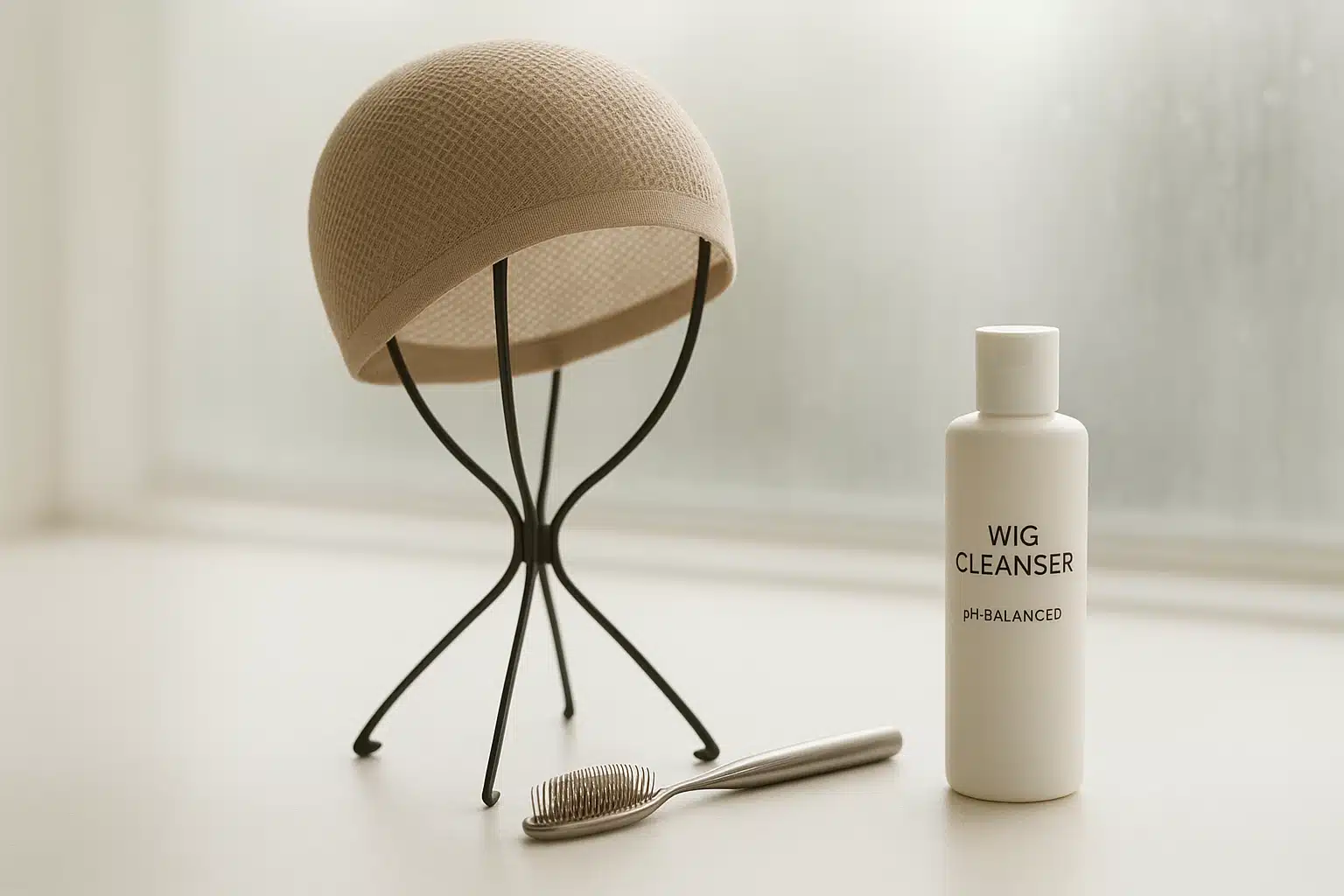
Proper wig maintenance requires scientifically formulated, pH-balanced wig cleansers designed to wash away environmental debris without leaving a coating. When brushing, always swap your standard ball-tipped hairbrush (which snags and shreds delicate lace knots) for a metal loop brush that glides safely over the base mesh.
Where to Buy Wig Supplies in the Portland Metro Area
When you need an emergency bottle of adhesive remover or a replacement bamboo cap before a doctor’s appointment, ordering online and waiting three days for shipping isn’t an option. Here is a breakdown of Portland’s wig supply geography based on your specific needs:
Specialty Medical Boutiques (Appointment Recommended)
If you require privacy, specialized oncology-grade accessories, or sensitive-scalp solutions, you should seek out boutique clinics.
- Brenda Kay Hair Specialties & Coco’s Hair Solutions: These private environments excel in medical-grade cranial prosthetics and specialized comfort accessories.
- The Wig Station (Tigard): A great suburban option offering personalized care and high-quality maintenance products.
Legacy Full-Inventory Retail
- Wigland (NE Broadway): A Portland institution, this location blends vast inventory with knowledgeable staff. If you need a specific type of tape, a canvas block, or styling advice without an appointment, this is a highly reliable stop.
Urban Beauty Supply Powerhouses
If you are looking for lace-melting sprays, high-hold adhesives, edge control, and affordable nylon caps in bulk, Portland’s beauty supply stores are your best bet.
- Mid-K Beauty Supply (NE MLK Jr Blvd & Gresham locations): Massive inventory for day-to-day styling tools, styling foams, and adhesives.
- Bella’s Beauty Supply (Jantzen Beach): Excellent selection of wig grips, standard maintenance kits, and diverse cap options.
Medical Support Programs & Loan Closets
For patients undergoing medical treatments, several local health networks maintain oncology resource centers that provide essential headwear and accessories at little to no cost.
- Check the resource networks at Compass Oncology, the Providence Cancer Institute, and the OHSU Knight Cancer Institute. Many of these locations coordinate with American Cancer Society wig banks to ensure patients have access to the caps, gentle shampoos, and stands they need.
Frequently Asked Questions (FAQ)
Why is my synthetic wig getting frizzy at the nape of my neck?
This is known as “friction frizz.” It happens when the synthetic fibers rub against your clothing collars, scarves, or natural body heat. To fix it, gently detangle daily with a metal loop brush and use a synthetic-safe leave-in detangling spray.
How do I safely remove lace glue without ripping my lace or my skin?
Never pull or peel dry adhesive! You must use a specialized solvent. Citrus-based removers are gentle on the skin but can leave an oily residue on the lace. Alcohol-based removers evaporate quickly and clean the lace well but can dry out your scalp. Always saturate the adhesive line, wait 2–3 minutes for the chemical to break the glue bond, and gently wipe away.
Can I use a curling iron on my wig?
Only if it is a human hair wig or a “heat-friendly” synthetic wig. Standard synthetic wigs will melt instantly under a curling iron. Even with heat-friendly synthetics, you must keep the temperature strictly under 350°F (176°C) and use a thermal protectant spray.
What is the best way to secure a wig if I have no natural hair?
A velvet wig grip or a silicone suction band is the gold standard for total hair loss. They create a secure, comfortable barrier between your scalp and the wig cap, eliminating the need for sticky tapes or glues.
Next Steps on Your Hair Journey
Mastering your wig accessories isn’t just about prolonging the life of your hairpiece—it’s about reclaiming your confidence. When you aren’t worrying about your lace lifting in the rain or your scalp itching during a meeting, you are free to simply live your life feeling beautiful and secure.
Take a moment to evaluate your current setup. Are you missing a breathable wire stand? Have you been using standard shampoo on your synthetic fibers? Making just one or two small adjustments to your maintenance routine can completely transform your daily wearing experience. As you continue to explore what works best for your unique lifestyle, remember that the right tools and a little bit of education are your best accessories.