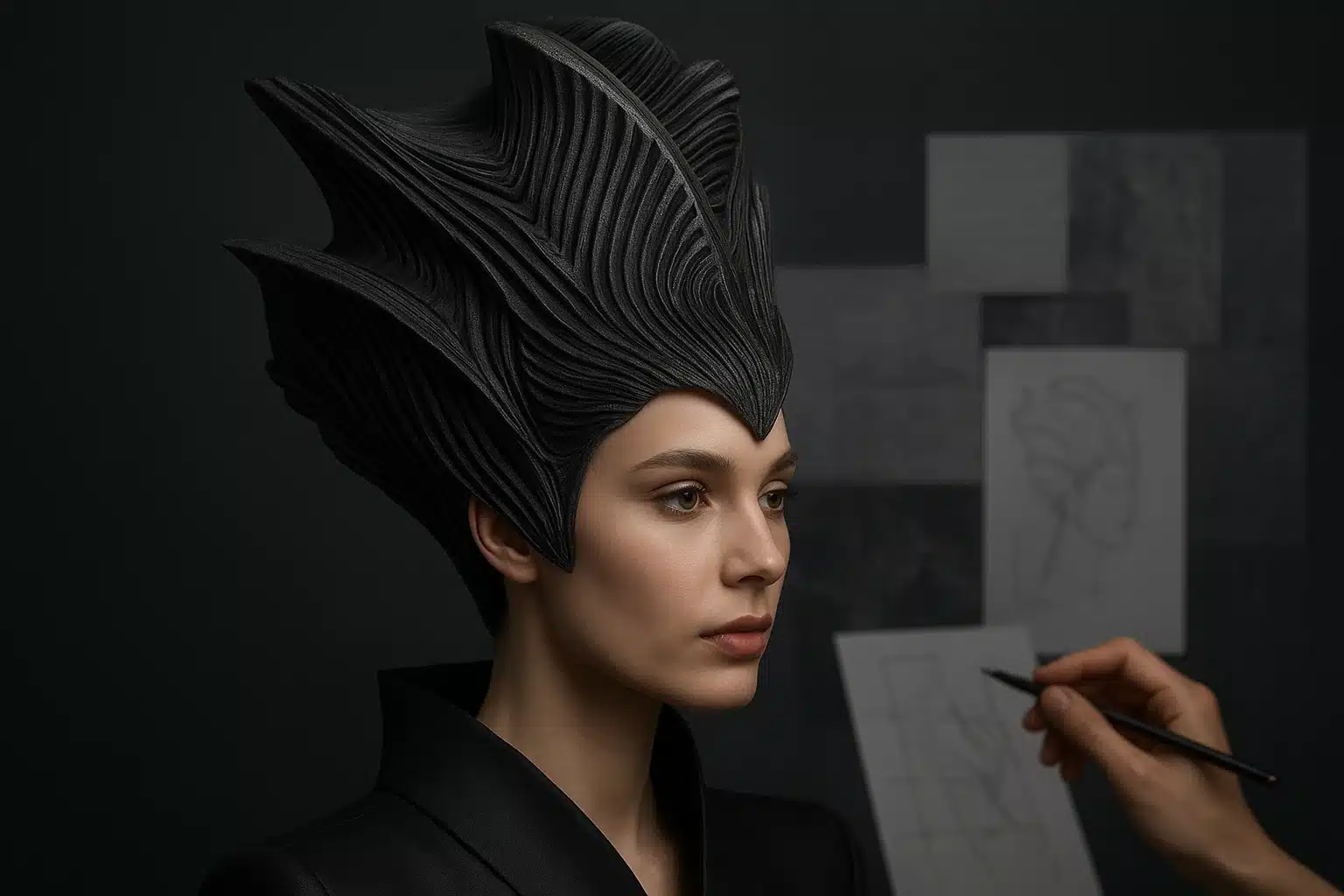
Imagine the chaotic, electrifying energy backstage at a Paris haute couture show. The garments are breathtaking, but as the models step into the spotlight, your eyes are immediately drawn upward. The hair—a gravity-defying, architectural marvel—perfectly completes the designer’s narrative. It looks completely effortless, but underneath that striking silhouette is a hidden world of structural engineering, deep historical reference, and profound artistic synthesis.
When you look closely at wigs in modern fashion, you uncover a fascinating journey from niche subcultures to international superstardom. But the high-fashion runway is a different beast altogether. Here, the “hair” is rarely just hair. It is a sculptural extension of the designer’s psyche, born from a deeply collaborative marriage between the fashion house and a master wig artist. Today, we’re pulling back the curtain to explore how these visionary teams translate abstract concepts into wearable art.
The Creative Marriage: Translating Abstract Visions
In the realm of high fashion, a wig artist isn’t just someone who styles hair; they are sculptors and engineers. The collaboration between a designer and a wig artist often begins months before a single model walks the runway. It’s a partnership built on creative shorthand—much like the legendary collaborations between Karl Lagerfeld and hair visionary Sam McKnight, who together built entire, immersive worlds.
When a designer hands over a brief, it rarely contains technical instructions. Instead, they use abstract words. A designer might say “minimalism,” “ethereal,” or “industrial.” It is the wig artist’s job to translate that emotion into a physical vessel.
The Vision Translation Process
- “Ethereal” becomes ultra-fine, low-density synthetic fibers hand-tied to transparent Swiss lace.
- “Industrial” translates into material alchemy—using non-hair elements like wire, paper, and polyurethane to create sharp, rigid shapes.
- “Minimalism” relies on seamless glueless tension caps and flawlessly flat foundations to create a sleek, undetectable silhouette.
From Sketch to Scalp: The Blueprinting Process
Creating a runway-ready wig involves a meticulous five-step blueprinting process that looks more like architecture than traditional hairstyling.
1. The Mood Board
Artists pull references from everywhere to ground the designer’s vision. They might look at seventies women’s fashion for texture, ’90s fashion ideas for sleekness, or even modern global trends like Thai outfit fashion and Young K fashion to capture a specific pop-culture energy.
2. The Blueprint
Before a single strand of hair is cut, artists draft technical blueprints. They map out the exact center of gravity for the piece, ensuring that an oversized or asymmetrical design won’t physically pull a model’s head to one side.
3. The Toile (Prototype)
Just as clothes are first made in inexpensive muslin, wigs are often prototyped. This phase involves experimenting with material alchemy, blending traditional hair with structured elements like wire frames to achieve shapes that natural hair simply cannot hold.
4. The Technical Fitting
Weeks before the show, the prototype is fitted to the model. This is where adjustments are made to ensure the piece perfectly frames the face and sits securely without damaging the model’s natural hair.
5. The Final Polish
The final wig is meticulously crafted, combining everything from the structural integrity of the base to the exact sheen of the fibers under intense runway lighting.
The Physics of the Walk: Engineering Runway-Safe Hair
If you’ve ever wondered how a model manages to walk briskly down a runway without a massive, three-pound sculptural wig shifting out of place, the answer lies in pure physics.
One of the best-kept secrets of the trade is the 188-Gram Rule. Master wig artists engineer high-fashion wigs to be exceptionally lightweight—often lighter than a standard smartphone. This precise weight management is crucial; it ensures the model can maintain impeccable posture without straining her neck.
When artists must create larger, heavier pieces, they rely on advanced attachment mechanics to maintain the center of gravity:
- Flat Foundation Braids: The model’s natural hair is braided incredibly flat against the scalp, creating an anchor point that distributes tension evenly.
- Polyurethane Grip Strips: Strategically placed strips grip the skin naturally without harsh adhesives, preventing the piece from sliding backward during a model’s stride.
- Glueless Tension Caps: Custom-fitted caps that use the exact circumference of the model’s head to stay locked in place via gentle, distributed tension.
Historical Alchemy: Weaving the Past into the Future
Fashion is cyclical, but wig artists are true historians, constantly reimagining archival silhouettes for modern audiences. They bridge the gap between museum pieces and futuristic trends.
Consider the towering, powdered aesthetics of 18th century men’s fashion. Wig artists will deconstruct that historical height, remove the powder, and recreate the silhouette using modern, translucent wire-frames for avant-garde women’s couture. Similarly, the ornate, heavy updos of Belle Epoque fashion women are frequently modernized into light, breathable structures that look historically accurate but feel weightless.
We also see subcultures feeding into high-fashion narratives. The gritty, mechanical aesthetic of women’s steampunk fashion or the utilitarian vibe of troopers fashion often serves as the foundation for textured, distressed runway wigs that tell a story of resilience and rebellion.
The Mastery Check: Backstage Quick-Changes
All of this preparation culminates in the chaotic environment backstage. During a show, a model might have less than 60 seconds to change garments—and sometimes, their hair.
Backstage technicians use a rigorous “quick-change” checklist. They ensure the foundation hasn’t slipped, verify that the center of gravity is still perfectly aligned, and smooth any flyaways. It is a highly choreographed dance that requires profound expertise, a calm demeanor, and an unwavering trust between the model and the artist.
Frequently Asked Questions (FAQ)
What is the difference between a session stylist and a wig artist?
While the roles often overlap, a session stylist typically works with natural hair on the day of a shoot or show, cutting and styling on the spot. A wig artist (or wig sculptor) conceptualizes, engineers, and builds the hairpieces weeks or months in advance in an atelier.
How do designers communicate hair concepts to artists?
Rarely with technical terms! Designers usually share emotional descriptors, abstract concepts, or a curated mood board of fabrics and historical periods. It is the wig artist’s expertise that translates a word like “romantic” into a specific curl pattern or lace foundation.
Are runway wigs made of real hair?
Not always! While 100% human hair is prized for its natural movement, high-fashion runway pieces often require “material alchemy.” Artists use high-quality synthetic fibers, polyurethane, paper, or wire because these materials can hold unnatural, gravity-defying shapes much better than natural hair.
Do these massive wigs hurt the models?
They shouldn’t! Thanks to techniques like the 188-Gram Rule and careful center-of-gravity engineering, a well-crafted high-fashion wig is designed to be as comfortable and weightless as possible. Proper fit and high-quality construction are paramount.
Continuing Your Exploration
The magic of runway hair might seem worlds away from everyday life, but the foundational principles are exactly the same. The meticulous attention to cap construction, the focus on weight distribution, and the dedication to high-quality materials are what make any wig—whether it’s for a Paris runway or your Tuesday morning—feel comfortable, secure, and beautiful.
Understanding the behind-the-scenes artistry gives us a deeper appreciation for the incredible craftsmanship woven into every quality hairpiece. As you continue to explore the world of hair enhancement, keep an eye out for these masterful details—you might just find a touch of haute couture engineering in your own collection.