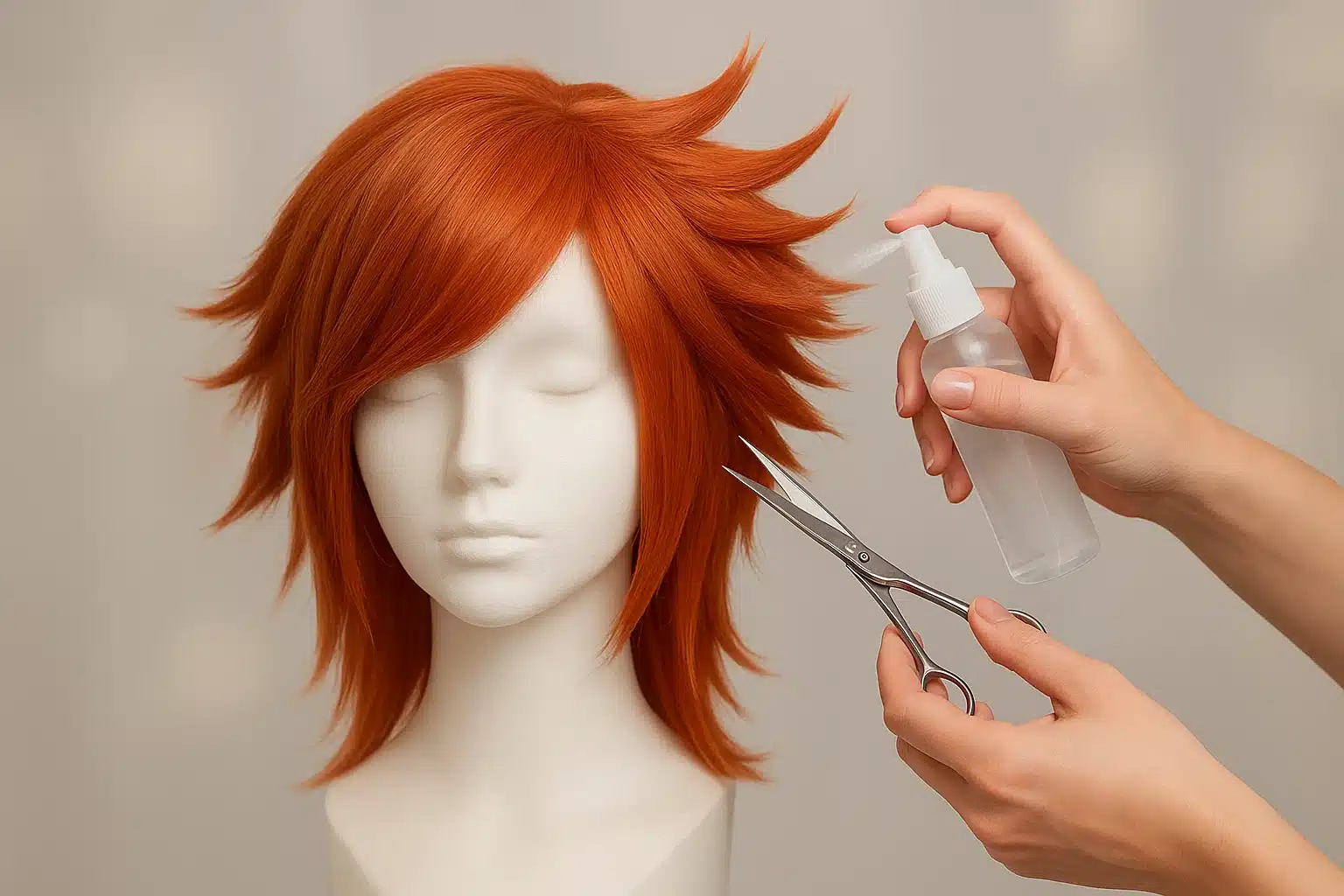
Picture this: You’ve spent weeks crafting the perfect cosplay. The armor shines, the seams are flawless, and your wig looks like it walked right off the screen. But two hours into walking the crowded convention floor, that gravity-defying masterpiece has turned into a heavy, tangled helmet that’s giving you a massive headache. If you’ve ever found yourself hiding in a convention center bathroom trying to desperately finger-comb a matted wig, you are not alone.
As wig technology has evolved, the lines between everyday wear and theatrical performance have blurred. The incredible durability and realistic textures we see in cosplay today actually mirror the fascinating evolution of wigs in modern fashion: navigating trends from subculture to superstardom, where high-performance synthetic blends have successfully transitioned from the stage to the street. But while an everyday wig is built for subtle realism, a cosplay wig requires something we call “Performance Styling”—the delicate balance of achieving absolute character accuracy while structurally reinforcing the hair to survive a grueling 10-hour convention day.
Let’s dive into the science of synthetic fibers, the secrets of structural longevity, and how you can transform an out-of-the-bag wig into a comfortable, convention-ready masterpiece.
The Foundation: Understanding Your Canvas
Before you ever pick up a pair of styling shears, it’s vital to understand what you are working with. Cosplay wigs are vastly different from human hair, and treating them the same way is the most common beginner mistake.
The “Plastic Memory” Concept
The biggest “Aha!” moment for new wig stylists is understanding how synthetic fibers—specifically heat-resistant PBT (polybutylene terephthalate) and PET (polyethylene terephthalate) plastics—actually work.
With human hair, heat sets a style. With synthetic cosplay wigs, heat merely moves the fiber. It is the cooling process that locks the style in place. This is known as “plastic memory.” If you hit a piece of synthetic hair with a steamer or curling iron and immediately let it go, it will fall flat. You must hold that curl or spike in its shape until it is completely cool to the touch. Think of a “Cooling Calculator”: for every second you apply heat, give it three seconds to cool in your hand or pinned to a roller.
Choosing the Right Base
Selecting a wig isn’t just about color; it’s about structure. Gravity-defying anime styles require high-density wigs with pre-teased roots, while sleek, realistic characters require lace-front bases. Sizing is equally crucial. Measure your head with your natural hair flattened exactly how it will be under the wig. A wig that is too tight won’t just cause a headache; it will naturally slide backward up your forehead as the day progresses.
The Sculpting Phase: From Blocky to Breathtaking
Many cosplayers receive a beautifully colored wig, put it on, and immediately feel like they are wearing a helmet. This happens because factory wigs are designed with excess bulk so you have room to cut.
Density Management
To avoid the dreaded “helmet look,” you need to manage the wig’s density. This involves carefully plucking the hairline—a technique borrowed from custom-styled drag wigs. By removing individual hairs along the parting space and the front lace, you create a natural, irregular hairline that mimics how human hair actually grows.
Point Cutting Over Blunt Cutting
When trimming bangs or layers, never cut straight across horizontally. This leaves a harsh, unnatural line. Instead, use a technique called “point cutting.” Hold your shears vertically and snip upward into the ends of the hair. This creates a softer, tapered edge that looks remarkably more realistic, both in person and on camera.
The “Realism” Pass: Mastering Texture and Light
Cosplay photography relies heavily on flash and bright convention hall lighting, which can be the ultimate enemy of synthetic hair.
The Shine/Texture Paradox
Factory-fresh synthetic wigs often have a high-gloss, plastic-like shine. The traditional advice is to dust the wig with baby powder to mattify it. However, under high-definition DSLR cameras, baby powder often makes a wig look dusty, gray, and dull.
Instead of powder, try washing the wig gently with a capful of fabric softener, or use a high-quality, clear dry shampoo. This diffuses the light hitting the plastic fibers, removing the unnatural shine without leaving a chalky residue behind.
Custom Color Blending
If a wig’s color is too flat or cartoonish, you can add incredible depth using alcohol-based markers (like Copics). By carefully coloring the roots of the wig a slightly darker shade, you create “root drag,” tricking the eye into seeing natural hair growth and adding dimensional realism.
Convention Hardening: Surviving the Floor
A beautifully styled wig means nothing if it falls apart by noon. This is the gap where many tutorials end, but where real convention survival begins.
The “Four-Finger Rule” and Weight Distribution
Heavy, heavily-styled wigs can cause severe neck strain—affectionately known in the community as “con-neck.” To combat this, placement is everything. Use the “Four-Finger Rule”: the front hairline of your wig should sit exactly four finger-widths above your eyebrows. Secure the wig foundation using heavy-duty U-pins driven into a tightly braided natural hair base, distributing the weight evenly across your crown rather than letting it hang off the nape of your neck.
The Silicone Secret for Tangle Prevention
If you have a wig that falls past your shoulders, you already know the nightmare of nape-tangles. Friction between the synthetic hair and your costume’s collar creates immediate, severe matting.
Here is the ultimate industry secret: use a 100% silicone-based lubricant (often found as specialized wig detangling sprays or even certain personal lubricants) on the underside of the wig at the nape. Silicone coats the plastic fibers in a micro-fine, slippery barrier that repels friction. Unlike hair oils, which are meant to absorb into porous human hair, silicone sits on top of the plastic, keeping long cosplay wigs flowing flawlessly for hours.
Your On-the-Go “Panic Bag”
Even the best-prepped wig needs a little love on the convention floor. Pack a small emergency kit in your cosplay bag containing:
- A wide-tooth comb (never a standard hairbrush, which stretches and snaps synthetic fibers)
- A travel-sized bottle of your silicone detangler
- Extra bobby pins and U-pins
- A small travel-sized hairspray for flyaways
Frequently Asked Questions (FAQ)
How can I test if an unknown wig is heat-resistant?
If you’ve bought a wig from a cosplay website but lost the tag, take a tiny clipping of hair from an invisible spot (like the lower back wefts). Place it on a heat-safe surface and touch it briefly with a flat iron set to a low temperature (around 250°F). If it melts, crinkles, or smells like burning plastic, it is not heat resistant. If it remains smooth, you are safe to style!
How do I hide my natural dark hair under a light-colored wig?
Layering is key. First, use a flesh-toned nylon wig cap to compress your hair. Then, place a second wig cap over it that matches the color of the wig you are wearing. This double-layer creates a blank canvas and prevents dark roots from peeking through light-colored fibers.
How do I make my wig spikes defy gravity without sagging?
For massive spikes, hairspray and heat aren’t enough—you need structural support. Advanced cosplayers use core materials like lightweight EVA foam or wire mesh shapes, gluing and wrapping the synthetic hair around these invisible structures to achieve height without adding heavy, sagging weight.
Can I use regular human hair products on my cosplay wig?
Generally, no. Human hair products contain moisture, proteins, and oils designed to penetrate the hair cuticle. Synthetic hair is non-porous plastic; these products will simply sit on top of the fiber, leaving it greasy and limp. Always look for products specifically formulated for synthetic hair.
Continuing Your Hair Journey
Mastering the art of cosplay wigs is a journey of continuous learning. It requires patience, an understanding of materials, and a bit of theatrical magic. By applying these foundational techniques—respecting plastic memory, managing density, and properly hardening your styles—you elevate your cosplay from a costume to a living, breathing character.
With nearly two decades of experience helping individuals navigate the world of high-quality alternative hair, Wig Superstore understands that whether you are walking a convention floor or walking down the street, your hair is an extension of your identity. You deserve to feel confident, comfortable, and flawlessly yourself. Keep experimenting, keep creating, and most importantly, wear your art with pride.