Picture this: You’ve just found the perfect wig. It looks completely natural, matches your skin tone flawlessly, and gives you a wonderful boost of confidence. But Monday morning rolls around, and you’re faced with a 12-hour nursing shift, a bustling commercial kitchen, or an active construction site. Suddenly, you’re trying to shove that beautiful, full-volume hairpiece under a scrub cap, a chef’s toque, or a hard hat.
Within an hour, your scalp is sweating, the wig is slipping, and you’re painfully aware of every pressure point on your head.
If you’re nodding along, you aren’t alone. Most wig advice out there focuses heavily on casual fashion—how to wear a cute sunhat or a cozy winter beanie. But for working professionals who are required to wear uniform headwear, the challenges are vastly different. When you’re dealing with the rigorous demands of safety gear and long shifts, you don’t just need a wig that looks good; you need one that functionally integrates with your professional life.
Let’s shift the focus from pure aesthetics to the mechanics of heat dissipation, compression, and all-day security. Here is your definitive guide to matching your wig with your workwear.
The Professional Challenge: Why Standard Wig Advice Fails at Work
When you wear a wig under a uniform hat, you are essentially creating a “micro-sauna” on your scalp. Standard wigs are designed with the assumption that the hair will be exposed to open air, allowing the cap to breathe.
When you cap that system with a non-porous hard hat or a thick chef’s hat, several physical problems arise:
- Thermal Regulation Issues: Trapped body heat leads to excessive sweating, which can degrade wig fibers and cause scalp irritation.
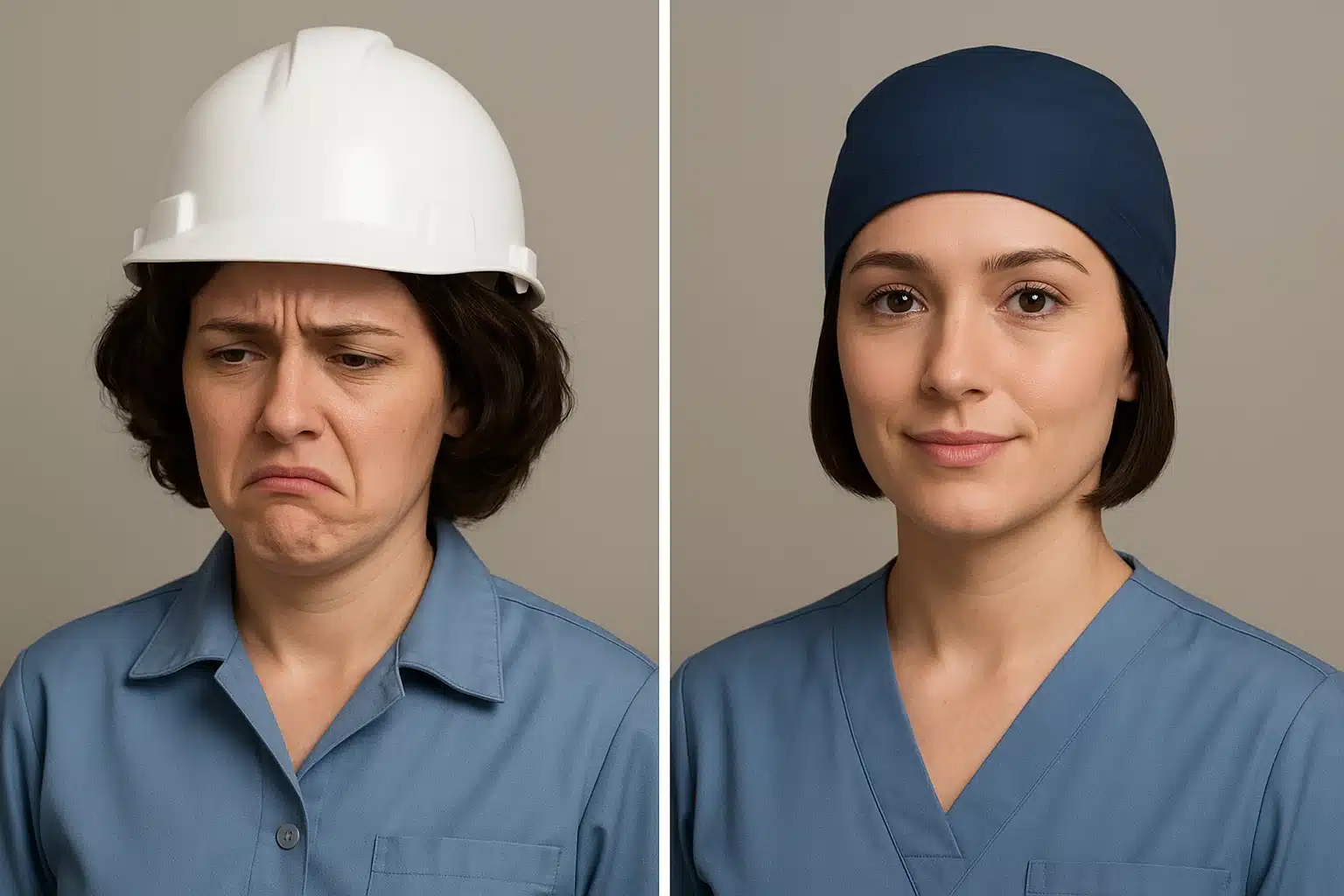
- The Bulk Problem: Standard wig caps have built-in volume at the crown. Trying to force a fitted helmet over this volume either ruins the hairstyle, compromises the safety fit of the helmet, or causes tension headaches.
- The Friction Barrier: Industrial gear can be incredibly abrasive. The constant rubbing of a hard hat suspension system against synthetic or human hair fibers will cause tangling, breakage, and premature wear.
Understanding these mechanical conflicts is the first step to finding a solution.
The “Halo” Pivot: Rethinking What You Actually Need
One of the biggest “aha moments” for working professionals is learning the Leverage Rule. The rule is simple: your uniform headwear provides its own security and coverage. Because your crown is completely covered by a hat or helmet, wearing a traditional, full-coverage wig is often unnecessary—and counterproductive to staying cool.
This is where partial wigs come into play. If you’ve ever researched alternative options, you might have wondered what is a fall wig (also known as a hat fall wig). A hat fall is essentially a brilliant “halo” of hair attached to an open, breathable band or a very lightweight mesh top. It gives the illusion of a full head of hair hanging beneath your hat, but leaves the top of your head completely bare to breathe.
By eliminating the bulk at the crown, your helmet or cap fits exactly as it was designed to, and your scalp can properly vent heat.
The Cap Science: Managing the “Micro-Sauna”
If a hat fall isn’t right for your specific uniform and you need to wear a full wig, your base layer becomes your most important tool.
Many beginners default to standard nylon wig caps. While nylon is excellent for containment and keeping bio-hair flat, it is terrible for moisture management. If your job involves physical labor or hot environments, you need to rethink your base layer.
Switching to a moisture-wicking bamboo or cotton dome cap will absorb sweat before it reaches the wig base, protecting the wig and keeping you comfortable. Additionally, how you secure the wig matters. Traditional bobby pins can become painful pressure points under a tight helmet. Exploring modern security options, like a suction silicone wig cap, can provide a flat, tension-free grip that won’t dig into your scalp when a helmet presses down on it.
Niche-Specific Solutions for Your Uniform
Every profession has its own unique uniform constraints. Let’s look at how to tackle the most common high-stakes environments.
Industrial & Construction: Hard Hats and Helmets
Safety is non-negotiable on a job site. An improperly fitted hard hat violates OSHA standards and puts you at risk.
- The “Big Head” Solution: Wigs add inches to your circumference. Always order your hard hat or work helmet one size up to accommodate the wig volume safely.
- The Four-Finger Rule: When placing your wig, leave four fingers of space from your brow bone. This ensures the hard hat’s suspension system rests directly on your forehead, not on the slippery edge of the wig.
- Friction Management: Line the inside of your hard hat with a silk or satin barrier to prevent the abrasive plastic from chewing through your wig fibers during a long shift.
Culinary Arts: Chef Hats and Hot Kitchens
Kitchens are hot, humid, and fast-paced. Health codes require all hair to be securely contained.
- Fiber Choice is Key: High heat from ovens and steam can permanently damage standard synthetic wigs, effectively melting the fibers. If you work in a kitchen, a heat-defiant synthetic or human hair wig is crucial.
- The Ponytail Hack: Utilize uniform hats with ponytail openings. Pulling the hair up and off the neck dramatically reduces your body temperature.
Healthcare: Scrub Caps and Long Shifts
Nurses and doctors often work 12-hour shifts where comfort is just as important as appearance.
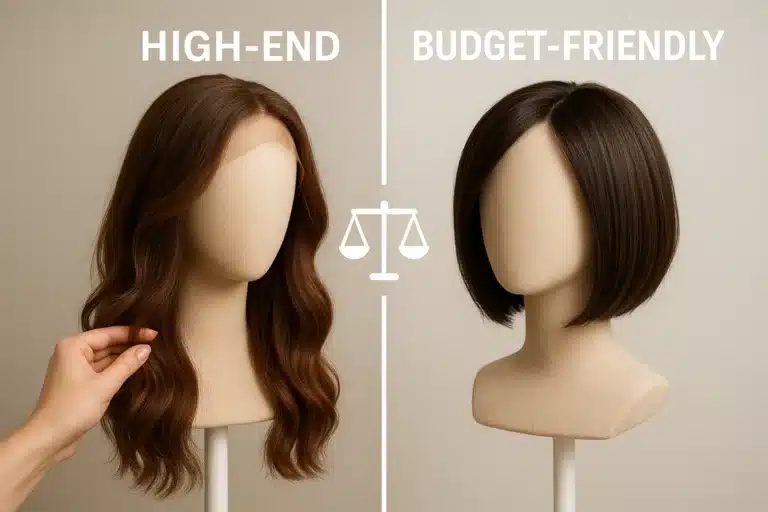
- Low-Profile Bobs: Shorter, low-density wigs (like sleek bobs) fit beautifully under surgical scrub caps without creating awkward, lumpy silhouettes.
- Scalp Sensitivity: The stress of a medical environment, combined with long hours, can irritate the skin. Finding comfortable wigs for sensitive scalp needs—featuring hand-tied, double-monofilament tops—can prevent the agonizing “wig itch” that distracts you from your patients.
The Men’s Corner: Navigating Uniform Hats
The conversation around professional headwear and hair loss often leaves men out, despite the fact that men’s uniforms frequently require specialized hats (police caps, military covers, pilot hats, and industrial helmets).
For men experiencing hair loss who utilize hair replacement systems or full wigs, the strategy involves strict bulk management. Choosing ultra-thin skin bases or fine lace fronts ensures that when the uniform hat is removed, the transition line remains completely undetectable. Additionally, male professionals benefit greatly from the aforementioned “halo” systems seamlessly integrated into their daily work covers, ensuring absolute discretion and comfort.
Protecting Your Investment (And Your Scalp)
Wearing a wig under a uniform hat for 8 to 12 hours a day puts immense stress on both the hairpiece and your natural scalp.
- Preventing Traction Alopecia: The constant downward pressure of a hat can pull on the wig, which in turn pulls on your natural hair (if you have any remaining). Ensure your wig is secured by a flat grip rather than localized clips.
- Hygiene Protocol: The “micro-sauna” effect creates an environment prone to bacterial buildup. Proper wig maintenance—including frequent washing of both the wig and the liners you wear underneath—is vital to extending the lifespan of the piece and maintaining your scalp health.
Frequently Asked Questions
Can I wear a regular wig under a hard hat?
You can, but it is not recommended unless you size up your hard hat. Standard wigs add significant bulk at the crown, which can compromise the safety fit of the helmet. A “hat fall” or a low-density wig is a much safer, more comfortable option.
How do I stop my wig from itching when I sweat at work?
Wig itch in hot environments is usually caused by sweat trapped against the scalp or friction from the uniform hat. Swap standard nylon caps for moisture-wicking bamboo liners, and ensure your wig is secured with a seamless silicone grip rather than metal clips that dig into the skin.
Will the heat from a commercial kitchen ruin my synthetic wig?
Yes, standard synthetic wigs can frizz, melt, or permanently lose their style when exposed to sudden blasts of heat (like opening an industrial oven). If you work in a kitchen, always opt for heat-friendly synthetic fibers or human hair, and keep the hair tied back.
Is there a way to permanently attach a wig to my uniform hat?
Many professionals choose to DIY a permanent solution by securely sewing the wefts of an older wig directly into the brim of a spare uniform cap. This guarantees the hair will never slip and provides maximum breathability for your scalp.
Your Next Steps Toward Professional Comfort
Navigating hair loss while managing the strict requirements of your professional uniform doesn’t have to be a daily battle of discomfort. By shifting your perspective from purely fashion-focused wig wear to functional, lifestyle-based integration, you can reclaim your confidence on the job.
Whether you decide to explore breathable hat falls for your hard hat or ultra-comfortable caps for your nursing shifts, there is a solution engineered for your exact lifestyle. To discover more options tailored to your daily life, take some time to explore our site and view some of the trending styles designed with both beauty and rigorous functionality in mind. Your work is demanding enough—your hair shouldn’t be.