There is a moment many first-time wig wearers experience that rarely makes it into the glossy brochures. You’ve found a style that looks beautiful in the mirror, but an hour later, you’re distracted by a nagging itch or a feeling of heaviness. When you are navigating hair loss due to chemotherapy, alopecia, or severe dermatitis, your scalp isn’t just bare—it is undergoing profound physiological changes. It may be swollen, hypersensitive to touch, or prone to allergic reactions.
In these moments, the priority shifts from simply finding a hairstyle to ensuring your comfort and dermal health. Finding a solution starts with understanding that not all caps are created equal. Rather than just looking for a style you like, the process requires selecting the right wig brand that engineers their products specifically for medical needs. When you match the construction quality to your specific sensitivities, you transform your daily experience from one of endurance to one of confidence.
The Scalp-Wig Relationship: Why “Soft” Isn’t Always Enough
If you are browsing general forums, you might see advice to just “buy a soft wig.” However, for a medical-grade sensitivity, subjective softness can be misleading. A cap that feels soft to the fingertips can still cause friction burns on a sensitive scalp after eight hours of wear.
We need to look deeper at the engineering. Medical hair loss requires us to move beyond aesthetics and look at the “Friction-Factor” and “Breathability Scores” of the wig construction.
- Chemo-Induced Sensitivity: Chemotherapy drugs can thin the skin and damage nerve endings, making even standard lace feel abrasive.
- Edema (Swelling): Steroids and fluids can cause the scalp size to fluctuate. A wig that fits perfectly in the morning might be too tight by evening.
- Heat Trapping: A lack of hair removes the natural buffer that regulates temperature, meaning sweat trapped against the skin can trigger immediate dermatitis flare-ups.
The “Big Three” Construction Pillars for Comfort
Before looking at specific brand names, look for these three technological features. These are the gold standards for comfortable wigs for sensitive scalps.
1. 100% Hand-Tied Caps
In standard wigs, hair is sewn onto tracks (wefts). These tracks create ridges that can dig into a sensitive scalp. In a 100% hand-tied cap, every single hair is knotted individually into a soft mesh base. This creates a completely smooth interior surface with zero seams or ridges to cause friction.
2. Double Monofilament Tops
You may have heard of monofilament, which mimics natural hair growth. A double monofilament top goes a step further. It adds a second layer of sheer, silk-like material to the underside of the cap. This creates a “silk sandwich” that protects your skin from the knotted ends of the hair, which can otherwise feel like tiny scratches against the scalp.
3. Silicone Grip Technology
For those with total hair loss, security is a major anxiety. The old solution was glue or tape, but for dermatitis sufferers, adhesives are often impossible to use. The modern solution is the suction silicone wig cap. These caps use medical-grade silicone patches that gently grip the skin using body heat and friction, providing a secure, non-slip fit without a drop of glue.
Analyzing the Brands: Who Specializes in Medical Hair Loss?
While many brands make beautiful wigs, a select few have dedicated lines specifically engineered for the medical market.
Jon Renau (The Evolution Collection)
Jon Renau is a heavyweight in the industry, but their Evolution Collection is specifically designed for women with total hair loss.
- Why it works: They incorporate silicone patches at the temples and nape, removing the need for adhesives.
- Best for: Active individuals who want absolute security without using glues that could irritate dermatitis.
Ellen Wille (The Prime Power & Hair Society Collections)
This European brand is renowned for density—specifically, the lack of it. American wigs often have high density (lots of hair), which can be heavy.
- Why it works: Ellen Wille designs are incredibly lightweight and low-density, mimicking the natural look of European hair. This reduces the weight on the scalp and increases breathability.
- Best for: Those who get tension headaches easily or feel overwhelmed by heavy hair.
The Unsung Heroes: Liners and Scalp Prep
Sometimes, even the highest quality comfortable wigs for sensitive scalp needs a barrier. If you are prone to sweating or have severe contact dermatitis, wearing a wig directly on the skin might still be challenging.
This is where the material of your liner becomes critical. Many beginners buy cheap nylon caps, but nylon traps heat.
The Bamboo Advantage
Bamboo viscose is a game-changer for medical hair loss. It is naturally:
- Antibacterial: Prevents fungal growth that causes “wig itch.”
- Moisture-wicking: Pulls sweat away from the scalp significantly better than cotton or nylon.
- Thermo-regulating: Keeps the scalp cooler.
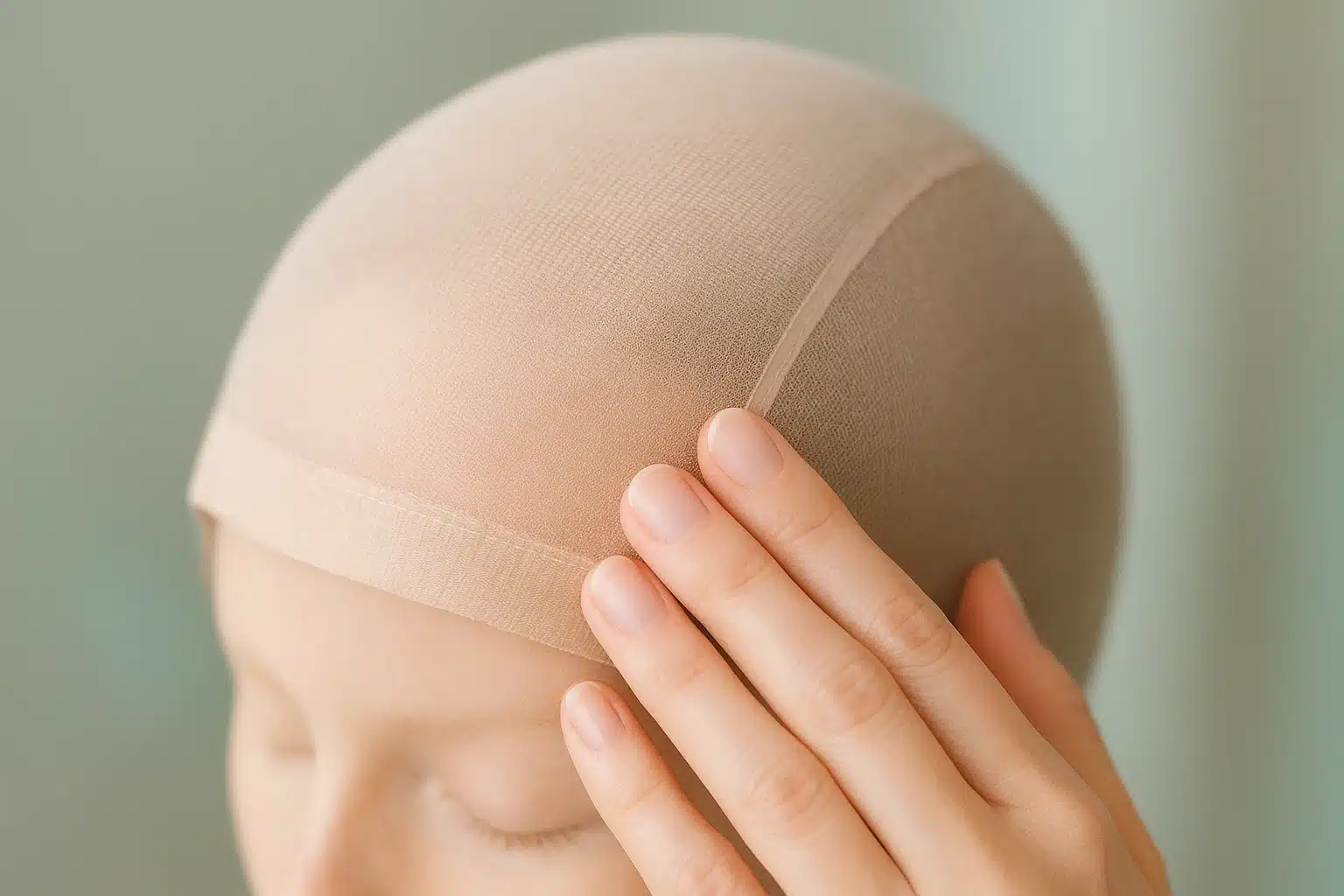
Using a bamboo wig liner creates a soft, hygienic barrier between your scalp and the wig cap, extending the time you can wear your wig comfortably.
Maintenance Matters: Protecting Your Scalp Long-Term
One often overlooked cause of scalp irritation is the condition of the wig fiber itself. As synthetic wigs age, the fibers can become dry and frizzy (a process called “cold setting”). These frizzy ends can poke the neck and scalp, causing redness and itching.
Proper maintenance isn’t just about keeping the wig looking good; it’s about keeping the fiber smooth against your skin. Using the best conditioner for synthetic wigs helps maintain the pH balance of the fiber and keeps the texture silky, reducing the “prickle” factor that irritates sensitive skin.
Troubleshooting “The Itch”: A 5-Step Checklist
If you are experiencing irritation, run through this diagnostic checklist before assuming you need a new wig:
- Check the Sizing: Are you experiencing the “Half-Inch Rule”? If you are undergoing treatment, swelling may have changed your head circumference. A tight wig restricts blood flow and increases sensitivity.
- Inspect the Nape: Is the friction coming from the adjustable straps? You may need to cover them with a velvet band or liner.
- Review Your Wash Cycle: Are you rinsing the shampoo out completely? Residue is a leading cause of contact dermatitis.
- Add a Barrier: Try a bamboo liner to wick away sweat.
- Examine the Cap: If you are wearing a wefted cap (open cap), the ridges might be the culprit. Consider switching to a hand-tied or double monofilament design.
Frequently Asked Questions
Can I wear a wig if I have active dermatitis on my scalp?
Yes, but you should avoid using any adhesives (glues or tapes) as these can exacerbate the condition. Opt for a 100% hand-tied cap with a bamboo liner underneath to keep the area clean, dry, and free of friction.
Why does my scalp hurt after wearing my wig for only a few hours?
This is often a sizing issue. If a wig is even half an inch too small, it exerts pressure on the nerve endings of the scalp, leading to headaches and tenderness. It could also be heat buildup; ensure your wig cap is breathable.
Is human hair better for sensitive scalps than synthetic?
Not necessarily. While human hair is soft, it is also heavier and requires more styling effort. For someone undergoing chemotherapy who may have low energy, a high-quality, lightweight synthetic wig with a medical-grade cap often provides a better balance of comfort and ease.
Do I really need a wig cap if I have no hair?
It is not mandatory, but it is highly recommended for sensitive scalps. A cap acts as a protective layer, preventing the wig’s construction materials from rubbing directly against delicate skin and absorbing oils and sweat.
Taking the Next Step in Your Journey
Understanding the “medical grade” difference is the first step toward reclaiming your confidence. You don’t have to endure discomfort to look like yourself again. By prioritizing cap construction—looking for double monofilament tops, hand-tied bases, and silicone grip technology—you can find a solution that feels as natural as it looks.
Remember, your scalp health is just as important as the hairstyle you choose. Take your time, prioritize comfort, and listen to what your body needs during this season of healing.