There is a specific, often unspoken moment in a new wig wearer’s journey. You’ve found a style you love, the color is perfect, and you put it on with excitement. But an hour later, you find yourself subconsciously tilting your head, rubbing your neck, or constantly aware of the “presence” on your head. Instead of feeling liberated, you feel encumbered.
This sensation of heaviness is one of the most common complaints among wig wearers, yet it is rarely discussed as a technical issue. Often, we assume we just need to “get used to it.” While a brief adjustment period is normal, persistent heaviness is usually a symptom of a mismatch between the wig’s features and your needs. It is a signal to start troubleshooting common wig wearer discomforts & irritations to ensure your hairpiece enhances your confidence rather than draining your energy.
The good news is that “heaviness” is rarely just about the physical weight of the wig in ounces. It is usually a combination of density, heat, and balance. By diagnosing the root cause, you can transform a bulky wig into a breezy, comfortable favorite.
The “Why” Behind the Weight: The Three Culprits
To solve the problem, we first have to understand the physics of wig comfort. When a wig feels heavy, it is almost always due to one (or a combination) of three specific factors: Density, Cap Construction, and Fit.
1. Hair Density (The Volume Factor)
In the wig world, “density” refers to how many hair strands are sewn into the cap. A standard wig is usually around 130% density, which approximates the look of a healthy, natural head of hair. However, many fashion wigs or high-glamour styles push this to 150% or even 180%.
If you are used to having fine biological hair, a 130% density wig can feel like you are wearing a winter hat in the middle of July. The “heaviness” you feel is often visual bulk and the physical weight of excess fiber dragging the cap down.
2. Cap Construction (The Breathability Factor)
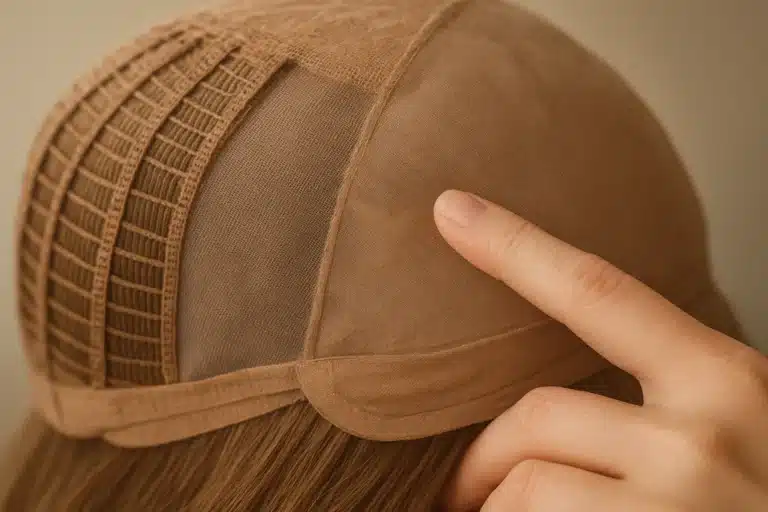
Sometimes, weight isn’t about the hair; it’s about the foundation. A standard “wefted” cap consists of rows of hair sewn onto strips of material. While durable and affordable, these layers can trap heat.
When your scalp gets hot, your body perceives the wig as being heavier and tighter than it actually is. It’s a sensory illusion—the hotter you are, the more “present” and burdensome the wig feels.
3. The Fit and Balance (The Tension Factor)
If a wig is ill-fitting, your body naturally tries to compensate. If the wig slides back, you may subconsciously crane your neck forward or tense your shoulders to keep it in place. This muscle tension manifests as a feeling of heaviness or a headache. A wig that is back-heavy (long hair with a loose fit) will constantly pull against your front hairline, creating a sensation of dragging weight.
The Diagnostic: Pinpointing Your Specific Issue
Before you reach for the scissors, take a moment to diagnose exactly what kind of heaviness you are experiencing.
Scenario A: The “Puffy Cloud”
- Symptoms: The hair looks too thick at the roots; you feel like you have a “helmet” of hair; the wig doesn’t lay flat against your head.
- Diagnosis: This is a Density Issue. The wig has more hair fiber than you are accustomed to, or the fibers are not steaming down flatly.
Scenario B: The “Heat Trap”
- Symptoms: You feel fine for 10 minutes, but then feel the urge to rip the wig off; your scalp feels sweaty and suffocated.
- Diagnosis: This is a Cap Construction Issue. The lack of airflow is creating sensory overload, which your brain interprets as weight.
Scenario C: The “Constant Shift”
- Symptoms: You are constantly tugging the wig forward; your neck muscles feel sore at the end of the day; you feel a dragging sensation at the back of your head.
- Diagnosis: This is a Fit & Security Issue. The wig is likely back-heavy or too large, causing physics to work against you.
Actionable Solutions for a Lighter Experience
Once you have identified the culprit, you can apply the right solution. You don’t always need to buy a new wig; often, adjustments can be made to the one you own.
Solutions for Density: Thinning and Taming
If your wig is visually too bulky, you need to reduce the volume.
- Professional Thinning: The safest route is to take your wig to a stylist who specializes in alternative hair. They can use thinning shears to remove bulk from the under-layers of the hair without compromising the style.
- The Steam Method (Synthetics Only): Sometimes the hair isn’t too thick, but too “poofy” at the root. Using a steamer (carefully directed at the roots while combing downward) can flatten the “return” hairs—the short, spiky hairs at the base of the weft—making the wig lay flatter and feel lighter.
Solutions for Cap Construction: Choosing Airflow
If heat is your enemy, the construction of the base is critical. This is where investing in higher-quality construction pays off in comfort.
- Hand-Tied Caps: If you want the sensation of wearing almost nothing, hand tied wigs are the gold standard. In these caps, every single hair is knotted individually by hand into a soft mesh. This eliminates the heavy rows of wefting, allowing air to flow freely to your scalp and significantly reducing the physical weight of the piece.
- Lace Fronts: While primarily for a natural hairline, lace fronts also use lighter materials at the forehead, reducing that “band” feeling across the front of your head.
Solutions for Fit: Improving Security
If the wig is slipping, you need to anchor it to stop the muscle tension.
- Wig Grips: A velvet wig grip band is a game-changer. It creates friction that holds the wig in place without tight clips. By distributing the weight evenly around your head, it stops the “dragging” sensation.
- Fiber Choice: When selecting your next piece, consider the fiber itself. The best human hair wigs offer incredible movement and realism, but human hair can be heavier than synthetic fiber. If weight is your number one trigger, a high-quality synthetic or a heat-friendly synthetic might offer a lighter-weight alternative for daily wear.
FAQ: Common Questions About Wig Weight
Q: Can I thin a wig myself at home?
A: Yes, but proceed with caution. Use legitimate thinning shears (not regular scissors) and only cut the layers underneath the top layer of hair. Never cut right at the root, as this can leave stubble that causes itching. It is always best to cut less than you think you need—you can always cut more later, but you can’t put it back.
Q: Does length add significant weight?
A: Absolutely. A 20-inch wig has significantly more mass than a pixie cut. If you love long styles but hate the weight, look for “low density” long wigs, or styles that are layered. Layers remove bulk from the bottom half of the wig, keeping the length while reducing the weight.
Q: Why does my wig feel heavier at the end of the day?
A: This is usually due to sensory fatigue and swelling. As the day goes on, heat and sweat can make the cap feel tighter, and your tolerance for the pressure diminishes. Taking a “wig break” mid-day or massaging your scalp can reset this feeling.
Next Steps
Understanding why your wig feels heavy is the first step toward loving your hair again. You don’t have to suffer for beauty. Whether it’s thinning out a dense style, switching to a hand-tied cap for better breathability, or simply securing your current wig more effectively, a few small tweaks can turn a heavy burden into a weightless confidence booster.
If you are unsure where to start with your next lightweight selection, browsing collections specifically designed for comfort—like 100% hand-tied options—is often the best place to begin your journey toward a breezier, lighter experience.