You know the feeling. It’s that subtle prickle at the nape of your neck, the gradual tightening around your temples that turns into a dull ache by midday, or the constant, low-level anxiety that your hair might shift out of place. If you are nodding along, you aren’t alone. Research indicates that between 10% and 40% of wig wearers experience physical discomfort, ranging from persistent itching to significant pressure pain.
At Wig Superstore, we believe that restoring your confidence shouldn’t come at the cost of your physical comfort. After nearly two decades of helping clients navigate hair loss, we know that discomfort isn’t just a physical nuisance; it creates psychological distress and social anxiety that defeats the purpose of wearing a wig in the first place.
Whether you are navigating medical hair loss or simply enhancing your style, you shouldn’t have to “tough it out.” This guide transforms technical research and industry expertise into a diagnostic framework to help you identify the root cause of your irritation and find permanent solutions.
The Diagnostic Phase: Why Does It Hurt?
Before applying a remedy, we must diagnose the issue. Discomfort usually falls into three distinct categories: friction-based irritation, compression pain, or material sensitivity.
Many wearers assume that an itchy scalp is simply part of the wig-wearing experience, but this is a myth. Persistent itching is often a sign of contact dermatitis caused by wig materials or adhesives, specifically in synthetic wigs that may retain chemical residues from manufacturing. Conversely, pressure headaches—often described as a “vice grip”—usually indicate a fundamental mismatch between the wig cap’s engineering and your specific head measurements.
By identifying whether your discomfort is dermatological (skin reaction) or mechanical (fit and friction), you can stop guessing and start solving.
Solving the Itch: Scalp Sensitivity and Material Reactions
The most frequent complaint we field is the dreaded “wig itch.” If your scalp feels hot, inflamed, or prickly, you are likely dealing with poor ventilation or a reaction to the wig fibers themselves.
The Role of Cap Construction
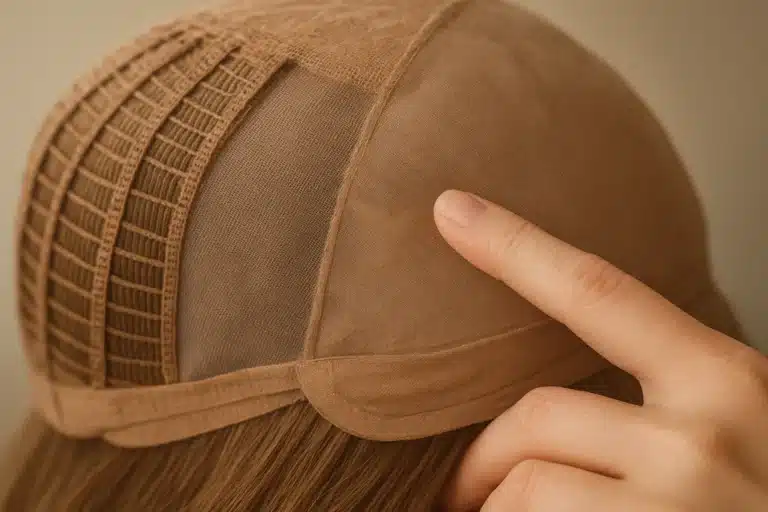
Standard machine-made caps often use “wefting” that can be rough against a sensitive scalp, particularly for those with total hair loss. The friction of these wefts against bare skin causes micro-abrasions.
The Fix: Transitioning to monofilament tops or double-monofilament caps can be transformative. These caps are constructed with a soft, breathable mesh material that mimics the appearance of natural scalp skin while providing a smooth barrier. If you are wondering what is a hand tied wig, it is the gold standard for comfort. In these designs, each hair is individually knotted into the cap by hand, eliminating the bulky wefts that trap heat and cause friction.
Hygiene and Residue Management
Sometimes, the irritant isn’t the wig, but what is on it. Synthetic fibers trap sweat and oils, while adhesives can leave residue that clogs follicles.
The Fix: Establish a rigorous cleaning routine. However, using standard drugstore shampoos on a premium wig can degrade the fibers and irritate your scalp. You need to know exactly how to care for human hair wig investments using sulfate-free, paraben-free products designed specifically for alternative hair. These specialized formulas remove oxidizers and sweat without stripping the hair’s protective coatings.
Addressing Pressure Points and Headaches
If you experience headaches within an hour of putting your wig on, or if you feel relief immediately upon taking it off, your issue is likely compression.
The Anatomy of Fit
A wig should fit like a glove, not a helmet. Pressure points usually occur at the temples and the occipital bone (the back of the skull). This often happens when a wearer attempts to secure a wig that is too small by over-tightening the adjustment straps.
The Fix:
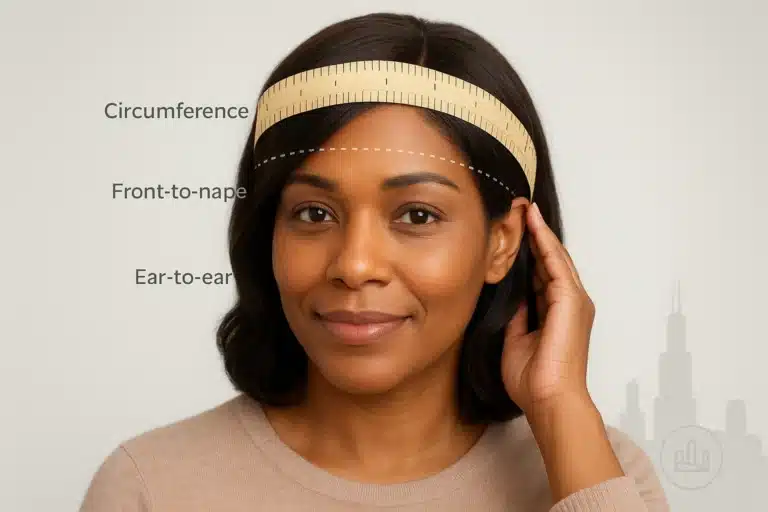
- Re-measure: Head size isn’t just about circumference; ear-to-ear and front-to-back measurements are critical for distributing tension evenly.
- Modify the Tension: Most high-quality wigs feature adjustable velcro or hook straps at the nape. Loosen these incrementally.
- Use a Liner: A bamboo or cotton wig liner acts as a buffer, redistributing pressure and absorbing sweat before it creates a slip-hazard.
Security Without the Squeeze: Stopping Slippage
The fear of a wig slipping is a major driver of social anxiety. This often leads wearers to over-tighten their wigs, creating a cycle of pain and insecurity.
The Velvet Solution
One of the most effective tools for both security and comfort is the wig grip band. Made from crushed velvet, the friction of the fabric against the grain locks the wig in place without the need for glue or tight clips.

Adhesive Management
For those who prefer adhesives, switching from liquid glues to hypoallergenic tapes can reduce skin reactions. However, always perform a patch test on your inner arm 24 hours before applying any new adhesive to your scalp.
Long-Term Solutions: Investing in the Right Architecture
While liners and cooling sprays offer immediate relief, the long-term solution to discomfort lies in the quality of the product you choose.
Low-quality synthetic wigs often have thick, non-breathable caps that trap heat—a phenomenon known as the “greenhouse effect.” This heat accumulation encourages bacterial growth and increases scalp sensitivity.
If you are evaluating your options, help me find a premium wig is a request we hear often from clients ready to graduate from temporary solutions. High-quality human hair wigs offer superior ventilation. Because the hair cuticle is natural, it moves and breathes, preventing the heat traps common in synthetic alternatives.
Furthermore, hand tied wigs utilize soft-stretch technology. This innovation allows the cap to expand and contract with your natural head movements, eliminating the static pressure that causes tension headaches.
Frequently Asked Questions
Why does my wig itch even though I wash it?
If you wash your wig regularly and still itch, the culprit might be the shampoo itself not being fully rinsed out, or “wig cap hygiene.” Ensure you are washing your wig liner daily. If the wig is synthetic, you may be reacting to the fiber coating. Soaking the wig in a mixture of water and baking soda can sometimes help neutralize these chemicals.
Can I wear a wig with a sensitive scalp or psoriasis?
Absolutely. For medical hair loss or sensitive skin, we highly recommend double-monofilament tops or 100% hand-tied caps. Avoid standard wefted caps. Additionally, look for silicone-lined caps which provide grip without the abrasion of traditional elastic.
How do I stop my wig from riding up in the back?
This usually indicates the wig cap is too small or your natural hair underneath is not flattened correctly. If your natural hair is bunching up at the nape, it pushes the wig upward. Braiding natural hair or using a wig cap to distribute the bulk evenly can resolve this.
Is human hair more comfortable than synthetic?
Generally, yes. Human hair is lighter and regulates temperature better than synthetic fiber. If you are looking for the best human hair wigs, focus on Remy hair options, which keep the cuticles intact and aligned, reducing tangling and friction against the neck.
Conclusion
Comfort is not a luxury; it is a requirement for wearing alternative hair with confidence. By understanding the mechanics of cap construction and prioritizing scalp health, you can eliminate the distraction of discomfort.
Whether you need to adjust your fit, introduce a velvet grip, or upgrade to a hand-tied human hair solution, the goal is for your wig to feel like a natural extension of yourself—undetectable to others, and barely noticeable to you.