We have all been there: standing in front of the mirror, tilting our heads at every conceivable angle, wondering if the world can see what we see. For many, the hesitation to wear a wig isn’t about vanity; it’s about the fear of detection. We want to look like ourselves, just with better hair. The difference between a wig that looks like a “wig” and one that looks like a biological miracle often comes down to a few expert techniques that bridge the gap between the product and the person.
True confidence comes from knowing your hair is undetectable. While high-quality wigs provide a beautiful starting point, seamless wig integration for confidence and lifestyle adaptations relies on the small, personalized touches you apply at home. By mastering the nuances of under-cap selection, hairline blending, and creative makeup application, you can transform a standard hairpiece into a flawless extension of your identity.
It Starts Beneath the Surface: The Under-Cap Strategy
Many beginners make the mistake of focusing entirely on the hair fibers, forgetting that the foundation determines the finish. If your natural hair isn’t secured properly, or if the wig cap creates a “dome” effect, the wig will sit too high on the head—a telltale sign that something isn’t quite right.
Choosing Your Foundation
The goal is to create a surface that mimics a smooth scalp. Your choice of under-cap depends largely on your biological hair situation:
- The Nylon Cap: Ideal for those with total hair loss or very fine hair. It reduces friction and prevents the wig from slipping against the skin.
- The Mesh Cap: A breathable option that is excellent for warmer climates or women who experience hot flashes. It offers less compression than nylon but provides better air circulation.
- The Grip Band: For those who prioritize security without adhesives, a velvet wig grip can be a game-changer. It eliminates bulk while keeping the wig firmly in place.
If you have biological hair, the key is flatness. For longer hair, avoid piling it on top of your head. Instead, wrap the hair around the circumference of your head (pin curling) or braid it into small cornrows. This creates a flat anchor point and prevents the “helmet” look.
The Art of the Hairline: Customization and Placement
The hairline is the most critical area for realism. Most wigs come from the manufacturer with a dense, perfectly straight hairline. However, natural hair doesn’t grow in a dense, straight line; it creates a soft, irregular gradient.
The “Four-Finger Rule”
Placement is paramount. A common error is wearing the wig too low on the forehead, which shrinks the face and looks unnatural. To find your ideal placement, place four fingers flat on your forehead, resting your pinky against your eyebrows. Your wig’s hairline should start where your index finger lands. This proportions the face correctly and mimics a natural forehead height.
Perfecting the Lace
For those wearing front lace wigs, the lace is designed to disappear against your skin, but it often needs a little help.
- The Zigzag Cut: When trimming excess lace, avoid cutting in a straight line. Use small manicure scissors to cut a jagged, irregular line. The eye is drawn to straight lines but glosses over irregular patterns, helping the lace blend into the skin.
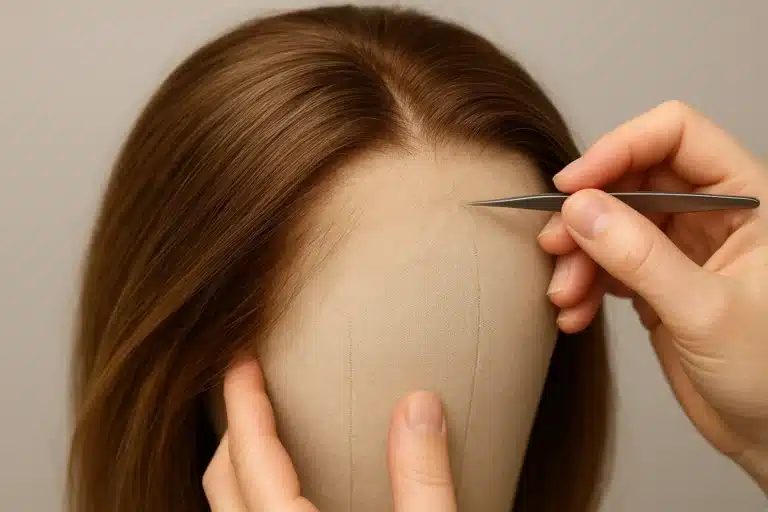
- Plucking the Part: To avoid the “wall of hair” look, you may need to pluck the hairline and part. Using tweezers, gently remove single strands of hair from the hairline to reduce density. The goal is a gradual transition from the forehead to the thicker hair, mimicking natural growth.
Makeup Magic: Melting the Lace
One of the best-kept secrets in the industry is that your makeup bag is your wig’s best friend. Even transparent lace can leave a slight cast, but makeup can “melt” the lace into your skin for a truly invisible look.
The Tinting Technique
Turn your wig inside out and apply a powder foundation that matches your skin tone to the inside of the lace. This tints the knots (where the hair is tied to the lace) and helps the grid blend with your scalp color.
Contouring for Depth
Here is a tip that transforms a look: use a contour powder slightly darker than your skin tone along your hairline before applying the wig. This creates a shadow effect that mimics the natural depth seen at the roots of biological hair. Once the wig is on, dab a small amount of concealer into the part line with a thin brush. This creates a crisp, realistic scalp appearance that contrasts beautifully with the hair.
Texture Control: Banishing the Shine
High-quality synthetic wigs are durable and stylish, but they can sometimes carry a “factory shine” that looks artificial under bright lights. To achieve the look of healthy, natural hair, you need to disrupt that reflection.
- Dry Shampoo: The quickest fix. Spraying dry shampoo lightly over the wig dulls the synthetic sheen and adds a bit of grit, making the hair move more naturally.
- The Fabric Softener Soak: For a long-term solution, this is a staple of wig maintenance. Soaking your synthetic wig in a mixture of water and fabric softener for a few hours (then rinsing and air drying) can remove the plastic-like coating and leave the fibers feeling softer and looking more like human hair.
Styling for Individuality
Finally, make the wig your own. A wig that looks “too perfect” often looks the least real.
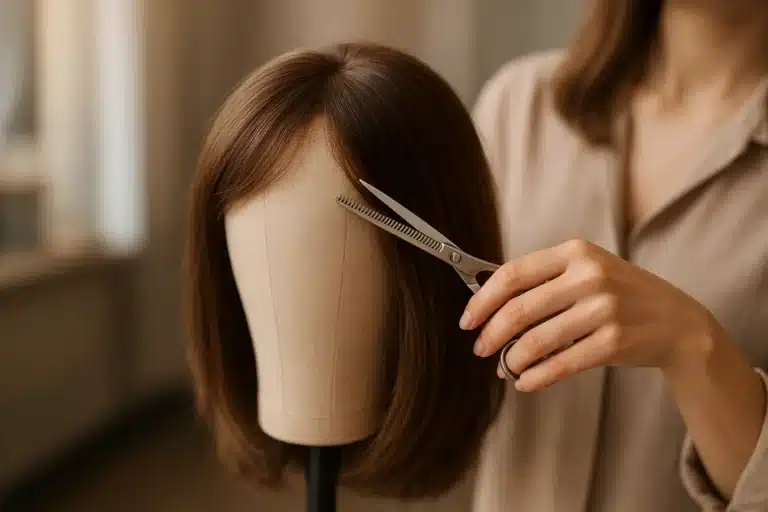
- Create “Baby Hairs”: Natural hairlines have shorter, wispier hairs at the front. You can trim a few very thin strands at the temples and forehead to create these baby hairs, using a little mousse to sweep them down. This is a common technique in African American wig styles, but it works for any texture to soften the transition between skin and lace.
- Move the Part: Don’t feel stuck with the center part. If the wig construction allows (like with a monofilament top), shift the part slightly to the side for a more relaxed, casual look.
Frequently Asked Questions
Q: Can I use heat to style my synthetic wig to make it look real?
A: It depends on the fiber. Standard synthetic wigs cannot tolerate heat and will melt. However, heat-friendly synthetic options allow you to use low heat settings (usually up to 280°F – 350°F) to change the curl pattern or flatten a bulky area. Always check the manufacturer’s label first.
Q: My wig cap shows through the part. How do I fix this?
A: This usually happens if the wig cap color doesn’t match your scalp. Use a nude or flesh-toned wig cap. You can also apply a strip of silicone scar tape to the underside of the part area on the wig; this mimics the look of a scalp perfectly.
Q: How often should I wash my wig to keep it looking natural?
A: Over-washing can degrade the fibers. For daily wear, washing every 6-8 wears is standard. If you are unsure about the process, you might search for wig styling near me to find a professional who can perform a “wash and reset,” but simple home maintenance is usually sufficient to keep the wig fresh.
Q: Will glue damage my hairline?
A: Not if used correctly and removed patiently. The damage usually occurs when users rip the lace off without using a solvent or oil to dissolve the adhesive first. For daily wear, many people prefer glueless methods like velvet grips or got2b glued spray, which are gentler on the edges.
The Journey to Effortless Hair
Achieving a realistic look is a journey of experimentation. You might find that a mesh cap works better for you than nylon, or that you prefer the look of a side part over a center one. These small discoveries are part of the process. By treating your wig not just as a product, but as a customizable accessory, you stop hiding under it and start living in it.
Remember, the goal isn’t just to wear hair; it’s to wear confidence. With these blending techniques, the only thing people will notice is how great you look.