You know that feeling: you’ve been wearing your favorite Hairdo wig for a few weeks, loving how the layers frame your face, when suddenly, the ends at the nape of your neck start to feel… different. They aren’t silky anymore. They feel dry, crunchy, and prone to tangling. For many first-time wig wearers, this is a moment of panic. You might wonder if you bought a low-quality product or if you’ve accidentally ruined it.
Take a deep breath. What you are experiencing is not a disaster; it is a normal scientific reaction known as “friction frizz,” and more importantly, it is entirely fixable. In our The Definitive Guide to Hairdo Wigs: Choosing Your Perfect Style with Confidence, we explore how to select the right look, but maintaining that look requires understanding the unique nature of heat-friendly fibers. This guide is your roadmap to understanding why frizz happens and the step-by-step protocol to restoring that silky, brand-new feel.
The Science of “Tru2Life” Fiber: Why Frizz Happens
To fix the problem, we first have to understand the material. Hairdo wigs are crafted with Tru2Life® Heat-Friendly Synthetic Fiber. This fiber is an engineering marvel designed to mimic the texture and movement of biological hair better than traditional synthetic fibers. However, this realism comes with a trade-off.
Because the fiber is softer and more porous to accept heat styling, it is more susceptible to friction. Think of a strand of synthetic hair like a ribbon used for gift wrapping. If you run a pair of scissors firmly along the ribbon, it curls and crinkles.
When your wig rubs against your collar, scarf, or even the skin of your neck, that friction acts like the scissors. Over time, it stretches and kinks the ends of the fiber, creating that rough, “crunchy” texture. This isn’t dryness—synthetic hair doesn’t need moisture in the way human hair does—it is a physical change in the structure of the fiber.
The “Cold Water” Fallacy
A common misconception is that washing your wig in cold water will smooth it out. While proper washing is essential for hygiene, cold water only cleans the fiber; it does not repair it. Once the fiber has been kinked by friction, controlled heat is the only way to relax the polymer chain and smooth it back out.
The Prevention Protocol: Stopping Frizz Before It Starts
While you can’t completely eliminate friction, you can significantly delay its effects with the right habits. The goal is to reduce the “drag” between the fiber and your clothing.
1. The Daily Detangle
Never brush a curly or wavy synthetic wig dry. Instead, use a wide-tooth comb. Start at the ends and gently work your way up to the roots. This prevents the microscopic knots from tightening into larger tangles that generate more friction.
2. Strategic Product Application
Using the best wig care products is crucial for longevity. Specifically, you need a leave-in detangler spray designed for synthetic fiber. These sprays coat the hair shaft in a microscopic layer of silicone, making it slippery so it glides over your clothes rather than catching and rubbing.
3. The “Nape Shield”
If you are wearing a mid-length or long wig, be mindful of your clothing. heavy wool collars, sequins, and untreated cotton create high friction. During winter months, consider wearing a silk scarf around your neck to create a smooth buffer zone for the hair to rest on.
The “Fiber Reset”: How to Fix Existing Frizz
If your wig is already feeling crunchy, don’t worry. Because Tru2Life fiber is heat-friendly, it has “memory.” You can reset that memory using heat. This process is effectively ironing the wrinkles out of the fiber.
Tools You Will Need:
- A wide-tooth comb
- A heat protectant spray made for synthetic hair
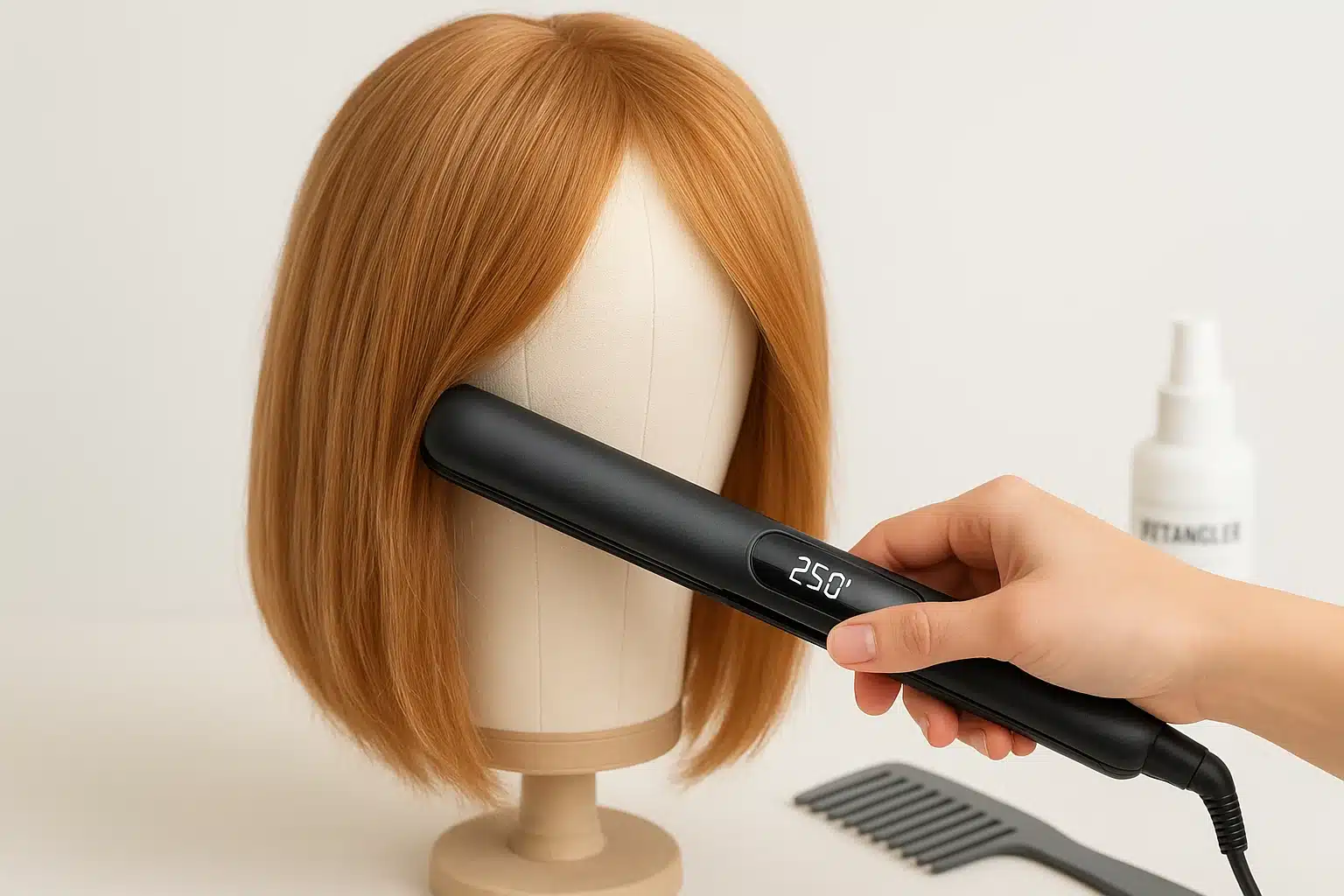
- A flat iron with a digital temperature control (Crucial!)
- A canvas block head or wig stand
Step 1: Prep and Protect
Secure your wig to a block head. Section off the hair, focusing primarily on the nape area where 90% of friction damage occurs. Spray the section lightly with heat protectant and comb through to ensure there are no knots.
Step 2: The Temperature “Goldilocks” Zone
This is where most mistakes happen. If the iron is too cool, it won’t smooth the frizz. If it’s too hot, you will melt the fiber.
- Too Cool (Under 200°F): Ineffective. The fiber won’t relax.
- The Sweet Spot (240°F – 275°F): This is the safe zone for Tru2Life fibers. It provides enough heat to reshape the plastic without melting it.
- Danger Zone (Over 300°F): High risk of singing the fiber, causing irreversible damage.
Step 3: The Smooth and Cool
Take a small section of hair (about 1 inch wide). Run your flat iron slowly through the hair from root to tip. You should see the frizzy ends smooth out immediately.
The Secret: Synthetic fiber sets as it cools, not while it’s hot. After passing the iron through, let the hair hang straight and refrain from touching it until it is completely cool to the touch. If you want to restore curls, you must pin the curl in place while it is hot and let it cool in that shape.
Myth Busting: The Fabric Softener Danger
If you browse online forums, you will inevitably see advice suggesting you soak your wig in fabric softener to remove frizz. Please avoid this technique.
While fabric softener makes clothes feel soft, it leaves a waxy film on wig fibers that attracts dirt and dust, making the hair look dull and clump together. Worse, the chemicals in laundry products can degrade the elasticity of the hand-tied knots in the wig cap, leading to shedding and a loosened fit. Stick to professional wig maintenance products specifically formulated for the pH balance of synthetic hair.
Frequently Asked Questions
Can I use a steamer instead of a flat iron?
Yes! A handheld clothes steamer is excellent for removing frizz without flattening the style as much as an iron. Comb through the hair as you apply the steam. Just be careful to keep the steam moving so you don’t overheat one spot.
How often should I perform a “Fiber Reset”?
This depends on how often you wear the wig. For a daily wearer, checking the nape and doing a quick touch-up with low heat every 6-8 wears can prevent deep friction damage from ever setting in.
Will heat ruin the curl pattern?
Heat will remove the existing style. This is the nature of heat friendly synthetic wigs. If you straighten the hair to remove frizz, you will need to re-curl it using heat and letting it cool in the curled shape. Many wearers view this as a benefit, allowing them to change their style from curly to straight and back again.
Moving Forward with Confidence
Understanding the science of your Hairdo wig transforms maintenance from a chore into a simple ritual. The “crunchiness” at the nape isn’t a sign that you need a new wig; it’s just a signal that it’s time for a reset. By using the right tools and temperature, you can double or triple the lifespan of your favorite style, keeping you looking beautiful and confident every day.
If you are ready to explore more about caring for your investment, or if you are looking to add a new style to your rotation, we are here to help guide you through every step of your hair journey.