We have all experienced that moment of panic: a sudden gust of wind, a humid summer afternoon, or a long day at the office where you suddenly feel your wig shift. For many, the immediate reaction is to blame the product quality or the application technique. But often, the culprit isn’t user error—it’s chemistry.
Choosing an adhesive isn’t just about picking the bottle with the strongest “hold rating”; it’s about understanding how specific chemical polymers interact with your unique biology. This knowledge is a crucial step in finding your perfect hold for any lace or poly system. When you understand what is actually inside that bottle, you stop guessing and start wearing your hair with genuine confidence.
The Science of Stick: Evaporation vs. Cross-Linking
Before diving into specific ingredients, it is vital to understand that not all glues “dry” in the same way. This distinction explains why some adhesives stay tacky for minutes while others set instantly.
- Evaporation (Water-Based): These adhesives rely on the water content evaporating into the air. As the water leaves, the polymers pack closely together to form a film. This is why these glues start white and turn clear—the visual signal that the water is gone.
- Cross-Linking/Curing (Solvent-Based): Acrylic and silicone adhesives often undergo a chemical reaction called “curing.” While solvents do evaporate, the molecules also chemically bond to one another (cross-link) to create a stronger, more rigid network. This reaction is why waiting the full 24-48 hours before getting a wig wet is non-negotiable; the chemical reaction needs time to complete to become truly waterproof.
The Big Three: Breaking Down the Formulations
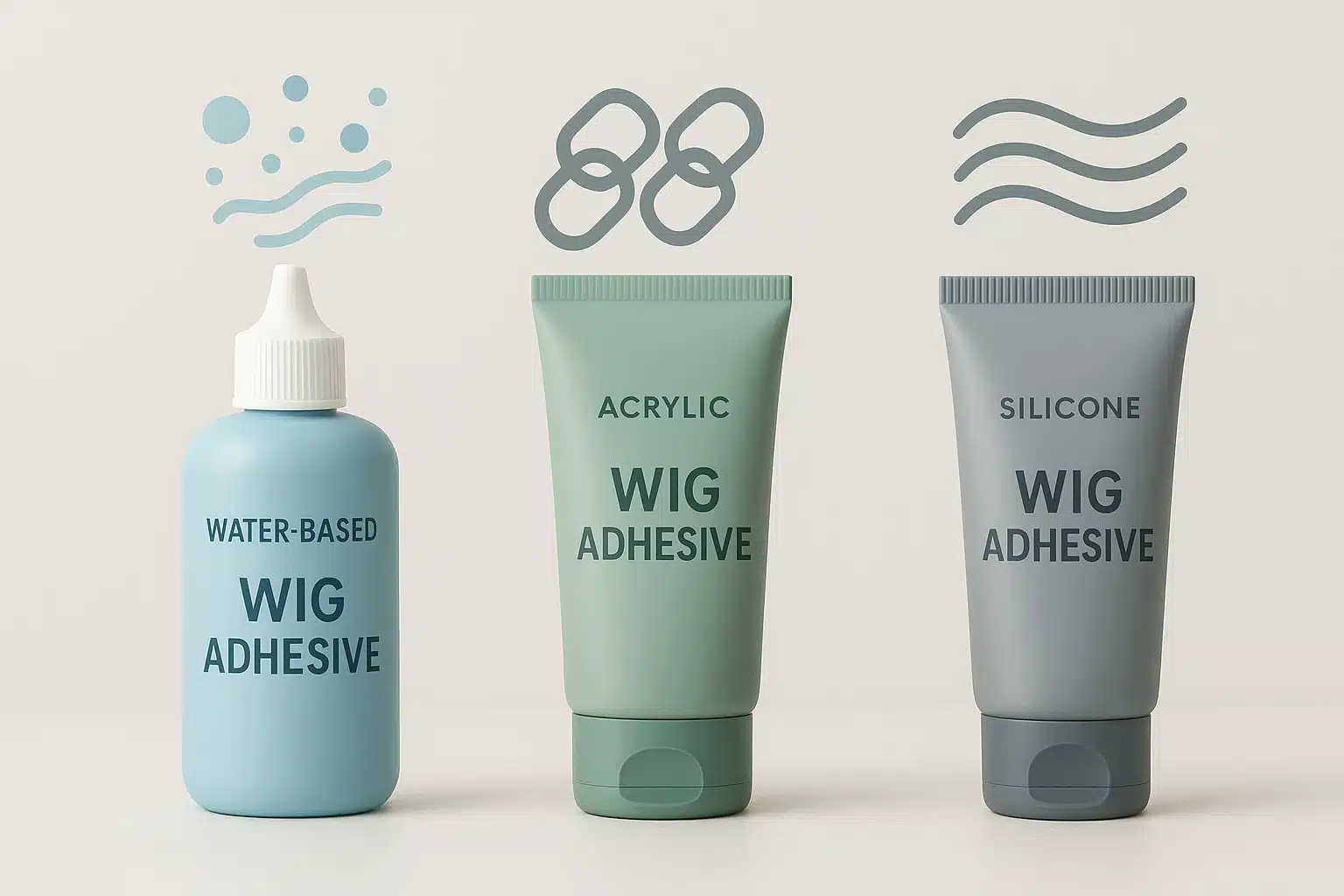
In the world of hair replacement, adhesives generally fall into three chemical families. Understanding the pros and cons of each will help you build a “wardrobe” of adhesives suited for different occasions.
1. Water-Based Adhesives (The Gentle Giant)
Water-based glues are effectively emulsions of polymers (usually copolymers) suspended in water. They have become the industry standard for daily wearers and those with sensitive skin.
- The Chemistry: These formulas often use non-toxic acrylic emulsions that are free from harsh solvents like latex or formaldehyde. Because they lack aggressive chemical carriers, they are hypoallergenic and possess a low odor.
- The Hold: They provide a secure hold but rely on a “soft bond.” They move slightly with the skin but are susceptible to re-emulsifying (turning back into a liquid) if exposed to excessive sweat or water before fully curing.
- Best For: Beginners, individuals with sensitive skin, and those who remove their wigs daily or every few days.
2. Acrylic-Based Adhesives (The Heavy Lifter)
When you see a “clear” liquid adhesive that smells akin to nail polish or rubbing alcohol, you are likely looking at a solvent-based acrylic formula.
- The Chemistry: These contain ingredients like Ethyl Acetate or Isopropanol as carriers for acrylic polymers. The solvent evaporates rapidly, leaving behind a hard, durable resin.
- The Hold: Acrylics are known for their “snap” cure—they dry fast and hold hard. However, this strength comes with rigidity. If you have a very active facial expression or flexible skin, acrylic bonds can sometimes feel stiff or create a “crinkling” sound if applied too thickly.
- Best For: Long-term wear (1-4 weeks), high-humidity environments, and experienced wearers who need speed during application.
3. Silicone-Based Adhesives (The Flexible Shield)
Silicone adhesives are often considered the “medical grade” option in the adhesive world. They offer a unique balance of strength and skin comfort.
- The Chemistry: Utilizing polymers like Polydimethylsiloxane, these adhesives are chemically inert, meaning they rarely react with skin to cause allergies.
- The Hold: Unlike the rigid hold of acrylics, silicone remains flexible even after curing. It creates a bond that moves with your skin, making it incredibly comfortable. Furthermore, silicone is naturally hydrophobic (water-repelling), offering superior resistance to showers and swimming.
- Best For: Active lifestyles, swimming, and users who experience irritation from traditional acrylic solvents.
Skin Biology & Compatibility: It’s Not Just About Hold
Why does a glue work perfectly for your favorite influencer but slide off your head in two days? The answer lies in the Chemical Safety & Compatibility Matrix between the glue and your physiology.
The pH and Sebum Factor
Your skin produces sebum (oil), which is slightly acidic. Acrylic adhesives are susceptible to being broken down by these oils over time. If you have naturally oily skin, an acrylic bond may turn to “mush” faster than a water-based or silicone bond.
The “Occlusive Barrier”
This is a critical concept for scalp health. An “occlusive” substance forms a seal that prevents moisture from escaping.
- Silicone creates a strong occlusive barrier. While this is great for waterproofing, it can trap sweat and bacteria against the skin. If you sweat heavily (hyperhidrosis), the sweat has nowhere to go, which can lift the bond from the inside out or cause irritation.
- Water-based glues are generally more breathable, allowing for better air exchange, which is why they are often recommended for those prone to breakouts.
The Removal Equation: Matching Solvents to Bonds
One of the biggest causes of damage to lace fronts and skin is using the wrong removal technique. You must match the solvent to the adhesive type to break the molecular bond rather than forcing it.
- For Water-Based: These can often be broken down with soap and water or gentle, citrus-based removers. They release easily without aggressive rubbing.
- For Acrylics: You generally need alcohol-based removers (like Isopropyl Alcohol) to dissolve the rigid resin. Oil can work, but alcohol is chemically more efficient at “shattering” the acrylic chain.
- For Silicones: You must use an oil-based solvent or a specific silicone releaser. Alcohol will often just make silicone gummy and messy without actually releasing the bond.
Environmental Factors: A Climate Selection Matrix
Finally, consider your environment as the third partner in this relationship.
- High Humidity / Sweating: Water-based glues struggle here because moisture can prevent them from ever fully setting. Acrylics or Silicones are superior in tropical climates as they don’t re-emulsify.
- Dry Heat: Acrylics can become brittle in extremely dry heat. A Silicone adhesive will maintain flexibility and comfort.
- UV Exposure (The Yellowing Effect): Have you ever noticed your glue turning yellow along the hairline? This isn’t just “dirty” glue; it’s oxidation. Certain acrylic polymers oxidize when exposed to UV light. If you spend a lot of time in the sun, look for water-based options which are generally more UV stable.
Frequently Asked Questions
Is “Waterproof” the same as “Shower-ready”?
No. This is the most common misconception. An adhesive might be chemically waterproof once cured, but if you shower before the 24-48 hour cure window closes, you will disrupt the bond formation. “Waterproof” describes the material’s properties, not its immediate state.
Why do some glues contain Formaldehyde or Toluene?
Historically, these harsh chemicals were used in industrial adhesives. However, modern, reputable wig adhesive brands (especially those sold by trusted retailers) have largely moved away from these toxic ingredients. Always check the label for “Non-Toxic” or “Latex-Free” if you have concerns.
Can I use different glues for different parts of the wig?
Absolutely. Many professionals use a “Hybrid Strategy.” They might use a strong acrylic tape or glue for the back and sides (where the hold needs to be durable) and a gentle water-based liquid for the front hairline (where the skin is delicate and requires a flawless, invisible blend).
Next Steps in Your Journey
Understanding the ingredients label on your adhesive bottle transforms you from a passive consumer into an educated wearer. By matching the chemistry of the bond to your skin type and lifestyle, you ensure that your hair system enhances your life rather than complicating it.
For those ready to explore high-quality options that prioritize both hold and hair health, browsing a curated selection of professional adhesives is the best place to start. Remember, the “best” glue isn’t the one with the highest price tag—it’s the one that agrees with your biology.