You know that moment. You’ve been wearing your favorite wig for a few weeks, looking fantastic, and suddenly the hair at the nape of your neck feels less like silk and more like… Velcro. It’s the dreaded “nape nest,” and for many first-time wig wearers, it causes a moment of panic. Did I ruin it? Is it dry? Do I need to buy a new one?
Here is the truth that most product labels won’t tell you: your synthetic wig isn’t “dry,” and it doesn’t need “moisture” in the way your biological hair does. It needs lubrication. Understanding this distinction is the key to transforming a wig that lasts three months into one that lasts twelve.
While we cover the full spectrum of maintenance tools in The Definitive Guide to Wig Care Products: How to Extend Longevity and Luster, this article dives deep into the specific chemistry of leave-in conditioners and detanglers. We’re moving beyond simple shopping lists to explain the science of synthetic fiber survival.
The “Plastic vs. Protein” Paradigm
To choose the right products, you first need to understand the canvas you are working on. Biological hair is made of keratin protein; it is porous, absorbs oils, and requires hydration to stay elastic. Synthetic hair, however, is essentially a high-quality monofilament fiber—a type of plastic (often modacrylic or polyester).
This creates a fundamental disconnect when beginners try to use drugstore hair products on their wigs.
- Biological Hair absorbs conditioner to repair the cuticle from the inside out.
- Synthetic Fiber is non-porous. Heavy oils and creams just sit on top of the fiber, attracting dust and creating a dull, heavy film known as “product gunking.”
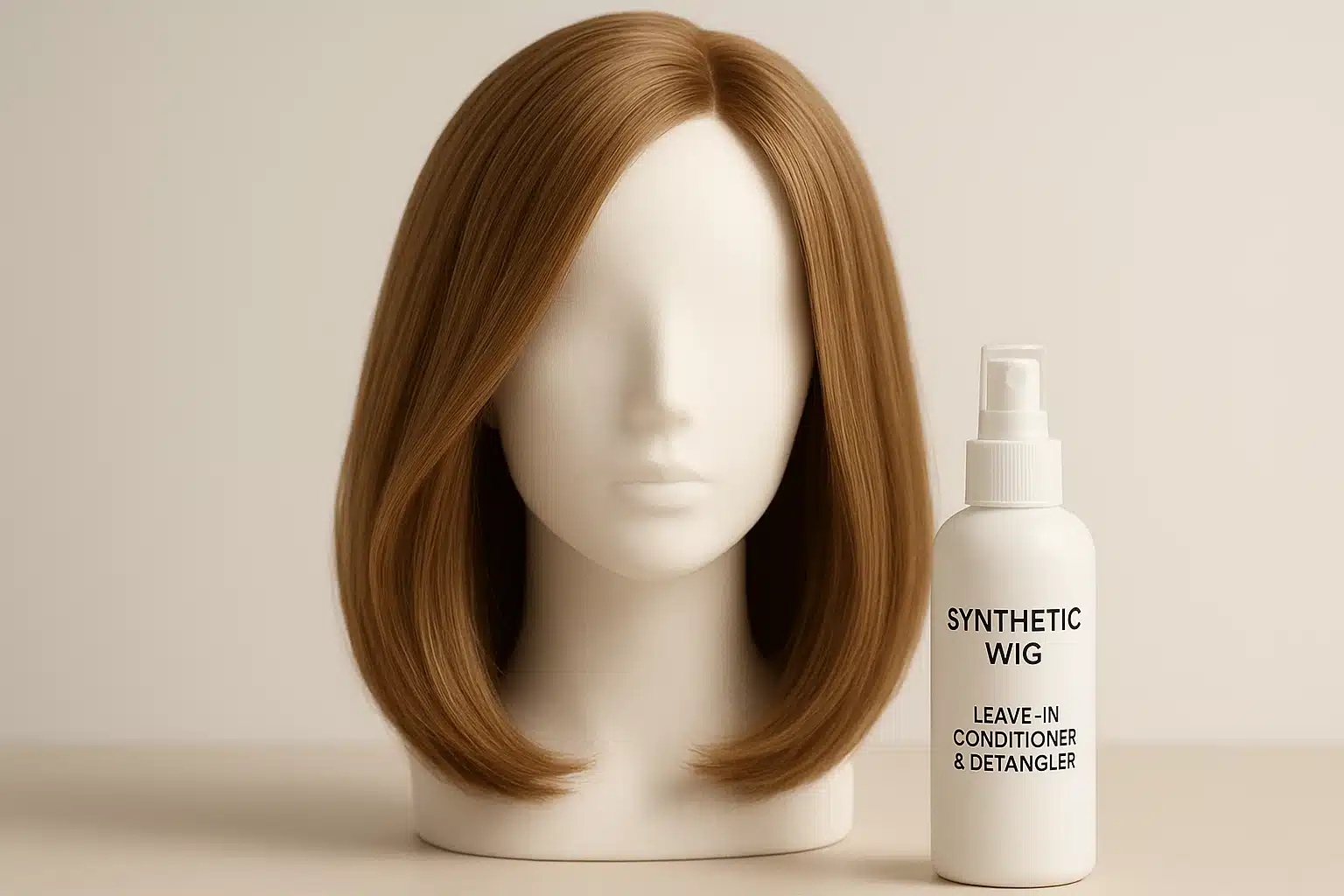
When looking for the best conditioner for synthetic wigs, you aren’t looking for hydration; you are looking for a surface modifier. You need a product that coats the fiber without weighing it down, mimicking the natural movement of hair without the biological requirements of protein.
The “Velcro Effect”: Why Wigs Tangle
Why does that friction happen at the nape of the neck? We call it the “Velcro Effect.”
Synthetic fibers are perfectly smooth when they are new. However, every time you turn your head, the fibers rub against your clothing and your skin. This friction creates microscopic abrasions on the surface of the fiber. Over time, these tiny scratches act like little hooks. When one scratched fiber touches another, they latch onto each other.
This is why traditional “moisturizing” doesn’t work. You cannot moisturize a scratch on a plastic surface. You have to fill it in or smooth it out. This brings us to the most controversial topic in wig care: Silicone vs. The DIY Cabinet.
The Great Debate: Professional Detanglers vs. Fabric Softener
If you have spent any time on Reddit or TikTok, you have likely seen the “fabric softener hack.” The logic seems sound: If synthetic hair is plastic/fabric, shouldn’t fabric softener work?
It is essential to weigh the risks before trying a synthetic wig conditioner DIY approach.
The DIY Route (Fabric Softener)
Fabric softeners use cationic surfactants to reduce static. While they will make the wig feel soft initially, they are designed for laundry, not wearable hair.
- The Risk: Fabric softeners leave a waxy residue that attracts dirt and dust like a magnet. Over time, this creates a grayish cast on the wig and can irritate sensitive skin on your scalp and neck.
- The Verdict: Great for reviving an old cosplay wig you wear once a year; dangerous for your daily-wear investment piece.
The Professional Route (Silicone-Based Sprays)
High-quality wig detanglers rely on water-soluble silicones.
- The Science: Silicone acts as a “sacrificial shield.” It fills in those microscopic scratches we discussed earlier, creating a sleek barrier. When friction occurs, the silicone takes the hit, protecting the structural integrity of the fiber underneath.
- The Verdict: Essential for daily wearers who want to extend the lifespan of their unit.
The Rescue Mission: How to Properly Detangle
Having the right product is only half the battle; how you use it determines your success. Many wearers aggressively comb through tangles, which stretches the fiber (creating the “frizz” look).
Here is the professional protocol on how to detangle a synthetic wig without causing further damage:
- The Finger Rake: Before touching a comb, gently separate large knots with your fingers. This prevents “hard locks.”
- The Lubrication Layer: Spray your leave-in conditioner liberally on the targeted area (usually the nape). Do not soak the cap, just the fiber.
- Bottom-Up Combing: Using a wide-tooth comb, start at the very ends of the hair. Detangle the bottom two inches, then move up. Never drag a comb from root to tip in one go.
The “Nape Ritual” for Long Wigs
If your wig touches your shoulders, you should perform a “Nape Ritual” every time you take the wig off.
- Spray the nape area with a lightweight detangler.
- Gently comb through.
- Let it air dry on a wig stand.This resets the “friction clock” daily, preventing the buildup of micro-tangles that lead to matting.
Beyond the Spray: When You Need Heat
Sometimes, a spray isn’t enough. If the fiber ends look crinkled or frizzy like toasted nervous system endings, product alone won’t fix it. You need to defrizz synthetic wig fibers using controlled heat.
Wait—heat? Yes.
While we are taught that heat melts plastic, controlled heat (steaming) actually resets the memory of the fiber. The steam relaxes the “kinks” caused by friction, smoothing the fiber back to its original cylindrical shape.
- Note: This applies to both regular synthetic (with caution and steam) and heat-friendly synthetic fibers.
- The Test: If you are unsure if you can you use heat on synthetic hair, always check the manufacturer’s specifications first. However, almost all synthetic fiber benefits from a low-temperature steam treatment to remove friction frizz.
Frequently Asked Questions
Can I use regular hairspray on my synthetic wig?
It is not recommended. Standard hairsprays often contain high alcohol content which can degrade the fiber over time, making it brittle. Furthermore, the lacquer in regular hairspray is difficult to wash out of synthetic fiber without aggressive scrubbing, which damages the wig. Always opt for a water-soluble spray designed for wigs.
How often should I use leave-in conditioner?
For shoulder-length or longer wigs, a light misting is recommended after every wear, specifically focused on the ends and nape. For shorter styles (pixie cuts or bobs) that don’t rub against collars, 2-3 times a week is sufficient.
My wig looks shiny. Will leave-in conditioner make it worse?
It depends on the product. Heavy, oil-based products will increase shine (which can look unnatural). Look for “matte finish” or lightweight detanglers. Interestingly, dry shampoo is the go-to product for reducing shine, while leave-in conditioner is for reducing friction.
Is baby oil a good substitute for wig spray?
Baby oil is too heavy for most synthetic fibers. It creates a greasy look that is nearly impossible to wash out completely. It attracts dust rapidly, turning your wig into a dust mop within hours of outdoor wear. Stick to silicone-based formulas specifically engineered for modacrylic fibers.
Final Thoughts: The Long Game
Caring for a synthetic wig is a relationship, not a transaction. By understanding the physics of friction and the chemistry of the fibers, you shift from reacting to damage to preventing it.
The goal isn’t just to keep the wig looking new; it’s to keep you feeling confident. A well-maintained wig moves naturally, feels soft against the skin, and allows you to forget you’re wearing it. When you invest in the right maintenance routine, you aren’t just buying a spray bottle—you’re buying months of extra life for your favorite look.
Ready to build your maintenance kit? Start by evaluating your current routine. If you are relying on drugstore products, swapping them for fiber-specific formulations is the single most impactful change you can make today.