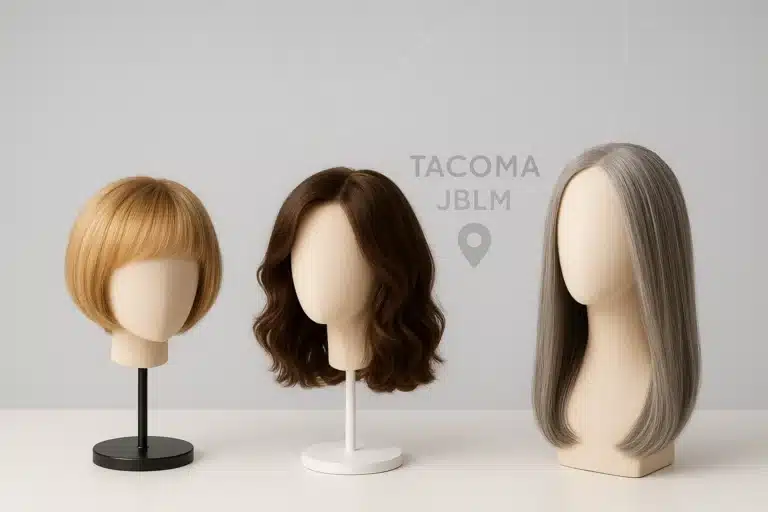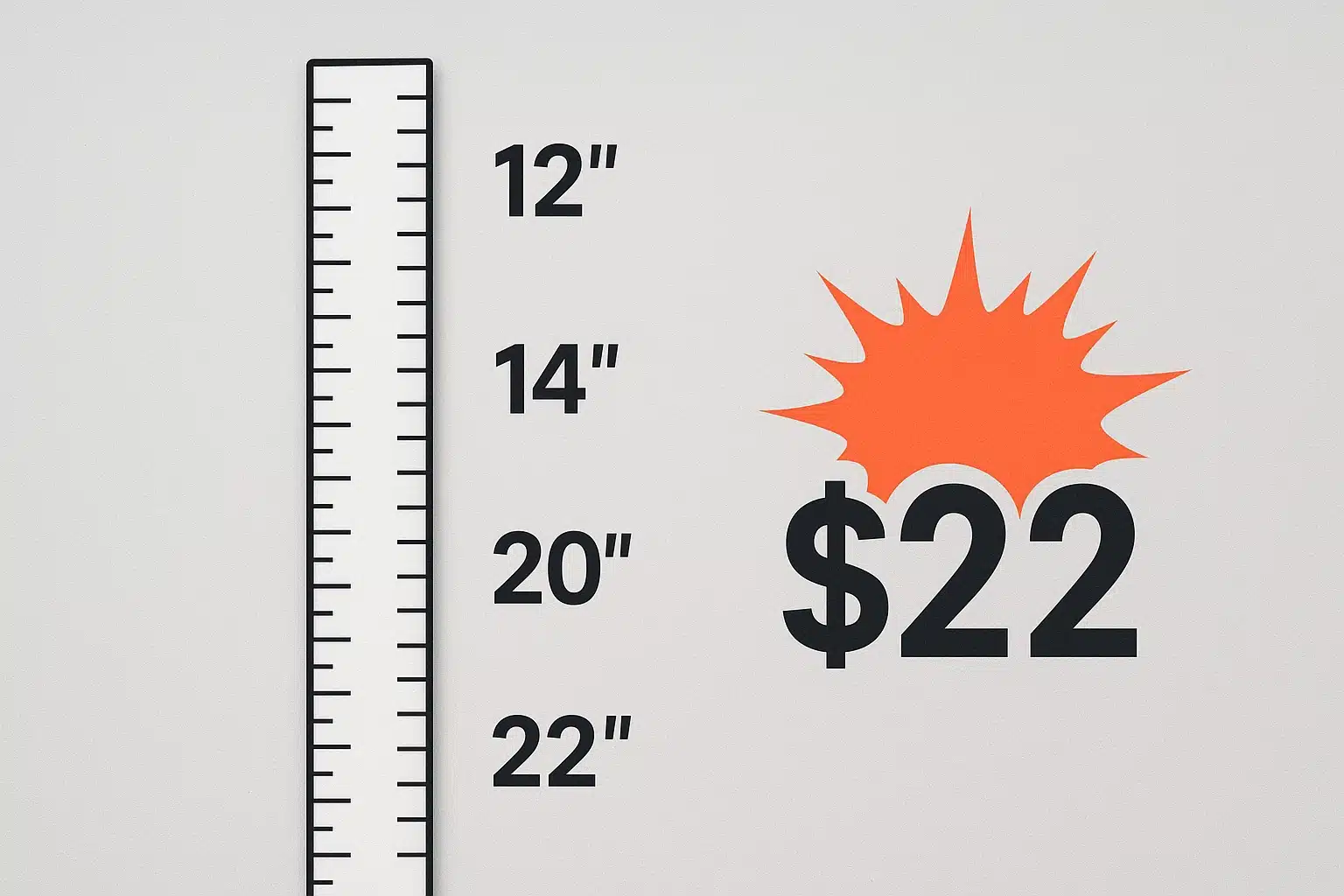
If you have ever browsed for high-quality human hair wigs, you have likely encountered a puzzling moment. You find a style you love, and you start toggling through the length options. Moving from 12 inches to 14 inches might result in a modest price increase—perhaps $40 or $50. It feels predictable. But then, you toggle from 20 inches to 22 inches, and suddenly, the price leaps by $150 or more.
It is natural to wonder if this is an arbitrary markup, but the reality is grounded in biology and economics rather than simple retail math. When you understand the supply chain complexities, you realize that wig pricing is rarely linear. A 20% increase in length does not equate to a 20% increase in cost; it often equates to a much higher jump due to the scarcity of the raw material. To truly understand the investment you are making, it is helpful to look at the big picture by decoding wig pricing factors to see how rarity, labor, and quality converge.
The Economics of the “2-Inch Jump”
The most important concept to grasp is that hair is a biological commodity, not a manufactured fabric. Unlike synthetic fibers, which can be produced in infinite lengths on a machine, human hair has a biological limit.
The Rare Strand Ratio
Human hair grows at an average rate of about half an inch per month. To achieve a healthy, usable 12-inch strand, a donor must grow their hair for roughly two years. However, to produce a 24-inch strand of high-quality, healthy hair, that donor must grow their hair for four to five years without chemical processing or significant damage.
This creates what we call the “Global Hair Supply Pyramid.”
- The Base (Abundant): There are millions of potential donors for 10-14 inch hair.
- The Middle (Moderate): The pool of donors shrinks significantly for 16-18 inch hair.
- The Tip (Exclusive): By the time you reach 22 inches and beyond, you are sourcing from a tiny fraction of the global population.
Because the pool of available donors for long hair is so small, the cost to acquire that hair skyrockets. You aren’t just paying for more hair; you are paying a premium for exclusivity and time.
The Surface Area Mathematics
Another reason for the non-linear price increase is the “surface area” math of wig construction. When you add 2 inches of length to a wig, you aren’t just adding a fringe at the bottom.
To maintain a natural look, a long wig requires density from root to tip. A 22-inch wig needs more strands of hair overall to prevent the style from looking stringy or thin at the ends compared to an 18-inch wig.
- Weight & Volume: A 2-inch increase in length across a full-density wig increases the total material volume by 15-25%.
- The “Double” Cost: You are paying for longer strands (which are rarer) and more of them (to maintain density).
The Texture Trap: Curls Eat Length
For those new to the world of wigs, texture can be one of the most confusing factors in pricing relative to length. It is a common misconception that a 16-inch straight wig and a 16-inch curly wig use the same amount of raw hair.
In the industry, hair length is measured when the strand is pulled straight. This introduces the concept of “shrinkage.”
- Straight Hair: A 14-inch strand looks like 14 inches.
- Curly/Afro Texture: A 14-inch strand might visibly sit at 10 inches due to the curl pattern.
To achieve a visual length of 14 inches on a tight curly wig, manufacturers might need to use 18-inch or 20-inch raw hair. Consequently, a “shoulder-length” afro curly wig will often cost significantly more than a shoulder-length straight wig because it requires much longer, rarer hair to achieve that silhouette.
The “Cut Down” Dilemma
A frequent question from savvy shoppers is: “Should I buy a longer wig and cut it to my exact desired length?”
While this seems like a good way to get a custom look, it is generally not cost-effective due to the rarity premium we discussed earlier. If you buy a 24-inch wig only to trim it to 20 inches, you have paid a steep premium for those bottom 4 inches—the rarest part of the hair—only to remove them.
The Golden Rule: It is usually most economical to buy the length closest to your desired style. Reserve the “buy long and cut” strategy for when you need a very specific, custom layering that requires extra length to execute properly.
Manufacturing and Labor Complexity
Beyond the cost of the hair itself, longer wigs require more sophisticated craftsmanship.
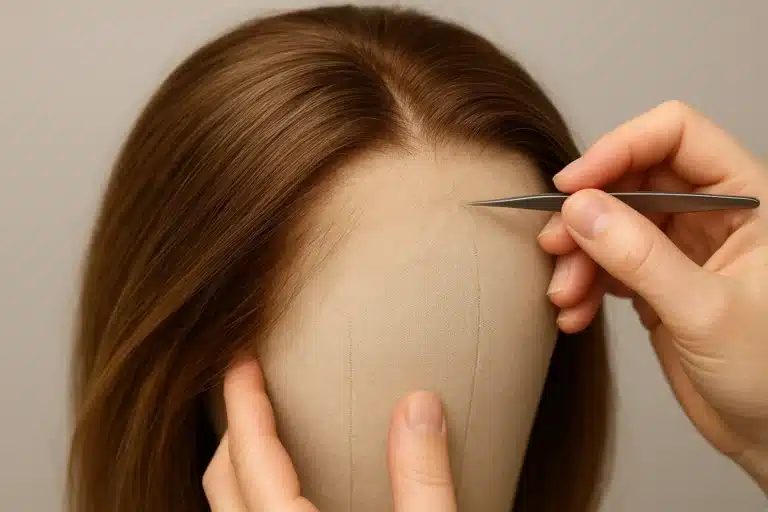
- Tangling Risks: Longer hair is more prone to tangling during the hand-tying (ventilating) process. Artisans must work slower and with greater precision to ensure the cuticles remain aligned.
- Sorting Time: Sorting 22-inch hairs to ensure they are all healthy and uniform takes significantly longer than sorting 10-inch hairs.
When you purchase a long, human hair wig, you are investing in thousands of hours of biological growth and dozens of hours of skilled labor.
Frequently Asked Questions
Why is the price difference between 12″ and 14″ so small compared to 20″ and 22″?
This is due to the “Rare Strand Ratio.” Donors with healthy 12-inch hair are abundant, keeping the supply high and costs stable. Donors with healthy 22-inch hair are extremely rare, creating a supply bottleneck that drives up the price exponentially, not linearly.
Does wig density affect the price of longer lengths?
Yes, significantly. A high-density (150% or 180%) long wig requires much more raw material than a standard density (130%) wig. When you combine high density with high length, you are multiplying the cost of the rarest materials.
If I want a 16-inch curly style, what length should I buy?
Because curls “shrink” the visual length of the hair, you generally need to buy a wig with a listed length of 18 to 20 inches to have it fall at a visual 16-inch point on your back. Always check if the retailer measures the hair “stretched” (pulled straight) or “crown to tip” in its natural state.
Taking the Next Step
Understanding the economics behind wig pricing transforms the shopping experience. Instead of viewing the price tag as a barrier, you can see it as a reflection of the biological rarity and craftsmanship involved in creating your piece.
When you are ready to explore your options, remember that the “right” length isn’t just about price—it’s about finding the balance between your budget, your desired look, and the maintenance level you are comfortable with. Whether you choose a practical bob or a luxurious long style, you are making an informed investment in your confidence.