Imagine carrying an extra two pounds of weight on your head while navigating a crowded, candle-lit room. Your natural hair has been completely shaved off, yet your scalp is radiating heat beneath tightly woven layers of hair, animal fat, and heavily scented starch. To top it off, you emit a distinct, lingering aroma of lavender, cloves, and sweet apples wherever you walk.
This wasn’t a punishment; it was the everyday reality of the 17th and 18th-century gentleman. While we often look back at the history of wigs in European nobility as mere symbols of Baroque extravagance, the iconic periwig (or peruke) was actually a highly sophisticated solution to the era’s unique hygiene challenges. For men of status, the periwig wasn’t just a fashion statement—it was a complex piece of wearable engineering that required meticulous daily maintenance, strict etiquette, and an arsenal of specialized tools.
Let’s look past the powdered pomp to uncover the fascinating, logical, and sometimes surprising realities of wearing, cleaning, and living in a historical periwig.
The Logical Illusion: Why Gentlemen Chose the Periwig
To understand the periwig, we first have to understand the environment of the 1600s and 1700s. In a world without indoor plumbing, centralized heating, or consistent access to clean, hot water, maintaining long natural hair was a daunting and unhygienic task.
Enter the “Lice Logic.” Today, shaving one’s head might seem like an extreme measure, but historically, it was a brilliant hygienic breakthrough. By shaving their natural hair and donning a wig, gentlemen effectively eliminated the primary breeding ground for lice and pests on their actual bodies.
The periwig acted as a modular, detachable “pest trap.” If a gentleman’s wig became infested, he didn’t have to suffer through painful and ineffective scalp treatments. He simply handed the hairpiece over to his valet or a professional wigmaker to be sanitized, effectively outsourcing his personal hygiene.
A Gentleman’s Morning Routine: The Daily Maintenance of a Bigwig
Getting ready in the 18th century was an elaborate affair, often taking an hour or more. A gentleman’s “toilette” (morning routine) required the assistance of a skilled valet to prepare the wig for public viewing.
The Chemistry of Historical Haircare
The secret to the periwig’s longevity lay in the chemistry of its styling products. Valets used a combination of pomatum (pomade) and hair powder to create a historical “dry shampoo” effect that absorbed oils and odors.
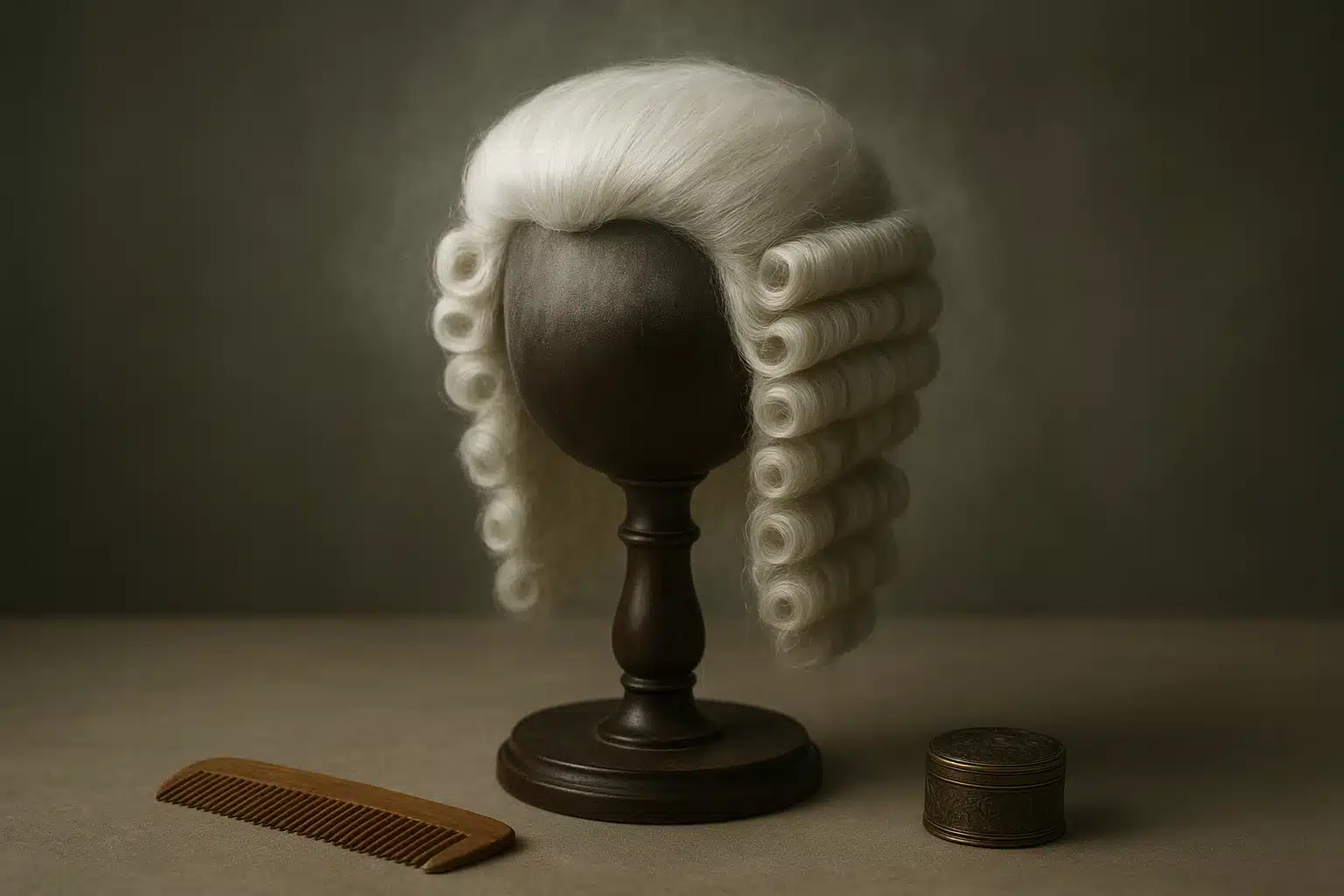
- Combing Out: The valet would first place the wig on a wooden styling block and vigorously comb out the previous day’s stale powder and dirt.
- Applying Pomatum: Next, the valet applied pomade. Unlike modern synthetic gels, historical pomatum was made from clarified animal fat (often bear grease or mutton tallow) boiled with ingredients like rosewater and up to 16 mashed apples to neutralize the animal smell. This gave the hair a tacky texture.
- Powdering: With the hair properly greased, it was time for powder. To protect the gentleman’s face, he might hold a glass cone over his face, while the valet used “powder bellows” to puff finely milled starch (usually wheat or corn-based) onto the wig. The starch stuck to the pomade, turning the wig a brilliant white or fashionable pastel color.
This fat-and-starch combination preserved the hair far longer than modern washing could have in a damp, unheated climate.
Professional Wig Maintenance: The 18th-Century “Dry Cleaner”
Even with meticulous daily care, wigs required deep cleaning. Professional wigmakers functioned much like modern dry cleaners.
When a wig was returned for servicing, the wigmaker would physically boil the hairpiece. This extreme heat safely deloused the wig and stripped away months of built-up fat and starch. Afterward, the hair had to be painstakingly re-curled. Archaeological finds, like those at Ferry Farm, show that wigmakers rolled the wet hair onto baked clay curlers (often called “pipes”), wrapped them in paper, and baked them in specialized ovens to set the style.
The Material Hierarchy
Not all periwigs were created equal. The materials used dictated not only the price but the durability and comfort of the piece:
- Human Hair (The Elite Choice): Exceptionally expensive, a full-bottomed human hair “Bigwig” could cost upwards of £40 in the 1700s—roughly equivalent to dropping $10,000 on a custom luxury item today.
- Horsehair (The Durable Middle): Favored by professionals like judges and military men. Horsehair held its curl beautifully in damp weather and was highly durable.
- Goat Hair (The Economical Option): More affordable, though coarser and harder to style, making it the choice for the everyday tradesman trying to keep up with fashion.
Navigating Society: Wig Etiquette and Practical Longevity
The physical size of early periwigs directly birthed the term “bigwig,” a word we still use today to describe an important person. But carrying that status came with a strict set of rules.
A gentleman was never to be seen “undressed”—which meant never being seen without his wig or at least a stylish turban to cover his shaved head. Because these massive hairpieces were heavily greased and powdered, they posed a constant threat to expensive silk and velvet clothing. To solve this, the “bagwig” was invented, where the back tail of the wig was encased in a small black silk bag to prevent the pomade from ruining the back of a gentleman’s coat.
Travel was another logistical nightmare. Wigs could easily be crushed. Gentlemen traveled with specialized, sturdy “wig boxes” and wooden travel blocks to ensure their expensive hairpieces maintained their shape on bumpy carriage rides.
Myth vs. Reality
Myth: People had mice and rats living inside their wigs.Reality: While you won’t find historical accounts of rats nesting in actively worn wigs, the heavily scented pomade did attract pests. If a wig was improperly stored on a block overnight, it wasn’t uncommon for mice, attracted by the apple and animal-fat pomatum, to nibble on the hairpiece!
Frequently Asked Questions About Historical Wigs
Were periwigs itchy?
Yes, they could be. The heavy canvas and netting foundations trapped heat against the scalp. This led to the invention of the “headscratcher,” a specialized long, thin tool elegantly designed to slide under the wig mesh so a gentleman could scratch his scalp without ruining his valet’s hard work.
How much did a periwig weigh?
A full-bottomed periwig from the late 17th century could weigh over two pounds once fully saturated with grease and heavy wheat starch.
How did they sleep with wigs?
They didn’t! A vital rule of wig etiquette and longevity was removing the wig at night. Gentlemen slept in linen nightcaps to keep their shaved heads warm and protect their bed linens, leaving the wig securely mounted on a wooden block.
Can you wash a historical wig with water?
Generally, no. Submerging a fully constructed periwig in water at home would cause the interior mesh to shrink and the curled wefts to completely lose their shape. They relied strictly on the powder-and-pomade dry cleaning method or professional boiling.
Continuing Your Journey into Wig History
Looking back at the elaborate rituals of the 17th and 18th centuries gives us a profound appreciation for modern hairpiece construction. Today, we don’t have to choose between comfort and style, nor do we need to boil our wigs or dust them with bellows full of wheat starch.
The evolution from heavy canvas and horsehair to today’s breathable, lightweight lace fronts is a testament to how far the craft has come. At Wig Superstore, we spend our days marveling at the nuances of wig craftsmanship, relying on nearly two decades of industry expertise to understand exactly what makes a hairpiece feel comfortable, natural, and beautiful.
If you’re fascinated by how fashion and necessity intertwine, there is much more to uncover. We invite you to continue exploring the rich history of wig-making, or perhaps discover how today’s modern advancements have solved the age-old challenges of hair loss and styling with compassionate, innovative care.