There is a distinct moment when you first settle a Follea wig onto your head—the way the hair moves with a lightness that defies gravity, and how the cap seems to disappear against your skin. For many, this isn’t just a purchase; it is the restoration of self. However, the very characteristics that make Follea the pinnacle of realism—the premium European hair and the delicate, patented cap constructions—also require a sophisticated approach to care. Unlike the resilient, chemically treated hair often found in standard wigs, European hair is a finite, precious resource that demands a curator’s mindset.
When you wear a piece of this caliber, you are essentially wearing an heirloom. The challenge is that our natural instincts often lead us astray; we tend to treat high-quality wigs exactly like our biological hair. But biological hair receives constant nutrient replenishment from the scalp’s natural oils. Your wig does not. If you are just beginning to explore the unique architecture of these pieces, you may want to review our comprehensive guide to Follea wigs to understand the foundational investment. For those ready to transition from simply “wearing” to expertly “maintaining,” this guide serves as your technical manual for preserving that investment for years to come.
The Science of European Hair: Why It Demands Different Care
To understand how to care for your Follea, you must first understand the canvas you are working with. The marketplace is flooded with advice on how to care for human hair wig types generally, but European hair behaves differently than the Indian or Asian hair commonly found in the industry.
Asian and Indian hair typically possess a thicker cuticle layer (the protective outer shell of the hair shaft). Manufacturers often strip this cuticle or coat it in silicone to create smoothness. European hair, conversely, has a naturally finer cuticle. Follea preserves this cuticle intact, which is why the hair has such incredible natural shine and movement. However, this finer cuticle is more susceptible to mechanical wear and heat damage. Because the hair is not attached to a follicle, it cannot self-repair. Every time you wash, style, or brush the hair, you are managing a delicate balance between hygiene and structural integrity.
The Chemistry of Cleansing: Hydration Over Hygiene
The biggest misconception in wig care is the purpose of washing. With biological hair, we wash primarily to remove excess oil. With a Follea wig, washing is actually a “stripping event.” You are removing environmental dust and product buildup, but you are also stripping away the moisture that keeps the hair supple.
Therefore, your focus must shift from “cleaning” to “replenishing.”
- The Pre-Wash Detangle: Never wet a tangled wig. Use a wide-tooth comb, starting from the ends and working your way up. This prevents the “matting effect” that occurs when water swells the cuticle.
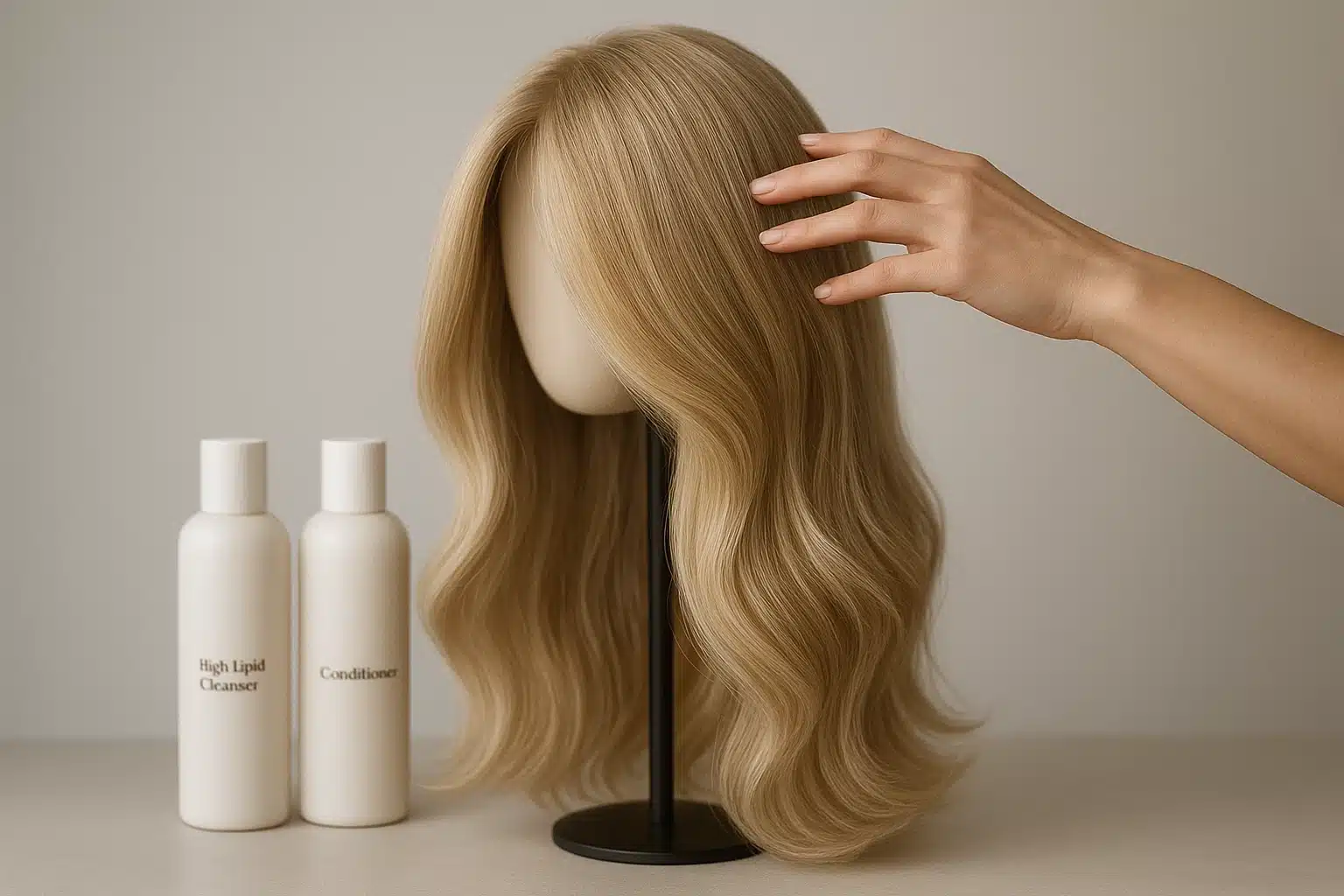
- The Lipid Exchange: Since the scalp provides no sebum, you must introduce external lipids. Avoid generic drugstore shampoos which often contain high-alkaline sulfates that blow open the cuticle, leaving hair rough.
- Conditioning Logic: Conditioner should be applied generously from the mid-shaft to the ends, avoiding the knots at the cap base (which can loosen if lubricated).
Finding the best wig care products is less about brand loyalty and more about ingredient literacy. Look for “high-lipid, low-protein” formulations. Too much protein can actually make European hair brittle and prone to snapping.
Cap-Specific Maintenance: Beyond the Hair
While the hair requires hydration, the cap requires technical cleaning. Follea offers different collections, such as the Gripper (for total hair loss) and the Style or Chic (for those with some or no bio hair). The maintenance protocols for these caps differ significantly.
The Gripper: Revitalizing the Silicone
The Gripper collection relies on medical-grade silicone perimeter strips to hold the wig secure. A common panic point for new owners is asking, “do glueless wigs stay on after six months?” If your Gripper feels like it is losing traction, the silicone hasn’t degraded—it’s likely dirty.
Your body’s natural oils and sweat create a microscopic film over the silicone, rendering the non-slip surface smooth.
- The Fix: Wipe the silicone strips (and only the strips) with a cloth dampened with 99% alcohol or a specific silicone cleaner. This cuts through the oil film and instantly restores the “grip” without damaging the hair.
The Style & Chic: Protecting the Silk Top
These caps feature a silk top where the knots are hidden between layers of fabric to mimic a scalp. The danger here is color bleed. If you wash the wig with the cap inverted (inside out), dissolved styling products or tinted shampoos can seep through the silk, permanently staining the scalp area. Always wash these pieces upright or on a block to ensure water flows away from the silk top.
The Customization Masterclass: Professional Barrier Techniques
One of the greatest advantages of Follea wigs is the ability to customize them. However, standard salon techniques can be disastrous if the stylist is not trained in alternative hair.
The “Barrier Gel” Method for Coloring
Many owners wish to root-smudge or lowlight their wig for a more dimensional look. The risk? Staining the delicate lace or silk top.
- The Amateur Mistake: Using petroleum jelly (Vaseline) as a barrier. This is greasy, hard to remove, and can degrade the knots.
- The Pro Technique: Use a firm-hold hair gel. Apply a thick layer of firm gel onto the lace and silk top where you want to prevent color absorption. Let it dry until it creates a hard, clear shell. Apply your hair color. Once processed, the gel washes away completely with water, leaving the lace pristine and unstained.
Strategic Thinning and Cutting
European hair has a natural density that is incredibly realistic, but sometimes you may want to frame the face. When looking into advanced wig cutting techniques, ensure your stylist uses “under-ventilation” methods. This involves cutting distinct hairs from underneath the bulk rather than using texturizing shears on the surface, which can leave short, “flyaway” hairs that look frizzy.
The Longevity Protocol: When to Wash
Over-washing is the silent killer of wig longevity. Because the hair doesn’t get greasy from the scalp, you can—and should—wash it far less frequently than bio hair.
- Daily Wear (10-12 hours/day): Wash every 10–14 wears.
- Occasional Wear: Wash every 15–20 wears.
Between washes, proper wig care maintenance involves refreshing the style with a dry conditioner spray rather than a full submersion wash. This keeps the hair smelling fresh and looking polished without subjecting the delicate hand-tied knots to mechanical stress.
Frequently Asked Questions
Q: Can I use heat tools on my Follea wig?
A: Yes, European hair handles heat beautifully, but always use a heat protectant. Keep tools below 350°F (180°C). A “cold-set” technique—pinning a curl until it cools—is highly effective for making styles last days without re-applying heat.
Q: Why do the ends of my wig feel “crunchy” after a few months?
A: This is usually due to dryness or friction against clothing (collars and scarves). Apply a small amount of Argan oil or a serum specifically to the bottom two inches of the hair daily to create a protective barrier against friction.
Q: Should I bleach the knots on my Follea for a more natural look?
A: Absolutely not. Follea’s craftsmanship already hides knots effectively, especially in silk top models. Bleaching knots chemically weakens the attachment point, leading to premature shedding and bald spots.
Q: Can I sleep in my Follea wig?
A: While possible, it is not recommended. The friction from a pillow acts like sandpaper on the hair cuticle, leading to tangling and breakage. If you must sleep in it, use a silk bonnet and loosely braid the hair.
Embracing the Curator Mindset
Owning a Follea is a journey of appreciation. By understanding the unique chemistry of European hair and the engineering of the cap, you move beyond basic maintenance into true preservation. These pieces are designed to restore confidence and beauty; with the right care, they will continue to do so, flawlessly, for years.
If you are ready to explore the tools mentioned here or need guidance on the specific products that pair best with European hair, we invite you to browse our curated collection of care products designed to protect your investment.