Investing in a high-quality wig or topper is both an emotional and financial milestone. When you first put on a perfectly styled piece, the boost in confidence is undeniable. But over time, even the most premium human hair or synthetic units experience daily wear and tear. A sudden snag, a thinning hairline, or stubborn frizz can feel like a disaster. However, a damaged wig rarely means a ruined wig. Whether you wear a full cranial prosthesis or a smaller enhancement piece, understanding how to care for its delicate structure is the ultimate key to extending its lifespan.
If you are still early in your journey and reading a guide to finding the perfect wig fit, you already know that these pieces are investments worth protecting. But what happens when that investment needs a little TLC? From deciphering the science of synthetic fiber memory to finding the most skilled local professionals, this guide will walk you through exactly how to restore your wig’s lifelike texture, density, and natural movement.
The Anatomy Puzzle: Understanding Your Wig’s Structure
To understand how a wig fix works, you first need to understand what you’re wearing. (Fun fact: if you’ve ever been stumped by a “wig hairpiece 6 letters” crossword clue, the answer is usually toupee or wiglet—types of partial pieces with very specific repair requirements!)
Most high-quality wigs are built around a delicate foundation. Understanding your wig cap construction is essential because different base materials require entirely different repair techniques:
- Lace Fronts: Designed to mimic a natural hairline, these feature individual hairs hand-tied into an ultra-fine mesh. They are beautiful but susceptible to stretching and tearing.
- Monofilament Tops: This breathable material gives the illusion of hair growing straight from the scalp but can separate from the rest of the cap if handled roughly.
- Machine-Wefted Backs: The most durable part of the wig, consisting of hair sewn into strips.
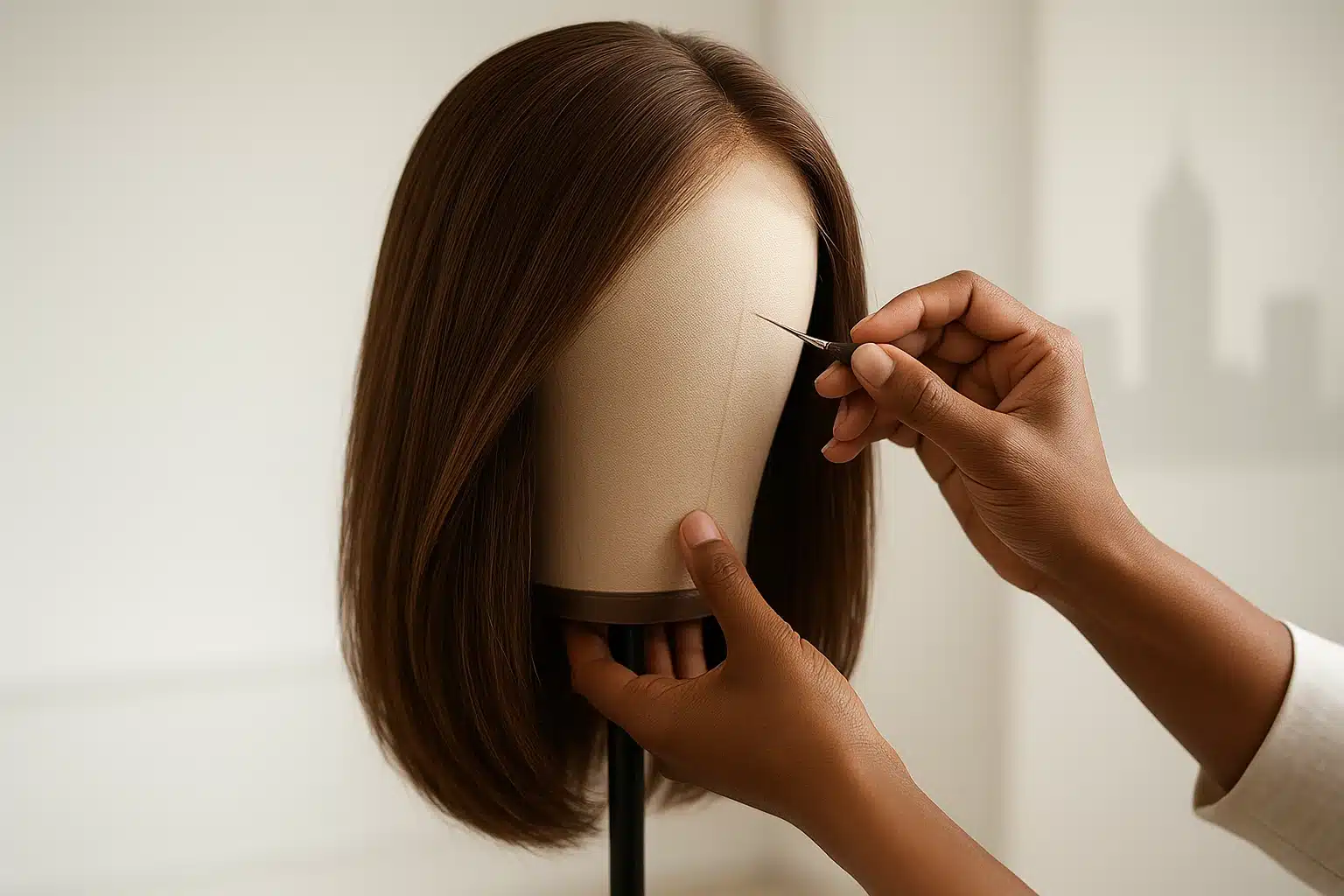
When a lace front tears, a professional doesn’t just “sew hair randomly.” They perform a meticulous process called re-ventilating, using specialized brass needles to recreate microscopic single or double knots on the delicate Swiss or HD lace, restoring the structural integrity of the piece without adding bulk.
The Restoration Science: Synthetic vs. Human Hair
Before looking for professional wig cleaning locally, it’s vital to understand the fundamental physics of your hairpiece. You cannot treat synthetic hair the same way you treat biological hair.
Restoring Synthetic Wigs
Many beginners don’t realize that synthetic wigs are crafted from modified acrylic or polyester fibers. If your synthetic wig becomes frizzy, it’s usually due to friction against your clothing. Washing it in hot water is a critical mistake that will permanently ruin the style. Instead, professionals restore synthetic wig units using a fabric softener wash, which acts as an anti-static agent on the plastic fibers. Then, they use controlled, low-temperature steam to reset the “fiber memory,” smoothing out the frizzle without melting the cap.
Restoring Human Hair Wigs
Human hair units, on the other hand, require intensive hydration. Because the hair is no longer attached to a scalp that produces natural sebum, it becomes dry and brittle over time. Professional restoration involves deep-cleansing lipid-replenishing conditioners and cuticle-sealing treatments to bring back that buttery-soft texture.
Pro Tip: Over-washing is the number one cause of premature shedding and lace degradation. Industry experts strongly advocate for the 6-to-8 wears rule. Washing your wig only after 6 to 8 full days of wear will drastically extend its life and preserve the delicate hand-tied knots.
Your DIY Troubleshooting Kit: Small Fixes & Essential Supplies
Not every issue requires a trip to the salon. Keeping a few essential hairpiece repair supplies on hand can save you during minor emergencies and prevent small problems from turning into costly replacements.
Your home styling kit should include:
- Emergency Hairpiece Repair Tape: If you notice a tiny tear in your lace front, do not let it spread. Applying professional hairpiece repair tape to the inside of the cap stabilizes the tear temporarily until you can get a structural patch.
- Knot Sealant Spray: Lightly misting the inside of your hand-tied cap after every few washes reinforces the microscopic knots and prevents excessive shedding.
- The Right Solvents: Never peel a wig off if the glue is stubborn! Pulling stretches the lace front and rips out hair. Keep a gentle, citrus-based solvent in your kit to safely dissolve adhesive buildup without destroying the lace.
Local Indianapolis Directory: Vetted Professionals
When a DIY project is too risky—like a gaping hole in the crown or severe adhesive buildup embedded in the lace—it’s time to call in the experts. If you’re searching for trusted wig shops in indianapolis indiana, these local professionals specialize in extending the life of your investment:
Vibrance Hair Studio (Keystone Crossing)
Vibrance stands out for its highly transparent pricing and service-oriented approach. They offer a $50 Basic Shampoo & Style and a $65 Premium deep conditioning service. With a reliable 3-day turnaround, they are an excellent choice for routine maintenance. Crucially, they offer specialized add-ons like safe excess glue removal and extreme detangling, saving you from accidentally tearing your own lace.
Taylor’d Made by Couture (East 82nd St)
Located in the Castleton area, this studio excels in custom medical wigs and cranial prostheses. If you need complete fiber rejuvenation or have a high-end unit requiring delicate handling, their expertise in structural cap integrity makes them a trusted local resource.
Wigs We Care (Greenwood)
With a long-standing reputation for compassionate care, Wigs We Care focuses heavily on clients experiencing medical hair loss. They provide personalized styling, custom fitting, and structural trimming, ensuring your piece continues to fit securely even as your needs change over time.
Hair By Micah (East 55th Pl)
Micah is known for master-level styling and high-quality lace customization. If your wig requires structural security adjustments or you need the hairline re-customized after a repair, this studio offers exceptional, highly detailed craftsmanship.
Cost-Benefit Analysis: When to Repair vs. Replace
Is a wig fix worth it, or should you just buy a new one? Understanding standard wig maintenance costs can help you make an empowered financial decision.
Consider this: A high-quality human hair wig can cost upwards of $1,200. If that wig starts shedding heavily at the part line, you might assume it’s ruined. However, a professional lace re-ventilating service might only cost around $150. Spending 10% to 15% of the unit’s original value to add another year of life to it is a highly cost-effective decision.
Repair if:
- You have minor shedding or bald spots in the lace (easily re-ventilated).
- There is a small, clean tear in the lace front.
- The hair is dry or tangled but structurally intact.
Replace if:
- Synthetic fibers have been severely melted by heat tools.
- The cap structure is fundamentally warped or dry-rotted.
- The cost of repairing multiple tears and adding bulk hair exceeds 50% of the cost of a brand-new unit.
Frequently Asked Questions About Wig Repair
Can a torn lace front actually be fixed, or is the unit ruined?
Yes, it can be fixed! Minor tears can be stabilized at home with specialized tape, while professionals can use a delicate lace extension strip and re-ventilate hair into the new lace, making the tear practically invisible.
What is the difference between washing a wig at home and professional wig cleaning?
Home washing is great for routine care, but professional cleaning utilizes specialized steamers, industrial knot-tightening solutions, and precise chemical treatments (like lipid restoration for human hair) that are difficult to safely replicate in a bathroom sink. Proper wig maintenance by a professional every few months acts as a reset button for your hairpiece.
How do professionals safely execute excess glue removal without tearing the lace?
Professionals avoid harsh rubbing or pulling. They use targeted citrus-based solvents that break down the molecular bonds of the lace glue, allowing the adhesive to gently flake away from the Swiss lace without disturbing the hand-tied knots.
Next Steps for Your Hairpiece Journey
Navigating the world of wig care doesn’t have to be intimidating. By understanding the anatomy of your unit, respecting the “fiber memory” of your synthetic pieces, and knowing exactly when to call an Indianapolis professional, you can keep your wig looking beautifully natural for months—or even years—to come.
Remember, your wig is an investment in your confidence. Treat it with a little grace, keep your essential repair supplies stocked, and lean on the expertise of local specialists when you need a helping hand.