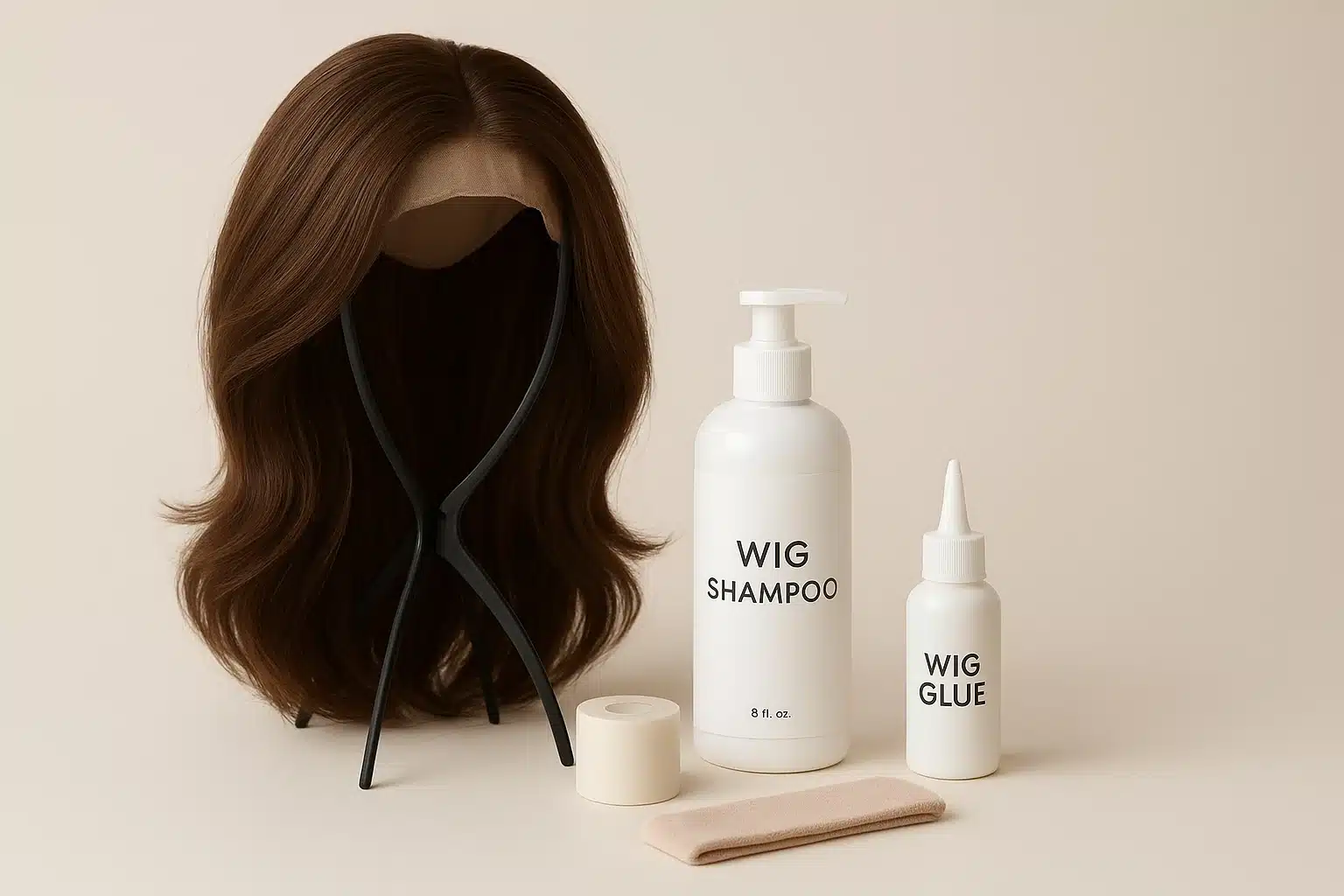
Imagine investing in a beautifully crafted, $500 lace-front wig that makes you feel confident, radiant, and totally yourself. Now imagine that same wig degrading within 30 days—the lace tearing, the fibers turning stiff, and the cap smelling faintly of mildew. This heartbreaking scenario happens entirely too often, and it almost never has to do with the quality of the hair. Instead, it comes down to a crucial, often overlooked layer of alternative hair ownership: the accessories, adhesives, and aftercare products you use every single day.
Wig accessories represent the critical foundation that determines whether your hair looks flawless for years or falls apart in weeks. For many beginners, stepping into a local beauty supply shop is overwhelming. Aisles are packed with bottles promising “ultimate hold” and “miracle conditioning,” leaving you guessing which products are actually safe for delicate hand-tied knots. Before venturing out, it helps to understand your foundational options. Learning how to evaluate local neighborhood boutiques by reading a guide on finding the best wig stores in Louisville, KY, gives you the criteria needed to identify which local storefronts carry medical-grade, fiber-safe supplies.
Let’s bridge the gap between digital knowledge and physical product acquisition by breaking down the chemistry, mechanics, and local Louisville availability of the essential accessories every wig wearer needs.
The Big Decision: Navigating Wig Glue, Tape, and Grip Bands
One of the most common questions beginners ask is, “Which is better: wig glue or tape?” The truth is, there is no one-size-fits-all answer. Your perfect match depends on your skin chemistry, your lace type, and surprisingly, the weather. The famous humidity of the Ohio Valley makes adhesive selection particularly important for Kentucky residents.
The Adhesion Hierarchy
1. Velvet Grip Bands (The Zero-Chemical Solution)For daily wearers, those with sensitive scalps, or individuals experiencing medical hair loss, velvet wig grips are a revelation. These adjustable bands use the directional friction of crushed velvet to lock your wig in place without a single drop of adhesive. They completely eliminate chemical exposure and protect your fragile hairline from tension alopecia (hair loss caused by pulling).
2. Tapes vs. Liquid Bonding (Combating Kentucky Humidity)When you need extra security, it’s time to look at hairpiece adhesives. The general consensus on internet forums is that “glue is always stronger than tape,” but this is a misconception.
- Water-Based Glues (e.g., Ghost Bond): These are fantastic, beginner-friendly options for a 1- to 4-day hold. They clean up easily, but they are highly susceptible to moisture. On a sweltering July day in Louisville, sweat and high humidity can cause water-based liquid adhesives to break down and slip.
- Acrylic Tapes & Glues (e.g., Ultra Hold): Designed for extended wear (1 to 3 weeks), these acrylic-based formulas create a waterproof bond. A double-sided acrylic tape often holds up better against humidity than a water-based liquid.
3. Medical-Grade ProtectionIf you require long-term hold but have easily irritated skin, choosing a hypoallergenic wig glue or using a specialized skin-barrier spray (scalp protector) before applying acrylic adhesives will prevent contact dermatitis while ensuring your wig stays perfectly in place.
The Anatomy of Wig Stands: Drying, Storing, and Styling
It is a common sight in bedrooms across the country: a freshly washed wig perched on top of a solid styrofoam head. While popular, this is one of the most damaging mistakes a wig wearer can make.
The Drying Stand Hazard
When you place a damp wig on a solid polystyrene (styrofoam) head, you completely block airflow through the delicate lace or wefted cap. Without ventilation, moisture becomes trapped against the solid foam, creating a breeding ground for bacterial growth and mildew. Furthermore, styrofoam heads are often slightly larger than the average human head, meaning they will permanently stretch out the elastic components of your wig cap as it dries.
Choosing the Right Stand for the Job
- Collapsible Plastic Stands: These open-air frames are mandatory for air-drying a wet wig. They allow 360-degree air circulation so the cap dries quickly and hygienically without stretching the tension bands.
- Canvas Mannequin Blocks: Stuffed tightly with cork and wrapped in canvas, these heavy blocks are designed for styling, cutting, and heat application. You pin your dry wig to the canvas block so it stays perfectly still while you use styling tools.
- Styrofoam Heads: Reserve these exclusively for displaying completely dry, inexpensive wigs.
Fiber Chemistry: Demystifying Specialized Wig Care
Mastering wig care requires an understanding of what your wig is actually made of. Many beginners assume they can wash their alternative hair with standard drugstore shampoo or—as often misguidedly suggested online—Dawn dish soap.
Synthetic Hair vs. Human Hair
Human hair wigs require ultra-hydrating, sulfate-free shampoos and deep conditioners because the hair is no longer receiving natural sebum (oils) from a scalp.
Synthetic wigs, however, are made from modacrylic fibers (essentially high-quality plastics). They do not absorb moisture the way human hair does. If you use regular human hair conditioner on a synthetic wig, it will just coat the fibers in a dull, heavy film. Synthetic fibers require specialized surfactant cleansers designed to lift away dirt and environmental odors without stripping the style memory baked into the fibers.
The Fabric Softener Myth
A popular internet “hack” suggests soaking stiff synthetic wigs in liquid fabric softener to revive them. Please, don’t do this! While it may feel softer for a day, fabric softeners contain non-water-soluble waxes. Over time, these waxes build up on the synthetic fibers, acting as a magnet for dust, dirt, and pollution. Eventually, your wig will become stiff, matted, and ruined. Stick to detangling mists explicitly formulated for synthetic hair.
Safe Removal: The Science of Solvents and Saving Your Lace
Applying your wig securely is only half the battle; taking it off safely is where the real skill lies. Wearers frequently ruin expensive lace-fronts by scrubbing adhesives with water or standard rubbing alcohol, tearing the delicate Swiss lace in the process.
To dissolve tape or glue residue without ripping out hand-tied knots or your natural edges, you must match the solvent to the adhesive base:
- Citrus-Based Solvents (like C-22): Excellent for breaking down heavy-duty acrylic glues and tapes. They are oil-based, meaning they moisturize the skin while breaking the adhesive bond, though they require washing the cap afterward to remove the oily residue.
- Alcohol-Based Release Agents: Ideal for breaking the bond of water-based adhesives. They evaporate quickly, making cleanup a breeze.
The Golden Rule of Removal: Never peel the lace dry. Spray your lace release or solvent through the hair from the top down. Allow it to sit for 1 to 3 minutes, letting the chemistry do the work. The lace should lift away from the scalp with zero tension.
Where to Source Wig Accessories in Louisville, KY
Searching online for “wig stores near me” often yields a mix of high-end salons and generic beauty supplies. Knowing exactly where to go in Louisville based on what you need can save you hours of driving.
- East End & St. Matthews: Shops in this corridor often cater to medical hair loss and premium human hair. This is your best destination for finding medical-grade velvet grip bands, hypoallergenic scalp protectors, and high-quality canvas styling blocks.
- South Louisville & Preston Highway: If you need a massive selection of adhesives, tapes, and specialty solvents, the beauty supply outlets dotting Preston Highway and 7th Street Road are treasure troves. You’ll easily find different contours of double-sided tape (C, CC, and straight curves) here.
- West Louisville & Cane Run Road: Local beauty hubs in this area are excellent for stocking up on daily essentials. This is where you can easily find affordable collapsible drying stands, basic wig caps, and synthetic-safe detangling sprays.
Your Wig Wearer’s Emergency Kit
No matter how well you apply your wig, life happens. Kentucky weather shifts, you get caught in a rainstorm, or you simply perspire more than expected. Every wig wearer should keep a small “Emergency Toolkit” in their purse or car:
- A mini spray bottle of solvent (like C-22) for safe mid-day adjustments
- Pre-cut contour tapes for quick edge-tacking
- A travel-sized synthetic or human-hair detangling mist
- A wide-tooth comb or loop brush (standard brushes will pull and snap wig fibers)
- A spare nylon wig cap
Frequently Asked Questions (FAQ)
Can I sleep in my wig?
While acrylic tapes and glues allow for extended, multi-day wear (including sleeping), it is highly recommended to sleep in a silk bonnet or on a silk pillowcase to prevent friction. If you wear your wig daily using a grip band, you should take it off at night and place it on a collapsible stand to prolong its lifespan.
How often should I wash my wig?
Less is more! Over-washing fades color and degrades fibers. If you wear the wig daily, aim to wash it every 8 to 10 wears. Using a wig cap underneath will absorb scalp oils and sweat, keeping the cap of the wig cleaner for longer.
Why is my lace front lifting at the edges?
This is typically caused by three things: applying liquid adhesive directly to the lace instead of your skin, failing to clean the skin with 99% alcohol before applying adhesive (skin oils block adhesion), or using a water-based adhesive on a highly humid day.
Is it safe to use heat on my synthetic wig?
Only if the wig is explicitly labeled as “Heat-Friendly” or “Heat-Defiant.” Standard synthetic wigs will melt instantly if exposed to curling irons, flat irons, or even the blast of an open oven door. Always check the manufacturer’s fiber specs before applying heat.
Continuing Your Journey
Understanding the chemistry of your adhesives, the mechanics of your stands, and the specific needs of your hair fibers transforms wig wearing from a daily struggle into a seamless, confident routine. When you treat your wig with the right accessories, it rewards you with longevity, comfort, and breathtaking realism. Take the time to explore Louisville’s rich landscape of wig boutiques, build your accessory toolkit, and embrace the beautiful journey of alternative hair.