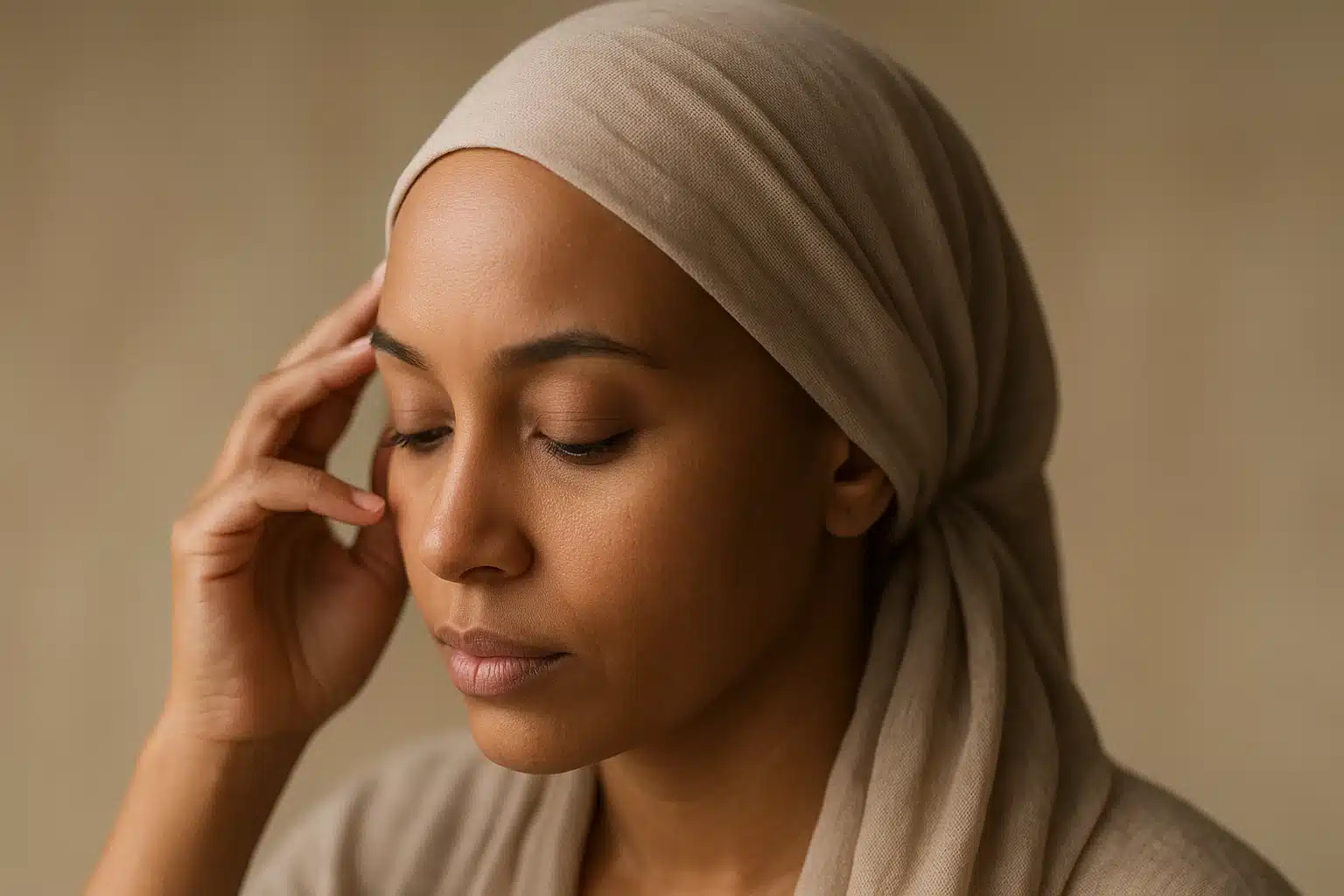
For many of us, hair is far more than just biological strands of keratin. It is a profound medium of spiritual devotion, a living map of our cultural heritage, and a beautifully woven symbol of social belonging. When you begin noticing extra shedding in the shower or thinning at your hairline, the initial panic is rarely just about aesthetics. It often strikes much deeper, triggering complex questions about your identity, your community, and how you show up in the world.
If you are already exploring the emotional attachment to hair and how deeply intertwined it is with our sense of self, you understand that losing it can feel like a profound rupture. For individuals within specific religious and cultural communities, this experience isn’t merely a physical change—it can feel like an existential crisis that threatens your alignment with community norms, sacred vows, and personal heritage.
Navigating hair loss while honoring your cultural or religious traditions doesn’t have to be a choice between your faith and your physical health. By understanding the intersection of scalp biology and cultural practice, you can find empowering ways to preserve both.
Biology vs. Custom: Deciphering the Hair Loss Spectrum
To understand how to protect your hair, we first need to distinguish between natural biology and mechanical stress. Many people confuse generalized hair thinning with style-induced hair loss.
- Normal Hair Loss vs. Balding: It is entirely normal to shed between 50 to 100 hairs a day. Temporary shedding (known as telogen effluvium) can happen after an illness, stress, or a major life event—this is “hair loss but not balding.” Progressive scalp balding, however, is typically genetic and causes hair follicles to miniaturize over time.
- Mechanical Hair Loss (The Traction Paradox): This is where cultural practices often intersect with hair health. Mechanical hair loss happens in two main ways: Friction (the constant rubbing of a wig cap, hijab under-cap, or scarf against the hairline) and Tension (the continuous pulling of a tight bun under a turban or heavy protective braids). Both can destroy the follicle over time, leading to what dermatologists call traction or friction alopecia.
The good news? Mechanical hair loss is highly preventable with the right micro-adjustments to how you wear your traditional styles.
How Hair Loss Intersects with Cultural and Religious Practices
Let’s explore how different communities experience hair loss, the unique challenges they face, and the faith-compliant, culturally sensitive adjustments that can help.
Sikhism: Kesh, the Dastar, and Turban Alopecia
In Sikhism, maintaining uncut hair (Kesh) is a beautiful symbol of living in harmony with nature and accepting God’s will (Hukam).
The Challenge: The daily practice of tying the joora (hair knot) tightly in the exact same spot on the frontal scalp, combined with the weight of the dastar (turban), can lead to “Sikh pattern traction alopecia.” Additionally, for Sikh men, experiencing “balding beard hair loss” (whether from alopecia areata or pattern thinning) can be a profound blow to male identity and community standing.
The Compassionate Solution: If you are experiencing involuntary balding, remember that it is a natural manifestation of Hukam, not a failure of devotion. To protect the hair you have, try changing the position of your joora daily to distribute tension across different parts of the scalp. Opt for softer, breathable turban fabrics, and avoid pulling the hairline tightly when wrapping.
Islam: The Hijab, Modesty, and Hair Health
For Muslim women, the hijab is a cherished emblem of modesty, privacy, and devotion.
The Challenge: Many women experience traction alopecia along the hairline caused by wearing tight cotton under-caps and securing high-tension buns beneath their scarves. Another common culprit is wrapping wet hair; trapping moisture under the hijab can lead to seborrheic dermatitis and weakened roots.
The Compassionate Solution: Switch to bamboo or silk-lined under-caps that reduce friction against the delicate hairline. Always allow your hair to dry completely before wrapping it, and try tying loose, low-tension braids beneath your scarf instead of a tight bun. A note on restoration: When considering hair replacement, many modern Islamic jurists permit the use of synthetic wigs for medical conditions (like alopecia or chemotherapy) as a psychological necessity. Additionally, hair transplants are broadly considered halal because they use your own hair to restore the body’s natural state rather than altering God’s creation.
Orthodox Judaism: Sheitels, Tichels, and Halachic Hair Loss
For married Orthodox Jewish women, covering the hair (tzeniut) is a profound act of modesty and marital sanctification.
The Challenge: Recent clinical surveys document a direct link between the daily wearing of a sheitel (wig) or tichel (headscarf) and hairline alopecia. Heavy sheitels secured with tight metal clips or combs create localized tension and friction that pulls at the roots.
The Compassionate Solution: Instead of clips, try wearing a velvet wig grip. This distributes the weight of the sheitel evenly across the head without tugging at individual hair follicles. Choose lightweight, breathable synthetic or highly refined human hair caps, and ensure you give your scalp regular “airing time” in the privacy of your home.
Black Culture: Braids, Locs, and the “Crown and Glory”
In Black and African-Caribbean communities, hair is historically a map of lineage, a symbol of resistance, and a canvas of self-determination. Losing this hair can feel like a systemic and historical rupture.
The Challenge: When natural hair begins to thin, the instinctive response is often to conceal it using traditional protective styles. However, adding “dreads on balding hair” or thick “braids on balding hair” creates a dangerous mechanical load. Adding the weight of extensions to already weakened hair follicles creates downward leverage that can accelerate permanent scarring (Central Centrifugal Cicatrical Alopecia, or CCCA).
The Compassionate Solution: Protective styles should actually protect. If your hair is thinning, scale down the size of your braids significantly to reduce weight. Avoid heavy hair charms, transition to natural, low-tension styles, and utilize silk or satin wraps at night to preserve moisture and minimize friction.
Native American & Indigenous Perspectives: The Spiritual Wound
In many Indigenous cultures, hair is viewed as a literal extension of the soul—a sacred vessel that stores thoughts, memories, and ancestral strength.
The Challenge: Cutting hair is typically a deliberate, sacred ritual reserved exclusively for mourning the death of an immediate loved one. When hair falls out involuntarily due to illness or balding, it can feel like a deeply traumatic, uninvited “spiritual bleed.”
The Compassionate Solution: Healing often requires addressing the spirit as much as the scalp. Engaging in traditional scalp ceremonies, utilizing ancestral herbal washes (like sweetgrass or yucca root), and reframing hair loss within the broader cycles of nature’s transformation can help bridge the gap between physical loss and spiritual peace.
Hinduism: The Ego, Tonsure, and Tejas
In Hinduism, shaving the head (Mundan) is often a child’s rite of passage to purify past-life karma, or a voluntary sacrifice at temples to shed the ego.
The Challenge: While voluntary shaving is spiritually liberating, thick, healthy hair is also viewed as a symbol of vitality and spiritual energy (tejas). Because of this, involuntary hair loss can be highly stigmatizing, creating a stark psychological contrast for those experiencing pattern baldness.
The “Aha” Moment: Adaptation, Not Abandonment
The greatest misconception in the medical community is the instruction to simply “stop wearing your head covering” or “abandon your cultural hairstyle.” That advice is culturally tone-deaf and ignores the holistic reality of who you are.
You do not have to choose between your faith and your follicles. Cultural headwear and protective styling do not inherently cause hair loss; rather, it is the mechanical execution of these practices that dictates hair health. Through education, gentle mechanical adjustments, and compassionate care, you can honor your ancestors and your traditions while deeply nurturing your scalp.
Frequently Asked Questions (FAQ)
What is the difference between normal shedding and balding?
Normal shedding involves losing about 50 to 100 hairs evenly across your head per day, and new hairs grow in to replace them. Balding, or progressive hair loss, involves the actual miniaturization of hair follicles—meaning the hair grows back thinner, shorter, and eventually stops growing altogether, usually following a specific pattern.
Is my hijab, turban, or sheitel causing my hair loss?
The fabric itself isn’t the enemy—friction and tension are. If your headwear is secured with tight clips, heavy buns, or rough under-caps that rub against your hairline all day, it can cause traction alopecia. Switching to smooth fabrics (like silk or bamboo), distributing weight evenly, and loosening your ties can completely reverse or prevent this damage.
Can I wear braids or locs to cover up my thinning hair?
It is highly recommended to avoid heavy extensions on thinning hair. When hair follicles are already weakened by genetic balding or temporary shedding, they cannot support the heavy downward pull of extension hair. This high mechanical load can permanently scar the follicle. Instead, opt for lightweight, low-tension styles.
Are hair transplants or wigs allowed in my religion?
While you should always consult with your personal religious counselor, many modern theological rulings are accommodating of medical hair loss. In Islam, modern jurists often permit synthetic wigs for medical necessity, and hair transplants are widely considered halal. In Orthodox Judaism, incredibly natural kosher sheitels are readily available. In Sikhism, treating the scalp medically is completely in line with respecting the body.
Next Steps on Your Journey
Losing your hair is a uniquely personal journey, but you never have to navigate it alone. Understanding the mechanics of your hair loss and how it intertwines with your cultural identity is the most vital first step toward reclaiming your confidence.
With nearly two decades of experience helping individuals through the emotional and physical challenges of hair loss, Wig Superstore is dedicated to providing compassionate, knowledgeable support. Whether you are seeking a lightweight, breathable solution to wear beneath religious headwear, or simply looking for educational resources to help you understand your changing hair, our goal is to ensure you feel beautiful, respected, and entirely yourself.