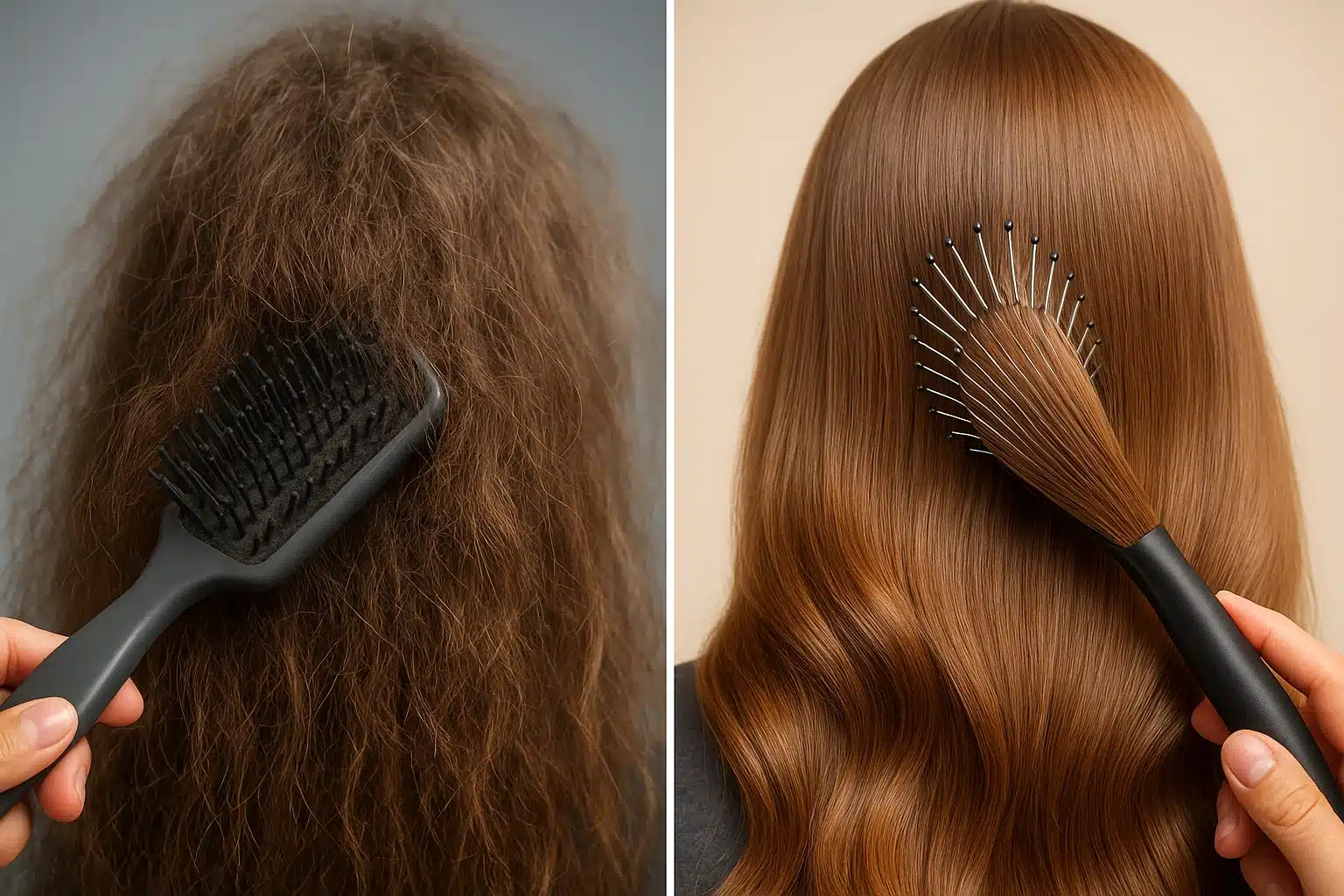
Imagine investing in a delicate, hand-woven silk tapestry, only to clean it with a stiff wire barbecue brush. It sounds disastrous, yet this is the exact level of mechanical stress many wig wearers unknowingly inflict on their hairpieces every day using standard drugstore hairbrushes. For those navigating the world of alternative hair—whether due to medical hair loss or a desire for aesthetic variety—understanding the “physics of fiber” is the difference between a wig that lasts six months and one that looks ragged in six weeks.
The truth is, wig fibers do not behave like biological hair growing from a scalp. They don’t have natural oils to lubricate the shaft, and more importantly, they don’t regenerate. Every time you pull a brush through a tangle, you are managing a finite resource. To truly master your routine and protect your investment, you should first Unlock Flawless Styles: Your Expert Guide to Wig-Safe Tools & Products, which provides the foundational knowledge required for professional-level maintenance. This guide will bridge the gap between simple detangling and the advanced restoration techniques that separate beginners from experts.
The Physics of Fiber: Why Your Standard Brush is the Enemy
To understand why specific tools are necessary, we have to look at what happens on a microscopic level when you brush a wig. Biological hair has a cuticle that can be smoothed down, but it also has elasticity and is constantly replenished by the body. Synthetic fibers and processed human hair wigs operate differently.
The Concept of Fiber Stretching
One of the most common reasons for “frizz” isn’t dryness—it’s mechanical damage caused by tension. When a standard brush with rigid bristles hits a snag in a synthetic wig, it doesn’t just pull the hair; it stretches the plastic fiber. Imagine stretching a piece of ribbon with scissors to make it curl. When you force a brush through a tangle, you are stretching the fiber beyond its elastic limit. Once that fiber relaxes, it doesn’t return to being straight; it kinks and crinkles. This is often irreversible and creates that “matted” look, particularly at the ends.
Friction and Static Electricity
Standard nylon or boar bristle brushes are friction generators. On a human head, this friction distributes natural oils. On a synthetic wig, this friction generates static electricity. Static acts like a magnet for dust and debris, and it causes fibers to repel each other, leading to flyaways and further tangling. This is why the material of your brush bristles matters just as much as the shape.
Decoding the Tools: Anatomy of a Wig-Safe Brush
Navigating the aisle of styling tools can be overwhelming. However, wig-safe tools generally fall into three specific categories, each designed to mitigate the friction and stretching issues mentioned above.
1. The Loop Brush
If you wear a wig with a monofilament top or a lace front, the loop brush is your first line of defense. Instead of straight bristles that point outward like needles, the bristles on this brush form a loop (like a croquet hoop).
- The Physics: Because there is no “tip,” the bristle cannot accidentally dive into the mesh cap and snag the knots.
- Best Use: Ideal for daily brushing near the base of the wig cap without risking shedding or tearing the delicate lace.
2. The Wire-Prong Brush (with Bobble Tips)
While it sounds harsh, a metal wire brush is actually the gentlest option for synthetic fibers.
- The Physics: Metal is conductive. As the metal tines move through the synthetic hair, they help discharge the static electricity that builds up during wear. A plastic brush would only generate more static.
- Best Use: The primary tool for detangling mid-lengths and ends of synthetic wigs to prevent the “Velcro effect” caused by static.
3. The Wide-Tooth Comb
Think of this as your triage tool. Before any brushing happens, a wide-tooth comb should be used to separate large sections.
- The Physics: The wide spacing significantly reduces the tension applied to the hair, minimizing the risk of fiber stretching.
- Best Use: Detangling wet human hair wigs or styling curly textures where you want to maintain the definition of the curl pattern.
The “Bottom-Up” Mandate: A Technique for Preservation
Owning the right tools is only half the battle; how you wield them determines the lifespan of your piece. Beginners often instinctively brush from the roots down, mimicking how we are taught to brush biological hair. In the wig world, this is a critical error known as “packing.”
The Snowball Effect
When you brush from the top down, you push small, manageable tangles down the hair shaft. As these micro-tangles meet other tangles, they combine and compress. By the time you reach the ends, you have created a “snowball” knot that is so tight it requires forceful pulling to remove. This force is what snaps human hair strands or permanently stretches synthetic fibers.
The Correct Protocol
- Section the Hair: Divide the hair into manageable sections.
- Start at the Ends: Hold the hair firmly above the section you are brushing to absorb the tension (so you aren’t pulling on the cap). Brush the bottom two inches first.
- Climb the Ladder: Once the ends are clear, move up two inches and brush down.
- The “Static Check”: If you hear crackling while brushing a synthetic wig, friction is too high. Lightly rub the fiber with a dryer sheet or use a conditioning spray before continuing.
Material Matters: Synthetic vs. Human Hair Strategies
While the “bottom-up” technique applies to everything, the fiber type dictates your environmental approach to wig care.
Synthetic Fiber Care
Synthetic hair has “Style Memory,” meaning it wants to return to the shape it was baked into. However, it is also prone to “friction frizz,” especially at the nape of the neck where it rubs against collars.
- Pro Tip: Never use a boar bristle brush on synthetic hair. The texture of the natural bristle is too rough for the smooth plastic fiber and will micro-abrade the surface, leading to dullness.
- Restoration: If your synthetic wig becomes frizzy, brushing alone won’t fix it. You may need a steamer. Gently steaming the fiber while combing with a fine-tooth comb can relax the friction kinks—a process known as a “thermal reset.”
Human Hair Care
Human hair wigs are susceptible to mechanical breakage, especially when wet. Biological hair absorbs water and swells, lifting the cuticle and making it fragile.
- The Wet Rule: Exercise extreme caution when brushing a wet human hair wig. Use only a wide-tooth comb and a leave-in conditioner to provide slip.
- Hydration: Since there are no scalp oils traveling down the shaft, you must use products that add moisture without weighing the hair down.
Special Cases: Textures and Cosplay
Not all wigs are straight bobs. Different textures require specialized wig maintenance to preserve their look.
Curly and Afro Textures
For tight curls, ginger afros, or high-density textures, put the brush away entirely. Brushes will separate the curls, creating a massive cloud of undefined frizz.
- Technique: Use your fingers to gently detangle (finger-combing). If you must use a tool, use a very wide-tooth pick and only when the hair is wet and coated with conditioner.
Cosplay and Heavy Styling
For highly stylized wigs (like the gravity-defying spikes of a “Deku” wig or intricate braids), the structure is held by strong-hold sprays.
- Technique: Do not try to brush through heavy styling products. You will rip the fiber. These wigs often require washing to dissolve the product before they can be detangled and restyled.
FAQ: Common Questions on Fiber Maintenance
Q: Can I use a regular drugstore brush on my wig?
A: It is highly discouraged. Most drugstore brushes use plastic bristles with seams that can snag hair, or boar bristles that create too much tension and static. Using these can shorten the lifespan of your wig significantly.
Q: Why is my wig matting at the nape of the neck?
A: This is caused by friction from your body heat and movement against your clothing. It’s inevitable, but manageable. excessive brushing won’t fix it; you need to detangle daily and occasionally use steam (for heat-friendly synthetics) to smooth the fibers back down.
Q: How often should I brush my wig?
A: You should gently detangle your wig after every wear. Leaving tangles in overnight allows them to “set” and become more difficult to remove later.
Conclusion
Caring for a wig is an art form that blends patience with a bit of science. By understanding the physics of fiber stretching and the importance of static reduction, you shift from simply “fixing hair” to actively preserving the life and beauty of your piece.
Remember, the goal isn’t just to remove tangles—it’s to do so without altering the integrity of the fiber. With the right tools and the bottom-up technique, you ensure that your wig remains a source of confidence and beauty for months to come. If you are ready to explore the specific tools mentioned here, take the time to evaluate what matches your specific fiber type best.