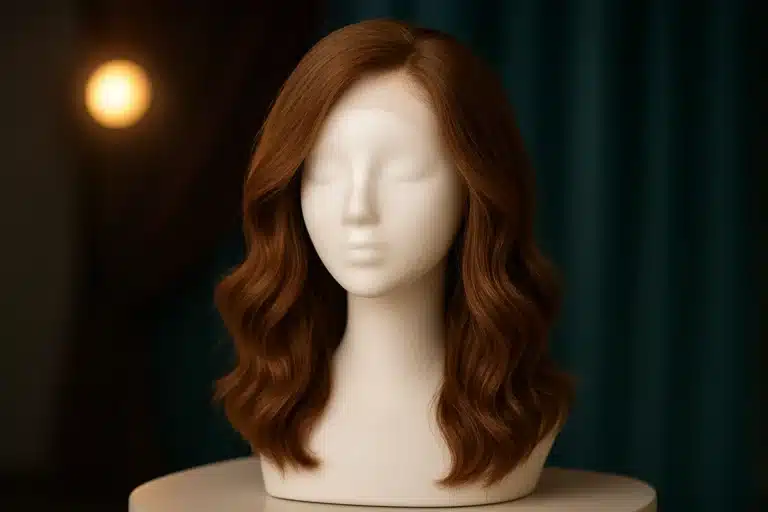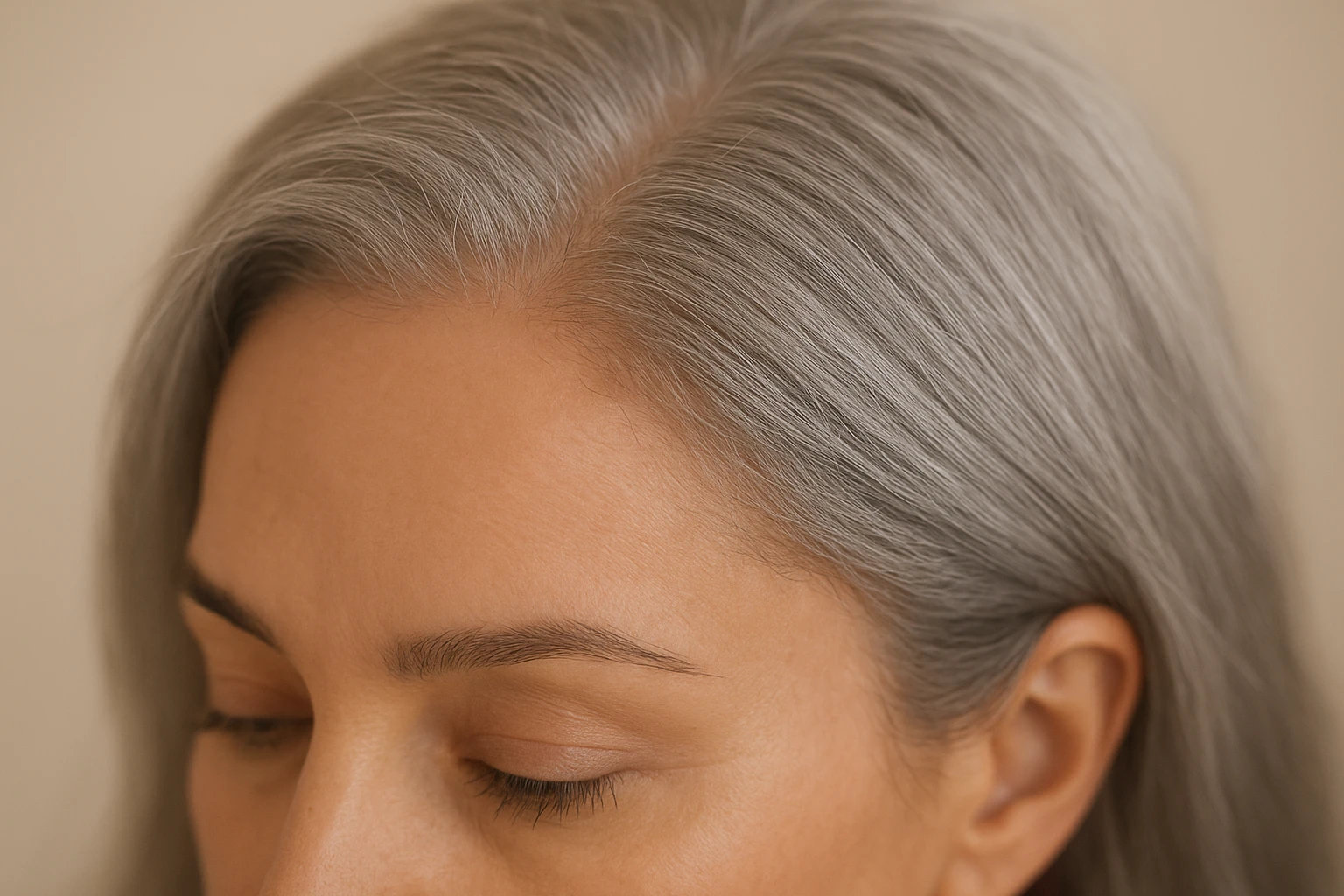
Gray is the least forgiving color a wig can come in. A brown wig with a so-so hairline can pass in a crowd, but a gray one with the same flaw looks like a costume from across the room. If you're thinking about gray, whether you love the look or just want to try it before you commit your own hair, you deserve to know what separates the convincing ones from the rest.
Gray lace front wigs look most natural when three things line up: a thin, sheer lace at the hairline, a moderate density of roughly 120% to 130%, and color that was made carefully, either from naturally gray hair or from hair that was lightened before it was toned. Gray hair also yellows more easily than darker shades, so sun protection, gentle washing, and soft water matter for keeping it bright.
In this article
- Why gray lace front wigs are having a moment
- How gray and silver color is actually made in a human hair wig
- Why gray hair looks and behaves differently
- The four types of gray wigs
- What makes a gray lace front look real instead of costume-like
- Why gray wigs turn yellow or dull, and how to stop it
- Lace front downsides worth knowing before you buy
- Frequently Asked Questions
- Where to go next
Why gray lace front wigs are having a moment
Gray is being chosen on purpose now, not just tolerated. Beauty coverage from Axios and Oprah Daily in 2026 describes a clear shift toward "gray blending" and silver as a deliberate style, with more salons offering services that soften the grow-out line and more younger women wearing visible silver streaks by choice.
A wig lets you get there without the commitment.
Going gray on your own head can mean months of grow-out, or a heavy lightening process that's hard to undo. A gray lace front lets you see the color on your face, in your own mirror and your own lighting, before you decide anything about your natural hair. And if you're dealing with hair loss, it gives you a gray that matches where you are in life, instead of a shade you'd have to explain.
How gray and silver color is actually made in a human hair wig
Gray in a human hair wig comes from one of three places. Some wigs use hair that grew in naturally gray or white. Some blend strands of different natural colors to build a mixed, salt-and-pepper effect. The rest start with darker hair that's been lightened first and then dyed or toned to silver.
That last route is the most common, and it's where quality shows. According to L'Oréal Paris's expert guide to silver hair, dark hair generally has to be lifted before a silver tone will show properly. Toner laid over hair that wasn't lightened enough tends to look muddy or brassy instead of cool and clean.
So when you're comparing gray wigs, it's fair to ask how the color was achieved. A seller who knows their products can tell you.
You'll also find gray lace front wigs in synthetic fiber. This guide focuses on human hair, but if you're weighing the two, our guide to human hair versus synthetic wigs covers how they differ.
Why gray hair looks and behaves differently
Gray and white hair has little to no melanin, the pigment that gives hair its color. That's the plain reason gray needs different handling than brown or black to look real.
Without that pigment, gray hair is often described as coarser and less reflective than pigmented hair. It catches light differently. It shows flaws differently too. A knot at the hairline that disappears under dark hair can stand out under silver, and a density that looks full in dark brown can look thinner in white, because lighter strands read as less dense at the same percentage.
Keep this in mind as you read the rest of this guide. Almost every choice below (lace, density, care) comes back to it.
The four types of gray wigs
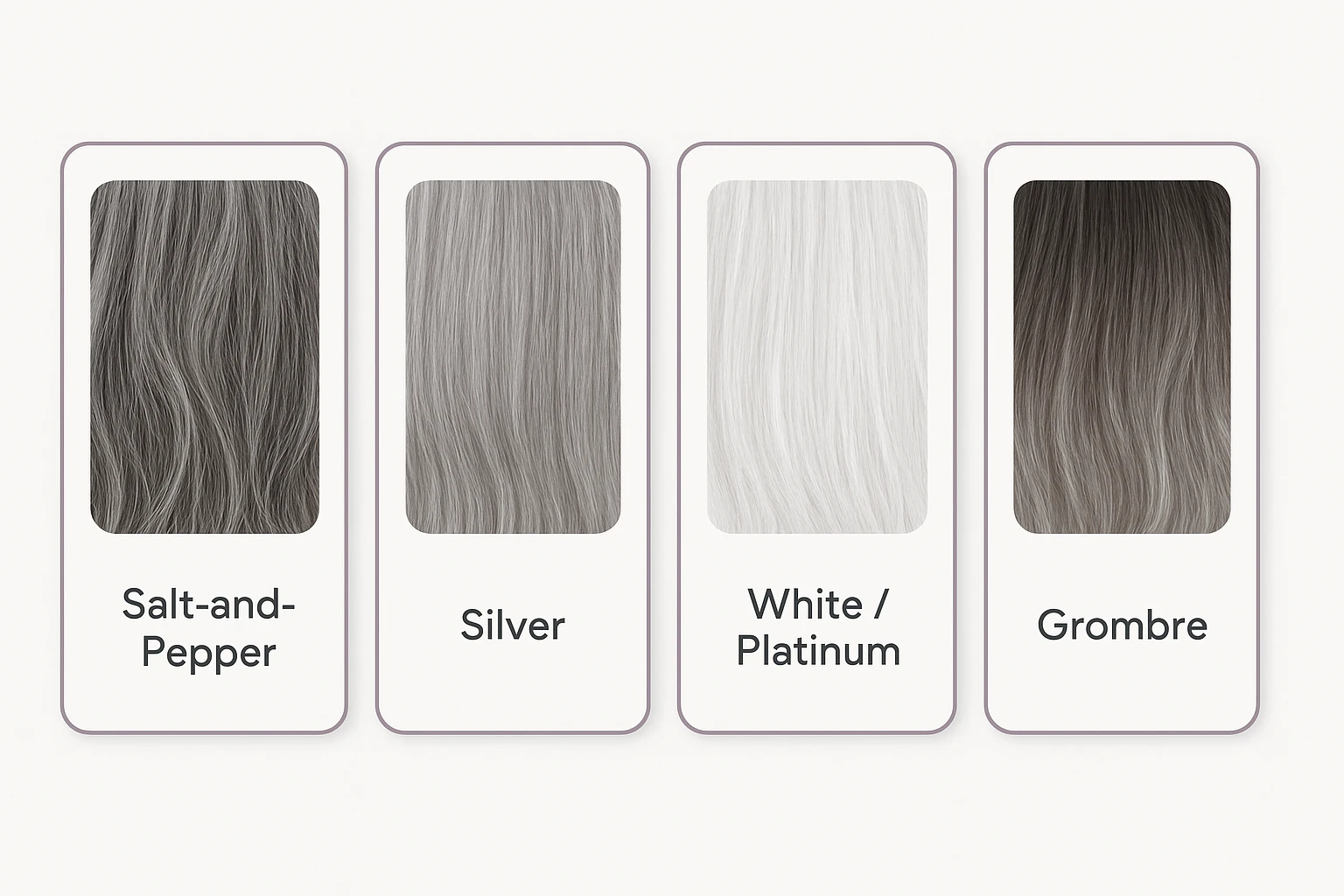
Salt-and-pepper, silver, white/platinum, and grombre — the four shade families most gray wigs fall into, from softest to most striking.
Gray wigs generally fall into four shade families. Knowing the names makes shopping much easier, because every store and product page seems to use its own.
- Salt-and-pepper. A mix of gray with darker strands, the way real graying usually happens. This is often the most believable choice if you want a gray that looks like it grew in on its own.
- Silver. A true, even medium gray. Clean and modern, and a strong fashion choice.
- White or platinum. The lightest, iciest end of the range. Striking, but it's the least forgiving shade for hairline and density flaws.
- Grombre. Darker roots that fade gradually into gray ends, sometimes sold as a gray gradient or ombre. The darker root can hide the lace line and make the whole look feel lived-in.
Within those families you'll also see words like ash, charcoal, and light or dark gray used to describe the undertone.
Texture and length change how each shade reads. A straight gray bob shows every bit of the color's cool tone, while a wavy or longer style breaks up the light and can look softer. If you want a softer frame around your face, our human hair wigs with bangs guide covers how bangs pair with a lace front.
What makes a gray lace front look real instead of costume-like
A gray lace front looks real when the hairline disappears and the fullness matches what gray hair looks like in real life. Get those two right and most people won't look twice.
The lace
The most natural-looking hairline comes from a lace front wig with very thin lace, often called HD or clear lace, paired with a properly "melted" hairline. Sheer lace at the front lets the knots blend into your skin, so the hair looks like it's growing from your scalp. This matters even more with gray, since there's no dark color to hide a visible knot line.
If realism at the part is important to you too, look at the top of the wig. A monofilament or silk top affects how natural the part and scalp area look more than it affects the front hairline.
The density
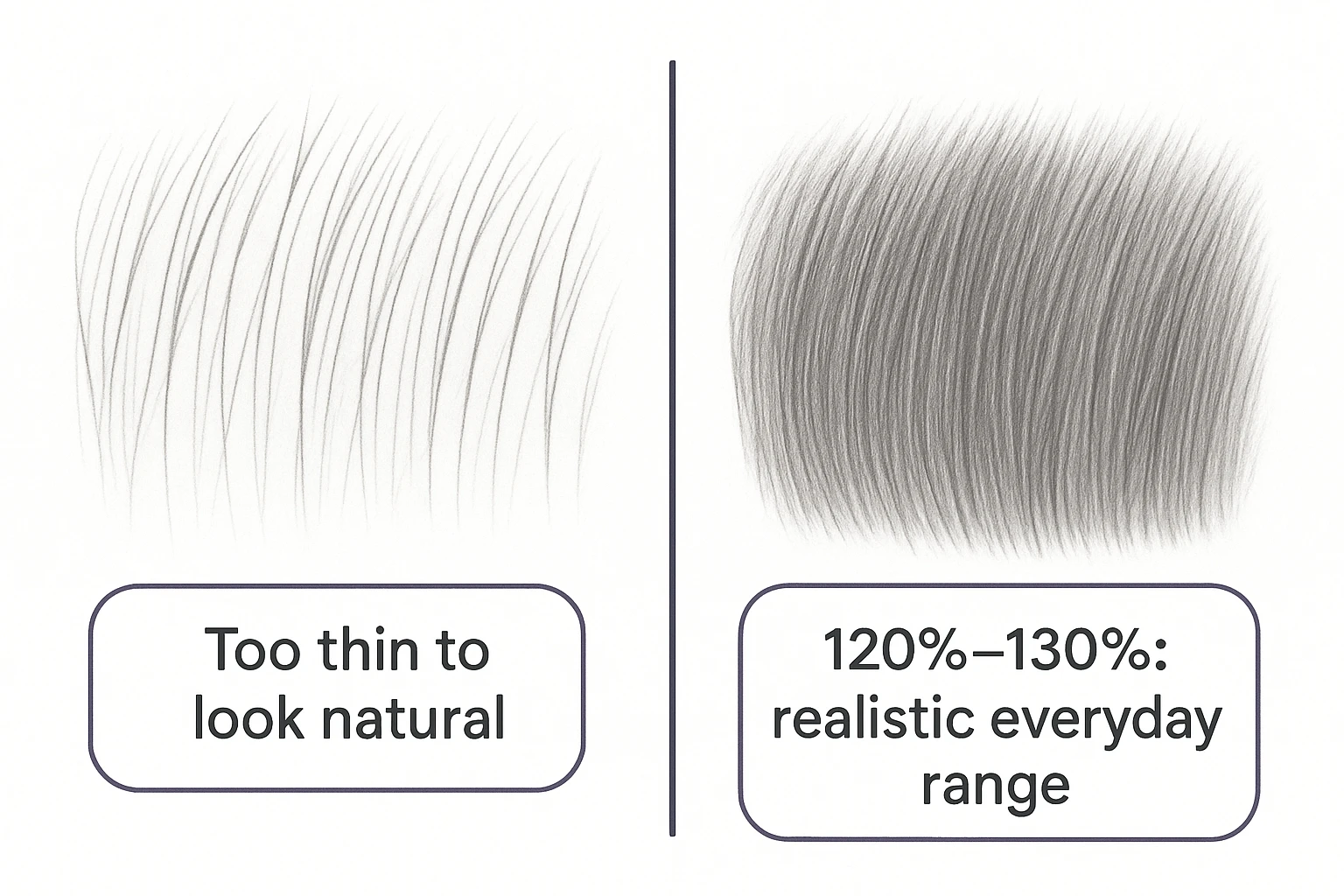
Density reads differently on gray hair than on dark hair — this shows how roughly 120% to 130% compares to a much lower and much higher density side by side.
Density is where a lot of gray wigs go wrong. Most wig-density guides recommend roughly 100% to 130% for a natural gray look, and 120% to 130% is the safest range for realistic everyday wear.
Go much below 100% and gray can look thin or see-through. Go well above 130% and it can look fuller than gray hair usually grows. That said, sources don't fully agree on the top end, and some suggest 150% to 180% for a deliberately fuller look. That's a style choice, not a mistake. Density varies a lot from wig to wig, so if you want the most natural gray, check the number before you buy rather than assuming.
Why gray wigs turn yellow or dull, and how to stop it
Gray wigs yellow or go dull because of what they're exposed to: sun, product buildup, hard water, chlorine, smoke, and heat. Every one of those shows up faster on gray than on darker hair.
Here's what's behind each one, according to industry care guides:
- Sun. UV exposure chemically changes the proteins in hair and makes it more porous, which leaves it prone to yellowing.
- Product buildup. Shampoo, conditioner, and styling residue collects on the strands and dulls the color.
- Hard water. Minerals in the water can leave a film that shifts the tone.
- Chlorine. Pool water can discolor light hair.
- Smoke and pollution. Both can leave a dingy cast.
- Heat styling. High heat can contribute to yellowing over time.
How to keep gray bright
- Store the wig out of direct sun when you're not wearing it.
- Wash with a clear, residue-free, wig-safe shampoo, and go light on styling products.
- Use soft or filtered water when you can.
- Rinse right away after any chlorine exposure.
- Keep heat styling on low.
One thing to know going in: there's no single fix that reliably reverses sun yellowing once it's set in. Dullness from buildup responds much better to a gentle clarifying wash than sun or oxidation damage does. Prevention is really your best tool here.
Lace front downsides worth knowing before you buy
Lace fronts are the most realistic option for most people, but they come with tradeoffs. If a lace front won't suit your budget or routine, it's better to know that now.
- Cost. Lace fronts generally cost more than standard wigs, so it's worth comparing price carefully and watching for a sale if the budget is tight.
- Upkeep. They need more care: regular cleaning, gentle lace handling, and reapplying adhesive if you use it.
- Fragile lace. The thin lace that makes the hairline look real can tear if it's handled roughly.
- A learning curve. Getting the hairline to lay right takes practice, especially if you're new to lace fronts.
- Skin sensitivity. Some people react to wig adhesives.
None of these are deal-breakers for most wearers. They're just the real cost of a hairline that looks like your own.
Frequently Asked Questions
What are the downsides of lace front wigs?
Lace front wigs cost more than standard wigs and need more maintenance, including cleaning, lace care, and reapplying adhesive. The lace is delicate and can tear if mishandled, there's a learning curve to installing one so the hairline looks right, and some wearers get skin irritation from adhesives.
What type of wig looks the most realistic?
A lace front wig with very thin, sheer lace (HD or clear lace) and a properly plucked and melted hairline looks the most realistic. The thin lace lets the knots disappear against your skin, so the hair looks like it's growing from your scalp. For gray hair, pair that with a density around 120% to 130%.
What are the different types of gray wigs?
The four main types of gray wigs are salt-and-pepper (gray mixed with darker strands), silver (an even medium gray), white or platinum (the lightest, iciest shades), and grombre (darker roots that fade into gray ends). Salt-and-pepper tends to look the most like natural graying.
Where to go next
The right gray wig starts with the same basics as any good lace front: the lace, the hair, and the fit. Our guide to human hair lace front wigs covers those fundamentals in more depth, and if the thin, sheer lace matters most to you, our glueless HD lace wigs let you see that hairline in person.
When you're ready to shop, take three questions with you to the lace front wigs we feature in gray and silver. How was the color made? What lace does it use? What density is it built at? When all three line up, you get a gray that looks like it's always been yours.