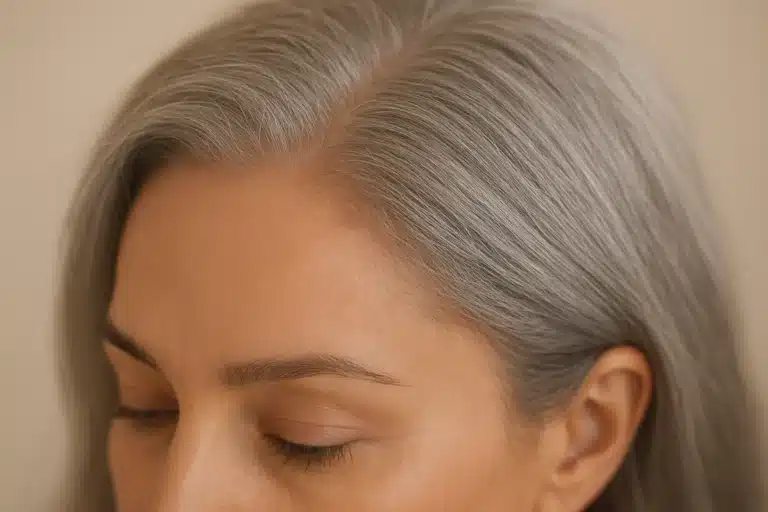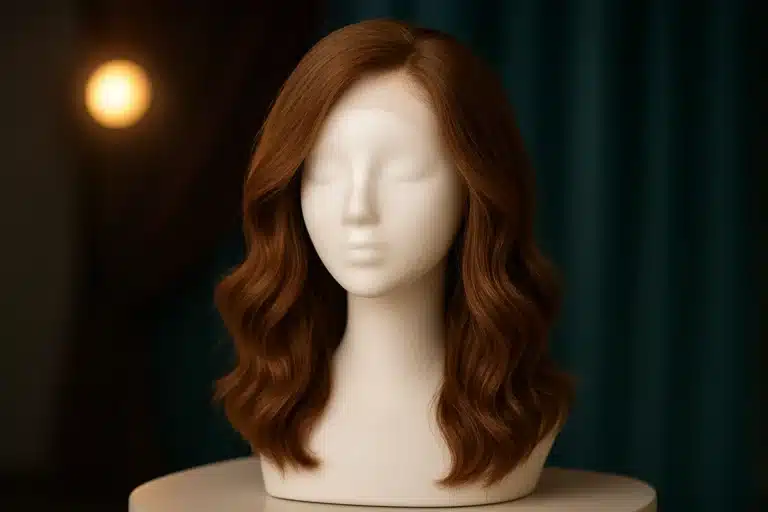
A fringe can make a wig look more natural overnight. It can also make it look like a costume, and that's exactly the fear that stops a lot of people from trying one.
So which way will it go for you? That comes down to a handful of choices you can make before you ever buy: the fringe style, the lace and density underneath it, and who does the cutting.
In this article
- Do You Need Bangs on a Human Hair Wig?
- The Main Fringe Styles: Curtain, Wispy, Blunt, and Side-Swept
- Can Bangs Hide an Imperfect Hairline?
- What Actually Makes Bangs Look Natural
- Who Should Think Twice About a Fringe
- Trimming and Styling Your Bangs: DIY or Stylist?
- Frequently Asked Questions
- Finding Your Fringe
Human hair wigs with bangs can look very natural, because the fringe covers the forehead area where lace and hairline are easiest to spot. The best results come from matching the fringe style to your face shape (curtain and wispy bangs are the most forgiving), choosing fine lace with bleached knots and a natural density, and keeping trims small. Bangs hide a lot, but they won't fix a poorly made wig.
Do You Need Bangs on a Human Hair Wig?
You don't need bangs, but they're one of the simplest ways to make a wig look like your own hair. On a bangless wig, the hairline and the edge of the lace do all the work. A fringe takes that pressure off.
That matters for two very different readers.
If you're dealing with hair loss, a fringe can take the hairline out of the conversation entirely. Nobody studies where your hair starts when it starts under a soft layer of bangs. If you're simply after a new look, bangs are a way to try a style you might never commit to with your own hair, with none of the awkward grow-out months.
A well-made lace front without bangs can look every bit as natural. Bangs are a shortcut to realism, not the only road to it. If you love an exposed hairline and a middle part, a quality lace wig with a good front hairline will get you there too.
The Main Fringe Styles: Curtain, Wispy, Blunt, and Side-Swept
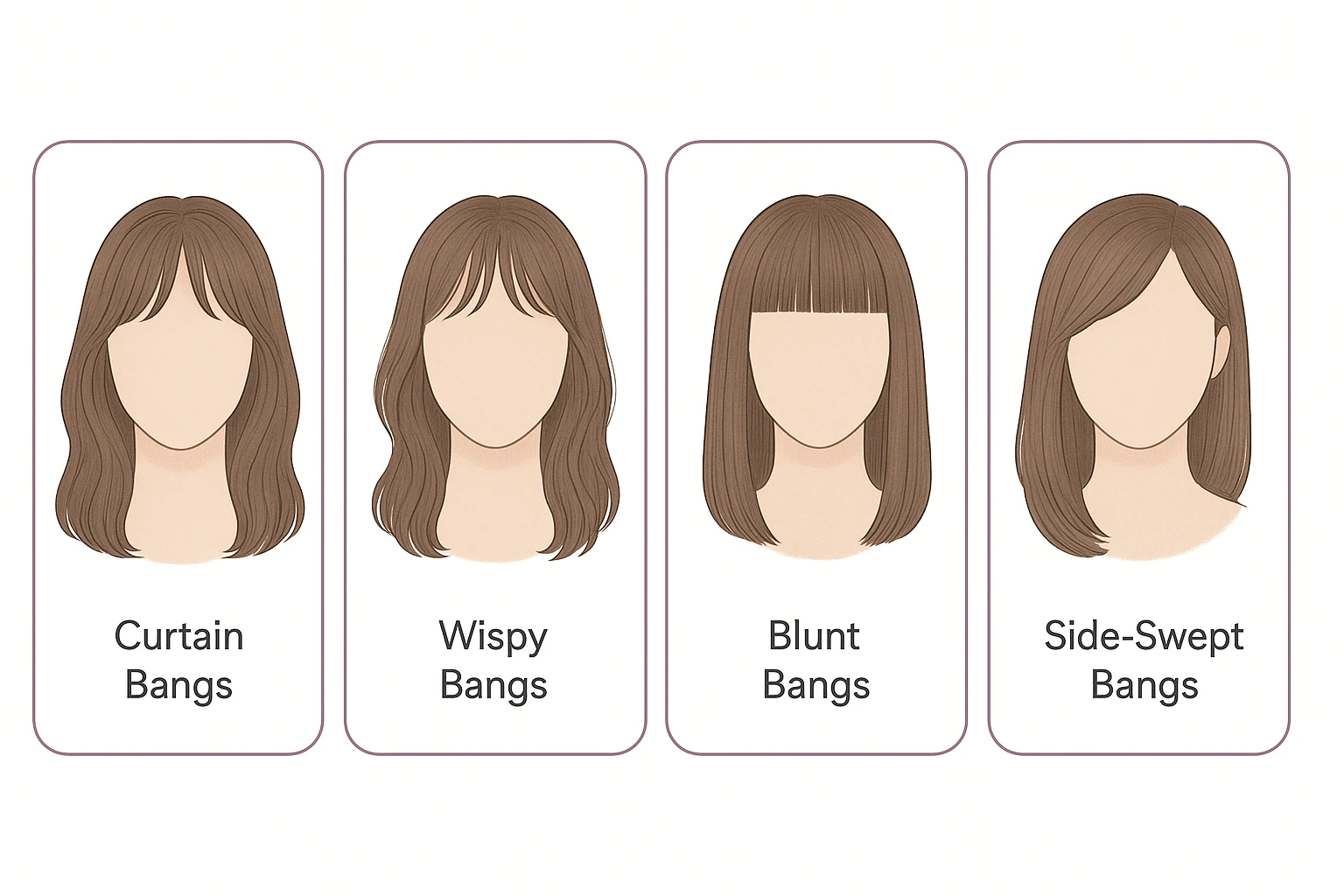
Four fringe styles, four different looks — curtain and wispy are the softest and most forgiving to blend.
There are four main fringe styles on wigs, and they differ in how much forehead they cover, how soft they look, and how much upkeep they need. Here's how each one behaves on a human hair wig with bangs.
Style 1: Curtain Bangs
Curtain bangs part in the center and sweep out toward the cheekbones, framing the face on both sides. They're the most forgiving style to blend, which makes them a strong first choice if you've never worn a wig with bangs before. They also pair well with human hair lace front wigs, since the part can sit right where the lace is finest. Curtain bangs work on longer lengths and on a bob wig alike.
Style 2: Wispy Bangs
Wispy bangs are light and airy, with some forehead showing through. They read as soft and lived-in rather than styled. Because there's less hair in the fringe, they need a wig with decent density at the front so they don't look sparse.
Style 3: Blunt Bangs
Blunt bangs are cut straight across in one solid line. They make a bold statement and give the most coverage, which is useful if you want the whole hairline hidden. The tradeoff is upkeep: blunt bangs need the most precise trimming of the four, and an uneven line is easy to see.
Style 4: Side-Swept Bangs
Side-swept bangs fall diagonally across the forehead from a side part. They soften strong angles in the face and grow out gracefully, so they're a relaxed, low-risk choice. They also blend nicely into longer layers.
What's Trending in 2026
Fringe trends this year lean softer. Curtain bangs are still a leading style, wispy bangs are especially popular, and a longer fringe that skims the brows or eyes is showing up more often than heavy blunt bangs, according to fall 2026 trend coverage from Cosmopolitan, Who What Wear, and Allure. That's handy for wig wearers, since the softer styles are also the easiest to make look real.
Can Bangs Hide an Imperfect Hairline?
Yes, bangs can help disguise a hairline that's uneven, thinning, or sitting slightly too far forward or back. The fringe covers the part of the forehead where the lace edge and hairline are most visible, so small placement errors mostly disappear.
There's an important limit, though.
Bangs mask a construction problem. They don't fix it. L'Oréal Paris makes the same point in its guidance on making a lace front look natural: a thin or poorly cut fringe can still look obvious. If the lace is thick or the knots are dark, you may still see it at the temples or through a wispy fringe.
So think of bangs as insurance, not a repair. Start with a wig that looks good on its own, then let the fringe give you extra room for error.
What Actually Makes Bangs Look Natural
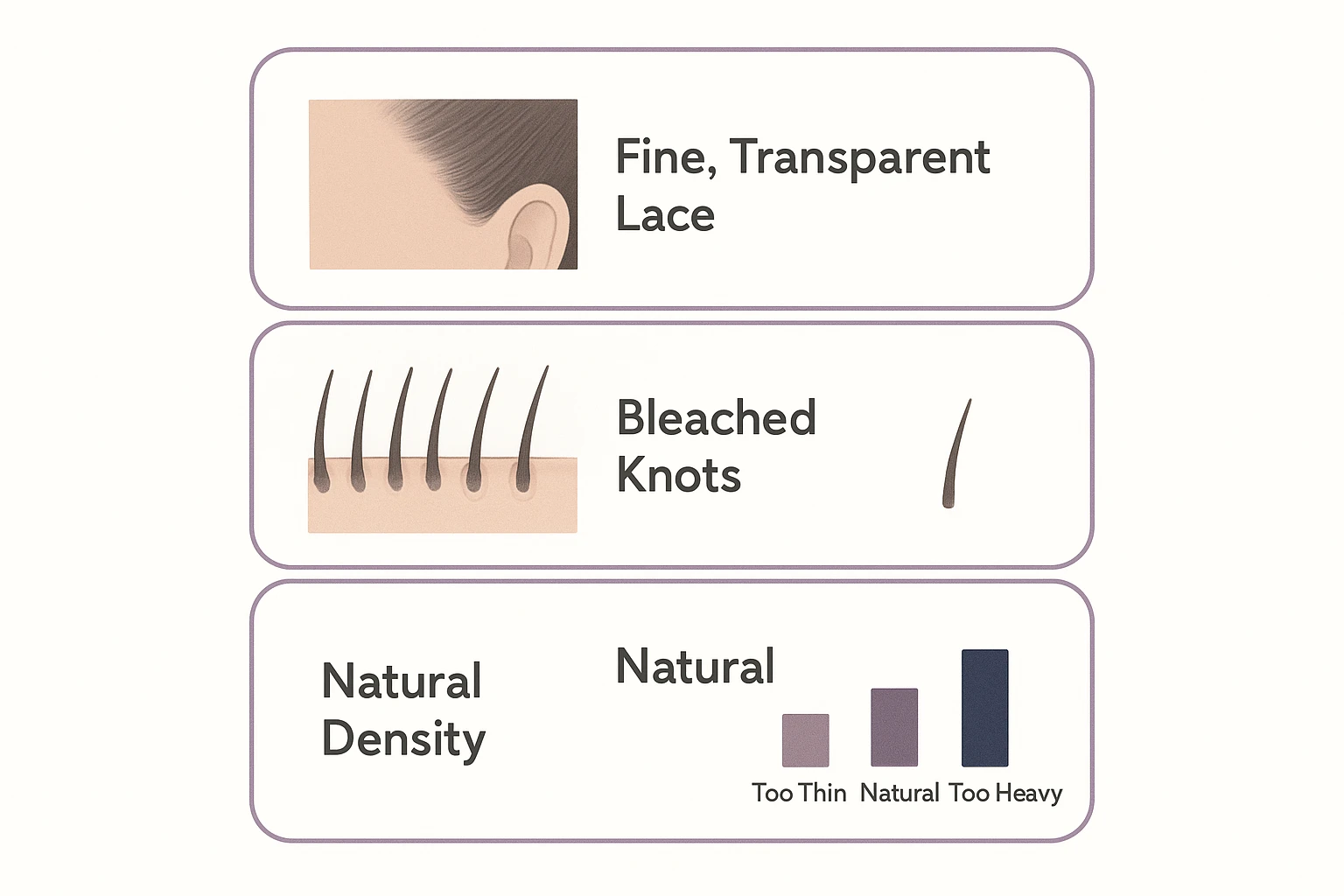
Realistic bangs come down to construction, not just the hair itself — fine lace, bleached knots, and the right density.
Natural-looking bangs depend less on the hair and more on how the wig is built. A wig can be 100% human hair and still look obvious if the lace, knots, or density are wrong. These are the four checks worth running on any wig with bangs.
Check 1: The Lace Type
Fine, transparent lace (often sold as HD or Swiss lace) melts into the skin far better than thicker lace. Even with a fringe on top, the lace still shows at the temples and around the ears. If you're comparing options, the HD vs. transparent vs. Swiss lace question is worth reading up on before you buy.
Check 2: The Knots
Every hair is knotted into the lace. Untreated knots look like tiny dark dots along the part and hairline. Bleached knots lighten those dots so the hair appears to grow straight from your scalp. This matters most with curtain bangs, where the part is on display.
Check 3: The Density
Density describes how much hair is on the cap. Too much and the fringe looks heavy and helmet-like. Too little and it lays flat and see-through. Industry guides commonly suggest a range of roughly 130% to 150% for the most natural look, and many lace fronts are made at 150% to 180%. Treat these as typical ranges, not fixed rules, since the right density also depends on your length and the style you want.
Check 4: The Cut
How the fringe is cut changes everything. Bangs that are layered or point-cut (snipped into at an angle rather than straight across) look softer and more like grown hair than one solid block. A pre-plucked hairline behind the fringe helps too, because real hairlines are never perfectly dense or perfectly straight.
Who Should Think Twice About a Fringe
Bangs suit a lot of people, but not everyone, and not every style. It's better to know that before you buy than after.
Your face shape. If you have a round or square face shape, heavy blunt bangs can make the face look wider or more angular. Softer curtain or side-swept styles usually flatter these shapes more. Here's a quick guide:
- Round: side-swept or long curtain bangs, which create angles and add length.
- Square: soft curtain or wispy bangs, which round off a strong jaw.
- Heart: wispy or side-swept bangs, which balance a wider forehead.
- Long: blunt or brow-skimming bangs, which shorten the face visually.
Your hair texture. Very fine hair under a heavy fringe can lay flat and look sparse. Very thick hair cut into short baby bangs needs a lot of thinning to lay right. Curly human hair wigs and wavy textures can wear bangs beautifully, but they shrink as they dry, so they need to be cut longer than you'd expect.
Your lifestyle. Bangs need regular trims and a little daily styling. If you want hair you can pull on and forget, a bangless glueless wig may suit your routine better.
None of this means you can't wear bangs. It just helps you pick the fringe that will actually work.
Trimming and Styling Your Bangs: DIY or Stylist?
You can handle small trims at home, but a first cut or a big change in shape is best left to a stylist. A wig doesn't grow back, so a bad cut is very hard to undo.
If You're Trimming at Home
Wig stylists commonly recommend these basics for small adjustments:
- Cut dry. Wet hair stretches, so a fringe cut wet will spring up shorter than you meant.
- Put the wig on a head form or wear it. Bangs need to be cut where they'll actually sit.
- Take tiny amounts. You can always cut more. You can't put it back.
- Point-cut instead of cutting straight across. Hold the scissors vertically and snip into the ends for a soft, natural edge.
When to Call a Stylist
Book a stylist for the first shaping of a new wig, for turning a long fringe into blunt bangs, or any time you feel unsure. Many stylists will cut wigs, and it's worth asking for someone with wig experience.
Keeping Your Bangs in Shape
Cleveland Clinic's wig care guidance lays out the basics that keep human hair bangs looking their best:
- Wash gently and keep conditioner off the wig cap and knots, since it can loosen them.
- Let the wig air-dry before you use any heat.
- Use a heat protectant before styling.
- Keep hot tools on low to medium heat and use short passes.
A round brush and a quick pass with a blow dryer will usually bring curtain or side-swept bangs back into shape. Go easy on heavy styling products, which can weigh a fringe down and make it look greasy faster than the rest of the wig.
Frequently Asked Questions
Are wigs with bangs more realistic?
Generally, yes, as long as the bangs are well cut and the wig is well made. Bangs hide the hairline and the lace edge, which are the most common giveaways on a bangless wig. A high-quality lace front without bangs can look just as natural, though, so a fringe is one route to realism rather than the only one.
Who should not get a fringe?
People with round or square face shapes may want to skip heavy blunt bangs and choose a softer curtain or side-swept style instead. Very fine hair can look sparse under a heavy fringe, and very thick hair needs heavy thinning for short bangs to lay right. Anyone who wants truly low-maintenance hair should also know that bangs need regular trims and some daily styling.
What is the most realistic human hair wig?
The most realistic human hair wigs combine fine, transparent lace (HD or Swiss), bleached knots, a pre-plucked hairline, and a natural density. Those details do more for realism than the hair alone. A wig can be 100% human hair and still look obvious if the lace is thick, the knots are dark, or the hairline is too dense and straight.
Finding Your Fringe
That fear of looking like a costume is real, and it's worth taking seriously. But once you know what makes bangs work (a style that suits your face, fine lace and treated knots underneath, and a careful hand with the scissors), a fringe stops being a risk and becomes one of the easiest ways to look like yourself.
When you're ready to compare options, Wig Superstore's lace front collection is a good place to see curtain, wispy, blunt, and side-swept styles side by side, in shades from soft brown to ash blonde, so you can find the new look that feels right.