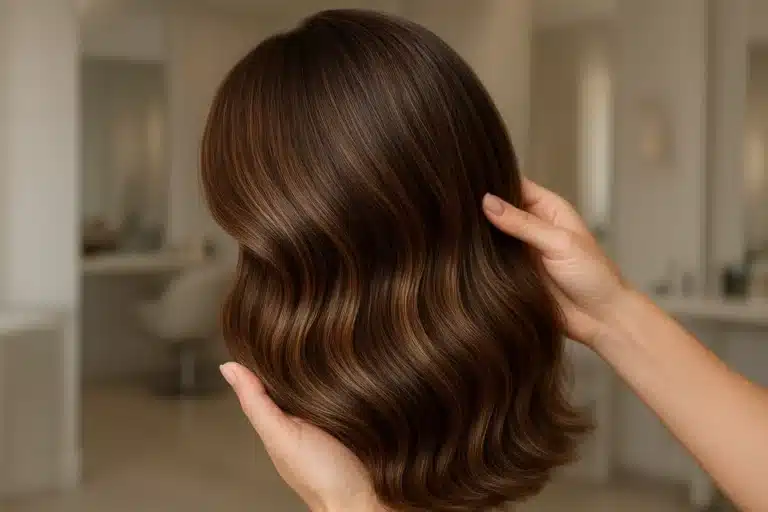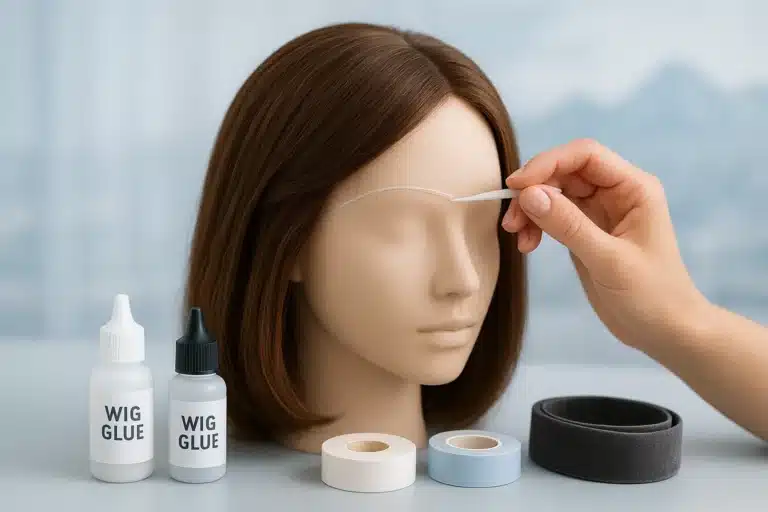
Imagine investing in a gorgeous, premium heat-friendly wig. The color is vibrant, the cut is flawless, and it looks so incredibly natural that nobody can tell it isn’t your biological hair. But after just a few days of wearing it, you run your fingers through the back and feel a surprising, straw-like clump forming at the nape of your neck. If you’ve ever experienced this, you are not alone. It’s one of the most common—and most easily fixed—frustrations in the alternative hair world.
Before mastering these advanced styling and rescue techniques, it’s vital to understand the foundation of your piece. To explore the premium cap designs and natural silhouettes that make these pieces so special, check out our definitive guide to Estetica wigs to find your perfect blend of style, comfort, and confidence. Once you have the right foundation, understanding the fascinating science of heat-friendly fibers will completely transform your daily routine.
Let’s demystify the physical properties of Estetica’s Heat Defiant (HD) fibers, turning everyday frustrations into brilliant “aha!” moments.
The Heat-Friendly Paradox: Why Premium Fibers Frizz
Many wig wearers experience a frustrating paradox: If heat-friendly synthetic wigs are supposed to be more durable and advanced, why do they seem to frizz and tangle faster than my cheap, traditional synthetic wigs?
The answer lies in micro-friction.
Standard synthetic wigs often have an unnatural, plastic-like shine because the individual hair strands (called monofilaments) are thick and smooth. Estetica’s HD fibers, however, are specifically engineered to mimic the fine denier (thickness) and low-sheen profile of healthy, natural human hair. Because these premium strands have a softer, more matte texture, they create microscopic friction when they rub against your collar, scarf, or shoulders.
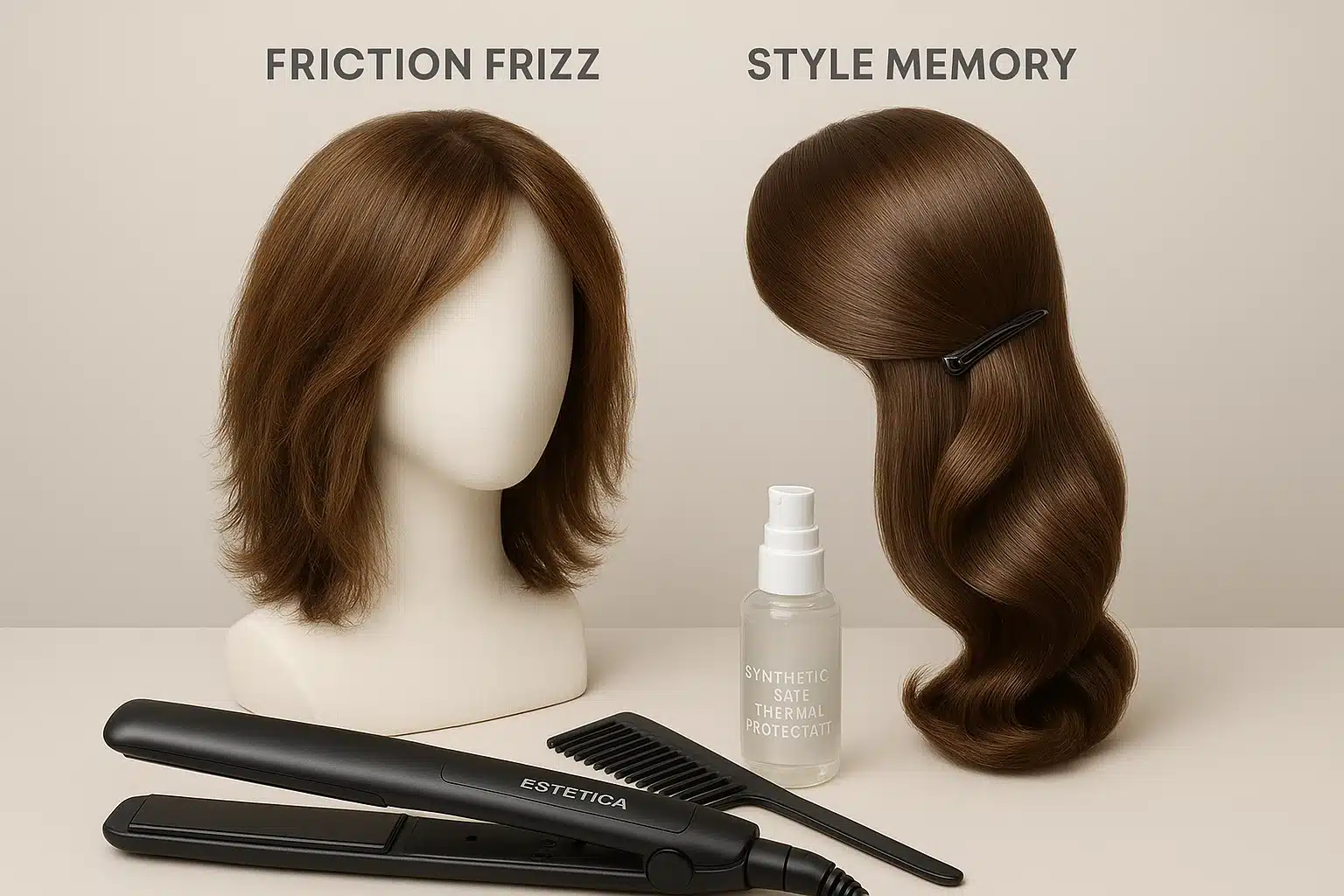
This friction causes the synthetic polymers to fray slightly, leading to what we call “friction frizz” or clumping. The great news? While friction is the cause, heat is the cure.
The Science of Estetica’s Heat Defiant Fibers
When you understand the science of your wig, you unlock its full potential. Estetica’s HD fiber is a premium polymer blend designed to withstand elevated temperatures, unlike traditional synthetics that will tragically melt at low heat.
However, there is a common myth floating around the internet: Will high heat change the color of my wig?
If you are noticing that your brilliant multidimensional shade—like an ash blonde or a black wig with highlights—is suddenly shifting color or lightening under heat, it isn’t a magical color-changing property. It is actually polymer oxidation, more commonly known as scorching. Premium fibers will retain their vibrant tones perfectly unless they are pushed past their absolute temperature limits, which degrades the acrylic/polyester pigment matrix.
To prevent this, you need to understand the golden rules of the temperature matrix.
The Golden Rules of Styling: Mastering “Style Memory”
If you’ve ever tried to curl heat friendly synthetic wigs with a curling iron, watched the curl drop beautifully off the barrel, and then watched it immediately fall completely flat, you’ve missed the most critical step in synthetic styling: the cooling phase.
Traditional human hair bends and sets while it is hot. Synthetic hair is entirely different. Heat only relaxes the molecular structure of the synthetic polymer. The shape isn’t permanently locked in until the fiber becomes 100% cold. This phenomenon is known as “style memory.”
The Temperature Matrix
- The Melt Zone (Danger): 320°F (160°C) and above. Never exceed this limit.
- The Caution Zone: 280°F–320°F. Unnecessary for most styling and increases the risk of scorching.
- The Sweet Spot (Green Zone): 260°F–280°F (120°C–140°C). This is the optimal working range for your digital heat tools.
The Hold-and-Cool Styling Technique
To perfectly set a curl that will last through washes and weather, follow this simple cooling cycle:
STYLING SYNTHETIC FIBER (THE COOLING CYCLE) [ STEP 1: HEAT ] [ STEP 2: SHAPE ] [ STEP 3: COOL ] Apply curling iron Slide iron out; hold Clip the curl flat at 260°F-280°F the warm curl intact until 100% cold | | | (Relaxes molecular (Bends the synthetic (Locks the polymer structures) polymers) into "Style Memory")By clipping the curl to the wig block and allowing it to completely cool down before touching it, that curl will stay locked in until you introduce heat to it again!
The “Resurrection” Protocol: Curing Friction Frizz
When the nape of your wig turns into a tangled, frizzy mess, don’t throw it away. You just need to “resurface” the fibers. Think of your flat iron not as a styling tool, but as a polishing tool. The low heat slightly softens the outer layer of the synthetic polymer, allowing you to press the microscopic frays flat, effectively “healing” the fiber.
The Nape Smooth-Out Tutorial:
- Prep: Spray a synthetic-safe thermal protectant or leave-in conditioner onto the frizzy area. Using standard drugstore wig care products that contain heavy silicones, sulfates, or drying alcohols will coat the fibers in a dull, sticky residue. Always use products formulated specifically for synthetic hair.
- Detangle: Use only a wide-tooth comb. Start at the very ends of the hair and gently work your way upward.
- Heat: Set a digital-display ceramic or tourmaline flat iron to 270°F.
- Polish: Take a small, thin section of the frizzy hair. Slowly glide the flat iron down the section while trailing it immediately with your wide-tooth comb. The heat softens the frayed edges, and the comb aligns them perfectly smooth.
- Cool: Let the section cool completely before touching it.
Pro Tip: For severely damaged ends, “wet heat” via a garment steamer is a phenomenal alternative to dry heat. Steaming provides a protective water barrier, preventing hot spots on the fiber while effortlessly relaxing intense tangles.
Daily Maintenance & Cleansing Rituals
A solid wig maintenance routine is the secret to extending the lifespan of your Estetica heat-defiant wig.
- Never Sleep in Your Wig: Tossing and turning on a pillow creates severe, irreversible friction tangles that heat-friendly synthetic fibers cannot easily bounce back from. Always store your wig on a stand overnight.
- The Cool Water Rule: When washing, always use cool water. Warm or hot water can prematurely relax your wig’s baked-in style memory and cause the intricate cap construction to stretch.
- Daily Detangling: Gently comb through the nape of your wig with a wide-tooth comb every single time you take it off. Preventing tangles from compounding is significantly easier than fixing a major mat.
Frequently Asked Questions (FAQ)
Can I use a regular curling iron on an Estetica wig?
Yes, but only if it has a digital temperature display so you can guarantee it stays in the 260°F–280°F sweet spot. Analog tools with high/medium/low settings are unpredictable and may unknowingly spike into the melt zone.
Are heat-resistant fibers safe for styling everyday or halloween wigs with heat tools?
If the wig is explicitly labeled as heat-friendly or heat-defiant (like Estetica’s HD line), it is safe for styling halloween wigs with heat tools or your everyday pieces, provided you stay under the 320°F maximum threshold. Standard synthetic wigs, however, will melt instantly upon contact with a hot iron.
Why does my heat-friendly wig feel coarse after a few weeks?
This is the result of micro-friction from your clothing. It is not a defect; it is a normal physical reaction of the fine-denier polymer. Performing the flat-iron “Resurrection Protocol” described above will smooth the fibers back to their original softness.
How do I restore the softness of a synthetic fiber?
Regularly misting the hair with a synthetic-safe leave-in conditioning spray protects the fibers from friction. When roughness occurs, low-heat flat ironing with a wide-tooth comb is the only way to physically smooth out the microscopic fraying.
Next Steps in Your Hair Journey
Mastering Estetica’s Heat Defiant fibers doesn’t require a cosmetology degree—it just requires understanding how these incredible polymers react to temperature, friction, and cooling. By adopting these targeted styling and resurfacing techniques, you will dramatically extend the lifespan and beauty of your piece.
Ready to put this knowledge to use? Explore our extensive educational resources to continue elevating your alternative hair journey, ensuring you always step out feeling empowered, comfortable, and beautifully confident.