For decades, wig wearers faced a rigid choice: the natural versatility of human hair (at a premium price point) or the “what you see is what you get” permanency of synthetic fiber. If you bought a curly synthetic wig, it stayed curly forever. If you bought a straight one, you couldn’t add a wave for a special occasion. That changed with the introduction of heat-friendly synthetic fibers, a technology that bridged the gap between convenience and creativity.
However, heat-friendly fiber requires a different mindset than traditional synthetic hair. It is not just about using hot tools; it is about understanding the physics of how the fiber reacts to temperature changes. Before diving into the technical nuances of heat styling, it is helpful to understand how these versatile fibers fit into the broader collection of styles available. For a comprehensive overview of the current landscape, you can explore The Definitive Guide to Gabor Wigs: Finding Your Perfect Style in 2025, which breaks down how these options cater to different aesthetic needs. Once you have identified your ideal silhouette, mastering the Tru2Life fiber is the key to keeping it beautiful.
The Science Behind the Strand: Why Tru2Life is Different
To care for your wig properly, you first need to understand what it is made of. Unlike standard synthetic hair, which is essentially a fixed plastic, Gabor’s Tru2Life fiber is polyester-based. This chemical composition gives the fiber “thermal memory.”
Think of standard synthetic hair like a fully baked ceramic pot—its shape is final. Tru2Life fiber is more like beeswax or glass. When heated, it becomes pliable and can be reshaped. When it cools, it “locks” into that new shape until heat is applied again. This unique property allows you to straighten a curly wig or curl a straight one, but it also means the fiber is more sensitive to its environment. It requires specific techniques to maintain its luster and prevent the dreaded “friction frizz” that often confuses first-time wearers.
The Physics of Styling: It’s Not About the Heat
The most common mistake new wearers make is treating heat-friendly synthetic fiber like human hair. With human hair, the heat itself creates the style. With Tru2Life fiber, the heat only facilitates the change; the cooling phase sets the style.
The Cooling Phase Rule
If you wrap a strand of Tru2Life fiber around a curling iron and immediately let it drop while hot, the curl will fall out instantly. The gravity of the fiber while it is still in its “pliable” state pulls it straight.
To successfully style this fiber, you must follow the “Heat, Hold, Cool” method:
- Heat: Wrap the fiber around your tool to get it to the target temperature.
- Hold: Slide the fiber off the tool into your palm, keeping the curl shape intact.
- Cool: Pin the curl against the cap using a metal clip. You must wait for the fiber to return to room temperature.
Only when the fiber is completely cool has the polymer chain reset into the new shape. This is why many professionals recommend styling your wig on a canvas block head rather than on your own head—it allows you to pin the entire style and let it “cure” overnight for the longest-lasting results.
The Temperature Sweet Spot
While Gabor states that Tru2Life fiber can withstand heat up to 350°F, acting at the maximum limit is rarely necessary and can reduce the lifespan of the wig over time.
- The Danger Zone: Above 350°F, the fiber can singe or melt.
- The Sweet Spot: Research and professional experience suggest that 275°F to 300°F is ideal. This temperature range is high enough to make the fiber pliable but low enough to protect the integrity of the strand.
Navigating Hidden Heat Hazards: The “Oven Door” Phenomenon
You might be diligent about your curling iron settings, but the biggest threat to your heat-friendly wig often hides in the kitchen. We call it the “Oven Door Phenomenon.”
When you bake at 400°F and open the oven door to check your food, a blast of superheated air rushes out and rises. If you are wearing your wig, this heat blast can instantly exceed the 350°F safety limit of the fiber. The result is immediate singing—the hair fibers will crinkle, lose their shine, and feel like rough wool.
Safety Tip: If you cook while wearing your wig, stand to the side when opening the oven, or consider wearing a stylish turban or scarf during meal prep to shield the fibers from sudden thermal shocks.
Combatting “Friction Frizz” and Maintenance
One of the specific characteristics of heat-friendly fibers is that they are more prone to friction than standard synthetics. This usually manifests at the nape of the neck, especially in longer styles like the Simply Flawless or High Society. This isn’t a defect; it’s a result of the fiber rubbing against clothing, creating static and abrasion.
The Silicone Shield
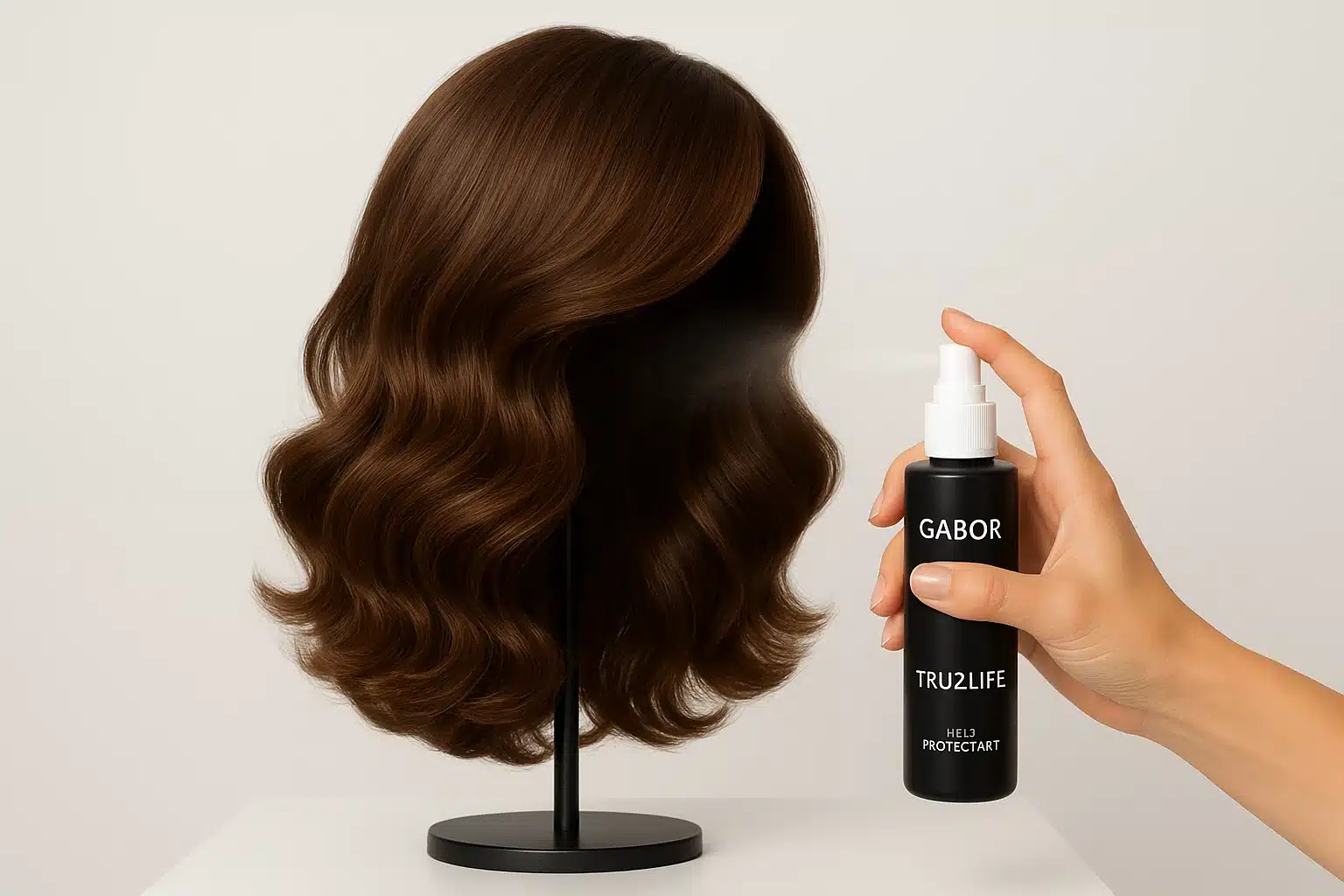
Many wearers believe heat protectant spray is only for when you are using a flat iron. However, for Tru2Life fibers, a silicone-based protectant (like HairUWear’s PROTECT spray) acts as a lubricant.
- Why it works: It coats the fiber, reducing friction when the hair rubs against your collar or skin.
- Daily Habit: A light misting at the nape of the neck before wearing can significantly extend the life of the wig.
Restoring the Fiber
Here is the “aha” moment for restoration: You can use heat to fix friction damage. If the ends of your wig are starting to look frizzy or rough, you don’t necessarily need to cut them.
- Apply a heat protectant.
- Set a flat iron to roughly 275°F.
- Slowly run the iron over the frizzy ends (combining with a fine-tooth comb).
The heat smooths the microscopic surface of the fiber, essentially “ironing out” the friction damage and restoring a smoother texture. This is maintenance you should perform regularly, not just when the wig looks worn.
Washing Guidelines: The 3-5 Minute Soak
Water causes the fiber to swell slightly, and improper washing can loosen the knots in the cap.
- Cool Water Only: Never wash in hot water.
- The Soak: Submerge the wig in cool water mixed with shampoo formulated for synthetics. Let it soak for 3 to 5 minutes. Do not leave it longer; soaking for 20 or 30 minutes can cause the hair to begin reversing its “hand-tied” knots or damage the cap construction.
- No Scrubbing: excessive agitation causes tangling. Simply swish the wig gently.
- Air Dry: Never brush the wig while it is wet. The fibers are at their weakest when saturated with water and can stretch or break. Place the wig on a wig stand and allow it to air dry completely before brushing or styling.
Frequently Asked Questions (FAQ)
Can I use a regular hairbrush on my Tru2Life wig?
Avoid standard drug-store brushes, which often have little balls on the tips of the bristles. These can snag the fibers and pull them out of the cap. Instead, use a wide-tooth comb or a brush specifically designed for wigs (often called a “loop brush”) that glides through the hair without tugging.
Can I dye my Gabor heat-friendly wig?
No. Synthetic fiber, including Tru2Life, is non-porous. It does not absorb pigment like human hair. Trying to dye it with standard hair color will likely stain the cap and ruin the fiber without changing the hair color effectively.
My wig has “Permatease.” Can I flat iron the roots?
“Permatease” is the short, crimped fiber at the root that gives wigs like High Society their volume. You should avoid applying high heat and heavy tension directly to the root area, as flattening the Permatease will cause the wig to lose its intended volume and silhouette permanently. Focus your heat styling on the mid-lengths and ends.
How often should I wash my heat-friendly wig?
Over-washing can shorten the lifespan of the wig. If you wear the wig daily, a wash every 6 to 8 wears is generally recommended. Rely on spot cleaning and refreshing sprays in between full washes.
The Path to Styling Confidence
Mastering Gabor’s Tru2Life fiber opens up a world of stylistic freedom. It allows you to transition a single piece from a sleek, professional office look to soft, romantic waves for dinner. By respecting the “Cooling Phase,” avoiding the “Oven Door,” and staying diligent with your friction protection, you ensure that your investment remains beautiful and wearable for the long haul.
Remember, the goal isn’t just to cover hair loss—it’s to regain the joy of expressing yourself through style. With these tools and techniques, you are well on your way to becoming your own best stylist.