Imagine sitting in a dimly lit theater or watching your favorite period drama. The costumes are spectacular, but it’s the towering, intricately styled hair that truly transports you to another era. Have you ever wondered how those massive, gravity-defying styles of the 1700s stayed perfectly in place under hot stage lights and hours of wear?
The secret lies not just in the skill of the stylist, but in the fascinating science of the materials themselves. When you dig into the evolution of wig craftsmanship and materials, you realize that the story of historical and theatrical wigs is essentially a story of engineering. From the ancient world to modern Hollywood sets, wigmakers have masterfully blended human hair, yak hair, and horsehair to create works of art. Let’s pull back the curtain on the unexpected materials that shaped history’s most iconic silhouettes.
The Surprising Truth About Early Wigs
Before we dive into the grand theatrical styles of Europe, we have to address a pervasive historical myth. Many people believe that people in the 17th and 18th centuries wore wigs simply because they didn’t bathe. The reality is quite the opposite.
In an era when lice were a rampant problem, wealthy individuals often shaved their natural hair entirely as a preventative hygiene measure. The wig wasn’t a cover-up for dirty hair; it was a detachable, cleanable head of hair that could be sent out to a professional to be boiled, baked, and deloused.
But the practice of wearing wigs dates back much further than the European royal courts. In Ancient Egypt, wigs were highly engineered status symbols. Royalty wore premium pieces crafted from human hair, while commoners relied on clever alternatives woven from palm fibers. Even thousands of years ago, the choice of material instantly communicated a person’s place in society.
The Structural Era: Why Animal Hair Ruled the Stage
Fast forward to the 1600s and 1700s, the era of the “Peruke”—the massive, cascading curly wigs famously worn by figures like King Louis XIV. If you were a wigmaker during this time, you faced a significant engineering challenge: how do you make a wig that holds a rigid curl in a damp, unpredictable climate?
The Humidity Factor
Here is where the material science comes into play. Human hair is highly susceptible to the environment. Under the heat of early stage lighting or the dampness of a humid ballroom, a human hair wig simply “wilts.” The curls drop, the volume deflates, and the style is ruined.
To combat this, wigmakers turned to animal hair—specifically horsehair and goat hair. If you were to touch historical horsehair, you’d immediately notice its natural coarseness compared to the delicate silkiness of human hair. That coarseness makes it incredibly “springy.” Horsehair naturally wants to hold its shape, making it the perfect foundational fiber for structural, heavily styled silhouettes that needed to withstand heat and humidity.
The Boiling and Baking Technique
To get that stiff, permanent curl into horsehair, wigmakers used an intense “boiling and baking” process. They would tightly wind the animal hair around small wooden rollers (called bilboquets), submerge them in boiling water to break down the hair’s structural bonds, and then literally bake them in an oven. Once cooled, the horsehair held an immovable, baked-in curl that could survive almost any weather.
The Yak Hair Secret: The 18th Century’s Premium Fiber
As the 18th century progressed, women’s styles evolved into the towering pouf—elaborate, gravity-defying structures decorated with feathers, jewels, and even miniature ships. Creating massive volume without causing neck pain required a very specific fiber: yak hair.
Yak hair was the ultimate premium choice for these extreme styles. It has a unique, natural “crimp” that creates massive volume with a fraction of the weight of human hair. Additionally, yak hair is naturally a beautiful ivory-white, making it much easier to powder to the desired snowy finish favored by the aristocracy.
What Was Actually in Wig Powder?
We often think of powdered wigs as looking like they were dusted in flour, but the reality was far more elegant. A high-quality 18th-century wig powder recipe was a luxurious blend of:
- Finely milled starch: To provide the stark white color and absorb oils.
- Orris root: A powdered root that provided a smooth texture and a lovely violet-like scent.
- Lavender and clove oils: Added to keep the wig smelling incredibly fresh.
The golden age of the powdered wig abruptly ended in 1795 when the British government introduced the “Powder Tax,” a heavy levy on hair powder. Almost overnight, the elaborate white wigs fell out of fashion, paving the way for a more natural look.
A Material Performance Matrix: Human vs. Animal Fiber
To truly understand how costume designers and historical wigmakers chose their fibers, it helps to look at them through an engineering lens. Here is how the materials stack up:
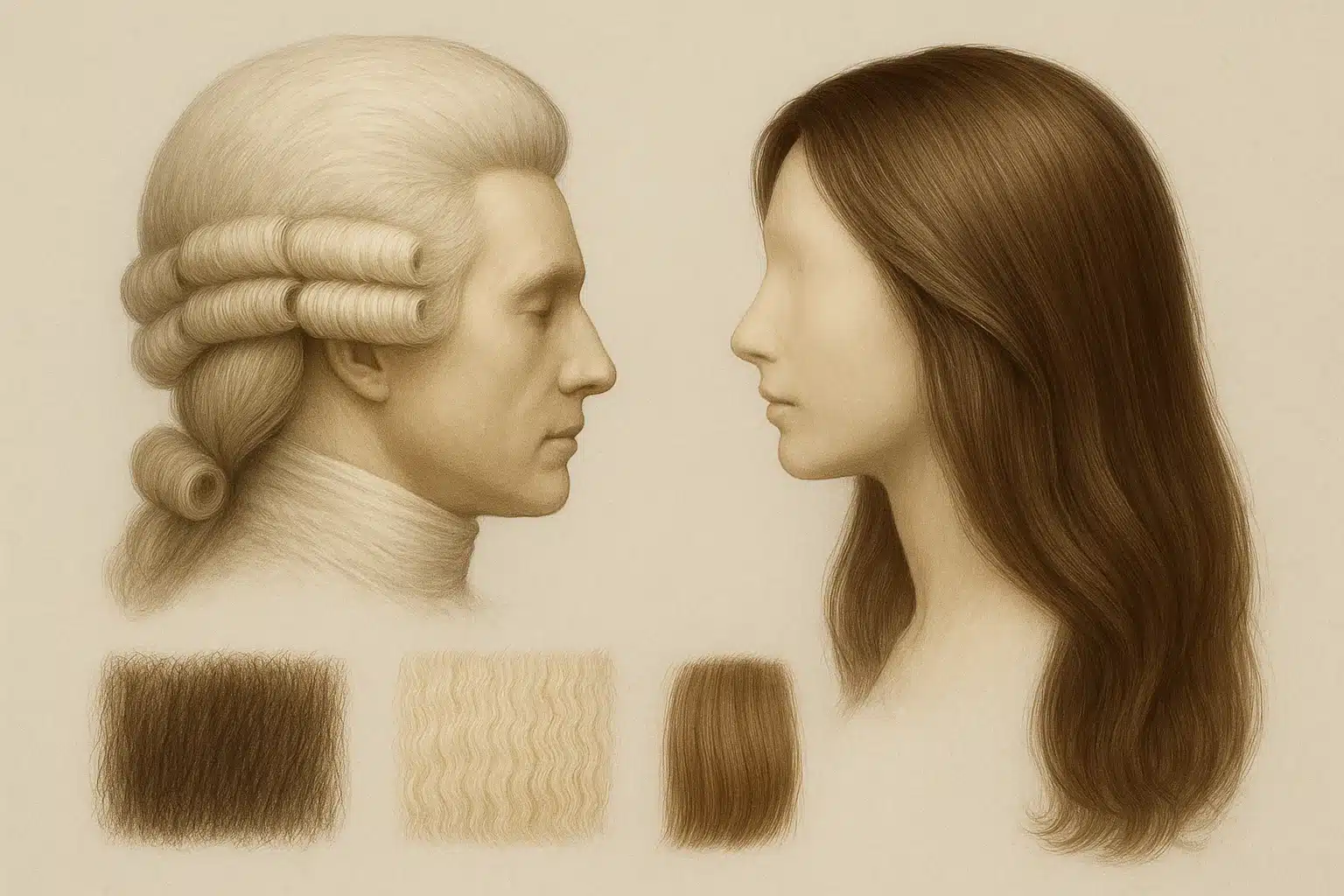
- Human Hair: Offers the most realistic sheen and a beautifully silky texture, but it is heavy and loses its curl in high humidity. Best for natural, everyday wear.
- Horsehair: Highly durable, incredibly springy, and holds an intense curl regardless of the weather. It has a coarse texture and low sheen, making it perfect for structured historical pieces.
- Yak Hair: Extremely lightweight with a natural crimp that provides massive volume. Naturally pale and takes styling wonderfully, making it the top choice for towering theatrical styles.
The Micro-Technical Details
The material you choose also dictates how the wig is built. In modern wig craftsmanship, ventilating (the process of tying hair to a lace cap) varies wildly by industry. For close-up film work using fine human hair, makers will often tie just 1 hair per knot to create a seamless, undetectable hairline. In theater, where durability and volume are needed to project to the back row, makers might use 3 hairs per knot utilizing coarser animal fibers that can withstand quick costume changes.
The Shift to Human Hair Dominance
As the 19th century dawned, society moved away from massive structural hairpieces toward the “Natural Look.” As hairstyles relaxed into softer, more romantic curls and updos, the need for the rigid, baked-in springiness of horsehair declined.
Human hair took over as the dominant material because its silky texture and natural drape couldn’t be replicated by animal fiber. Techniques improved, allowing wigmakers to create incredibly natural-looking pieces for everyday people, not just kings and theatrical performers.
Today, decades of industry expertise have given us access to both exquisite 100% human hair wigs and highly advanced synthetics that offer the best of both worlds—the natural movement of human hair with the “baked-in” style memory of those early historical wigs. At Wig Superstore, our nearly 20 years of experience have taught us that whether a wig is for theatrical expression or finding confidence during medical hair loss, the quality of the material is what transforms a simple hairpiece into a wearable work of art.
Modern Legacy: Where History Meets Hollywood
While you might think animal hair wigs are a thing of the past, they are still heavily utilized today. In the United Kingdom, judges and barristers still wear traditional legal wigs crafted primarily from white horsehair, honoring centuries of courtroom tradition.
In modern cinema, yak hair remains a costume designer’s best-kept secret. When you see fantastical creature effects—like the towering Wookiees in Star Wars or the heavily bearded dwarves in The Hobbit—you are often looking at meticulously styled yak hair. Its coarse, crimped texture is still unbeatable for creating otherworldly volume.
Frequently Asked Questions (FAQ)
Why didn’t they just use human hair for all wigs in the 1700s?
Human hair is heavy and drops its curl in high humidity. The elaborate, structured styles of the 1700s required materials that were “springy” and could hold a baked-in curl, making horsehair and goat hair much better suited for the job.
Is yak hair still used in wigs today?
Yes! While you won’t find it in your everyday fashion wig, yak hair is widely used in theater and film. It is especially popular for creating realistic facial hair, theatrical character wigs, and special effects creature suits because of its unique crimped texture.
Did wearing early wigs cause hair loss?
The wigs themselves didn’t cause hair loss. In fact, many people deliberately shaved their heads to comfortably wear wigs and to maintain hygiene and prevent lice.
How do modern synthetic wigs compare to historical materials?
Modern advanced synthetics are essentially the technological successors to horsehair. Just like early makers baked curls into animal hair, modern manufacturers use heat to bake a “style memory” into synthetic fibers. This allows modern synthetics to hold their curl even after washing, without the coarse, heavy texture of historical animal fibers.
What is the best material for a wig today?
It depends entirely on the wearer’s needs. For those seeking the absolute most natural look, feel, and styling versatility, 100% human hair is the gold standard. For those looking for easy maintenance and a style that holds its shape, premium synthetics are an excellent choice.
Continue Your Journey
Understanding the rich history of wig-making gives us a profound appreciation for the craftsmanship available today. We’ve moved from the heavy, powdered horsehair perukes of the 18th century to incredibly lightweight, comfortable designs engineered to help individuals feel beautiful and confident.
If you are exploring wigs for yourself—whether you are managing hair loss or simply looking to enhance your style—knowing your materials is the first step. Take the time to explore the differences between premium human hair and advanced synthetic options to discover the piece that perfectly fits your lifestyle and your story.