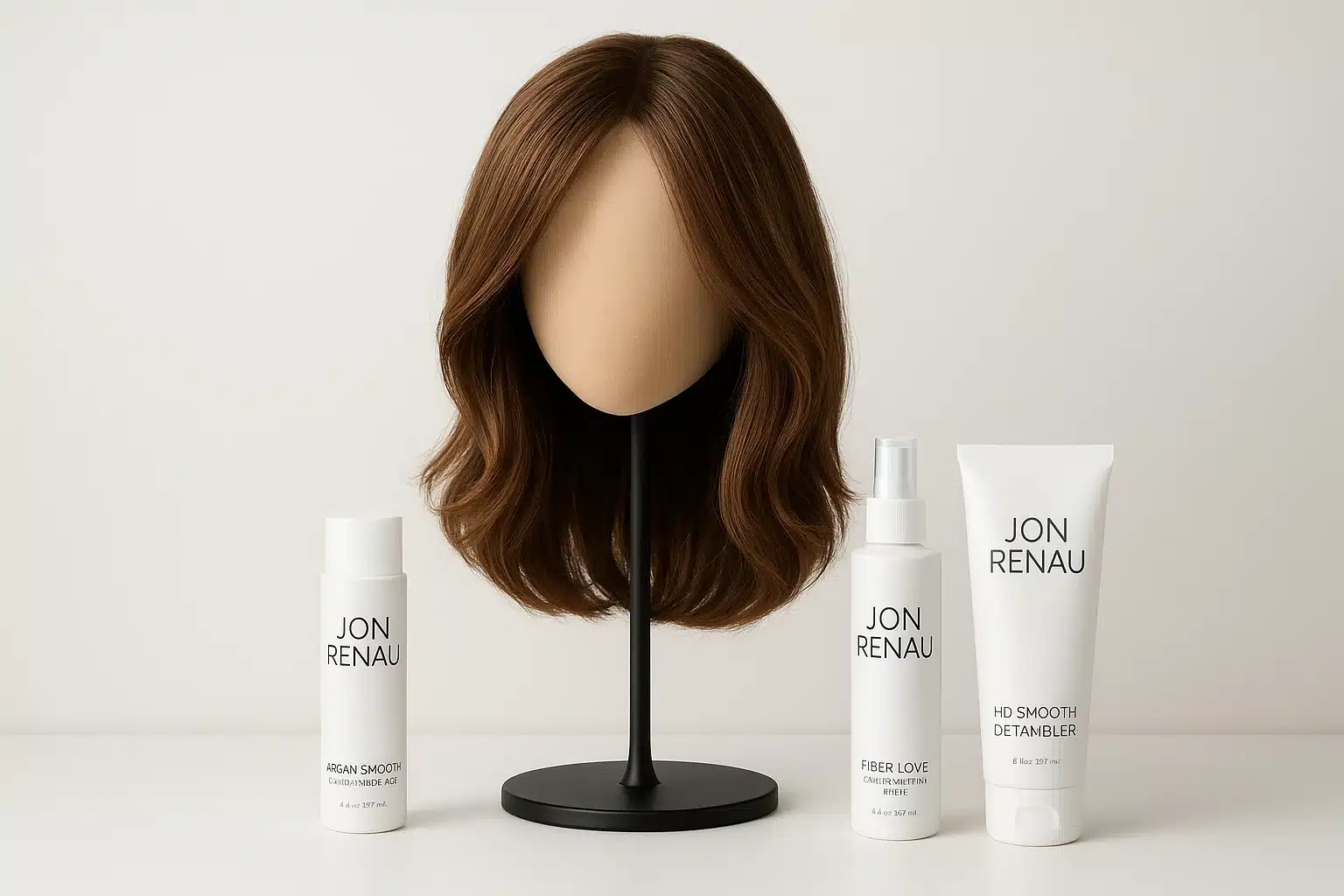
Imagine that moment you first put on your new wig. The volume is perfect, the shine is natural, and your confidence is soaring. It’s an investment in yourself—not just financially, but emotionally. But then, a few weeks later, a common anxiety sets in: How do I keep it looking this good? Many first-time wearers inadvertently shorten the life of their wigs simply because they treat them like biological hair, or worse, use generic drugstore products that strip the fibers of their vitality.
The secret to maintaining that “salon-fresh” look isn’t complicated, but it does require a specific approach. Just as you wouldn’t wash a cashmere sweater with dish soap, your wig requires specialized care engineering. Whether you are wearing a synthetic piece for ease or a human hair wig for versatility, understanding the science of fiber care is crucial. For those just starting their journey, we recommend exploring The Definitive Guide to Jon Renau Wigs: Finding Your Perfect Style to understand the foundational differences in wig construction, as this directly influences your care routine.
The Philosophy of Fiber Care: Why Specialization Matters
The most significant “aha moment” for many wig wearers comes when they realize that synthetic hair and biological human hair have almost opposite needs.
Biological hair growing from your scalp is constantly fed by natural oils (sebum). Regular shampoo is designed to strip away excess oil. A wig, however, has no source of natural hydration. If you use a standard stripping shampoo on a human hair wig, you are dehydrating it rapidly. If you use it on a synthetic wig, you are essentially trying to wash a high-tech textile with a harsh detergent, which can degrade the fiber’s coating.
Jon Renau’s care line isn’t just about branding; it’s about chemistry. Their products are formulated to be water-soluble, meaning they rinse out completely without leaving a dulling residue—a critical factor in preventing that “wiggy” shine and heavy feeling.
Building Your Essential Care Kit
To navigate the world of best wig care products, it helps to think in terms of a “survival kit” for your hair system. What you need depends entirely on the fiber you are wearing.
The Synthetic Care Arsenal
Synthetic fibers are durable and hold their style, but they are prone to friction frizz. Your goal with synthetic care is to cleanse gently and protect against static.
- Fiber Love Shampoo: This is formulated free of sulfates and parabens. It cleanses the fiber without stripping the surface, ensuring the “memory” of the style remains intact.
- Fiber Love Conditioning Spray: Unlike heavy creams, this spray is designed to restore the healthy sheen of synthetic fiber without weighing it down.
- HD Smooth Detangler: This is perhaps the most critical tool for longevity. Synthetic fibers, especially at the nape of the neck, can tangle due to friction against clothing. A daily spritz of this helps the fibers glide rather than snag.
- Wide Tooth Comb: Never use a standard brush on a wet synthetic wig. A wide-tooth comb gently detangles without stretching or snapping the fibers.
The Human Hair Specialist Kit
Human hair wigs require hydration, hydration, hydration. Since they don’t receive oils from the scalp, you must manually replenish moisture.
- Argan Smooth Luxury Shampoo & Conditioner: These are infused with French Argan Oil to inject moisture directly into the cuticle.
- Blown Away Blow Dry Balm: If you heat style your human hair wig, this is non-negotiable. It protects the hair from UV damage and high temperatures.
- Versatile 3-Way Hairspray: A workable spray that allows you to hold a style without creating a crunchy, unnatural texture.
The Art of the Wash: Step-by-Step Routines
Knowing how to care for human hair wig types versus synthetic ones can be the difference between a wig that lasts six months and one that lasts two years.
Washing Synthetic Wigs
- Detangle: Before getting it wet, gently comb out tangles starting from the ends and working up.
- The Soak: Fill a basin with cool water (never hot, which can relax the style) and mix in a capful of wig shampoo. Turn the wig inside out and submerge it.
- Agitate Gently: Do not scrub or rub the hair like laundry. Gently swirl it in the water.
- Rinse: Rinse with cool water until all bubbles are gone.
- Air Dry: Blot with a towel—do not wring. Place it on a wig stand. Gravity helps the fibers fall naturally back into their pre-styled shape.
Washing Human Hair Wigs
- Wet and Lather: Hold the wig by the nape area (or place on a blockhead) and run cool water from the roots down. Apply shampoo in a downward motion.
- Condition Correctly: This is where most mistakes happen. Apply conditioner to the mid-lengths and ends only. Avoid the base. Conditioner on the hand-tied knots at the cap can cause them to loosen, leading to shedding.
- Deep Condition: Every 3-5 washes, use a deep treatment to restore elasticity.
The Silent Killers: Common Mistakes to Avoid
Even with the best intentions, simple errors can ruin a wig. Here is what to watch out for.
1. The Heat Trap
Standard synthetic wigs cannot handle heat. Opening a hot oven or standing near a patio heater can singe the fibers instantly, causing irreparable frizz (often called “baking” the fiber). Unless you have Heat Defiant (HD) fibers, keep the heat away.
2. The “Regular Brush” Error
Using a drugstore brush with little balls on the ends of the bristles is a recipe for disaster. Those little balls can snag on the wig cap or stretch the fibers. Always use a loop brush or a wide-tooth comb designed for wigs.
3. Friction Frizz
Throughout the day, your wig rubs against your collar and shoulders. This friction causes the fibers to frizz, specifically at the nape. Using a detangler spray daily and brushing through the nape area after every wear is essential preventative maintenance.
Storage and Travel: protecting the Shape
When you aren’t wearing your wig, where you put it matters. Throwing it in a drawer can crush the cap structure and tangle the fibers.
If you are wondering how to store a wig without a head, a collapsible wig stand is your best friend. It allows air to circulate through the cap (crucial after washing) and keeps the wig upright. For travel, turning the wig inside out and placing it in a silk bag or a dedicated wig travel case preserves the style and prevents friction during transport.
Conclusion: Confidence Comes from Knowledge
Caring for your Jon Renau wig doesn’t have to be a chore; it is a ritual that ensures your hair looks as vibrant as you feel. By using the correct wig maintenance tools and understanding the “why” behind the routine, you extend the life of your piece and ensure every day is a good hair day.
If you are ready to explore the tools mentioned here or need more specific advice on restoration, remember that the goal is always to keep you feeling beautiful and confident in your choice.
Frequently Asked Questions
How often should I wash my Jon Renau wig?
Ideally, you should wash your wig every 6 to 8 wears. Over-washing can wear out the fibers, while under-washing causes oil and product buildup that can damage the cap.
Can I use baby shampoo on my synthetic wig?
It is not recommended. Baby shampoo is designed for biological skin and hair and may not rinse out of synthetic fibers completely, leaving a dull film. It also lacks the specific conditioning agents needed to keep synthetic fibers soft.
Why is my wig tangling at the neck?
This is caused by friction against your clothing and body heat. It is normal but needs management. Use the HD Smooth Detangler daily and gently comb the nape area after every wear to prevent the tangles from becoming permanent matting.
Can I use heat on my Jon Renau wig?
Only if it is a Human Hair wig or a Heat Defiant (HD) synthetic wig. Standard synthetic wigs will melt or frizz if exposed to heat tools. Always check the fiber specifications of your specific wig model.