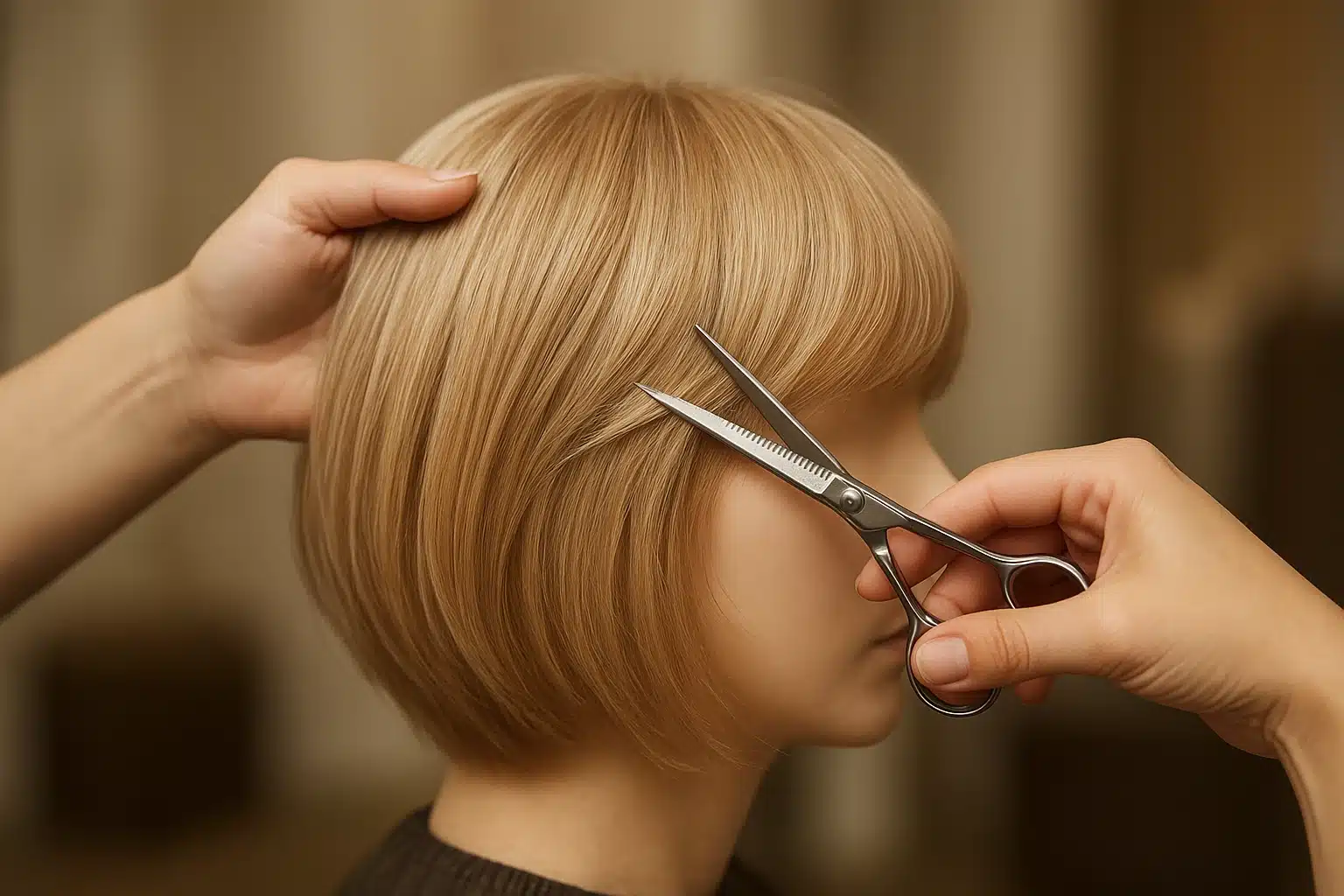
Imagine taking your brand-new, carefully selected wig out of its beautiful packaging. You place it on your head, expecting an instant boost of confidence, but instead, it feels heavy, bulky, and overwhelmingly “wiggy.” If this sounds familiar, take a deep breath—you haven’t made a mistake. This is an entirely normal part of the alternative hair journey that nearly everyone experiences.
If you’ve recently been finding the best wig stores in Louisville, KY, you already know the thrill of discovering that perfect color and cap style. However, buying the piece is merely step one. Bridging the gap between a factory-fresh unit and a beautifully natural, undetectable hairstyle requires the specialized touch of a certified wig stylist.
Let’s explore why initial customization is the industry’s best-kept secret, and how specialized trimming and shaping can completely transform your new hair.
The “Out-of-the-Box” Paradox: Why High-End Wigs Require Tailoring
When you purchase a high-quality alternative hair system, whether human hair or synthetic fiber, it rarely arrives ready to wear straight out of the box. Factory manufacturing intentionally leaves excess density, uniform lengths, straight-across hairlines, and uncut lace fronts to accommodate a wide variety of head sizes and personal preferences.
Because a manufacturer doesn’t know your specific face shape or forehead height, they give you a blank canvas. However, this excess density is exactly what causes the dreaded “wig helmet” effect.
The fear of permanently altering an expensive piece is real—after all, wigs come with a “Zero Re-Growth” reality. Unlike biological hair, a mistake on a wig is permanent. If you are buying a wig for the first time, this final customization step can feel intimidating, but understanding the mechanics behind it will give you the confidence to move forward.
Bio-Hair Salon vs. Certified Wig Stylist: Understanding the Difference
It is tempting to take your new wig to the neighborhood salon you’ve trusted for years. Unfortunately, standard cosmetology practices can unintentionally ruin a constructed wig. The techniques required to cut biological hair (bio-hair) are fundamentally different from those used on alternative hair.
Shear Mechanics and Fiber Physics
Standard hair-cutting often involves pulling the hair upward at a 90-degree elevation and cutting it wet. If a stylist attempts this on a wig, two things happen: upward tension lifts the cap, distorting the cut, and wet cutting alters the length unpredictably. Human hair stretches and shrinks when wet, while synthetic fibers lose their manufactured memory.
Furthermore, using standard blunt shears on synthetic fibers creates static “broom-end” fraying instead of a tapered, natural end. Specialized wig stylists utilize micro-serrated shears or specialized hot razors to execute slide-cutting and point-cutting at 45-degree angles. This “slither” technique creates soft feathering that mimics the organic taper of natural hair growth.
The Anatomy of Wig Customization: What to Expect
A proper wig customization appointment is a methodical, step-by-step process. Here is how a certified professional will tailor your piece.
1. Lace Micro-Trimming and Hairline Alignment
One of the biggest beginner mistakes is wearing a unit too low on the forehead. A certified stylist will teach you the “Four-Finger Measurement”—placing four fingers horizontally between the bridge of your eyebrows and the lace edge—to find your natural hairline.
Once positioned, the stylist won’t just cut the lace straight across. A straight cut creates a harsh edge that catches the light and causes the lace to roll. Instead, they use a scalloped or zig-zag cutting technique, leaving just 1–2mm of lace. This irregularity tricks the eye and melts the lace seamlessly into your skin.
2. Density Mapping and Bulk Reduction
Factory hair distribution differs drastically from natural scalp follicle density. Removing this excess weight is an art form. When thinning a wig, a stylist must know exactly where the hand-tied knots end and the machine-wefted tracks begin.
Rather than just thinning the ends—which can make the top look even more like a helmet—a wig specialist will perform internal root texturizing and mid-shaft de-bulking. This creates organic airflow and movement without exposing the cap construction beneath.
3. Face Shape and Profile Calibration
Just like biological hair, your wig should highlight your best features. A stylist will dry-cut the hair directly on your head (or a perfectly sized canvas block) to map out layers based on your unique face shape:
- Round Faces: Graduated long layers starting below the chin with soft crown volume to elongate facial proportions.
- Square/Angular Faces: Wispy, textured perimeter layers with side-swept fringe to soften a strong jawline.
- Heart/Oval Faces: Cheekbone-accentuating face frames with beautifully blended curtain bangs.
The Kentucky Climate Factor
For those exploring the wigs Louisville KY has to offer, local climate plays a massive role in how your wig behaves. The high humidity of the Ohio Valley affects alternative hair significantly.
Human hair wigs will react to Kentucky humidity by pulling moisture from the air, often leading to frizz, just like biological hair. Synthetic fibers, on the other hand, do not react to humidity but are highly susceptible to friction and heat. A local wig stylist understands these regional challenges and will use thermal setting and silicone sealing during your initial prep to lock in the style and protect the fibers against the heavy summer air.
Navigating Louisville Wig Stylist Services
When looking for a stylist to perform your initial trimming, you want to ask the right questions to ensure they have alternative hair expertise. Use this quick vetting checklist:
- “Do you cut the wig dry and on my head?” (The answer should be yes).
- “What techniques do you use to de-bulk?” (Listen for terms like internal bulk reduction, slide-cutting, or point-cutting).
- “How do you trim the lace?” (They should mention scalloped edges or micro-trimming, never blunt kitchen scissors).
Red Flag Warning: If a stylist attempts to wash and cut your synthetic wig while it is wet, or if they apply heavy biological hair oils to the piece, kindly stop the appointment.
Post-Customization Preservation
Once your wig is perfectly tailored to your face, protecting that investment becomes your next priority. Proper wig maintenance involves specialized washing routines and friction avoidance. Always use wide-tooth combs or loop brushes designed specifically for alternative hair, and never apply heat to a synthetic wig unless you are certain it is crafted from heat-friendly fibers.
Frequently Asked Questions (FAQ)
Why does my new wig look bulky or “wiggy” when I put it on?
Wigs are manufactured with extra density and length to accommodate everyone. This uniform thickness lacks the natural taper and varied density of biological hair, which is why professional thinning and face-framing are essential to make the wig look natural.
Can I cut or trim my own wig with regular household scissors?
It is highly discouraged. Regular household scissors (and even many standard salon shears) will blunt-cut the synthetic fibers, creating a frayed, unnatural edge. A professional uses specialized shears and angles to ensure the hair falls naturally.
What is the “four-finger rule” for positioning a wig hairline?
The four-finger rule is a reliable measurement technique for finding your natural hairline. Place four fingers horizontally flat against your forehead, starting right above the bridge of your eyebrows. Where your top finger sits is generally where the lace edge of your wig should begin.
What is the difference between human hair wig cutting and synthetic fiber trimming?
Human hair can be texturized and shaped similarly to how it grows out of a scalp, though it must be done carefully to hide the cap’s wefts. Synthetic hair has “manufactured memory” and reacts poorly to standard razoring, which can stretch and permanently frizz the plastic fibers. Synthetic trimming requires highly precise, micro-serrated tools and specific cutting angles.
Final Thoughts
The journey to finding hair that makes you feel beautiful and confident doesn’t end at the cash register. Embracing the customization process is what transforms a “wig” into your hair. By partnering with a specialized stylist who understands the physics, geometry, and artistry of alternative hair, you can step out into the world with absolute confidence.