Navigating hair loss due to a medical condition is an emotional journey, often accompanied by a steep learning curve. Amidst the doctor’s appointments and treatment plans, the last thing you need is a confusing battle with your insurance provider. Many individuals assume that because their hair loss is medical, their insurance will automatically cover a wig. Unfortunately, the reality is often buried in specific terminology and policy exclusions that can feel impossible to decode.
The difference between a claim denial and a reimbursement check often comes down to a single phrase. While you view a wig as a vital part of your recovery and confidence, insurance companies view it through a strict binary lens: is it cosmetic, or is it a medical necessity? That’s why understanding the nuances of medical wig insurance coverage and financing is the first step toward turning an overwhelming expense into a manageable medical claim.
The “Cosmetic Trap”: Why Terminology Matters
The most critical insight for anyone beginning this process is that insurance companies operate on a language entirely their own. If you submit a claim for a “wig,” “hairpiece,” or “hair system,” many automated insurance systems will trigger an immediate denial based on the assumption that the item is for aesthetic enhancement—similar to how they view teeth whitening or elective plastic surgery.
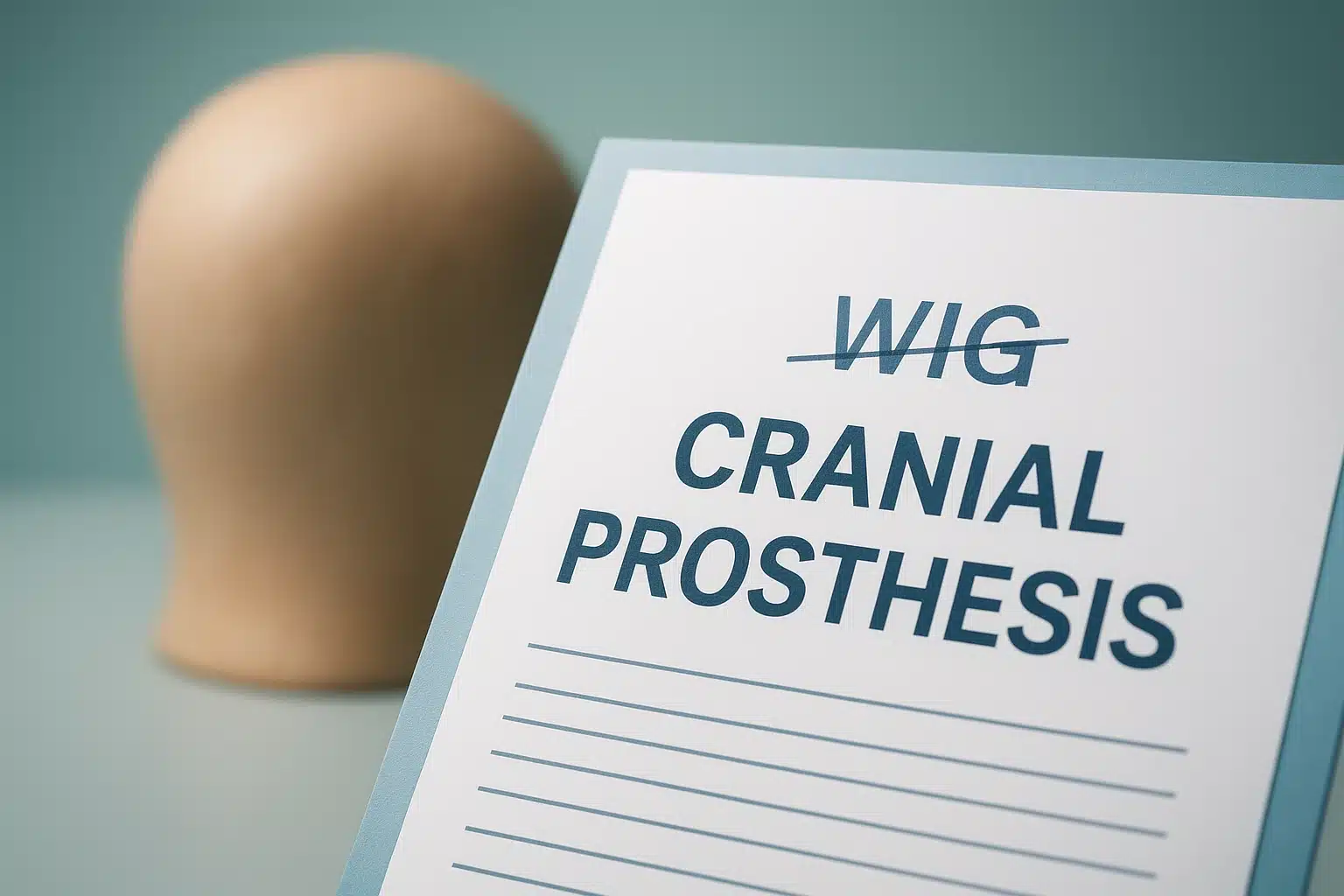
To bridge the gap between what you need and what they cover, you must shift your vocabulary. In the eyes of medical insurers, you are not purchasing a wig; you are purchasing a Cranial Prosthesis.
This isn’t just semantics; it’s a legal and medical distinction. A “wig” is a fashion accessory. A “cranial prosthesis” is a custom-made medical device designed for patients who have lost their hair as a result of a medical condition or treatment, such as Alopecia Areata, Trichotillomania, or chemotherapy. Understanding this distinction is the “aha moment” that empowers you to advocate for the coverage you deserve.
The Designation Divide: What Makes a Wig “Medical”?
Beyond the paperwork, there is a physical difference between a standard fashion wig and a medical-grade prosthesis. Insurance providers often require evidence that the item you purchased is designed for medical needs, not just casual wear.
Construction and Materials
Medical wigs are engineered for sensitivity. When you are undergoing chemotherapy or experiencing total alopecia, your scalp lacks the protection of biological hair, making it incredibly sensitive to friction.
- Base Materials: Cranial prostheses often utilize hypoallergenic materials, silicone grippers for security without adhesive, and soft silk tops that prevent irritation.
- Customization: Unlike off-the-shelf fashion wigs, medical units are often capable of being tailored to exact cranial measurements, ensuring a secure fit that doesn’t restrict blood flow or cause tension headaches.
The Financial Engineering of a Claim
To successfully claim a cranial prosthesis, you cannot simply send a receipt from a department store. Insurers look for specific “transparency markers” from the retailer, including a valid Tax ID number and proper medical coding on the invoice. This is where partnering with established industry experts becomes vital—you need a provider who understands how to format a receipt that an insurance adjuster will respect.
The Documentation Stack: The “Power of Three”
Winning a reimbursement claim rarely happens by accident. It requires a strategic assembly of documents we call the “Power of Three.” Missing any one of these elements is the most common reason for a technical denial.
1. The Prescription
Just as you need a prescription for medication, you need one for a cranial prosthesis. This must come from your treating physician (oncologist, dermatologist, etc.).
- Critical Detail: The prescription must explicitly read “Cranial Prosthesis” or “Hair Prosthesis.” It should never say “Wig.” It should also include the specific diagnosis code (ICD-10) related to your hair loss.
2. The Letter of Medical Necessity
This is your opportunity to humanize the claim. This letter, written by your doctor, explains why the prosthesis is necessary for your well-being.
- What to Include: It is not enough to state that you have hair loss. The letter should address the psychological impact of the condition (anxiety, depression, social withdrawal) and how the prosthesis is a vital part of your emotional recovery and mental health. This moves the item from “cosmetic” to “medically necessary” for mental well-being.
3. The Medical-Coded Invoice
Your receipt serves as the final proof of purchase. It must break down the purchase using standardized medical codes (HCPCS) rather than generic product SKUs.
Decoding the Library: ICD-10 and HCPCS Codes
This section acts as your technical translation guide. When speaking with your insurance provider or reviewing your policy benefits, these are the codes that matter.
ICD-10 Codes (The “Why”)
These codes describe your medical diagnosis. Your doctor will select the one that applies to you, such as:
- L63.0: Alopecia (capitis) totalis
- L63.1: Alopecia universalis
- L63.9: Alopecia areata, unspecified
- C50.919: Malignant neoplasm (Chemotherapy-induced hair loss often falls under the cancer diagnosis code)
HCPCS Codes (The “What”)
These are the product codes that describe the prosthesis itself. Using the wrong code here can lead to a gap in coverage, especially regarding price limits.
| Code | Description | Why It Matters |
|---|---|---|
| A9282 | Wig, any type, synthetic, custom | The standard code most insurers recognize. Often subject to lower reimbursement caps. |
| L8499 | Artificial limb/prosthetic, not otherwise specified | Often used for Human Hair prostheses or high-cost custom units. Because human hair is significantly more expensive, this code can sometimes bypass the low caps set for synthetic items. |
Financing & Reimbursement: The Cash Flow Strategy
A major hurdle for many patients is that insurance claims are typically “reimbursement” based. This means you must pay for the prosthesis upfront and wait for the insurance company to send you a check—a process that can take 30 to 90 days.
This creates a cash-flow problem: you need the hair now, but the funds are tied up.
Leveraging Modern Financing
This is where understanding modern payment options interacts with insurance. Platforms like Affirm or Shop Pay allow you to split the cost of a high-quality human hair wig into monthly payments.
- The Strategy: Insurance companies generally reimburse based on the total invoice amount and the date of purchase, regardless of whether you paid it all at once or used a third-party financing service.
- The Benefit: By using a payment plan, you can secure the high-quality prosthesis you need immediately. Ideally, your insurance reimbursement check arrives before you have completed all your installment payments, effectively mitigating the out-of-pocket burden.
When They Say “No”: The Appeal Protocol
Receiving a denial letter is disheartening, but it is rarely the end of the road. Many denials are automatic administrative errors that can be overturned.
- “Cosmetic Exclusion”: If they deny based on the policy not covering cosmetic items, appeal by resubmitting your Letter of Medical Necessity, highlighting the mental health aspect and citing that this is a prosthesis, not a cosmetic wig.
- State Mandates: Be aware of your local laws. States like New York (Bill A2683), Massachusetts, and Minnesota have specific mandates requiring coverage for cranial prostheses. Citing these precedents, even if you are in a different state, can sometimes pressure insurers into a “single-case agreement” or exception.
- Lifetime Limits: Some policies have a “one wig per lifetime” clause. If you have exceeded this, have your doctor write a new letter explaining that your physical measurements have changed (common during treatment due to weight fluctuation) or that the previous device is no longer hygienic or functional.
Frequently Asked Questions
Will my insurance cover 100% of the cost?
It varies by plan. Some policies cover a percentage (e.g., 80% after deductible), while others have a flat dollar cap (e.g., $500 per year). Always call your benefits manager and ask specifically about “Durable Medical Equipment” (DME) coverage for cranial prostheses.
Can I get a prescription from my dermatologist?
Yes. In fact, prescriptions from dermatologists or oncologists carry significant weight because they are specialists in the conditions causing the hair loss.
Does the type of hair matter for insurance?
Technically, no—but financially, yes. Insurance looks at the code. If you require a human hair wig for skin sensitivity reasons (synthetic fibers can sometimes cause irritation), ensure your doctor notes this specifically to justify the higher cost associated with code L8499.
What if I don’t have insurance coverage?
If your policy has a hard exclusion, look for the “Wig Bank” network or non-profit organizations like the National Alopecia Areata Foundation (NAAF). Furthermore, expenses for cranial prostheses can often be deducted from your taxes as a medical expense if your total medical costs exceed a certain percentage of your income.
Taking the Next Step
Understanding the distinction between a cosmetic wig and a medical cranial prosthesis is the most powerful tool in your arsenal. It transforms a purchase into a medical claim and shifts the conversation from fashion to healthcare.
As you move forward, remember that you are not just shopping; you are fulfilling a medical need. Equip yourself with the right prescription, the correct codes, and a compassionate provider who understands the paperwork as well as they understand hair. Your journey to feeling like yourself again is worth the advocacy.