Navigating medical hair loss is an emotionally and physically exhausting journey. Whether you are undergoing chemotherapy at the Huntsman Cancer Institute or managing conditions like alopecia, finding a supportive path to purchasing a high-quality hairpiece shouldn’t add to your stress. Yet, for many Utah residents, the intersection of local retail options, medical insurance, Flexible Spending Accounts (FSA), and Health Savings Accounts (HSA) presents a confusing and overwhelming hurdle.
If you are early in your journey and simply want to explore general retail options, our companion guide on the best wig stores in Salt Lake City, UT provides a complete look at local boutiques. However, if you are looking to utilize your health insurance or tax-advantaged accounts to cover the cost of a medical hairpiece, you are in the right place. This guide will walk you through the precise steps, local Utah realities, and verified retail partners you need to know to maximize your financial benefits.
The Big “Aha!” Moment: It’s Not a Wig
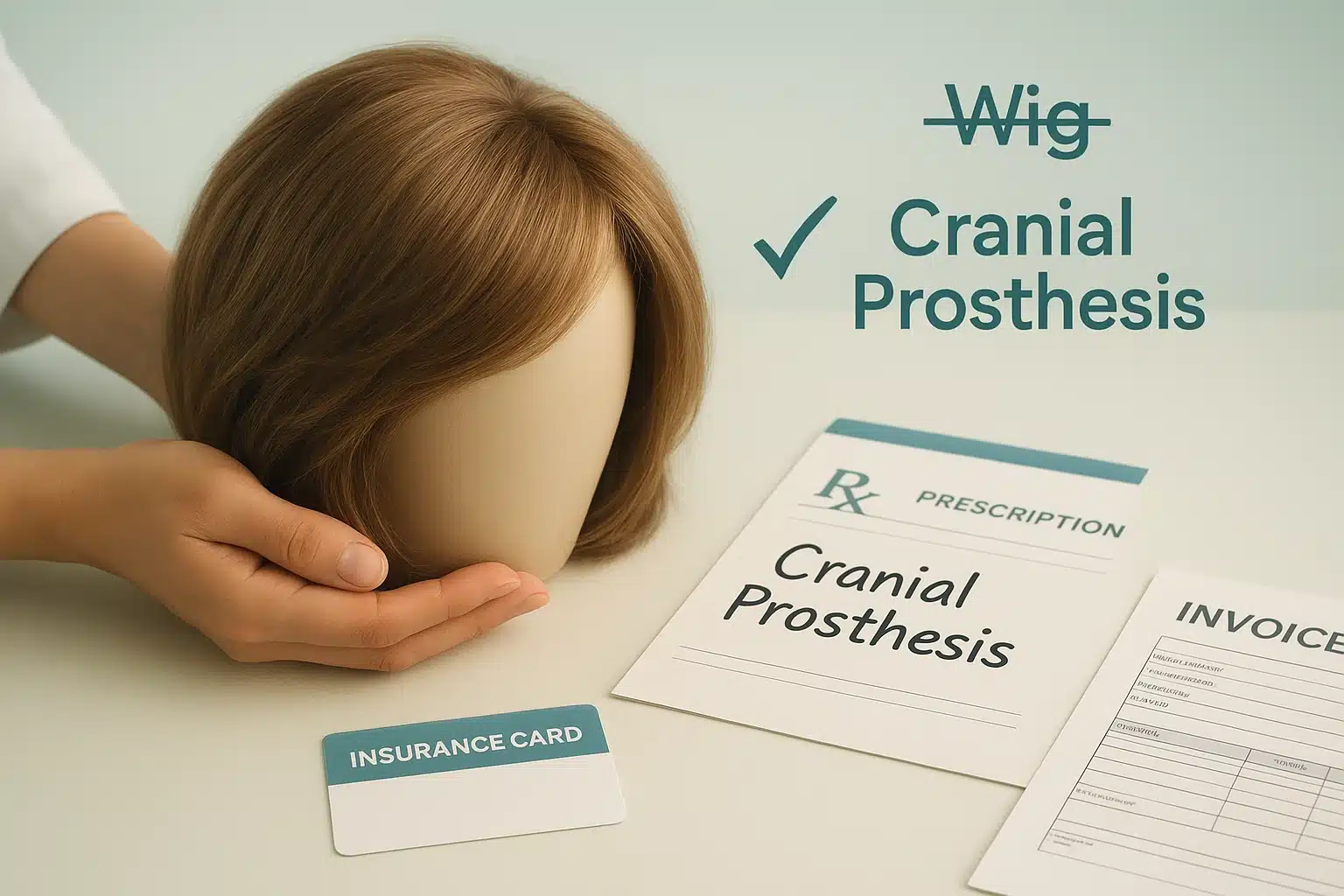
The single most important thing you can learn about buying a hairpiece through insurance is this: never call it a wig on your paperwork.
To a health insurance provider, a “wig” is classified as a cosmetic item, which means an automatic claim denial. However, when a hairpiece is prescribed by a doctor for a compromised scalp due to a medical condition, it legally becomes a cranial prosthesis (or a hair prosthesis).
A cranial prosthesis is recognized as a necessary prosthetic device or Durable Medical Equipment (DME). The magic code you will need to become familiar with is HCPCS Code A9282 (Wig, any type, each), often paired with the modifier NU (New Item). Changing your vocabulary from “wig” to “cranial prosthesis” is the foundational step in getting your expenses covered.
The Reality of Direct Billing in Utah
Many people assume they can walk into a local wig shop, hand over their SelectHealth or PEHP insurance card, and have the store bill their provider directly—just like at a pharmacy.
Unfortunately, this isn’t how the industry operates. No major wig stores in Salt Lake City bill health insurance directly. They operate on an out-of-network, reimbursement-only model. You will need to pay for the cranial prosthesis upfront and submit a manual claim to your insurance provider to be reimbursed.
Furthermore, Utah does not have a state legislative mandate requiring private insurers to cover medical hairpieces. Because plans from local giants like SelectHealth, Regence BlueCross BlueShield of Utah, and PEHP vary wildly, pre-authorizing your purchase with your insurance company is absolutely essential before you begin shopping.
The HSA/FSA Debit Card Trap
If you plan to use a Health Savings Account (HSA) or Flexible Spending Account (FSA), you might think you can just swipe your specialized debit card at the register.
Be prepared: your card will almost certainly decline.
This isn’t because your purchase isn’t eligible. It’s because of a merchant processing system called Merchant Category Codes (MCC). Most local wig boutiques are registered under standard “retail/apparel” MCCs. When your HSA/FSA provider sees an apparel code, the system automatically rejects the transaction.
To use these funds successfully, you will need to pay with a standard credit or debit card at checkout. You can then submit your itemized invoice and doctor’s prescription to your HSA/FSA administrator for manual reimbursement. According to IRS Publication 502 and Section 213(d), a prescribed cranial prosthesis is fully eligible for tax-free HSA/FSA spending, covering the purchase price and even specialized wig maintenance services required to keep the prosthetic functional.
The 4-Step Road to Reimbursement
Transforming a confusing process into an empowered execution requires a clear roadmap. Here is exactly how to navigate the system:
Step 1: The Pre-Verification Call
Call the number on the back of your insurance card and ask specifically about your coverage for “cranial prostheses” or “prosthetic devices.” Ask if your plan covers HCPCS Code A9282, what percentage they cover, and if they require a prior authorization from your physician.
Step 2: Securing the Prescription
Your doctor’s prescription is your golden ticket. Ensure your physician or oncologist includes:
- The exact phrase “Cranial Prosthesis”
- Your specific ICD-10 Diagnosis Code (e.g., L63.9 for Alopecia Areata, C92.90 for chemotherapy-induced hair loss)
- The physician’s National Provider Identifier (NPI) number and signature
Step 3: The Retail Consultation
Visit a specialized local boutique. Let them know immediately that you are shopping for a medical prosthesis so they can prepare the correct paperwork. You will pay out of pocket, but you must leave the store with an itemized receipt that specifically reads “Cranial Prosthesis – HCPCS Code A9282.”
Step 4: Submitting the Claim
Package your doctor’s prescription, the specialized store invoice, and your insurance company’s specific out-of-network claim form, and submit them for reimbursement.
Local Directory: SLC Boutiques Equipped for Medical Hair Loss
While you can search for general wigs in Salt Lake City, buying a medical hairpiece requires a boutique that understands privacy, compassionate care, and insurance-compliant paperwork. Here are the leading local options:
- Creative Wigs & Hair Replacement: With locations in Salt Lake City, South Jordan, Orem, and St. George, this shop is highly experienced in medical hair loss. They offer 10%–20% patient medical discounts, private rooms for sensitive consultations (including head-shaving), and specialized custom alterations using “wig ovens” to safely reshape synthetic fibers. Crucially, they know how to issue an invoice marked for a Cranial Prosthesis.
- Headcovers by Joni: Located in Salt Lake City (2286 E 3300 S), this appointment-only boutique emphasizes a highly personalized, private setting—ideal for those who feel overwhelmed by traditional retail environments.
- Lynne’s Wig Boutique: Located in American Fork, this shop sits strategically between Salt Lake City and Provo. They boast a massive inventory and offer the private styling experiences essential for medical patients.
- Apollo Hair Systems: Based in SLC (5525 S 900 E), Apollo focuses on semi-permanent medical hair replacement systems and custom cranial prosthetics, offering a different approach to hair replacement.
- K’s Wig Shop & Robert’s Wigs: For residents in Northern Utah, these Ogden and Riverdale-based shops offer excellent local service options without the commute into SLC.
Finding Additional Support
If you hit a roadblock with your insurance, don’t lose hope. Local support networks like the Huntsman Cancer Institute Patient Navigation team (1-800-395-4420) are incredible allies in coordinating care and offering verified local referrals.
If you lack insurance coverage entirely, there are alternative financing avenues. Several national non-profits, such as The Pink Wig Project and the Verma Foundation, offer free wig programs for qualifying individuals. Additionally, you can learn more about flexible ways to fund medical wigs to ease the upfront financial burden.
Frequently Asked Questions (FAQ)
Does health insurance cover wigs in Utah?
Utah does not have a state law mandating that private health insurance companies cover medical hairpieces. Coverage varies greatly depending on your specific plan (like SelectHealth or Regence BCBS). You must call your provider to ask about your out-of-network benefits for a “cranial prosthesis.”
Can I use my HSA or FSA debit card to buy a wig?
Usually, no. Because wig stores are classified as “retail” by credit card processors, HSA/FSA debit cards will automatically decline at the register. You will need to pay with a regular card and submit the itemized receipt and your doctor’s prescription for manual reimbursement.
What tax benefits exist for medical hairpieces?
Under IRS Publication 502, if you itemize deductions on Schedule A of your tax return, the cost of a prescribed cranial prosthesis is tax-deductible once your total medical expenses exceed 7.5% of your Adjusted Gross Income (AGI). If you use an HSA or FSA, the 7.5% AGI threshold does not apply—you can use those funds tax-free immediately.
What must my store receipt say?
Your invoice must never just say “Wig.” It must specifically state “Cranial Prosthesis” and ideally feature the billing code “HCPCS Code A9282” to be accepted by insurance and HSA/FSA administrators.
Taking the Next Step
Experiencing medical hair loss is a profound life event, but securing a beautiful, confidence-restoring hairpiece shouldn’t be an insurmountable financial burden. By understanding the critical terminology, knowing exactly how the reimbursement process works, and leaning on experienced local boutiques in the Salt Lake City area, you can take back control of your journey. Start by calling your insurance provider today to understand your benefits, and then schedule a private consultation with a compassionate local professional who can help you find your perfect match.