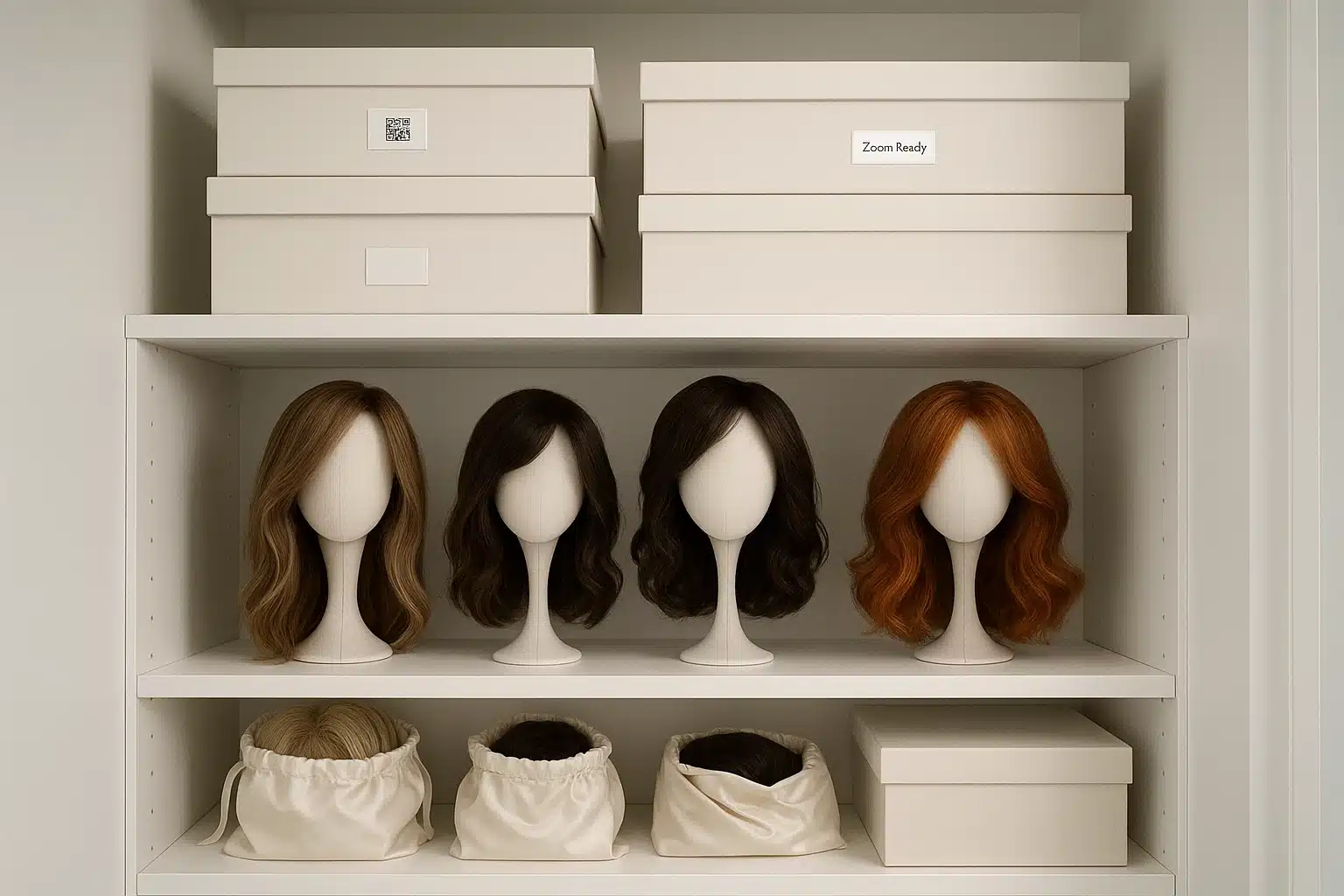
There comes a distinct moment in every wig enthusiast’s journey when a casual assortment of hairpieces transforms into a full-fledged collection. You open your closet, and instead of seeing a neat row of options, you’re greeted by a chaotic sea of boxes, tangled fibers, and precarious mannequin heads fighting for shelf space. If you are nodding in agreement, you have officially graduated from “wig wearer” to “wig collector.”
Managing a large inventory—whether it’s 10 pieces or 50—requires a shift in mindset. You are no longer just maintaining a hairstyle; you are archiving an investment. While the fundamentals of care remain constant, the logistics of space change drastically. For a deep dive into the basics of preservation, it is worth revisiting The Definitive Guide to Wig Storage: From Everyday Stands to Travel-Proof Cases, which lays the groundwork for protecting your pieces. However, once you move beyond the basics, you need a system that scales with your style.
The Science of “Closet Climate”
Before you buy another shelving unit, it is crucial to understand the environmental science behind fiber degradation. A common misconception is that if a wig is in a box, it is safe. In reality, the micro-climate of your storage area plays a massive role in the longevity of your collection.
Humidity and Fiber Health
Different fibers react differently to their environment.
- Human Hair: Just like biological hair, these wigs are hygroscopic—they absorb moisture from the air. Storing them in a humid bathroom or a damp basement can lead to mold, frizz, and the breakdown of knotting at the cap.
- Synthetics: While synthetic fibers are more resistant to humidity, they are highly sensitive to friction and static. A dry environment is generally better, but excessively dry heat can make fibers brittle.
The Fix: Store your collection in a climate-controlled room away from direct sunlight (UV rays bleach color) and distinct temperature fluctuations. If you live in a humid coastal area, silica gel packets inside your storage boxes are non-negotiable.
The “Tetris” of Storage: Maximizing Verticality
The biggest pain point for collectors is floor and surface space. You simply cannot display 40 wigs on Styrofoam heads without turning your bedroom into a salon. The solution lies in vertical optimization and understanding which wigs actually need a head.
The Hierarchy of Display
Not every wig deserves prime real estate on a mannequin. Use a tiered system:
- The Daily Rotation (3-5 wigs): These stay on stands for airflow and immediate access.
- The Occasion Wear: Stored in boxes or silk bags.
- The Archive: Retired styles or seasonal pieces (e.g., heavy density for winter) stored in under-bed bins.
Solving the Mannequin Math
When space is tight, many collectors struggle with how to store a wig without a head while maintaining the cap’s integrity. The answer lies in the “Inside-Out Method.” Gently fold the wig inside out so the fibers are tucked into the cap. This protects the hair from friction and dust. Place a ball of acid-free tissue paper inside the cap to help it hold its shape, then slide it into a silk bag or a labeled shoebox. This method allows you to stack wigs like books rather than spreading them out like trophies.
Advanced Indexing: The Digital Wig Log
When you own over 20 wigs, memory fails. You might forget which box holds the “Beach Wave Blonde” versus the “Platinum Bob.” This is where digital indexing transforms your collection management.
The QR Code System
It sounds high-tech, but it is incredibly simple.
- Take a photo of each wig while you are wearing it.
- Create a free QR code linked to that photo (or a folder containing the photo and details).
- Print the QR code and tape it to the outside of the storage box.
Now, instead of rummaging through opaque boxes, you simply scan the box with your phone to see exactly what is inside.
Labeling by “Mood,” Not Just Color
Most collectors label boxes by color (“Red,” “Brunette”). However, we usually choose hair based on the occasion. Try labeling your storage based on function:
- “Zoom Ready”: Low maintenance, face-framing, professional.
- “High Glam”: Longer lengths, requires styling time.
- “Errand Runner”: Throw-on-and-go caps, hats with hair.
The Maintenance Matrix
Storage isn’t just about putting things away; it’s about ensuring they are ready to wear when you pull them out.
The “Four-Finger Rule”
If you do use mannequin heads, avoid the most common stretching mistake. Never pull the wig down aggressively over the mannequin’s “ears.” Always place four fingers on the forehead of the mannequin and set the wig’s hairline above them. Pin it gently. If you pull it too tight, the elastic in the cap will permanently stretch during storage, leaving you with a loose fit.
Dealing with “Big Hair”
For those who collect high-volume drag styles or elaborate cosplay pieces (similar to the “Wigs by Vanity” aesthetic), standard boxes won’t work. These pieces require “floating” storage. Invert a wire shelving unit or use a pegboard system on a wall. Mount the wig heads horizontally on pegs so the long hair hangs freely without pooling on a shelf, which prevents tangling at the nape.
Travel and Emergency Hacks
Even the most organized collector travels. If you arrive at a hotel and realize you forgot your wig stand, don’t panic.
The Lamp Base Hack: Most hotel lamps have a finial or a sturdy base. If the lamp is cool to the touch (LED), it can serve as a temporary stand. Alternatively, an ice bucket turned upside down creates a perfect dome shape to support a cap overnight.
DIY Cardboard Stand: Keep a template in your suitcase. You can cut two pieces of stiff cardboard with opposing slits to slide them together, creating a cross-section “X” stand that folds flat for travel but supports a wig perfectly.
The Retirement Protocol: Ethical Letting Go
A major aspect of organization is decluttering. But what do you do with wigs you no longer wear? Throwing them away feels wasteful and contributes to landfill mass.
Establish a “Retirement Protocol.”
- The 12-Month Rule: If you haven’t worn it in a year, and it’s not sentimental, it’s time to move it on.
- The Wig Bank: Organizations like Simply Wigs and various cancer support charities operate “Wig Banks.” They accept gently used donations, wash and sanitize them, and provide them to individuals who cannot afford hair replacement. Donating your “retired” collection is a beautiful way to extend the lifecycle of your wigs and help someone else feel confident.
Frequently Asked Questions
Is it better to store wigs in plastic or fabric bags?
Fabric is generally superior, specifically silk or satin bags. Plastic seals out air completely, which can trap residual moisture and lead to musty odors or mold. Fabric allows the wig to “breathe” while still protecting it from dust and friction.
How do I stop my stored wigs from smelling stale?
If a wig is going into long-term storage (6+ months), ensure it is completely clean and dry first. You can place a small cedar block or a dryer sheet inside the box (not touching the fiber directly) to keep it smelling fresh.
Can I store synthetic wigs in a cold garage?
It is not recommended. While cold is better than heat, garages often have fluctuating humidity and temperature. These constant changes can cause the fibers to expand and contract, eventually degrading the quality. Stick to a climate-controlled closet.
How do I store long wigs without them tangling?
For wigs past shoulder length, gently braid the hair into a loose plait before storing. This prevents the fibers from rubbing against each other and creating friction tangles. When you take it out, simply undo the braid and shake it out.
Next Steps for the Curator
Transforming your wig storage from a cluttered pile to a curated archive takes time, but the payoff is immense. You will rediscover pieces you forgot you loved, extend the life of your investments, and make your daily routine smoother. Start small: reorganize your “Top 5” rotation today, and slowly work your way through the rest of the collection. Your future self—and your wigs—will thank you.