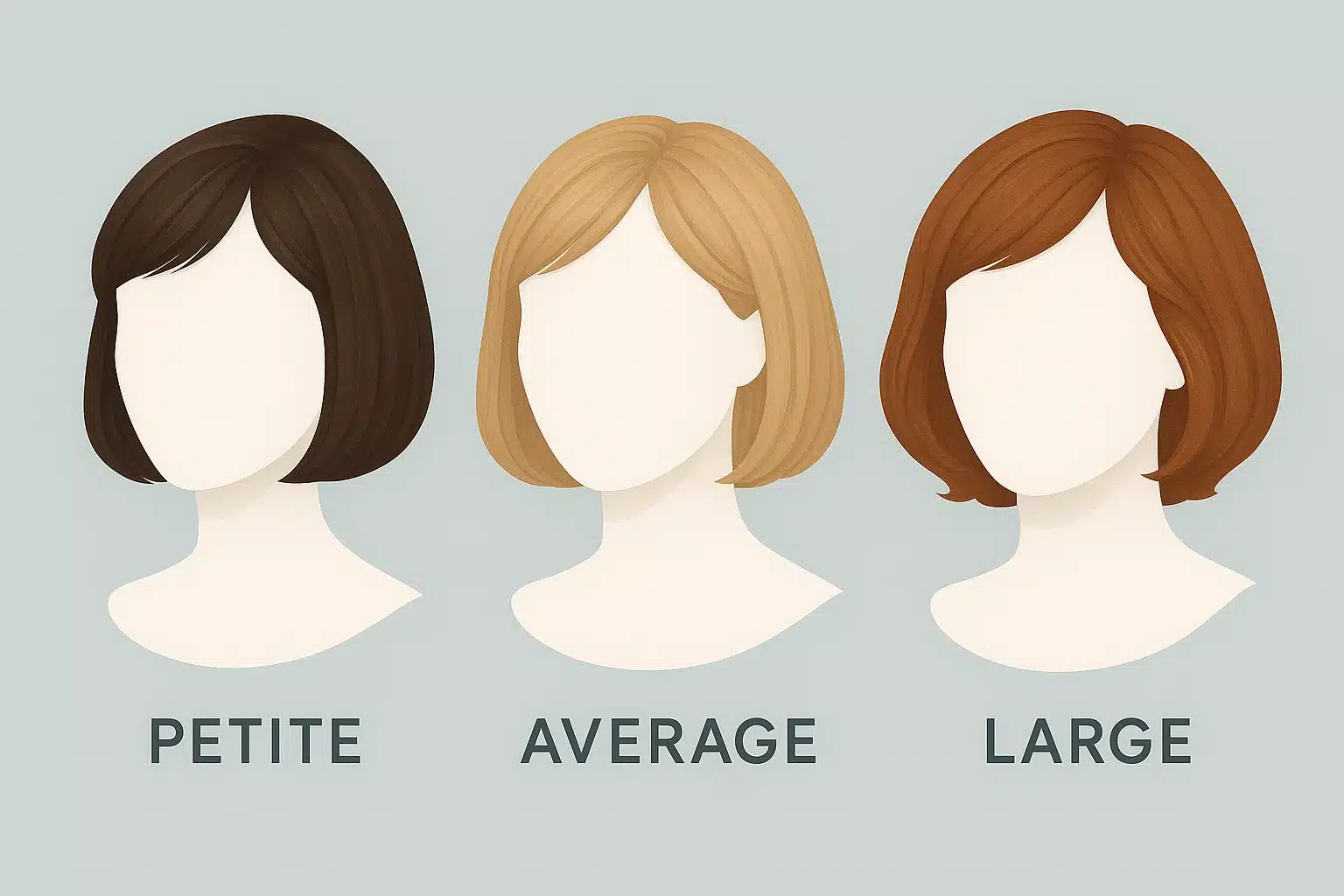
Imagine finding a dress that looks stunning on the hanger, but when you put it on, it pinches in the wrong places or slips off your shoulders. It doesn’t matter how beautiful the fabric is; if the fit is wrong, you won’t feel confident wearing it. The exact same principle applies to wigs. For many, the journey to finding the right hairpiece is stalled not by style or color, but by the physical fit of the cap.
If you have ever tried on a wig that felt like a vice grip within minutes, or one that felt insecure with every turn of your head, you are likely part of the significant population that doesn’t fall squarely into the “Average” size category. Before diving into specific sizes, it’s helpful to understand the landscape of manufacturers, as detailed in our Essential Guide to Top Premier Wig Brands. Understanding the nuances of these manufacturers is the first step toward reclaiming your comfort and confidence.
The Myth of Universal Sizing
One of the most common “aha moments” our clients experience is realizing that wig sizing is not standardized across the industry. Much like buying shoes or jeans, a “Medium” in one brand might be a “Large” in another.
Most wigs produced today are “Average” size, typically designed for a head circumference of 21.5 to 22.5 inches. However, nature rarely adheres to strict manufacturing averages. If your measurements deviate even by half an inch, an average cap can ruin your experience.
- The Petite Struggle: Excess bulk at the crown, gaps near the ears, and a hairline that sits too low on the forehead.
- The Large Cap Struggle: Comparison tightness, headaches (“wig headaches” are very real), and the wig riding up in the back because it cannot stretch enough to cover the nape.
The Foundation: How to Measure Your Head
Before we can discuss which brands will be your best friends, we must establish your true size. Guessing your size based on hat fit is a common mistake. To get an accurate reading, you need a flexible sewing tape measure.
While circumference is the most common measurement, a comprehensive wig fitting involves three key numbers:
- Circumference: Place the tape measure at your front hairline, wrap it behind your ear, to the nape of your neck, around the other ear, and back to the front.
- Front to Nape: Measure from your natural hairline at the forehead, over the top of your head, down to the bone at the base of your skull (the occipital bone).
- Ear to Ear: Measure from the top of one ear, over the crown of your head, to the top of the other ear.
Pro Tip: If you are wearing bio hair under your wig, ensure it is pinned flat exactly how you intend to wear it under the wig cap before measuring.
Decoding the Brands: Who Fits Whom?
Once you have your measurements, you can stop browsing blindly and start targeting the brands that engineer their caps for your specific anatomy. Different manufacturers have different “sizing personalities” based on their design heritage and target demographics.
The Petite Specialist: Ellen Wille
If you consistently find wigs to be “too much”—too much fabric, too much room, too loose—Ellen Wille is likely the brand you have been searching for.
- The Fit: Known for a European design influence, these caps run smaller than their American counterparts. An “Average” Ellen Wille wig often fits like a “Petite/Average” in other brands.
- Why it works: They are ideal for individuals with finer bone structures or those who find American brands bulky.
The Generous Standard: Gabor
On the other end of the spectrum, Gabor is celebrated for comfort and ease.
- The Fit: Gabor wigs tend to run slightly generous. Their “Average” often accommodates up to a 22.5 or even 23-inch circumference comfortably due to the stretch capabilities of their cap construction.
- Why it works: If you are on the borderline between Average and Large, Gabor is often the safest and most comfortable starting point without needing to special order a Large cap.
The Structured Variety: Jon Renau
Jon Renau is a favorite because they don’t just rely on stretch; they manufacture specific types of wig caps for different sizes.
- The Fit: They are one of the few brands that offer specific “Petite,” “Average,” and “Large” options across many of their most popular styles.
- Why it works: Their sizing is very true-to-chart. If you measure as a Large (23 inches), a Jon Renau Large cap is engineered specifically for that circumference, rather than just being a stretched-out Average.
The True-to-Life Fit: Raquel Welch
Raquel Welch wigs are famous for their Memory Cap® technology.
- The Fit: These caps are designed to mold to the shape of the head over time. While generally True-to-Size Average, the technology allows for a more custom feel after a few wears.
- Why it works: This is an excellent middle ground for those who measure as a standard Average but have a unique head shape (e.g., flatter in the back or wider at the sides).
Material Matters: Synthetic vs. Human Hair
It is also worth noting that the fiber affects the fit. Best human hair wigs are often constructed on caps that have less elasticity than machine-made synthetic wig caps. Hand-tied caps, often found in luxury lines, offer the ultimate comfort but rely on precise measurements because they do not stretch as aggressively as wefted caps.
If you are investing in a high-end human hair piece, ensuring you are in the correct size bracket (Petite vs. Average) is even more critical than with a basic synthetic piece.
Frequently Asked Questions
Q: Can I just use the adjustable straps to make a Large wig fit a Petite head?
A: Generally, no. Adjustable straps can tighten a wig’s circumference by about 0.5 to 1 inch. However, they cannot change the ear-to-ear or front-to-back measurements. Putting a Large wig on a Petite head will result in gaps over the ears and bagging at the crown, regardless of how tight you cinch the straps.
Q: I fall exactly between Average and Large. What should I do?
A: In this scenario, we usually recommend sizing up to the Large or choosing a brand known for a generous fit, like Gabor. It is much easier to make a slightly loose wig secure (using a wig grip or liner) than it is to wear a wig that is too tight, which can cause pain and damage your hairline.
Q: Does hair length affect cap size?
A: No, the length of the hair fiber does not change the cap size. However, longer, heavier wigs can feel different on the head. If a wig is heavy and the fit is incorrect, it is more likely to slip backward. A proper fit is essential for longer styles to ensure they stay secure.
Finding Your Confidence
Knowing your size is the most powerful tool you have in your wig journey. It transforms the experience from a guessing game into a curated selection process. By understanding that Gabor offers room to breathe, while Ellen Wille hugs a petite frame, you can filter out the noise and focus on the styles that will not only look beautiful but feel like they were made just for you.
If you have your measurements in hand but are still unsure which brand aligns with your numbers, take your time to explore the collections with this new perspective. The perfect fit is out there.