There is a unique kind of sinking feeling that happens when you notice the first signs of wear on your favorite wig. Maybe it’s a tiny tear in the delicate lace near the hairline, or perhaps the ends of the hair have started to feel inexplicably brittle and frizzy. For many, a high-quality wig isn’t just an accessory; it’s a daily source of confidence, comfort, and normalcy. When it starts to show its age, the immediate panic sets in: Do I have to throw it away and start all over?
The short answer is absolutely not. Finding the best wig stores in Orlando, FL is just the beginning of your hair journey. The secret to a truly seamless, long-lasting experience lies in what happens after your purchase. Orlando is home to an emerging network of specialized salons that offer surgical-level wig repair, transforming the way we think about hairpiece longevity. Let’s dive into the fascinating world of wig restoration, re-lacing, and the science of bringing your favorite hairpieces back to life.
The Sustainability Shift: Repair vs. Replace
For years, a widespread misconception has plagued the wig community: that once a wig starts to look worn, it is effectively “dead.” This has led to a cycle of frequent, expensive replacements. However, the new standard in Orlando’s wig community is sustainability through professional restoration.
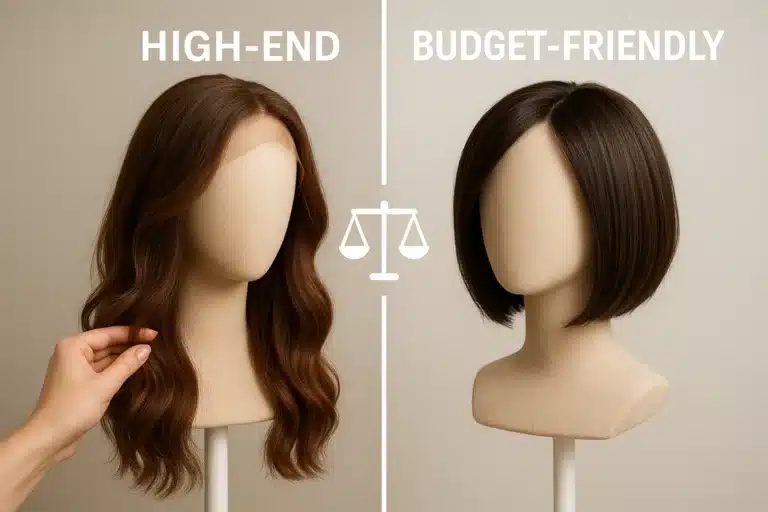
Consider the cost-benefit breakdown. If you are wondering how long do human hair wigs last, the answer heavily depends on maintenance. A premium human hair wig can easily be an investment of $800 to over $1,500. When wear and tear inevitably happen, a professional wig repair visit typically ranges between $100 and $400. Investing in professional maintenance every few months can quite literally save you thousands of dollars a year, doubling or even tripling the lifespan of your unit.
Demystifying the Magic: What is Re-Lacing and Ventilation?
When you take a damaged wig to a specialized salon, you aren’t just paying for a deep clean—you are paying for artisanal craftsmanship.
The Anatomy of a Tear
Lace tears usually happen for two reasons: adhesive buildup over time, or over-tension from improper placement. When lace tears, many assume the piece is ruined. However, professional salons can perform either a “lace patch” or a full closure replacement.
The Art of Ventilation
If you’ve ever looked closely at a high-quality lace front, you’ll see individual hairs emerging seamlessly from the sheer material. This doesn’t happen by machine. The process is called ventilation, where a specialist uses a microscopic needle to hand-tie individual strands of hair into the lace, knot by knot.
If your wig is experiencing bald spots or shedding from over-brushing, a professional can literally rebuild the density of your wig through ventilation. They can also perform cap resizing to ensure the wig fits snugly, preventing the dangerous tension that causes lace to tear in the first place.
The Science of Fiber: How Salons Perform “Mane Rescues”
Understanding how different fibers react to wear and tear is the ultimate “aha moment” for wig wearers. Orlando’s intense heat and humidity provide a unique challenge, making professional salon intervention a necessity rather than a luxury.
Reviving Synthetic Hair: The Power of Steaming
A common complaint with synthetic wigs is “friction frizz”—that stubborn, tangled roughness that occurs at the nape of the neck where the hair rubs against your collar. Many people mistakenly think the synthetic fibers are permanently fried.
In reality, synthetic hair is essentially specialized plastic that holds a “fiber memory.” When friction alters that memory, it looks frizzy. A professional knows how to steam a synthetic wig using precise, salon-grade tools to safely heat the fibers back to their original, smooth state, resetting the factory memory without melting the piece.
Restoring Human Hair: The Acid-Base Secret
Human hair wigs don’t receive natural oils from your scalp, making them susceptible to severe dryness over time. When learning how to care for human hair wig units, you might notice that standard deep conditioning eventually stops working.
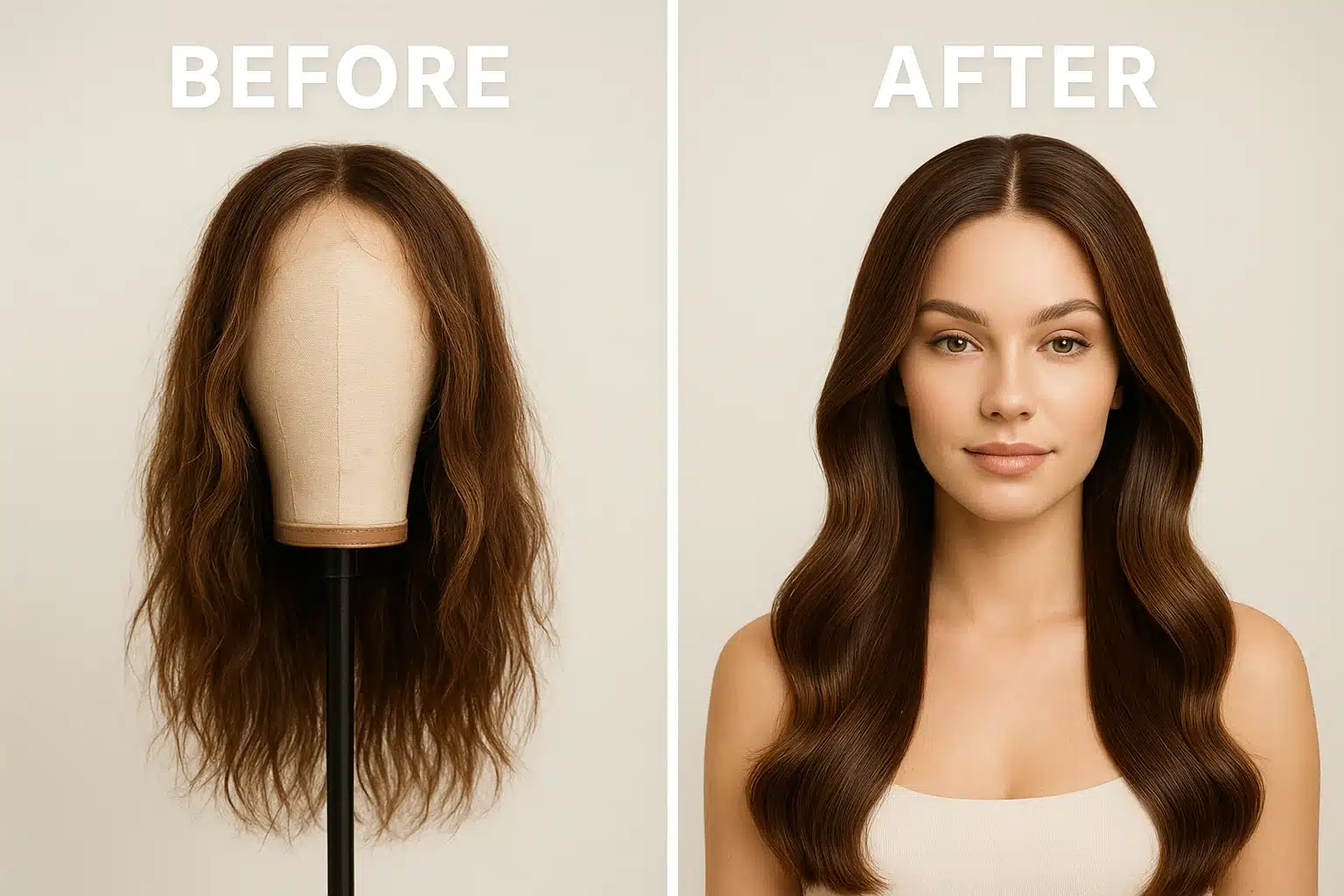
This is where professional restoration steps in. Specialized salons use an acid-base stripping process to remove layers of old product buildup, hard water minerals, and environmental pollutants. Following this, the wig is submerged in a professional-grade silicone bath, which artificially replenishes the lost cuticle layer, restoring the silky, liquid movement of brand-new hair.
The “Is it Dead?” Diagnostic Checklist
How do you know when it’s time to seek out a local Orlando restoration service? Use this quick diagnostic checklist before you decide to toss your wig:
- The Frizz Test: Is the hair clumping together at the nape of the neck despite brushing? (Verdict: Needs professional steaming or a silicone bath).
- The Lace Check: Are there frayed edges or small tears forming near the temples or hairline? (Verdict: Needs professional mending before the tear expands).
- The Density Drop: Can you see the tracks or lace through the hair when the wind blows? (Verdict: Needs professional ventilation to add hair back in).
- The Stretch Test: Does the wig give you a headache, or slide back easily throughout the day? (Verdict: Needs cap resizing or tightening).
Preventative Care: The Four-Finger Rule
While local salons are your best safety net, preventing damage starts at home. One of the biggest culprits of lace tearing and edge fraying is improper placement, which puts undue stress on the fragile front lace.
Enter the Four-Finger Rule: Place four of your fingers horizontally across your forehead, resting the bottom finger on your brow bone. Your wig’s hairline should sit exactly where your top finger lands. Placing the wig any further back or forward creates structural tension across the cap. Pairing proper placement with the best wig care products ensures your salon visits remain routine maintenance rather than emergency reconstructive surgeries.
Frequently Asked Questions (FAQ)
Can my synthetic wig actually be fixed, or is restoration only for human hair?
Yes, synthetic wigs can absolutely be restored! While they cannot be chemically processed like human hair, professionals use advanced steaming techniques to remove friction frizz and reset the synthetic fiber memory, making it look brand new.
What is the difference between patching lace and a full closure replacement?
Patching involves delicately sewing invisible thread or adding a tiny piece of matching lace to stop a small tear from spreading. A full closure replacement is a more intensive surgery where the entire damaged lace section is removed and a brand new hand-tied lace front is attached to the existing wig cap.
Can a salon change the density of my wig during restoration?
Yes. If your wig has thinned out over time, a professional can use a technique called ventilation to hand-tie new hair into the cap, restoring its original volume and density.
Is it cheaper to repair or replace my wig?
In almost all scenarios, repairing is significantly cheaper. Professional restoration services generally cost between $100 and $400, depending on the severity of the damage, whereas purchasing a new high-quality medical-grade or human hair wig can cost upwards of $800 to $2,000.
Your Next Steps in Wig Care
Understanding the mechanics behind wig restoration empowers you to make informed, cost-effective decisions about your hair. Your wig is an investment in how you show up in the world, and like any great investment, a little expert maintenance goes a incredibly long way.
Before you give up on a piece that has lost its initial luster, take a closer look at the fibers, the lace, and the cap. By recognizing the difference between irreversible damage and routine wear-and-tear, you can confidently partner with local professionals to breathe new life into your favorite styles.