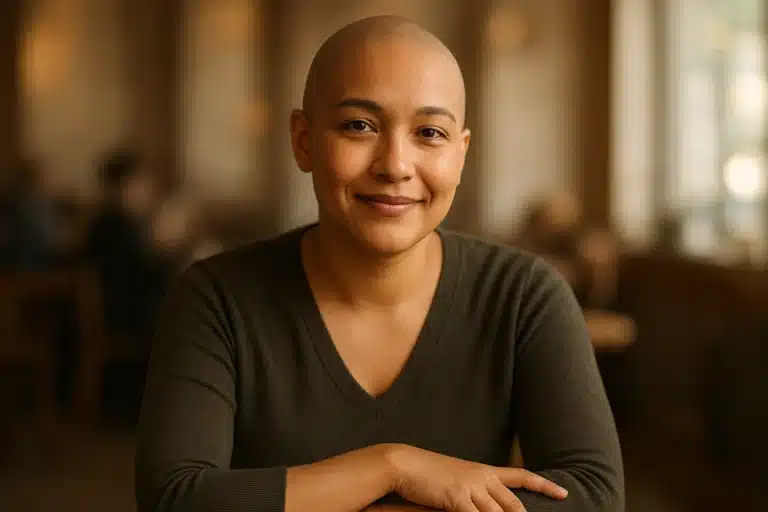
When we hear the term “hair loss,” the public conversation almost immediately drifts toward chemotherapy or standard male pattern baldness. While these are significant experiences, they represent only a fraction of the hair loss community. For thousands of individuals, the journey is vastly different, stemming from complex, often misunderstood conditions like trichotillomania (hair-pulling disorder), scarring alopecia (cicatricial alopecia), or unique genetic predispositions. These experiences often come with their own specific set of emotional hurdles, ranging from confusion to isolation.
At Wig Superstore, we believe that every hair journey is valid and deserves a solution that brings peace of mind. Your hair story is unique, and your solution should be too. In sharing these inspiring journeys of Wig Superstore customers, we hope to show that you are not alone. Whether you are looking for a temporary aid while your hair recovers or a permanent style solution, there is a path forward that prioritizes your confidence and comfort.
Understanding the “Why” Behind the Loss
Before we discuss solutions, it is vital to validate the “why.” Many of our readers arrive here feeling exhausted from explaining their condition to people who don’t quite understand. Let’s bridge that gap.
The Complexity of Trichotillomania
Trichotillomania is often misunderstood as a “bad habit,” but medical authorities like the Mayo Clinic classify it as a complex impulse control disorder. It involves an irresistible urge to pull out hair, often resulting in patchy hair loss. For many, this creates a difficult cycle: the stress of hair loss triggers more pulling.
- The Reality: It is not a failure of willpower. It is a condition that requires compassion, not judgment.
- The Need: Individuals often need a solution that covers specific patches while preventing physical access to the hair, effectively “breaking the circuit” of pulling.
The Permanence of Scarring Alopecia
Unlike non-scarring forms of alopecia where hair follicles remain alive, cicatricial (scarring) alopecia involves inflammation that destroys the follicle and replaces it with scar tissue. This results in permanent hair loss.
- The Reality: Because the loss is permanent, waiting for regrowth isn’t the strategy. The focus shifts to long-term cosmetic restoration.
- The Need: Since the scalp is often inflamed or sensitive, the primary requirement is not just style, but extreme comfort and breathability.
The Bridge to Confidence: Dispelling the Myths
If you are considering a wig or hairpiece for the first time, you likely have questions that feel scary to ask. Let’s address the most common myths that keep people from finding relief.
| Myth | Fact |
|---|---|
| “Wearing a wig will stop my natural hair from growing back.” | False. A properly fitted wig protects your biological hair and scalp from environmental damage and friction. For those with trichotillomania, a wig can actually promote regrowth by acting as a physical barrier against pulling. |
| “Wigs look fake and people will know.” | False. High-quality synthetic and human hair wigs now utilize technology like monofilament tops and lace fronts, which mimic natural hair growth directly from the scalp. |
| “Wigs are hot and itchy.” | False. While cheap costume wigs are uncomfortable, medical-grade wigs are designed with lightweight, breathable caps specifically for sensitive scalps. |
Real Stories, Real Solutions
The “aha moment” for many of our customers comes when they realize a wig isn’t a disguise—it’s an accessory of empowerment. Here is how different conditions require different approaches, based on the diverse needs we see every day.
The “Barrier Method” for Trichotillomania
For those navigating trichotillomania, the goal is often twofold: restore the aesthetic of full hair and protect the biological hair underneath to allow for recovery.
Many clients find that a full wig or a substantial topper acts as a “protective hug” for the scalp. By physically covering the trigger zones, the hand cannot reach the hair root. This sensory interruption can be a powerful tool in behavioral recovery.
- The Strategy: Look for hair toppers or wigs that are secure enough to sleep in occasionally if nighttime pulling is a struggle, or pieces that are easy to put on during high-stress times (like working at a computer) when subconscious pulling often occurs.
Comfort First for Scarring Alopecia
For conditions involving scalp sensitivity or scarring, the texture of the wig cap is just as important as the look of the hair. Standard wefted caps might feel abrasive against tender skin.
We recommend seeking out comfortable wigs for sensitive scalps, specifically those with hand-tied or double-monofilament caps. These designs use soft, mesh-like materials that glide over the skin rather than scratching it, ensuring that your hair solution doesn’t irritate an already sensitive condition.
Finding Your Path: A Solution Finder
How do you know which option is right for your specific stage of hair loss?
1. The Topper (Partial Coverage)
Best for: Early-stage trichotillomania, female pattern thinning, or localized alopecia areata.
- How it works: Clips into existing biological hair.
- Why choose it: It integrates with your own hair, providing volume and coverage exactly where you need it (usually the crown or part line) without covering your entire head.
2. The Full Wig (Total Coverage)
Best for: Advanced trichotillomania, scarring alopecia, totalis/universalis, or anyone seeking a completely new look.
- How it works: Covers the entire scalp; no biological hair needs to be showing.
- Why choose it: It offers total freedom. You don’t have to worry about color-matching your bio hair or hiding bald spots. It provides a “set it and forget it” level of confidence.
Frequently Asked Questions
Will wearing a wig irritate my scalp if I have active inflammation?
If you have active inflammation (common with scarring alopecia), material choice is critical. Avoid standard “open weft” caps which can be rough. Opt for 100% hand-tied caps or double-monofilament tops, which are designed to be silky-smooth against the skin.
How do I keep a wig on if I don’t have hair for clips?
For total hair loss, you do not use clips. Instead, the wig relies on the tension of the velvet ear tabs and the adjustable nape straps. For extra security, many wearers use a velvet “wig grip” band or medical-grade adhesive tape (if the scalp allows) to keep the piece firmly in place all day.
Can a wig really help me stop pulling my hair?
While a wig is not a cure for the underlying impulses of trichotillomania, our customers frequently report that it serves as an effective “speed bump.” The inability to feel the texture of the natural hair or reach the root often interrupts the pulling cycle long enough for the urge to pass.
Taking the Next Step
Hair loss—regardless of the medical term attached to it—is a journey, not a destination. Whether you are managing a genetic condition or navigating the complexities of a BFRB (Body-Focused Repetitive Behavior), you deserve to look in the mirror and see you, not your hair loss.
We invite you to explore our resources, read more about cap constructions, and take your time. There is no rush, and there is a whole community here ready to support you when you are ready to find your perfect fit.