You have likely found a wig that looks fantastic right out of the box. But as you wear it, you might find yourself wishing for slightly looser beach waves, a sleeker straight look, or simply needing to revive the texture after weeks of daily wear. For many of our clients navigating hair loss, the ability to customize a wig isn’t just about vanity—it’s about reclaiming your personal identity.
There is a common misconception that synthetic wigs are static—that you are stuck with the style provided by the manufacturer forever. While this was true twenty years ago, today’s advanced fibers offer a surprising amount of versatility if you know the correct techniques.
However, modifying synthetic hair requires a fundamentally different approach than styling biological hair. It is a process of managing “fiber memory” rather than altering protein bonds. This guide will walk you through the advanced methods of re-texturing, steaming, and transforming your synthetic wig safely, ensuring you can achieve a custom look without compromising the longevity of your investment.
The Science of Synthetic Fibers: Understanding Heat Compatibility
Before you reach for a styling tool, you must identify exactly what you are working with. The synthetic wig market is projected to reach over $12 billion by 2034, largely driven by the innovation of heat-friendly fibers. However, not all synthetics are created equal, and treating them incorrectly can lead to irreversible damage (melting or singing).
The Two Categories of Synthetic Fiber
- Traditional Synthetic: These fibers possess a “baked-in” style memory. They are incredibly low maintenance because they bounce back to their original shape after washing. Warning: Generally, these cannot withstand heated tools.
- Heat-Friendly (HD) Synthetic: These fibers are engineered to withstand heat up to a specific threshold, usually between 260°F and 350°F. They allow for re-styling but require more maintenance to prevent friction frizz.
The Golden Rule of Temperature:Research indicates that while some premium blends claim higher tolerances, the “safe zone” for most heat-friendly fibers is 270°F – 280°F (132°C – 138°C). Exceeding this poses a high risk of degrading the fiber’s integrity over time.
Steam Styling: The Secret to Permanent Curls and Waves
If you are accustomed to styling biological hair, you know that heat creates the curl, and hairspray holds it. Synthetic fiber works strictly on a Heat + Cool = Set equation. Heat makes the fiber pliable, but the cooling process is what locks the new shape into the “memory” of the fiber.
Steam is often the superior method for this because it heats the fiber evenly without the direct, damaging contact of a hot plate.
The “Pin and Steam” Method
To take a straight synthetic wig and add permanent curls (until you heat-style them out again), follow this professional protocol:
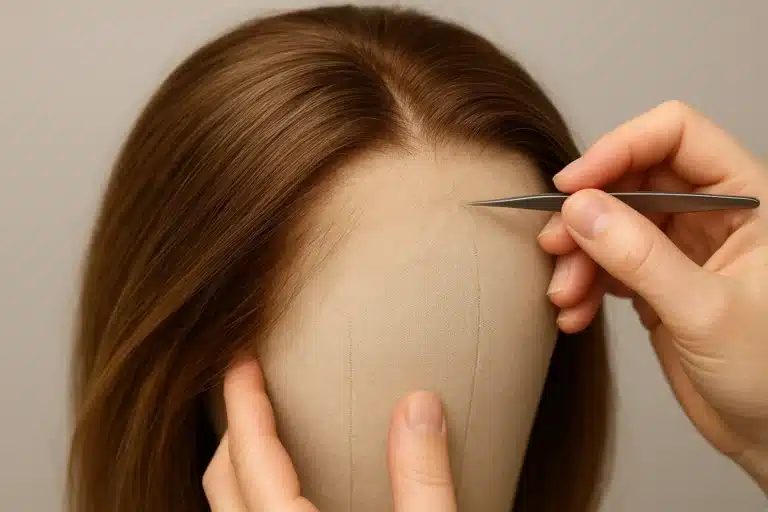
- Preparation: Secure your wig to a canvas block head with T-pins. Ensure the hair is detangled.
- Wrapping: Section the hair and wrap it around rollers or flexi-rods. The size of the roller determines the curl size.
- Steaming: Use a handheld fabric steamer. Direct the steam at the curled hair for 3-5 seconds per section. Do not touch the steamer directly to the fiber; keep it about an inch away. The moist heat penetrates the fiber, relaxing the original texture.
- The Cooling Phase: This is the most critical step. Do not remove the rollers while the hair is warm. You must allow the fiber to cool completely (usually 20-30 minutes). During this time, the plastic polymers re-harden in the shape of the roller.
- Release: Unravel the rollers and finger-comb for a soft, natural look.
Safe Heat Styling: Straightening and Smoothing
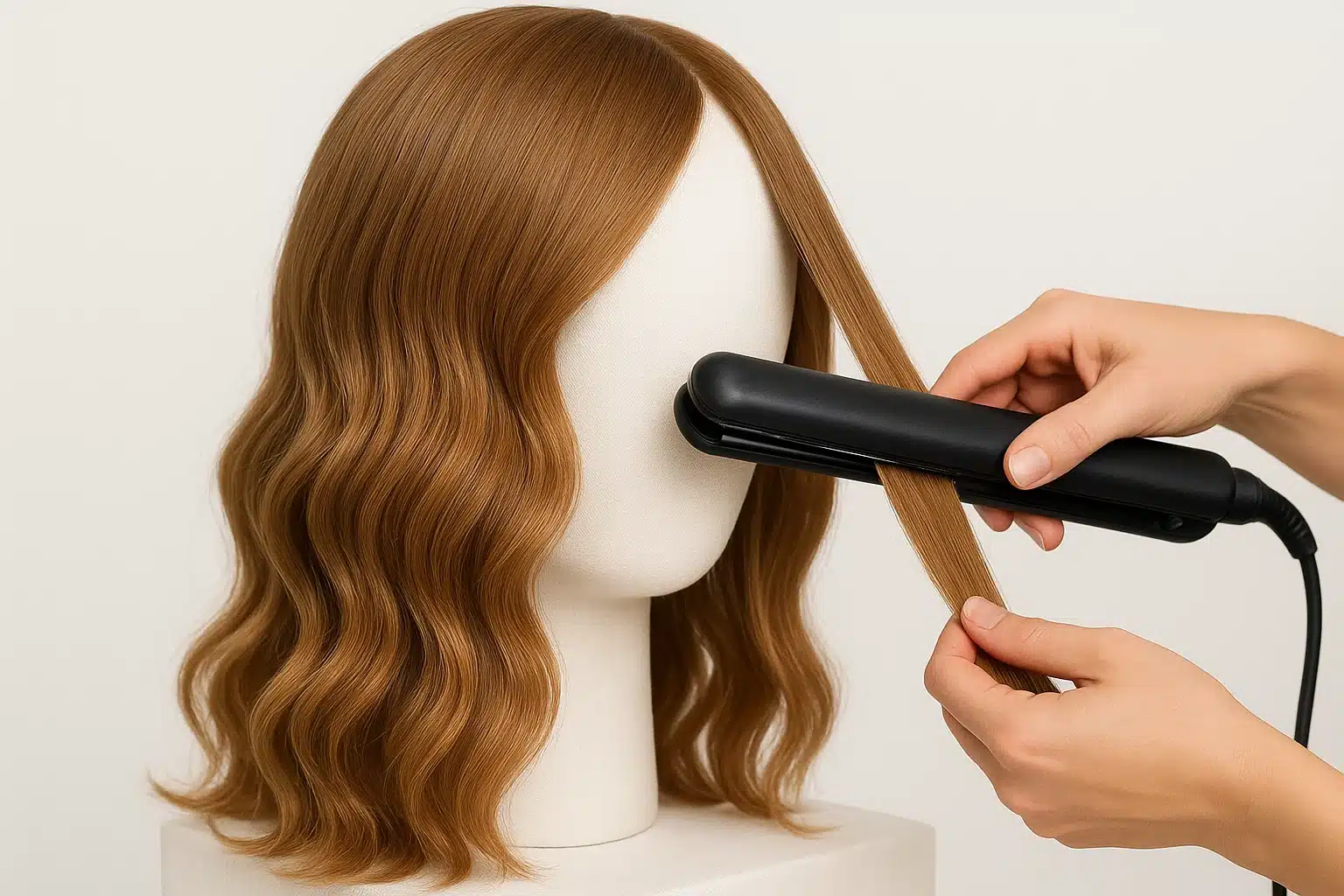
Straightening a heat-friendly synthetic wig requires a delicate touch. Unlike human hair, where high heat passes quickly over the cuticle, synthetic fiber requires a slow pass at a lower temperature to alter the fiber’s shape.
When looking for tools, prioritize those with precise digital temperature controls. Much like when searching for the least damaging hair extensions, your goal is to minimize mechanical stress and heat exposure to preserve the hair’s lifespan.
The Chase Method for Sleek Results
- Set Your Tool: Pre-heat your flat iron to 270°F-280°F.
- Tension is Key: Use a fine-tooth heat-resistant comb. Place the comb in a section of hair and follow immediately behind it with the flat iron.
- Slow and Steady: Move slowly down the hair shaft. The heat needs a moment to penetrate the plastic fiber.
- Cooling: Allow the hair to hang straight while it cools. If you clip it up while warm, it will kink.
Restoring Texture: Advanced De-Frizzing Techniques
One of the most common pain points we hear from our community is the issue of “friction frizz,” particularly at the nape of the neck. This happens when the synthetic fibers rub against clothing and body heat creates static, causing the ends to kink and matte.
Many people assume a frizzy wig is ruined. Often, it just needs to be re-textured.
The Steam-Press Restoration
You can use the same steam principles mentioned above to smooth out frizz:
- Detangle the dry wig gently with a wide-tooth comb, starting from the ends.
- Apply a burst of steam to the frizzy section to relax the kinked fibers.
- While the fiber is warm and pliable, use a fine-tooth comb to smooth it out, holding the section taut until it cools.This resets the fiber to its original smooth texture, significantly extending the life of your wig.
Comparative Framework: Synthetic vs. Human Hair Care
When evaluating whether to invest time in re-texturing synthetic wigs or switching to human hair, it helps to understand the fundamental maintenance differences.
Human hair offers the ultimate styling versatility but requires hydration and protein balance, similar to your own growing hair. If you are researching how to care for human hair wig, you will notice the routine involves deep conditioning and protection from environmental damage.
In contrast, synthetic re-texturing is about fiber manipulation. You aren’t “healing” the hair; you are mechanically reshaping it.
- Human Hair: Reacts to humidity, needs restyling after every wash, higher price point, longer lifespan with care.
- Heat-Friendly Synthetic: “Style memory” holds through rain and humidity, needs re-texturing only when you want a change or to fix frizz, more affordable, shorter lifespan (4-6 months with daily wear).
Troubleshooting & Longevity: Maintaining Your Custom Style
Once you have successfully re-textured your wig, maintaining that style requires specific products. Standard drugstore hairspray contains alcohols that can dry out and degrade synthetic fibers.
The “Crunchy” Texture Problem
If your wig feels stiff or “crunchy” after styling, you may have used too much product or too high a heat setting (beginning stages of melting).
- The Fix: Wash the wig with a synthetic-safe shampoo to remove product buildup. If the fiber is heat-damaged (melted/singed), unfortunately, this cannot be reversed, which is why sticking to the 280°F limit is non-negotiable.
Essential Maintenance Kit
To keep your re-textured styles looking fresh:
- Detangler Spray: Use daily to prevent friction buildup.
- Silicone-Based Serum: Synthetic hair lacks natural oils. A small amount of serum restores shine and reduces friction.
- Canvas Block Head: Essential for styling so you can pull and pin without damaging the delicate lace front cap.
Frequently Asked Questions
Can I dye my synthetic wig to match my new texture?
Generally, no. Synthetic fibers are non-porous and do not absorb traditional hair dye. While some DIY methods involve fabric dyes, we strongly advise against this as it can damage the fiber and stain the lace cap, ruining the unit.
How often can I restyle a heat-friendly wig?
While the fiber can be restyled, frequent heating will shorten the wig’s lifespan. We recommend re-texturing a wig once to your preference and performing minor touch-ups only when necessary (e.g., smoothing frizz).
Will steaming damage the lace front?
Direct high heat can warp the lace or loosen the knots. When using steam or heat tools, always stay at least 1-2 inches away from the cap base and lace material. Focus your styling efforts on the mid-lengths and ends.
Conclusion
Mastering the art of synthetic wig re-texturing opens up a world of possibilities. It allows you to navigate your hair loss journey with autonomy, ensuring your look always reflects how you feel on the inside. By understanding the science of fiber memory and adhering to safe temperature guidelines, you can transform an out-of-the-box product into a custom signature style.
Whether you are smoothing out friction frizz or adding voluminous curls, the right techniques make all the difference. Take your time, test your tools, and wear your new style with confidence.