We have all seen those mesmerizing “hair transformation” videos. You know the ones: a stylist takes a wig that looks like a standard hairpiece, and within seconds of applying it to the forehead, the lace seems to magically dissolve into the skin. It’s the “melt”—the holy grail of wig wearing. For many beginners, this level of realism feels unattainable, reserved only for professional stylists or ultra-expensive custom units.
However, the gap between a “wiggy” look and an undetectable hairline often isn’t skill—it’s technology. Specifically, the innovation behind High Definition (HD) lace. If you have been browsing resources like the definitive guide to Outre wigs, you know that the architecture of a wig matters just as much as the style. Today, we are moving beyond the basics to explore the specific science of Outre’s HD lace technology, dissecting why it works and how you can master the customization process to achieve that flawless, skin-like finish.
The Anatomy of the Melt: Understanding HD Technology
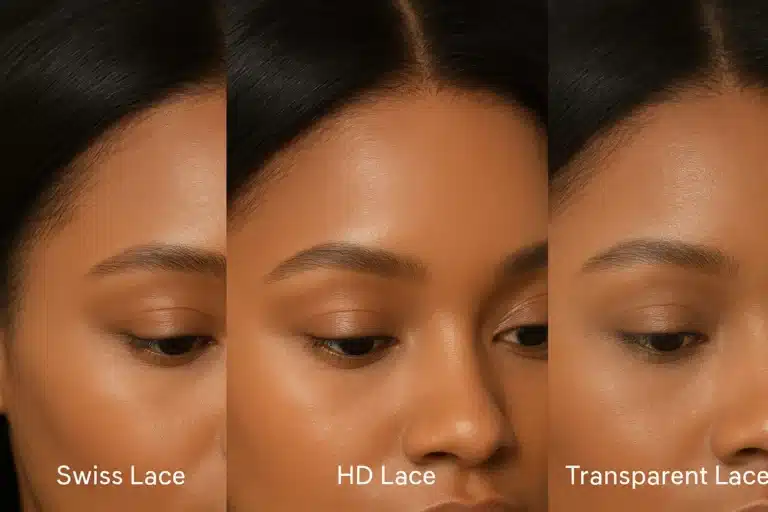
To understand why HD lace is a game-changer, we first have to look at what came before it. For years, the industry standard was Swiss lace—a durable, slightly thicker material designed to hold hair ventilation securely. While Swiss lace is excellent for longevity, it often leaves a visible “grid” pattern on the forehead that requires heavy makeup or thick “baby hairs” to conceal.
Outre’s HD lace (often marketed under their “Vanish” or “Perfect Hairline” collections) is technically a finer variant of lace material. Think of it in terms of hosiery: if standard Swiss lace is a 40-denier stocking, HD lace is an ultra-sheer 10-denier.
The primary goal of this technology is light refraction. Thicker lace reflects light, creating a shine that alerts the eye to the presence of a foreign object. HD lace is designed to be matte and porous, allowing light to pass through it to your skin below. This transparency is what creates the optical illusion that the hair is growing directly from your scalp.
The Transparency Spectrum
One of the most common misconceptions is that “transparent” lace and “HD” lace are the same things. They are not, and understanding the difference can save you from a disappointing purchase.
- Transparent Lace: This is usually standard Swiss lace that has been bleached or strictly devoid of dye. It is clear, but it still possesses the thickness of standard lace. It works well, but often requires more work to hide the grid.
- HD Lace: This refers to the texture and thickness, not just the color. It is softer, thinner, and more fragile.
Matching the Melt to the Melanin
Outre’s HD lace is designed to be tint-friendly, but it isn’t magic. It requires color theory to work effectively. Because the lace is so sheer, it acts less like a barrier and more like a filter.
- For Lighter Skin Tones: The HD lace often works right out of the box or with a light dusting of powder.
- For Brown and Darker Skin Tones: The “Vanish” effect relies on tinting. Because the material is porous, it absorbs lace tint sprays or powder foundations readily. The key is applying the tint to the underside of the lace, allowing the color to seep through and neutralize the white/grey cast that often plagues synthetic wigs.
The “Gridline Ghosting” Phenomenon
A specific challenge that educational resources rarely address is “Gridline Ghosting.” Even with HD lace, close inspection can sometimes reveal the tiny squares of the lace grid. This is particularly common in synthetic units where the knots (where the hair is tied to the lace) cannot be bleached like human hair.
This is where the Outre Melt Protocol comes into play. The secret isn’t just glue; it’s using a “melting spray.” Unlike standard hairspray, melting sprays are designed to temporarily liquify the surface of the lace and the adhesive, filling in those tiny grid holes. When it dries, it creates a unified, smooth surface that blurs the grid lines, much like a pore-filling primer does for makeup.
The Outre Melt Protocol: Step-by-Step Customization
Achieving a professional look doesn’t require a license; it requires a methodology. Here is a breakdown of how to customize these specific units for maximum realism.
1. The Tint Phase
Before you even cut the lace, you must match it to your skin. Many beginners make the mistake of applying liquid foundation to the top of the lace, which can make the hair roots look “muddy.” Instead, use a powder foundation that matches your forehead (not your cheek, which is often a different shade) and press it into the inside of the cap. This warms up the lace tone without compromising the hair fibers.
2. The Jagged Cut
The human eye is trained to notice straight lines because they rarely occur in nature. A perfectly straight hairline is a dead giveaway of a wig.
- The Technique: Use small embroidery scissors or an eyebrow razor. Instead of cutting in a long, smooth arc, use a jagged, zigzag motion. These microscopic irregularities trick the eye and help the lace blend into the natural texture of your skin.
3. The Glueless Lock
One of the distinct advantages of Outre’s construction, particularly in their 13×6 frontals, is the internal engineering designed for glueless wear. Many users reach for the glue immediately, risking damage to their edges.
- The Tension Method: Utilize the pre-attached wide elastic band. This band pulls the hairline flush against the head. When combined with the combs located behind the ears (rather than just at the top), the tension keeps the HD lace flat. If the lace lies flat due to tension, you may not need adhesive at all, or perhaps only a light layer of styling gel for peace of mind.
Advanced Maintenance: Durability vs. Invisibility
There is a necessary trade-off in the world of wigs: The more invisible the lace, the more fragile it is.
Outre’s HD lace is delicate. It does not have the tensile strength of the older, thicker plastic-based laces. This means “lace slacking” is a real risk. Lace slacking occurs when the lace stretches out of shape and ripples along the forehead.
To prevent this:
- Avoid Aggressive Plucking: Outre units usually come pre-plucked. Over-plucking removes the structural integrity of the lace edge, causing it to fray.
- Gentle Removal: Never rip the lace off at the end of the day. If you used spray or gel, use water or a remover to dissolve the bond first. Tugging stretches the microscopic holes in the HD lace, ruining the “melt” for future wears.
Frequently Asked Questions
Q: Can I wear Outre HD lace glueless?
A: Absolutely. The “melt” refers to the look, not necessarily the adhesive. Thanks to the internal elastic bands and cap construction, these units can sit flush against the skin without glue, provided you adjust the tension correctly.
Q: How do I hide the knots on a synthetic HD wig?
A: Since you cannot bleach synthetic knots, the best approach is a combination of the “gridline ghosting” technique (using melting spray) and applying a concealer to the part line from the inside of the cap.
Q: Will the HD lace match my dark skin tone?
A: HD lace is generally colorless/milky but is highly porous. It will not match dark skin out of the box, but it is designed to absorb tint spray or foundation instantly to match any complexion perfectly.
The Path to Confidence
Understanding the technology behind your wig transforms the experience from a guessing game into a repeatable routine. Outre’s HD lace offers a professional-grade aesthetic that is accessible to everyone, provided you handle the delicate material with care and follow the proper customization protocol.
As you continue your journey, remember that the goal isn’t just to wear a wig—it’s to feel like the most confident version of yourself. If you are ready to explore the different styles and constructions available, taking time to learn about the specific features of each collection will ensure your next choice is your best one.