There is a specific kind of heart-drop moment that every wig wearer knows. You are brushing your favorite piece, getting ready for the day, when you notice a bald patch that wasn’t there yesterday, or worse—a small tear in the delicate lace front. For many, a wig is not just an accessory; it is a shield, a confidence booster, and a significant financial investment. The immediate instinct is often panic. Is it ruined? Do I need to spend hundreds (or thousands) of dollars on a new one right now?
Before you make a hasty decision, take a deep breath. Not every sign of wear is a death sentence for your hairpiece. However, determining the life left in your wig often requires more than a casual glance. This is why choosing your wig expert by looking for the essential services that define a great wig shop is the first step in safeguarding your investment. Understanding the difference between a simple professional fix and a terminal issue can save you both money and heartache.
The Foundation First: Understanding Cap Integrity
When evaluating damage, most people look at the hair first. However, a professional starts with the “foundation” of the house—the cap. The cap is the structural integrity of your wig. No matter how silky the hair is, if the cap is compromised, the wig cannot perform its job.
If your wig feels loose, slips throughout the day, or bunches up at the nape of the neck, the cap materials may have lost their elasticity. While some minor take-ins can be done, a permanently stretched or warped cap usually signals the end of a wig’s lifespan. If the foundation is solid, however, we can move on to addressing the cosmetic issues.
The “Big Three” Repairable Issues
Many issues that look disastrous to a beginner are actually standard maintenance procedures for a professional. Here are the three most common problems that are usually repairable.
1. Loss of Density (The Art of Ventilation)
Seeing hair in your brush or bald spots on the part line can be alarming. But did you know that adding hair back into a wig is a standard service? This process is called Ventilation.
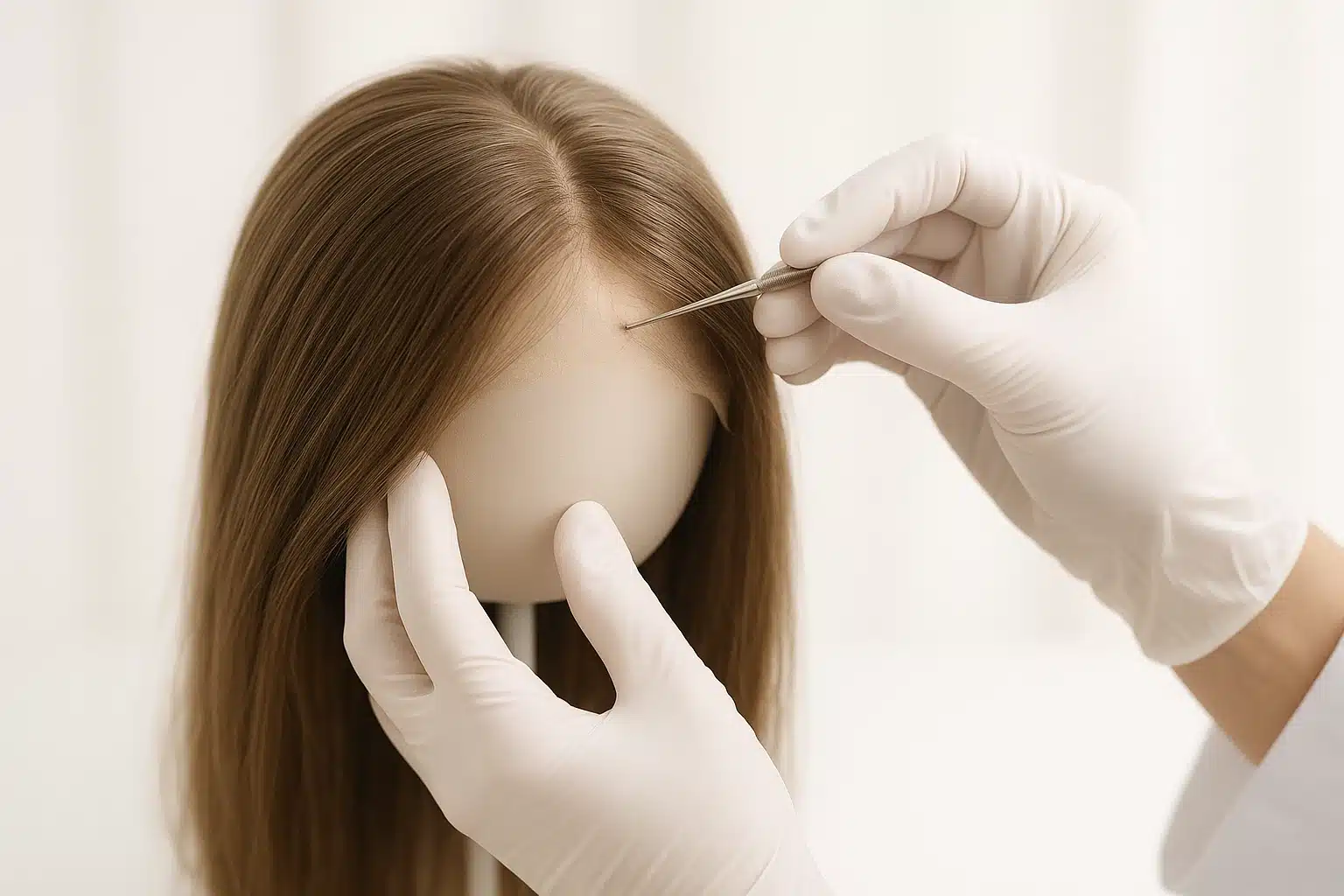
Ventilation is the meticulous art of hand-tying individual strands of hair back into the cap, knot by knot. Whether it’s a synthetic piece or a human hair wig, a skilled ventillator can restore density to thinning areas, making the wig look full and voluminous again. It is not a quick glue fix; it is a restoration of the wig’s original construction.
2. Lace Tears and Frays
The lace front is the most delicate part of your wig, designed to be invisible against the skin. Because it is so fine, it is prone to tearing or fraying over time.
- Small Tears: A vertical tear in the lace can often be stitched with invisible thread or patched with a specialized lace patch.
- Fraying: If the edge of the lace is starting to fray, a professional can often trim back the lace (if there is room) or seal the edges to prevent further unraveling.
- Warning: Avoid the common DIY hack of using clear nail polish to stop a tear. This hardens the lace, making it uncomfortable and shiny, which ruins the invisible illusion.
3. Texture Trauma
Friction is the enemy of all wigs. Over time, the hair at the nape of the neck can become matted, dry, or “frizzy” (especially in heat-friendly synthetic wigs). This is often mistaken for the fiber being “ruined.”
- Synthetic: Professionals use industrial steamers to smooth out friction frizz, essentially resetting the fiber’s memory.
- Human Hair: Human hair wigs lack the natural oils your scalp produces. When they look dry and straw-like, they often just need a professional deep hydration treatment that goes beyond standard conditioner.
The Salvageability Scorecard: A DIY Assessment
Before you pack your wig up to ship it to a repair specialist, you can run it through this 5-point “Salvageability Scorecard.” If your wig fails more than two of these points, replacement might be the wiser choice.
- Cap Integrity: Put the wig on. Does it still grip your head securely without adhesive? (Yes = Pass / No = Fail)
- Fiber Condition: Is the dryness or tangling limited to the ends (repairable) or does it extend up to the root (likely terminal)?
- Shedding Pattern: Is the shedding localized (repairable via ventilation) or is hair coming out in clumps all over (sign of cap failure)?
- Color Stability: Has the color faded significantly? (Human hair can be dyed; synthetic fiber cannot be recolored).
- Attachment Points: Are the ear tabs and adjustable straps still intact and functioning?
The Financial Logic: The 70% Rule
Sometimes, a wig can be repaired, but it doesn’t make financial sense to do so. This is where we apply the “70% Rule” to help you make a logical decision rather than an emotional one.
- For Synthetic Wigs: If the cost of the repair (plus shipping) is more than 70% of the cost of buying a brand-new replacement, it is better to replace it. Synthetic wigs have a finite lifespan (typically 4-6 months with daily wear), and repair costs rarely yield a high return on investment here.
- For Human Hair Wigs: Because these are higher-value assets that can last over a year, the threshold is higher. If the repair costs 50% of a replacement, you should carefully weigh the age of the hair against the cost.
What Happens During an Expert Evaluation?
When you utilize an expert evaluation service, you aren’t just paying for someone to look at your wig; you are paying for a forensic assessment of the hairpiece.
A professional evaluation typically involves:
- Tension Testing: Checking the elasticity of the velvet bands and elastic straps.
- Base Integrity Check: Examining the delicate knots under a microscope to see if they are unraveling from the inside.
- Fiber Analysis: Determining if the fiber has been heat-damaged beyond the point of steaming (melted fibers cannot be fixed).
By relying on this data, you move from guessing to knowing.
Frequently Asked Questions (FAQ)
Q: Can you repair a synthetic wig that was melted by opening an oven door?
A: Unfortunately, no. Once synthetic fiber is melted or “singed” by high heat, the plastic structure is permanently deformed. The damaged section must be cut out. If the damage is near the ends, a trim might save the style. If it is near the crown, the wig usually needs to be replaced.
Q: How long does professional wig repair take?
A: This varies by the complexity of the work. A simple steam and restyle might take a few days, while intricate ventilation (adding hair) is labor-intensive and can take several weeks depending on the shop’s workload.
Q: Is it worth repairing a budget-friendly wig?
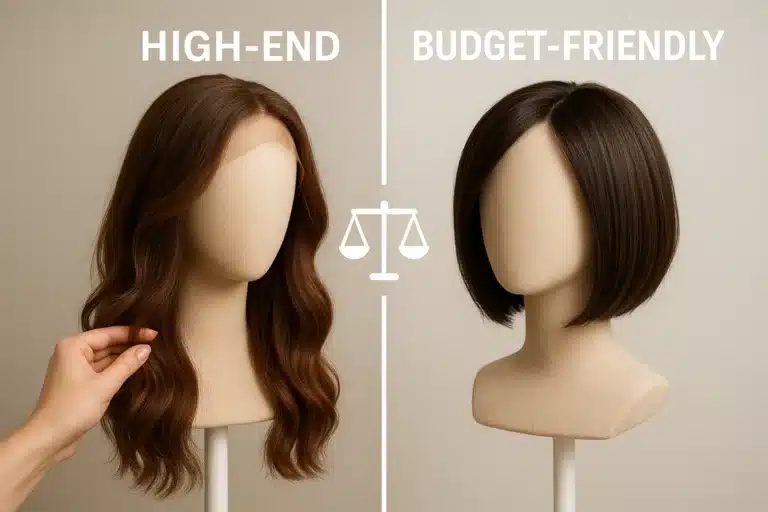
A: Generally, no. Expert repair is a skilled trade. If the wig cost less than $150, the labor cost for repair will almost certainly exceed the value of the wig. Repair services are best utilized for high-quality synthetic or human hair investments.
Q: My human hair wig looks dull. Is it ruined?
A: Likely not! Human hair wigs oxidize (fade) in the sun and dry out without scalp oils. A professional color correction and deep conditioning treatment can often bring a “dead” looking wig back to life.
The Next Step in Your Journey
Recognizing the difference between a wig that needs a little TLC and one that needs retirement is a skill that develops over time. By understanding the anatomy of your wig and the capabilities of professional repair, you can extend the life of your favorite pieces and budget smarter for your future needs.
If your wig is showing signs of struggle, don’t guess. Seek out a compassionate expert who can walk you through the evaluation process. Whether the verdict is a repair or a replacement, you will have the peace of mind knowing you made the right choice for your look and your lifestyle.