When you purchase a high-quality wig, you aren’t just buying a hairpiece; you are making a capital investment in your confidence and daily image. However, many first-time buyers treat their purchase like a fast-fashion accessory rather than a long-term asset. This approach often leads to frustration when a piece wears out prematurely. By shifting your perspective and learning the principles of maximizing your wig ROI, you can transform a recurring expense into a sustainable, cost-effective solution.
The secret that industry insiders know—but rarely explain clearly—is that the upfront cost of the wig is only one variable in the equation. The true value is determined by how long that wig remains wearable and realistic. Just as you wouldn’t drive a luxury car for years without oil changes or tire rotations, you cannot expect a premium wig to maintain its integrity without professional intervention. This guide explores the “Wig Asset Management” framework, helping you understand how strategic customization and care can double the lifespan of your unit.
Shifting Your Mindset: Wigs as Asset Management
To understand the Return on Investment (ROI) of a wig, we must move beyond the price tag and look at the “Cost-Per-Wear” metric. This is a simple calculation: total cost divided by the number of days you wear the hair with confidence.
Consider two scenarios:
- The DIY Approach: You buy a $300 synthetic wig, wear it out of the box, and wash it with standard shampoo. Within three months, the friction causes the nape to frizz beyond repair. Cost-per-wear: Roughly $3.30 per day.
- The Investor Approach: You buy a higher-end unit and invest in professional styling and maintenance. The initial outlay is higher, but the piece lasts significantly longer.
By viewing professional services not as “extra costs” but as “longevity insurance,” you drastically lower your daily cost. A $130 professional customization session that extends a $1,000 unit’s lifespan by six months effectively puts money back in your pocket.
The Science of Materials: Depreciating vs. Active Assets
Understanding what you are buying is the first step in protecting your investment. In the world of alternative hair, materials dictate the rules of engagement.
Synthetic Fiber: The Depreciating Asset
Synthetic wigs are marvels of modern technology—they hold their style through rain and humidity. However, from an investment standpoint, they are generally “depreciating assets.” Synthetic fiber has a finite lifespan; once the fibers undergo friction damage (frizzing at the ends), they are difficult to restore to their original state.
Human Hair: The Active Asset
Human hair wigs are “active assets.” Because the fiber is organic, it is highly repairable. It can be deep-conditioned, re-colored, and trimmed. Learning how to care for human hair wig fibers is essential because, with the right professional support, these wigs can recover from wear and tear that would ruin a synthetic piece.
The Financial Case for Professional Customization
Many newcomers believe that a wig should be perfect right out of the box. In reality, most high-quality wigs are manufactured with excess density (too much hair). Manufacturers do this to allow for customization, but wearing a wig with full density can actually shorten its life.
The Hidden Cost of “Out-of-the-Box” Density
When a wig has too much hair, particularly at the nape of the neck, it creates excess heat and friction against your clothing. This friction is the number one cause of tangling and matting.
By taking your new unit to a professional for thinning and layering, you are structurally engineering the wig to last longer. A stylist removes the bulk that causes friction, allowing the hair to move freely. This single service can delay the onset of tangling by months, preserving the fiber’s integrity.
Understanding Cap Construction
The base of your wig is just as important as the hair itself. Your wig cap construction—whether it’s a monofilament top or a hand-tied base—determines how the hair falls and moves. Professional stylists understand the mechanics of these caps and can tailor the cut to work with the construction, preventing stress on delicate areas like the lace front.
Repair vs. Replace: The Math of Maintenance
There comes a moment in every wig wearer’s journey where a piece starts to look tired. The hair feels dry, the color has oxidized (turned brassy), or the lace is fraying. This is the critical decision point: Repair or Replace?
The “Tangle-Death” Scenario
Often, a wig is discarded because of severe tangling. However, a professional “detangle and steam” service costs a fraction of the price of a new unit.
- Replacement Cost: $800 – $2,000+
- Restoration Cost: $100 – $250
If a restoration service gives you another 4 to 6 months of wear, the ROI is undeniable.
Advanced Repairs: Knot Toning and Ventilation
As you wear a wig, the hair may shed, leading to bald spots or a thinning hairline. Instead of retiring the unit, specialized services can restore it.
- Ventilation: This involves a professional hand-tying new strands of hair into the lace to restore density.
- Knot Toning: Over time, the knots where the hair is tied to the cap can become visible. Professional toning masks these knots, restoring the illusion of hair growing from the scalp.
When damage occurs, professional wig repair services can often restore a piece to 90% of its original condition, saving you the immediate capital expense of buying a brand-new unit.
Solving the “Fake” Look: Customization as Value
ROI isn’t just financial; it’s emotional. If you don’t feel confident in your wig, you won’t wear it, and its value drops to zero.
The Four-Finger Rule and Hairline Placement
A common issue for beginners is wearing a wig too low on the forehead, which instantly signals that it is a hairpiece. The general rule is to place the hairline four fingers width above your eyebrows. However, sometimes the wig’s construction doesn’t match your natural hairline shape.
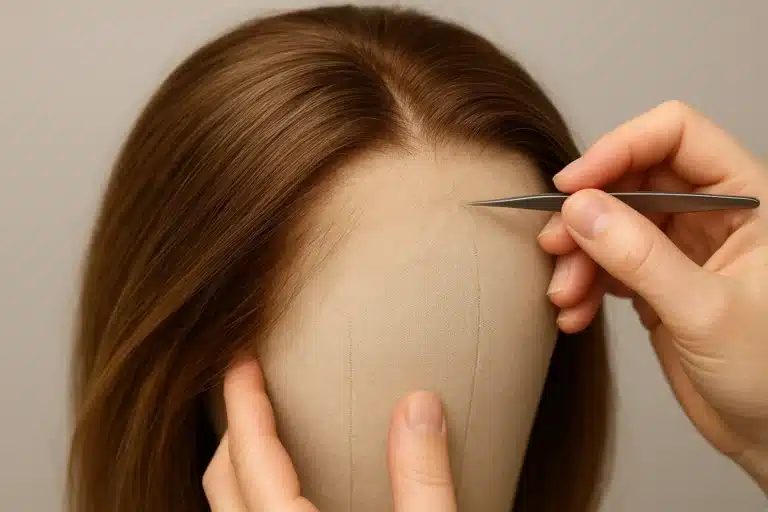
Professional customization can alter the hairline. A stylist can pluck the hairline to create a natural, graduated density and trim the lace to follow your specific face shape. This transforms a “wiggy” look into an undetectable hair solution.
Your 12-Month Professional Maintenance Schedule
To maximize your investment, treat your wig care like a scheduled maintenance plan. Routine wig maintenance is the insurance policy that protects your purchase.
- Month 1 (Acquisition): Custom cut, thinning, and face-framing layers.
- Month 3 (Refresher): Professional wash and steam treatment to rehydrate fibers.
- Month 6 (Mid-Life Inspection): Deep conditioning and check for shedding. Minor lace trims if edges are fraying.
- Month 9 (Restoration): Color correction (if human hair has oxidized) or steam-smoothing (if synthetic).
- Month 12 (Evaluation): Assessment for professional repair or retirement.
Frequently Asked Questions
Can a regular hairdresser cut a wig?
It is generally not recommended. Cutting a wig requires different tools (often specialized shears) and techniques than cutting biological hair. Biological hair grows back; one wrong snip on a wig is permanent. Wig fiber is also tougher on scissors, which is why regular stylists may refuse to cut them. Always seek a specialist trained in alternative hair.
How do I know if my wig is worth repairing?
A good rule of thumb is the “50% Rule.” If the cost of the repair is less than 50% of the cost of a replacement, and the repair will extend the life of the wig by at least 3-4 months, it is usually a sound investment.
What is the “Four-Finger Rule”?
This is a placement guide to ensure your wig looks natural. Place four fingers horizontally on your forehead, resting the bottom finger on your eyebrow. The hairline of the wig should sit where your top finger ends. If the wig has a small cap or your forehead is larger, professional customization can help adjust the hairline for a better fit.
Does cutting a wig make it last longer?
Yes, specifically regarding density. “Out-of-the-box” wigs often have heavy density at the nape. This bulk creates friction against your neck and collar, leading to matting. Professional thinning removes this weight, reducing friction and preventing the tangles that ultimately ruin the fiber.
Taking the Next Step
Understanding the economics of wig ownership empowers you to make smarter purchasing decisions. By viewing your wig as an asset that requires management, you move from a cycle of disposing and replacing to a cycle of maintaining and preserving.
If you are ready to explore high-quality options that are worthy of this investment, or if you need guidance on which materials best suit your lifestyle and budget, exploring a curated collection of premium wigs is your best starting point. Remember, the goal isn’t just to buy hair; it’s to invest in a version of yourself that feels confident and secure every single day.