Facing hair loss due to chemotherapy, alopecia, or other medical conditions carries a heavy emotional weight. Finding a high-quality hairpiece that helps you feel like yourself again is a deeply personal step toward regaining your confidence. However, when it comes time to pay, a deeply personal decision can quickly transform into a confusing financial hurdle. If you’re feeling overwhelmed by the idea of getting your health insurance to cover the cost, you are certainly not alone.
While many patients begin their search by navigating the best wig stores in Detroit MI, they quickly realize that securing health insurance reimbursement requires a specialized approach. Health insurance companies traditionally view standard wigs as cosmetic accessories. Unless you understand the specific medical billing language, required doctor’s prescriptions, and local provider networks, you might end up paying hundreds or even thousands of dollars out of pocket.
This guide is designed to help you transition from feeling overwhelmed to becoming an empowered healthcare advocate. We’ll decode the exact billing formulas, highlight local Detroit retailers equipped to help, and walk you through every step of the process.
The “Aha” Moment: Why Your Doctor Can’t Write “Wig”
If there is one golden rule of medical insurance billing, it is this: the terminology you use dictates whether your claim is approved or denied.
If your doctor writes “wig” on your prescription, your insurance claim will almost certainly be denied because they classify it as a cosmetic item. However, if your doctor writes “cranial prosthesis“, it enters the pipeline for Durable Medical Equipment (DME) or Prosthetics—a category that many insurance plans actually cover.
The Difference Between Medical and Fashion Wigs
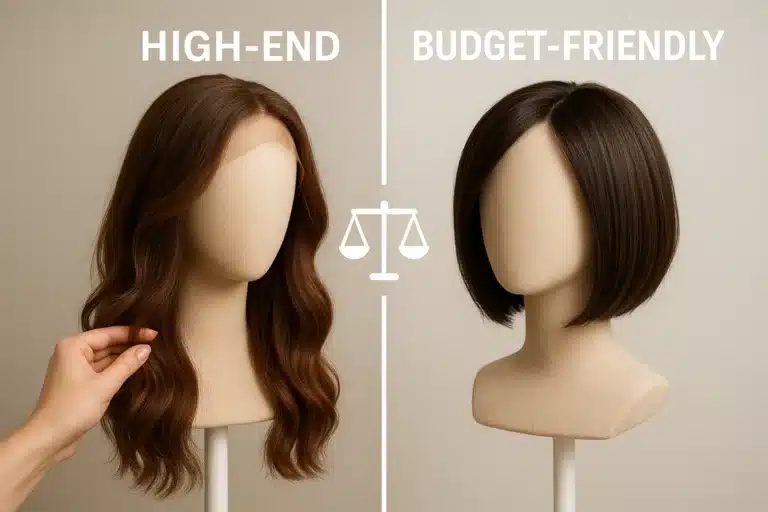
A true cranial prosthesis is vastly different from a fashion wig you might buy for a weekend event. Medical wigs are meticulously engineered for sensitive, hairless scalps. They feature breathable caps, monofilament tops that mimic natural hair growth, and hand-tied bases that won’t irritate active hair follicles or sensitive skin recovering from radiation or chemotherapy. Because of this specialized construction, a synthetic cranial prosthesis typically ranges from $125 to $425, while premium human hair models run between $600 and $1,500.
Decoding the Insurance Puzzle: The Coding Trifecta
To get your medical wig covered, your insurance claim needs to hit a very specific “trifecta” on the CMS-1500 claim form. You will need three matching elements:
- The HCPCS Code: The universal billing code for a cranial prosthesis (synthetic or human hair) is A9282. Your wig retailer will use this on their invoice.
- The ICD-10 Diagnosis Code: Your doctor must provide the medical code for your specific condition. Common examples include:
- L65.8 for Chemotherapy-Induced Hair Loss
- L63.0 for Alopecia Totalis
- C50.919 for Malignant Breast Cancer
- The Provider NPI Number: The retailer where you purchase your wig must have an active National Provider Identifier (NPI) registered in the National Provider Directory.
Local Directory: Where to Find Medical Wigs in Metro Detroit
Finding a physical store where you can try on a wig, get a custom fitting, and secure the right paperwork is crucial. When searching for custom wigs detroit locals rely on, it’s important to know the difference between stores that bill your insurance directly and those that provide the paperwork for you to seek reimbursement.
Here are the premier medical wig providers in the Detroit Metro area:
A Woman’s Image (Royal Oak, MI)
- Location: 28966 Woodward Avenue, Royal Oak, MI 48067
- Insurance Approach: Direct Participating Provider. They are in-network with Blue Cross Blue Shield of Michigan, specific Medicare Advantage plans, PPOM, St. John’s Smart HealthPlan, and HAP PPO.
- What Makes Them Unique: Because they can bill insurers directly, this reduces your upfront out-of-pocket costs. They offer free consultations, private rooms for custom fittings, and compassionate licensed cosmetologists who provide head-shaving services and soothing warm scalp massages.
Rebecca’s Wigs (Farmington, MI)
- Location: 23348 Farmington Rd., Farmington, MI 48336
- Insurance Approach: Out-of-Network Reimbursement. While they do not bill insurers directly, they provide an official, detailed medical invoice printed with their registered NPI and Tax ID for seamless patient reimbursement.
- What Makes Them Unique: Operating as a luxury private wig studio, they specialize in custom hair-cutting and cap alterations (petite, average, large) to ensure a completely seamless, natural look.
Shear Pointe Hair Restoration Center (Birmingham, MI)
- Location: 1971 East 14 Mile Road, Birmingham, MI 48009
- Insurance Approach: Out-of-Network / Tax-Deductible Consultation. They assist you in documenting your purchase as a tax-deductible medical expense and guide you on filing out-of-network claims.
- What Makes Them Unique: They focus on 100% natural human hair and virgin European hair integrations, featuring medical-grade custom caps engineered to protect highly sensitive scalps.
The Wig Boutique (Shelby Township, MI)
- Location: 52184 Van Dyke Ave, Shelby Township, MI 48316
- Insurance Approach: They offer private fittings and provide itemized receipts complete with the necessary medical coding (like HCPCS A9282) so you can pursue insurance reimbursement independently.
Financial Strategies: Maximizing Your Benefits
The Direct Billing vs. Reimbursement Difference
If a store offers direct billing (like A Woman’s Image), they submit the claim for you, and you typically only pay your co-pay or deductible upfront. If a store operates on a reimbursement model (like Rebecca’s Wigs), you will pay the full cost of the wig upfront, and the store gives you the exact NPI and Tax ID paperwork required for your insurance company to mail you a reimbursement check later.
The HSA/FSA “Double-Dip” Strategy
If your insurance plan covers 80% of the cost of your cranial prosthesis, what happens to the remaining 20%? Provided you have a Letter of Medical Necessity (LMN) from your doctor, that remaining out-of-pocket balance is fully eligible for tax-free reimbursement using your Health Savings Account (HSA) or Flexible Spending Account (FSA).
Free Alternatives: Detroit-Area Wig Banks
If you do not have insurance coverage or the funds for upfront costs, there are incredible community resources in Michigan designed to ensure no one goes without a wig during their medical journey:
- University of Michigan Health Wig Bank (Ann Arbor): Provides free synthetic wigs and custom fittings for active cancer patients.
- Changez Salon Community Outreach (Royal Oak): Offers a free, rotating wig bank for individuals facing medically related hair loss.
- A Woman’s Image Donation Bank (Royal Oak): Collects, sanitizes, and distributes gently used donated wigs entirely for free.
Your Medical Wig Journey Checklist
Ready to take action? Follow this step-by-step path to secure your medical wig:
- Call Your Insurance: Ask them directly, “Does my policy cover a cranial prosthesis for medical hair loss?” Find out your specific coverage limits.
- Secure the Prescription: Ask your oncologist or dermatologist for a prescription. Remind them it must explicitly state “Cranial prosthesis for medical purposes” and include your specific ICD-10 diagnosis code.
- Book a Private Consultation: Call a registered Detroit wig store that aligns with your insurance needs and make an appointment.
- Collect Your Documents: Ensure your final receipt features the HCPCS code A9282, along with the store’s Tax ID and NPI number.
- Submit and Track: File the claim through your insurance portal or via mail, and log your follow-up dates in case you need to file an appeal.
Frequently Asked Questions (FAQ)
Does Medicare or Medicaid cover medical wigs?
Original Medicare and standard Michigan Medicaid usually exclude wigs. However, certain Michigan Medicare Advantage PPOs (like BCN Advantage) and HMOs often feature enhanced benefits that include annual or lifetime caps (e.g., up to $300) for cranial prostheses. You must call your specific plan provider to verify.
What if my insurance claim gets denied?
Don’t give up. Claims are often denied simply because of a coding error. You have the right to request a written explanation for the denial and file an appeal. Submitting a detailed Letter of Medical Necessity (LMN) from your doctor alongside your appeal frequently overturns initial denials.
Can I use these steps outside of Detroit?
Yes. The medical codes (A9282 and ICD-10) are federal standards. Whether you are consulting a store in Michigan or visiting wig shops across the country, the exact same coding rules, NPI requirements, and prescription terminology apply for insurance reimbursement.
Taking the Next Step
Experiencing hair loss is challenging enough without having to fight with insurance claims. By understanding the language of medical billing and knowing which Detroit stores are equipped to help you, you are taking back control of your journey. Remember, you deserve to feel comfortable, confident, and beautiful. Start by making that first call to your insurance provider today, and take comfort in knowing the Metro Detroit community has specialized experts waiting to assist you.