It starts with a subtle tickle. Then, it becomes a nagging irritation. Before you know it, you’re doing the “wig tap”—that discreet, rhythmic patting of your head in public to relieve an itch you can’t quite scratch. If this sounds familiar, take a deep breath: you are not alone, and more importantly, wearing a wig doesn’t mean you have to live with constant discomfort.
For many, the assumption is that an itchy scalp is just the price of beauty or a necessary sacrifice for hair replacement. But at Wig Superstore, with nearly two decades of helping clients regain their confidence, we know that comfort is the foundation of confidence. While you might think you just have “sensitive skin,” the reality is often a specific, solvable issue falling under the umbrella of troubleshooting common wig wearer discomforts & irritations. Let’s explore why your scalp is reacting and, more importantly, how to reclaim your comfort.
The Science of a Happy Scalp: It’s Not Just “Dry Skin”
To solve the itch, we first have to understand the environment we are creating. Your scalp is a delicate ecosystem—a microbiome that relies on a specific balance of pH, natural oils (sebum), and airflow to stay healthy.
When you wear a wig, you are essentially changing that climate. You create a warmer, more humid environment that can alter the behavior of the natural bacteria and yeast that live on everyone’s skin. It’s similar to how your skin feels under a bandage left on too long; without airflow, moisture gets trapped, and the skin’s barrier function weakens. This doesn’t mean you can’t wear wigs safely; it simply means your scalp requires a different care strategy than exposed skin does.
The 5 Main Culprits of Wig-Related Itchiness
Before you buy a new shampoo or toss your wig cap, let’s play detective. Most itchiness stems from one of these five specific triggers. Identifying yours is the first step toward relief.
1. The “Greenhouse Effect” (Heat & Sweat)
This is the most common cause for new wearers. Your body heat escapes through your head. When that heat meets a wig cap, it creates humidity. As sweat accumulates and dries, the salt crystals left behind can become incredibly irritating, causing a prickling sensation that feels like dozens of tiny needles.
2. Residue Roulette (Product Buildup)
Are you rinsing your wig—and your own hair—thoroughly? Residue from shampoos, conditioners, and styling sprays is a major irritant. When these products dry on the wig cap or your scalp, they form a film that can clog hair follicles and cause inflammation.
3. Material Sensitivities & Allergies
Sometimes, the culprit is chemical. Research suggests that contact dermatitis from wig glues or synthetic fibers affects a significant portion of wearers. For example, some studies indicate that formaldehyde-releasing preservatives found in certain lower-quality wig adhesives can trigger reactions in sensitive individuals. Even the dyes used in wig caps can sometimes be the source of the itch.
4. The Friction Factor
If your wig isn’t secured properly, it shifts. Micro-movements of the wig cap against your skin act like sandpaper over the course of a day. This mechanical irritation can compromise the skin barrier, making it raw and susceptible to stinging.
5. Underlying Scalp Conditions
Sometimes the wig isn’t the cause, but the exacerbator. Conditions like dandruff (seborrheic dermatitis) or fungal issues thrive in the warm, dark environment under a wig. Distinguishing between simple dry skin (white, small flakes) and fungal issues (yellowish, oily flakes) is crucial for choosing the right treatment.
Immediate Relief: How to Soothe the Itch Right Now
If you are reading this while fighting the urge to scratch, here are three immediate steps to take:
- The “Tap,” Don’t Scratch: Scratching creates microscopic tears in the skin, which sweat can enter, causing a stinging sensation that makes the itch worse. Continue to tap gently or use a wig-safe soothing spray.
- Cool Down: If possible, remove your wig in a private space and apply a cool compress to the scalp. This constricts blood vessels and calms inflammation immediately.
- Witch Hazel Relief: For natural hair under the wig, dabbing a cotton pad soaked in alcohol-free witch hazel can dissolve sweat salts and soothe irritation without drying out the skin.
Long-Term Prevention: Your Itch-Free Routine
Turning a reactive approach into a proactive one is how you achieve all-day comfort. Here is the protocol we recommend to our clients to keep their scalp healthy for the long haul.
Upgrade Your Barrier
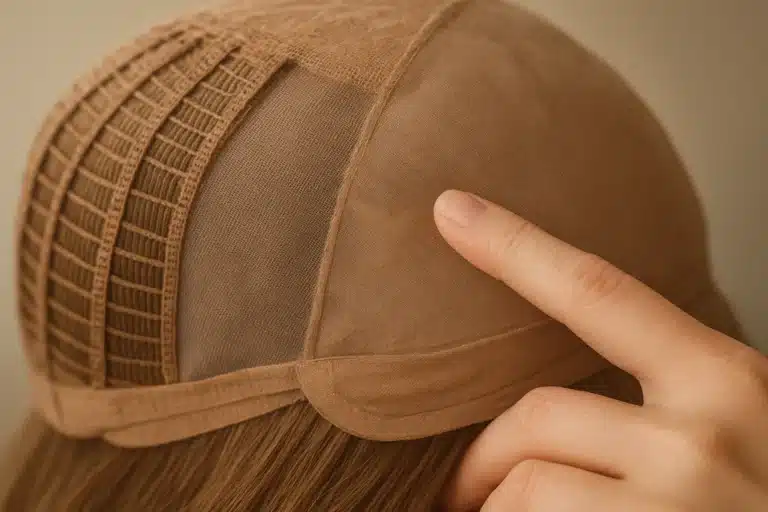
If you are using a standard nylon wig cap and experiencing itching, it might be time to switch. [] Nylon traps heat. Consider a bamboo or cotton liner; these natural fibers are breathable, antimicrobial, and wick moisture away from the scalp rather than trapping it against the skin.
The “Double Rinse” Rule
When washing your wig (or your natural hair), rinse until the water runs clear, and then rinse one more time. The vast majority of “allergic reactions” are actually irritant reactions to leftover soap.
Protect the Moisture Barrier
A dry scalp is an itchy scalp. However, heavy oils can damage wig fibers. Look for water-based scalp moisturizers or serums specifically designed for wig wearers. Apply these at night when you are not wearing the wig to allow the skin to breathe and absorb the nutrients.
Sanitize Your Tools
We often forget that brushes, combs, and wig stands can harbor bacteria. Clean your tools regularly to ensure you aren’t reintroducing irritants to your freshly washed scalp.
Frequently Asked Questions
Q: Can I use regular anti-dandruff shampoo on my wig to stop the itching?
A: We generally advise against using generic drugstore anti-dandruff shampoos on synthetic wigs, as the chemicals can be too harsh for the fibers. However, you should absolutely treat your biological scalp with medicated shampoo if you have dandruff. Just ensure it is fully rinsed and your hair is dry before putting on your wig.
Q: Is it possible I’m allergic to the wig hair itself?
A: While rare, it is possible to be sensitive to the coating on synthetic fibers. If you suspect this, giving the wig a gentle wash with a high-quality wig shampoo before wearing it for the first time can remove the factory finish and solve the issue.
Q: How often should I wash my wig to prevent itching?
A: This depends on frequency of wear, but generally, washing a synthetic wig every 6-8 wears is standard. If you sweat heavily or use a lot of styling products, you may need to wash it more frequently to prevent buildup.
The Path to Comfortable Wear
Experiencing scalp irritation doesn’t mean you aren’t cut out for wigs. It usually just means your scalp is asking for a little adjustment in your routine. By identifying the root cause—whether it’s trapped sweat, product residue, or the wrong wig cap—you can transform your experience from one of tolerance to true comfort.
Remember, a beautiful style starts with a healthy foundation. [] If you’re unsure about which products are best for your sensitive scalp, or if you need guidance on breathable cap constructions, taking the time to learn about your options is the best investment you can make in your confidence.