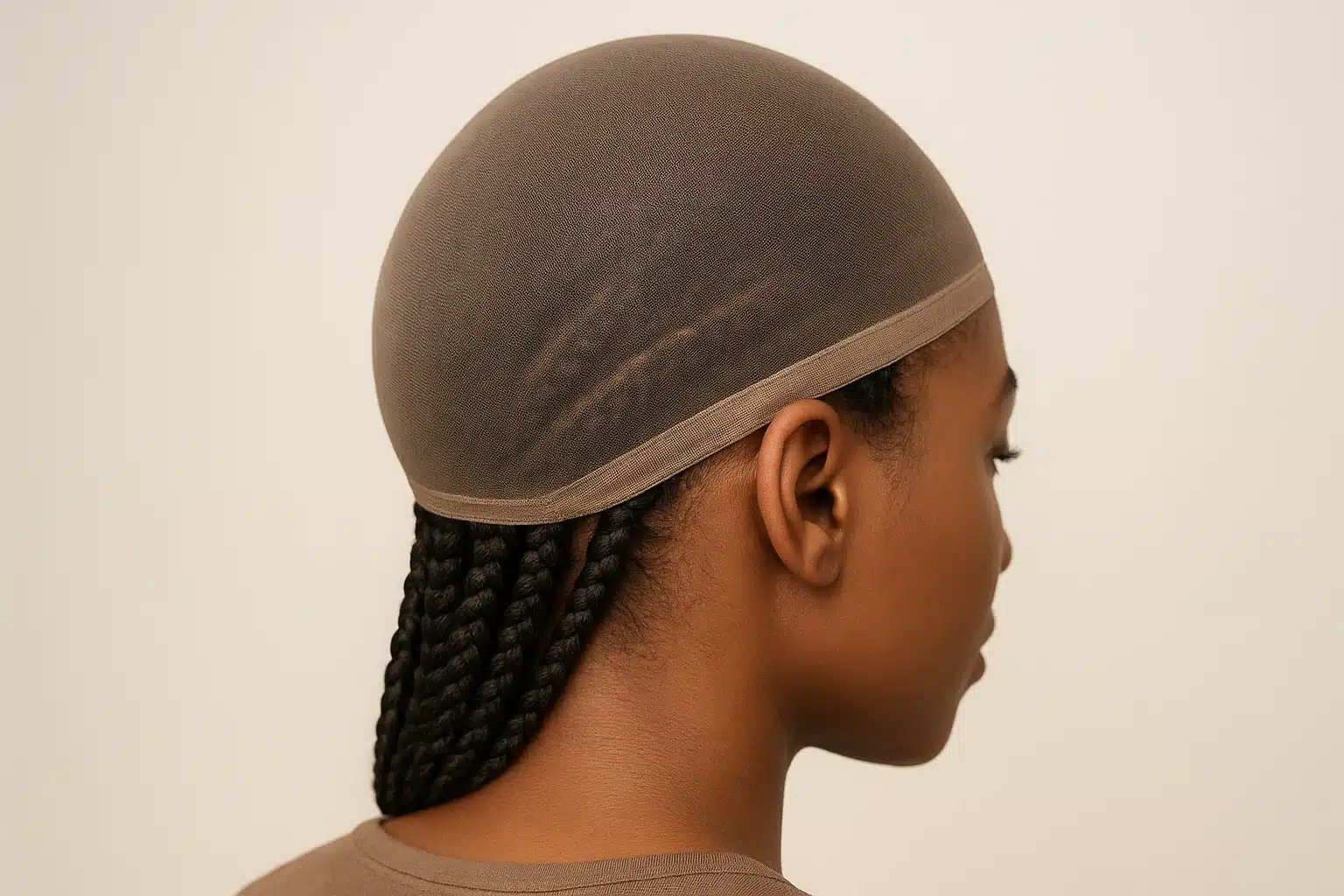
If you have ever stood in front of a mirror, wig in hand, wondering how on earth you are going to fit all of your natural hair underneath it without looking like you have a “bump” at the crown or—worse—getting a tension headache within an hour, you are not alone. It is the most common hurdle for wig wearers with long, thick, or textured hair.
The secret isn’t just about shoving hair under a cap; it is about the mechanics of weight distribution. When you approach your foundation with the same care as your style, you unlock a level of realism and comfort that lasts all day. Whether you are dealing with waist-length tresses or high-density curls, Comfort & Protection: Wig Caps, Liners & Scalp Preparation for Optimal Wear is the first step in a successful long-term protective styling journey. By prioritizing scalp health alongside hair containment, you change the entire experience from “tolerable” to “undetectable.”
The Physics of Comfort: Why the “Beehive” Method Fails
To understand how to flatten hair effectively, we have to think a little bit like engineers. A common mistake beginners make is bundling hair into a single bun or a high “beehive” shape at the crown. While this might contain the hair, it creates a mechanical problem.
When you stack hair in one spot, you raise the “center of gravity” of the wig. This creates a pivot point that causes the wig to slide backward or slip forward. Furthermore, a centralized bun creates a pressure point. When you place a wig cap over a high bun, the tension is focused entirely on that one area, often leading to soreness or headaches.
The goal is Linear Load Distribution. Instead of a mountain, we want a plateau. By spreading the mass of your hair across the entire surface area of your head, you reduce the pressure on any single follicle and create a flatter surface for the wig to sit on.
The Foundation: Preparing Your Canvas
Before a single braid is made, the condition of your hair matters. There is a misconception that because hair is hidden, it doesn’t need prep. However, the environment under a wig cap is warm and enclosed.
The “Moisture Trap” Warning: never bundle damp or wet hair under a wig. The lack of airflow combined with body heat creates a breeding ground for bacteria and fungi, which can lead to scalp irritation and odor. Always ensure your natural hair is 100% dry.
The Friction Barrier: If your hair is prone to dryness, apply a lightweight oil or leave-in conditioner before braiding. This acts as a barrier, reducing friction between your hair strands and the wig cap, preventing breakage during wear.
The Braid Map: Strategies for Every Density
Different hair types require different structural approaches to achieve a flat look. Here is how to match your technique to your density.
Low to Medium Density: The Flat Twist
For hair that is fine or average thickness, simple flat twists are effective and gentle. They lay flat against the head and are easier to remove than cornrows.
- Technique: Part hair into 4-6 vertical sections and twist them flat against the scalp from the hairline to the nape. Pin the ends flat at the nape.
High Volume/Thick Hair: Straight-Back Cornrows
This is the gold standard for weight distribution. By braiding small, consistent rows from the forehead straight back to the nape, you utilize the “Linear Load” concept.
- Why it works: It reduces bulk at the sides of the head (preventing the wig from looking wide) and eliminates the crown bump.
- Pro Tip: Keep the braids small. Two large braids will still show ridges; 8-10 micro-braids create a smooth surface.
Extreme Length/Volume: The “Theater Rosette”
This technique is often used in professional theater and film for actors with immense amounts of hair.
- Technique: Instead of braiding back, separate hair into many small square sections (like a checkerboard). Twist each section and coil it flat against the scalp like a pin-curl or “rosette,” securing it with bobby pins.
- The Advantage: This distributes volume equally over every inch of the head, eliminating the “bulge” at the nape that often happens with long braids.
Engineering the Cap: Material Matters
Once your hair is flattened, the cap you choose acts as the containment vessel. Not all caps effectively hold high-volume hair.
- Nylon Caps: Great for grip and creating a smooth surface, but they can slide off very silky or heavy hair.
- Mesh Caps: These offer superior breathability and containment. The texture of the mesh grabs onto hairpins better, making them ideal for securing heavy, long hair that needs to be pinned down extensively.
- Bamboo/Cotton Liners: If your scalp is sensitive or you are experiencing medical hair loss, these natural fibers provide a breathable barrier that prevents the synthetic materials of the wig from irritating the skin.
The “Flat-Head” Secrets: Solving the Nape Bump
The most common giveaway of a wig on long hair is the “Bell Shape”—where the head looks normal at the top but bulges out at the neck because all the braid ends are stuffed there.
The Nape Tuck Hack:Don’t terminate all your braids at the same point. If you are doing straight-back cornrows, cross the ends of the braids behind your head like shoelaces—bring the left braids up toward the right ear, and the right braids toward the left ear. Pin them flat against the back of the head, not the nape of the neck. This utilizes the natural hollow space behind the ears to hide the bulk of the hair ends.
Health & Maintenance: The Tension-Free Safety Check
Comfort is the best indicator of safety. If you feel immediate tightness, you are at risk for traction alopecia (hair loss caused by pulling) or tension headaches.
The 5-Sign Tension Checklist:
- The Eyebrow Raise: Does your wig cap pull your eyebrows up or back?
- The Temple Pulse: Can you feel a pulse or throbbing at your temples?
- The Red Line: When you remove the cap, is there a deep red indentation that lasts more than 10 minutes?
- The Snap: Do you hear snapping sounds when you manipulate the cap?
- The Nape Pinch: Does the cap dig into the sensitive skin at the back of your neck?
If you answer “yes” to any of these, your foundation is too tight. Loosen your braids or switch to a larger cap size.
Frequently Asked Questions
Can I wear a wig if my hair is down to my waist?
Absolutely. The key is distributing the bulk. Avoid piling it up. Use the “Theater Rosette” method or cross-wrap your braids around the head (milkmaid style) to use the entire surface area of your skull to hide the length.
Will wearing a wig cap damage my edges?
Not if worn correctly. Damage occurs from friction and tension. Ensure your braids aren’t pulling tight at the hairline. Many wearers use a velvet wig grip band, which protects edges by eliminating the need for combs or clips.
How often should I take my hair down?
Ideally, you should remove your wig daily to let your scalp breathe. If you are braiding your hair down under the cap, try to wash and re-braid at least every 1-2 weeks to maintain scalp hygiene and moisture balance.
The Path to Confidence
Mastering the foundation of your wig wear takes a little practice, but the payoff is immense. When you eliminate the worry of a slipping wig or a throbbing headache, you can stop thinking about what’s on your head and focus on living your life.
Your hair journey is unique, and finding the right method—be it cornrows, twists, or rosettes—is about listening to your hair and scalp. If you are ready to explore the tools that make this process easier, consider looking into high-quality caps and preparation products designed to support your natural hair health.