Have you ever tried on a wig that was technically a beautiful color, but when you looked in the mirror, it felt like the hair was “wearing you” rather than the other way around? It’s a common frustration, and it rarely has to do with the quality of the wig. While understanding your complexion is the first step—something we explore deeply in our guide on Finding Your Perfect Wig Color: A Masterclass in Skin Tone Matching—the true secret to a believable, undetectable look often lies in the subtle harmony between your wig, your eyebrows, and your roots.
For many women experiencing hair loss, whether through alopecia, chemotherapy, or natural thinning, the goal isn’t just to cover the head; it’s to reclaim a sense of self. The difference between a wig that looks “nice” and one that looks like your hair usually comes down to transition points. By anchoring your wig color to your eyebrows and utilizing the magic of rooted shades, you can create a look that is soft, flattering, and undeniably confident.
The “Anchor” Theory: Why Harmony Matters More Than Matching
A common misconception among first-time wig wearers is that your wig color must contain the exact same pigment as your eyebrows. This often leads to a “monochromatic” look that can appear flat or unnatural.
Instead, think of your eyebrows as the “anchor” of your face. They frame your eyes and provide contrast. The goal is not an identical match, but a harmonious relationship. In the world of biological hair, it is very common for eyebrows to be one to two shades darker than the hair on your head. This natural contrast provides depth and dimension.
When you select a wig that interacts correctly with your eyebrow color, you create a visual bridge that tricks the eye into seeing natural growth. This is the “Anchor Theory”: if the transition from face to hair feels logical, the wig becomes undetectable.
The 2-Shade Rule
So, how do you determine what is “logical”? Stylists and colorists rely on the 2-Shade Rule.
To ensure your wig looks like it belongs to you, the hair color (specifically the color near your face) should be within two shades of your eyebrow color—either lighter or darker.
- Dark Eyebrows: If you have naturally dark brows, you don’t have to wear jet-black hair. You can comfortably wear medium browns, auburns, or even dark blondes, provided the tone connects back to the brow.
- Light/Fair Eyebrows: If your brows are very fair or blonde, a stark black wig might look harsh unless you darken your brows with makeup. A soft blonde, light brown, or platinum usually works best to maintain a gentle, ethereal look.
This rule gives you freedom. It means you aren’t stuck with one hair color just because of your brows; you just need to stay within a cohesive color family.
Rooted Wigs: The Ultimate “Hack” for Natural Integration
If there is one “secret weapon” in the modern wig industry, it is the rooted color.
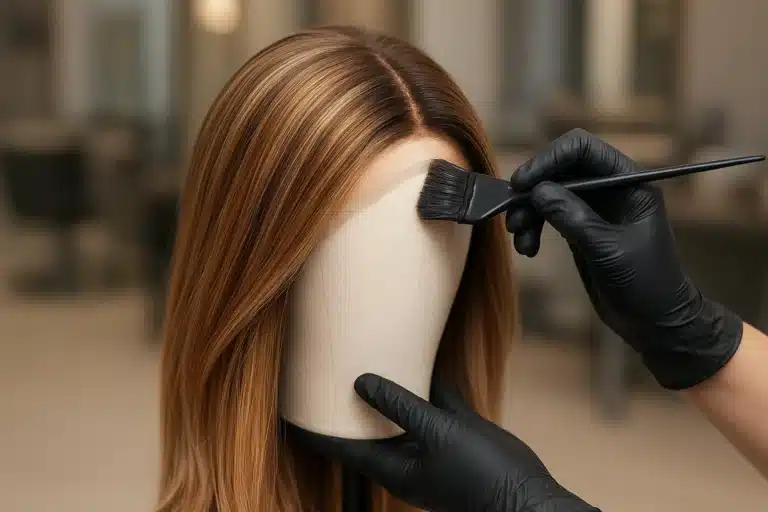
In the past, wigs were colored effectively from top to bottom in a single hue. While vibrant, this rarely mimics nature. Biological hair, even when dyed, usually shows a hint of natural growth at the scalp.
Rooted wigs feature a darker shade at the base (the “root”) that gradually blends into the main color of the wig. This is a game-changer for several reasons:
- The Bridge: The darker root acts as a bridge between your skin/eyebrows and the lighter lengths of the wig. For example, if you have dark brown eyebrows but want to be a blonde, a wig with a “dark blonde” or “light brown” root will tie the look together perfectly. The root matches the brow, while the length gives you the blonde you desire.
- Depth and Realism: The shadow created by the root mimics the natural shadow of hair follicles, making the part line look incredibly realistic, even up close.
- Softening the Face: A slightly darker root frames the face and prevents lighter colors from washing out your complexion.
Navigating Specific Hair Loss Scenarios
Your approach to color matching may shift depending on where you are in your hair journey. Here is how to apply these principles to your specific situation.
Scenario 1: You Have Biological Hair or Regrowth
If you have thinning hair or are experiencing regrowth and are wearing a wig for volume or coverage, your biological roots are your primary guide.
- The Strategy: Match the wig’s root color to your biological root color, not your dyed ends. This ensures that if your own hair peeks out at the temples or nape, it blends seamlessly with the wig.
- The Aha Moment: You don’t need to match the texture of your bio hair, only the root color. This allows you to wear a different style or length while maintaining a seamless hairline.
Scenario 2: You Have Eyebrows, but No Hair
If you have total hair loss on the scalp but retain your eyebrows, your brows become the sole anchor.
- The Strategy: Lean heavily on rooted wigs. Choose a root shade that is distinctively close to your eyebrow color. This creates the illusion that the hair is growing from your scalp and matches your natural coloring.
- The Aha Moment: If you have dark brows and want to go lighter (like platinum or red), a “shaded” or “rooted” variation of that color is your best friend. It eliminates the disconnect between dark features and light hair.
Scenario 3: Total Hair Loss (Alopecia Universalis or Chemotherapy)
If you have lost both your hair and eyebrows, you essentially have a blank canvas. This can be daunting, but it is also liberating.
- The Strategy: You get to design your look from scratch. We recommend selecting your wig color first based on what flatters your skin tone. Once you have the wig, choose an eyebrow pencil or powder that matches the root color of that wig.
- The Aha Moment: Do not try to match your brow makeup to the ends of the hair. Match it to the root. If you buy a rooted blonde wig, use a light brown brow product. This recreates the natural depth mentioned in the “Anchor Theory.”
Frequently Asked Questions
Q: Can I wear a blonde wig if I have black eyebrows?
A: Absolutely. This is a trendy, high-fashion look. However, to keep it looking natural rather than costume-like, look for a blonde wig with “dark roots” or “shaded roots.” The dark root will connect with your black brows, making the blonde lengths look like a salon-quality dye job rather than a wig.
Q: My eyebrows are graying. Should I match my wig to the gray?
A: You have a choice here. You can choose a wig that incorporates grey blends (like salt and pepper) to match your brows. Alternatively, many women choose to tint their eyebrows slightly darker (using a brow gel) to match a brunette or blonde wig, which can have a youthful, “face-lifting” effect.
Q: What if I fall in love with a wig color that doesn’t match my roots?
A: If you have biological hair underneath, you can use a root concealer spray or powder on your own hairline to temporarily blend it with the wig. If you have no hair, simply ensure your eyebrow makeup is adjusted to harmonize with the new wig color.
Q: How do I know if a wig is “rooted”?
A: When browsing colors, look for “R” in the color code (e.g., 12FS8R) or names that include “shaded,” “rooted,” or “gradient.”
The Confidence of Harmony
Choosing a wig color is about more than just picking a shade you like on a swatch; it’s about curating a look that feels authentically you. By respecting the relationship between your eyebrows, your skin, and your wig’s roots, you move beyond simply “wearing a wig” to embracing a style that enhances your natural beauty.
Remember, there are no strict laws in beauty—only guidelines to help you feel your best. Whether you are blending with natural roots or creating a new look from scratch, the right color is the one that makes you smile when you catch your reflection.