Imagine walking down a breezy street, the wind catches your hair, and you don’t even flinch. For anyone experiencing hair loss, that feeling of absolute, unshakeable confidence is the ultimate goal. But if you’ve ever worn a wig, you likely know the anxiety of the wind exposing a harsh edge or an unnatural crown.
When it comes to wig realism, the number one “tell” isn’t the shine of the hair or the density of the style—it’s the parting line.
If you’ve been browsing wigs online, you’ve probably encountered a dizzying array of terms: Monofilament, Welded Lace, Freedom Parts, V-Looping, Hand-Tied. What do these actually mean for your daily life? Today, we are going to decode the physics of wig realism. By understanding the construction behind multi-directional parting technology, you’ll be empowered to choose a piece that offers unparalleled styling versatility and the illusion of natural hair growth from any angle.
The Realism Hook: Why the “Parting Line” Matters Most
Think of the parting line as the foundation of your wig’s believability. Natural hair grows out of the scalp individually, changing direction based on the shape of your head and your hair’s natural whorl. Traditional, budget-friendly wigs often feature a “fixed part”—a dense, predetermined line where the hair is machine-wefted into place. If you try to comb the hair in a different direction, you end up exposing the cloth cap underneath.
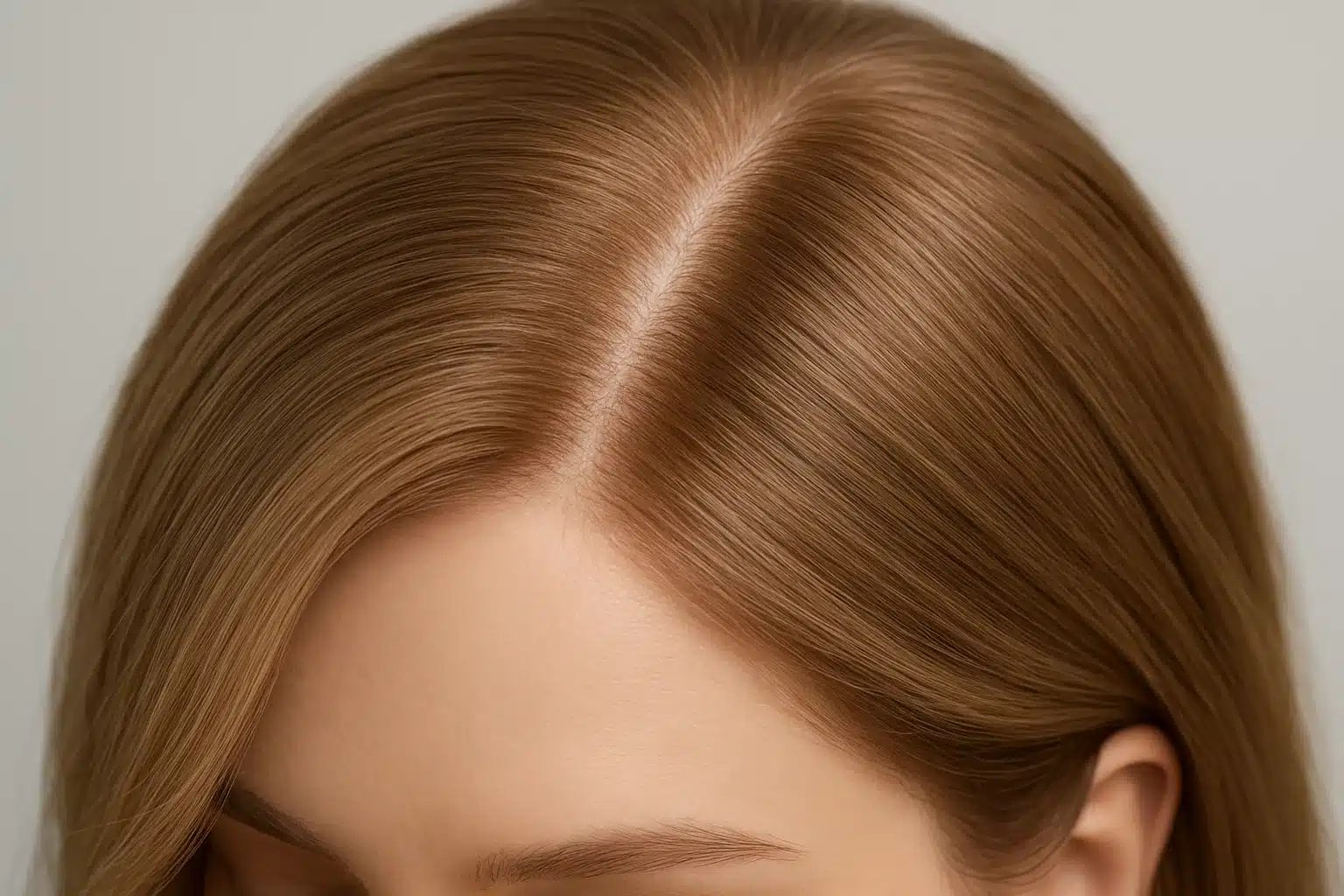
Multi-directional parting technology changes the game entirely. By utilizing specialized fabrics and meticulous hand-knotting techniques, these advanced caps allow you to sweep your hair to the left, flip it to the right, or pull it straight back, revealing what looks exactly like your own natural scalp.
The Engineering of a Scalp: Demystifying Monofilament and Lace
To achieve this “Scalp Pivot Point” flexibility, wig makers use incredibly sheer materials that mimic human skin. Let’s break down the two primary canvases used for advanced parting.
The Monofilament Top (Mono Top)
A monofilament top is crafted from a micro-fine, sheer polyester or nylon mesh. Because the material is transparent and breathable, it takes on the color of your natural scalp (or a wig cap worn underneath) when parted.
Try “The Shadow Test”: If you want to check the realism of a monofilament mesh, hold it over your forearm in natural light. The sheerer the mesh, the more seamlessly your natural skin tone will shadow through it, ensuring a flawless color match at the root.
Welded Lace vs. Swiss Lace
You will often see multi-directional tops paired with lace fronts.
- Swiss Lace is incredibly fine and delicate, offering an invisible hairline but requiring gentle handling.
- Welded Lace is created through an ultrasonic heat-fusing process. Instead of weaving the fibers over and under each other, the monofilament fibers are welded together at their intersections. This provides incredible durability, meaning you can change your part daily without the material fraying or losing its shape.
Knotting 101: The Micro-Science of Natural Hair Growth
Having a sheer canvas is only half the battle. The real magic of multi-directional parting lies in how the hair is attached to that canvas. This is a meticulous, labor-intensive process called “ventilating,” where artisans hand-tie individual hairs to the mesh.
To get the most natural part, you need to understand the knots:
- Single Split Knots: This is the gold standard for parting realism. One or two hairs are tied to the mesh using a tiny, single knot. Because the knot is so small, the hair lies incredibly flat against the “scalp,” allowing it to pivot freely in any direction.
- Double Knots: Here, multiple hairs are tied with a thicker, double knot. While double knots are incredibly durable and fantastic for creating lift and volume at the crown, they are too bulky for a natural-looking part line and don’t lay as flat.
- V-Looping: Often used in ultra-thin bases, the hair is looped through the base material in a “V” or “U” shape without a traditional knot at all, creating the ultimate illusion of hair growing directly from the skin.
The “Freedom Part” vs. “Full Mono” Showdown
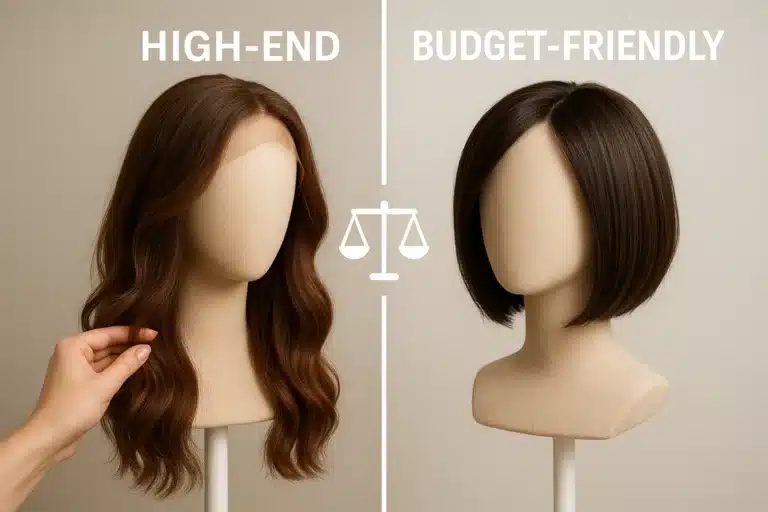
Whether you are looking at an entry-level fashion wig or a premium medical-grade piece, you’ll see claims of “multi-directional parting.” Let’s compare the two ends of the spectrum.
The Budget “Freedom Part”
Popularized by beauty supply store brands, “Freedom Parts” (or L-parts and C-parts) offer a specific, limited area of lace where the hair can be shifted slightly.
- The Pros: Highly affordable and offers more versatility than a hard, fixed part.
- The Cons: The knotting is often denser (double knots), and the mesh is less transparent. Wearers frequently have to rely on “hacks” like plucking the part with tweezers to widen it or using concealer makeup to hide the visible knots and mesh.
The Premium “Full Monofilament”
Found in high-quality, luxury brands, a Full Mono top covers the entire crown area.
- The Pros: Every single hair is hand-tied with microscopic single knots. It requires zero plucking, zero concealer, and is ready to be parted anywhere across the top of the head straight out of the box. The realism is undeniable, especially for those with sensitive scalps experiencing medical hair loss.
- The Cons: The intensive hand-craftsmanship requires a higher initial investment.
Styling Workshop: Mastering the Multi-Directional Part
Having a multi-directional wig means you have absolute styling freedom. Here is how to make the most of it:
1. Find Your “Scalp Pivot Point”
Look at natural hair. It doesn’t part in a perfectly straight line from the forehead to the nape. It usually pivots from a whorl at the back of the crown. When creating your part, use a rat-tail comb to draw a line that slightly angles toward your natural crown pivot point. This minor asymmetry creates massive realism.
2. The 4-Finger Rule
Unsure where to place a side part? Place four fingers flat against your forehead, with your index finger resting on your eyebrow. Where your pinky lands on your hairline is universally the most flattering starting point for a natural side sweep.
3. Heat Setting to “Lock” Your Part
If you change your part on a high-quality synthetic or human hair monofilament wig, the hair might initially try to fall back into its old style.
- For Human Hair: Wet the hair slightly, part it, and use a blow dryer on warm heat pointing downward to lock the new direction.
- For Heat-Friendly Synthetic: Use the warmth of your hands to press the part flat, or use a specialized hot comb on a very low setting to train the fiber. Always allow the synthetic fiber to cool completely in its new position—synthetic hair sets as it cools!
Advanced Maintenance: Protecting Your Parting
To keep your multi-directional parting looking pristine, keep these two advanced tips in mind:
Beware of Permatease
Many wigs use “permatease”—short, crimped hairs hidden at the root to provide built-in volume. If you brush too aggressively near the parting line, you can accidentally pull this permatease into the visible part, clouding the illusion of the scalp. Always part carefully using a fine-tooth comb.
The Truth About Knot Bleaching
You may see tutorials online about “bleaching the knots” on lace wigs to make dark knots invisible against the scalp. A word of caution: Chemically altering the knots weakens the integrity of the hair tie. While it can enhance realism, over-bleaching leads to rapid shedding. High-quality monofilament wigs are specifically knotted to minimize visibility without the need for harsh, damaging chemicals.
The Wig Realism Checklist
Want to audit a wig you currently own or one you are thinking of purchasing? Run it through this quick checklist:
- Mesh Transparency: Does the cap material pass the “Shadow Test” against your skin?
- Directional Freedom: Can the hair be parted cleanly on the left, right, and center?
- Knot Density: Are the knots at the parting line tiny and single-tied, allowing the hair to lay flat?
Frequently Asked Questions (FAQ)
What is the difference between a Mono Top and a Mono Part?
A Mono Part features a thin strip of monofilament material solely where the part is located (usually left, right, or center). You cannot change the location of this part. A Mono Top covers the entire upper crown area, allowing you to move the part anywhere within that section.
Does a 3-way parting wig actually look real?
A 3-way part offers more versatility than a fixed part, but realism depends on the knotting. If the knots are thick and the mesh is opaque, it may still look slightly “wiggy” up close. For absolute realism, a hand-tied monofilament top is always superior.
Why are my wig knots so visible?
Visible knots look like tiny black dots on the parting line. This happens when dark hair is tied to the lace using double knots. Premium wigs solve this by using lighter colored hair at the very root, or by utilizing micro-single knots that are barely visible to the naked eye.
How do I change the part on a fixed-part wig?
Unfortunately, you cannot cleanly change the part on a fixed-part wig because the hair is sewn tightly in one direction on cloth wefts. If you try, you will expose the structural cap underneath. To change your part freely, you must invest in a monofilament or fully hand-tied lace top.
Your Next Steps in the Wig Journey
Navigating the world of wigs can feel overwhelming, but understanding the technology behind cap construction is the most empowering step you can take. Knowing the difference between budget mechanics and premium monofilament engineering ensures you make choices that align with your lifestyle, your comfort, and your confidence.
For nearly two decades, Wig Superstore has been dedicated to providing compassionate care and deep industry expertise to individuals navigating hair loss. We believe that an educated wearer is a confident wearer.
We encourage you to continue exploring the fascinating world of wig cap construction. Take a moment to browse our educational resources, compare different cap styles, and discover the exact technology that will help you feel beautiful, comfortable, and unmistakably yourself.