If you’ve ever worn a wig and felt an overwhelming wave of relief the moment you took it off, you are not alone. For decades, the conversation around wig comfort has been dominated by a single topic: the wig cap. We are constantly told to look for “breathable lace” or “monofilament tops” to solve our discomfort.
But what if the cap isn’t the main culprit?
The true secret to a weightless, breathable, and itch-free experience lies in a hidden layer of engineering that most retailers rarely discuss: the materials and manufacturing of the hair wefts themselves. By shifting our focus from the fabric of the cap to the science of the wefting, we can uncover exactly why some wigs feel like a heavy winter hat, while others feel like a natural extension of yourself.
Let’s pull back the curtain on the engineering of ultra-lightweight wefting and discover the innovations transforming the comfort of modern hairpieces.
The Hidden Physics of Discomfort: Why “Standard” Wigs Feel Hot
When you experience discomfort while wearing a wig, it typically boils down to three physical factors: bulk, heat traps, and weight.
Most people assume a wig’s “breathability” is determined strictly by how many holes exist in the mesh cap. In reality, thermal conductivity plays a much larger role. The actual strings of hair—specifically how they are bundled, stitched, and attached to the cap—create tiny “walls” that either trap body heat against your scalp or allow it to escape.
When hair is densely bundled into thick tracks, it acts as insulation. Understanding the art of wefting helps explain why advanced engineering matters just as much as the cap material when it comes to keeping your scalp cool.
Anatomy of a Weft: The Stitch, The Return, and The Bond
To understand modern lightweight innovations, we first need to look at the anatomy of a traditional hair weft. A weft is essentially a curtain of hair sewn together at the top. But how it’s sewn makes all the difference.
The “Return Hair” Irritation
If you’ve ever felt an annoying, prickly itch at the top or back of your wig, you’ve likely experienced the “return hair” problem.
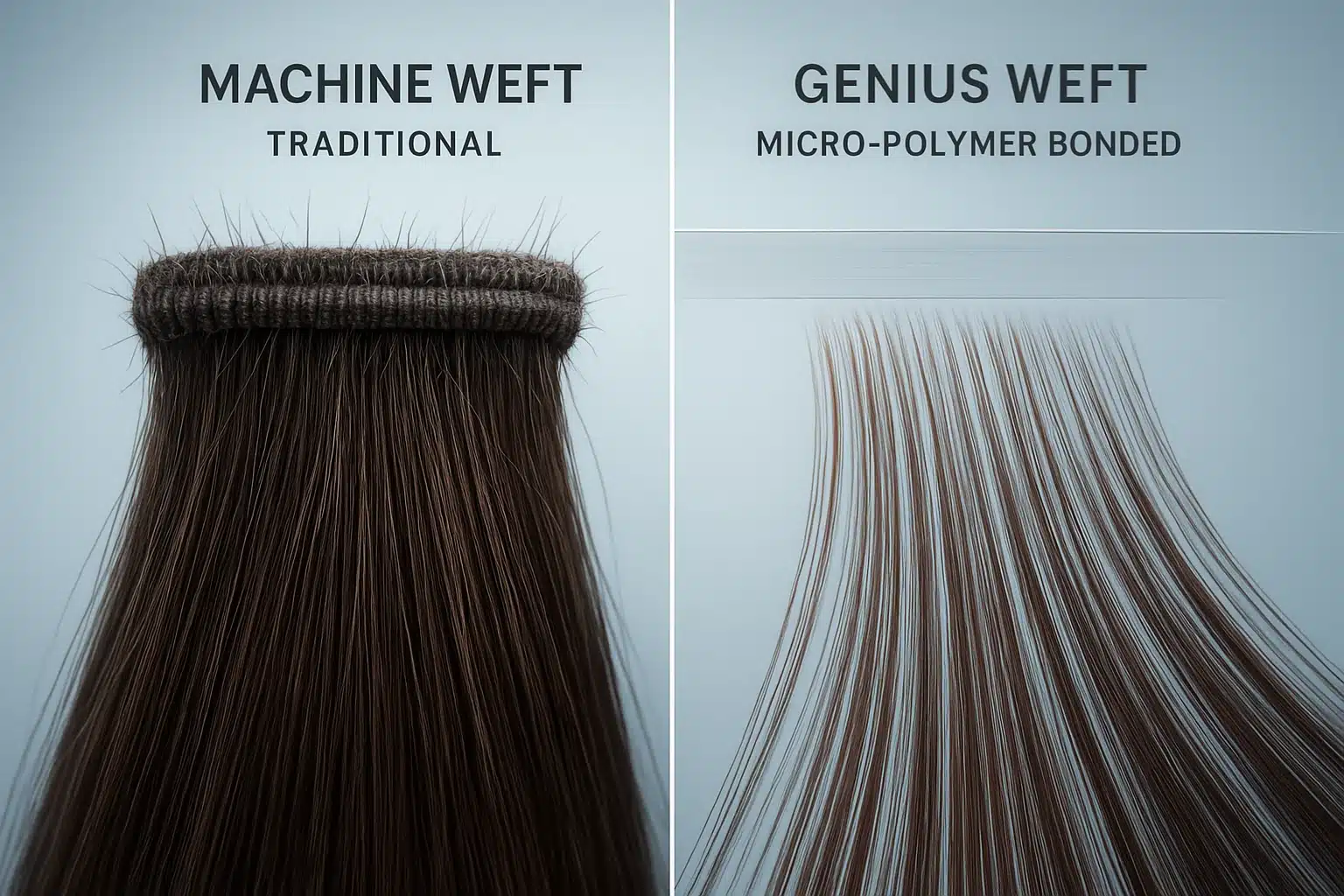
In traditional machine-made wefts, individual hairs are folded over a stitching thread and sewn down to keep them secure. The short, folded-over ends (usually 1 to 2 inches long) are called the “return.” Because these short hairs are stiff and sit right against the seam, they can poke through the cap and irritate a sensitive scalp. It is one of the most common complaints among new wig wearers, yet it’s rarely explained.
Modern engineering aims to completely eliminate this return hair, drastically reducing bulk and friction.
The Innovation Hierarchy: From Traditional Tracks to Weightless Comfort
Wig manufacturing has quietly undergone a technological revolution. Here is how wefting technology has evolved to prioritize your comfort.
Traditional Machine Wefts (The Baseline)
Standard machine wefts are created by feeding hair through a specialized sewing machine. While they are highly durable and cost-effective, they are also the bulkiest. They feature a prominent fold (the return hair) and utilize thicker stitching threads. Multiple layers of these wefts are often required to build a wig, which significantly increases the overall weight.
Butterfly Wefts (The Hybrid: Volume + Stability)
Butterfly wefts represent a brilliant middle-ground in hair engineering. By utilizing a unique folding and stitching technique, the hair is distributed more evenly across the seam. This creates beautiful, natural volume right at the root without the dense, heavy ridge of a traditional machine weft. It offers excellent stability and is noticeably lighter, making it a fantastic step up in comfort.
Genius Wefts (The Apex: Invisibility + Weightlessness)
The Genius Weft is currently the pinnacle of ultra-lightweight engineering. Instead of bulky thread and folded hair, Genius Wefts use advanced micro-polymer bonding.
The hairs are essentially fused side-by-side into an incredibly thin, flexible silicone or polymer strip. The result? Zero return hair. They are virtually invisible, sit entirely flat against the scalp, and eliminate the prickly itch altogether. Because they lack the bulk of traditional stitching, Genius Wefts offer an unparalleled feeling of weightlessness.
Material Science: Demystifying Denier and Thread Physics
How do we measure the weight of something as small as a thread? In textile engineering, we use a measurement called denier, which calculates the thickness and weight of a specific yarn or fiber.
In older wig constructions, manufacturers had to use high-denier (thicker, heavier) threads to ensure the hair didn’t shed. When you multiply that heavy thread across dozens of rows of wefting, you end up with an extra 40 to 60 grams of unnecessary weight sitting on your head.
Today’s ultra-lightweight wefts utilize precision low-denier threads combined with liquid polymer bonding. This brings us to a crucial concept in wig comfort: The Scalp-Aircount Metric.
In engineering terms, reducing the thickness of a weft seam by just 20% can result in up to a 40% increase in scalp airflow. The thinner the track, the less heat is trapped against the scalp. This scientific principle is exactly what you should look for when searching for effective cooling wigs that can withstand warm weather.
The Durability Myth: Does Thinner Mean More Fragile?
A major concern for anyone investing in a high-quality wig is durability. There is a common myth that “thin means fragile,” leading some to worry that ultra-thin Genius or hand-tied wefts will shed or break easily.
Thanks to modern material science, this is entirely false. Traditional wefts rely on physical knots and tension (thread tightly gripping hair) to prevent shedding. Over time, brushing and washing can loosen these stitches.
Modern ultra-lightweight wefts use micro-polymers that act as a flexible adhesive glue on a microscopic level. The bonding material flexes with the hair rather than fighting against it. While keeping your wig in top shape still requires proper wig maintenance, these advanced thin wefts are actually highly resilient to shedding and breakage.
Actionable Buying Guide: How to Evaluate Wig Engineering
Next time you are looking for a hairpiece, look past the basic label and evaluate the engineering:
- Feel the Seams: If you can easily pinch a thick, bulky ridge where the hair is sewn, it is a traditional machine weft. If the seam feels like a thin piece of tape or is barely detectable, you are feeling advanced polymer wefting.
- Check for the “Itch Factor”: Run your fingers gently right at the root of the tracks. If you feel short, coarse, prickly hairs sticking up, that is the “return hair.”
- Consider the Color Contrast: Sometimes, inspecting lighter hair colors makes it easier to see construction quality. High-quality engineering is beautifully apparent in blonde human hair wigs, where dark, bulky knots or thick seams would otherwise be highly visible. Premium lightweight wefting remains perfectly seamless.
- Ask the Right Questions: While exploring different types of wig caps, ask your retailer about the wefting. Ask if the wig utilizes Genius Wefts, Butterfly Wefts, or standard machine tracks. Whether you’re shopping online or browsing a premier wig store minneapolis locals rely on, true experts will gladly explain the structural engineering of their products.
Frequently Asked Questions (FAQ)
Why is my wig so hot, even though it has a lace cap?
Lace provides ventilation, but if the wig uses thick, high-denier machine wefts in the back and sides, those tracks act as thermal insulators. To reduce heat, you need a wig that combines a breathable cap with ultra-thin wefting (like Genius Wefts) to maximize your “Scalp-Aircount” and let heat escape.
Why do the short hairs at the top of my wig itch so much?
Those short hairs are called “return hair.” They are the folded-over ends of the hair strands stitched into traditional wefts. Because they are short and stiff, they poke against the scalp. To avoid this, look for weft constructions that use polymer bonding to eliminate the fold entirely.
Can I cut a lightweight weft without it shedding?
It depends on the construction! Traditional hand-tied wefts will unravel and shed immediately if cut. However, modern polymer-bonded “Genius Wefts” can typically be cut at any point along the track without shedding, making them highly customizable.
What is the best weft type for a highly sensitive scalp?
For maximum comfort, look for seamless, ultra-thin polymer wefts (Genius Wefts) or 100% hand-tied caps. Both options eliminate the bulky return hair and heavy thread that cause friction against sensitive skin.
Empowering Your Comfort Journey
Understanding the engineering behind ultra-lightweight wefting completely changes how you shop for hair. You are no longer just looking at a style or a color; you are looking at the technical architecture that determines how you will feel at 8:00 PM after wearing your wig all day.
By prioritizing advanced material science—low-denier threads, micro-polymer bonds, and the elimination of return hair—you can find a solution that offers brilliant aesthetics alongside uncompromising, weightless comfort.