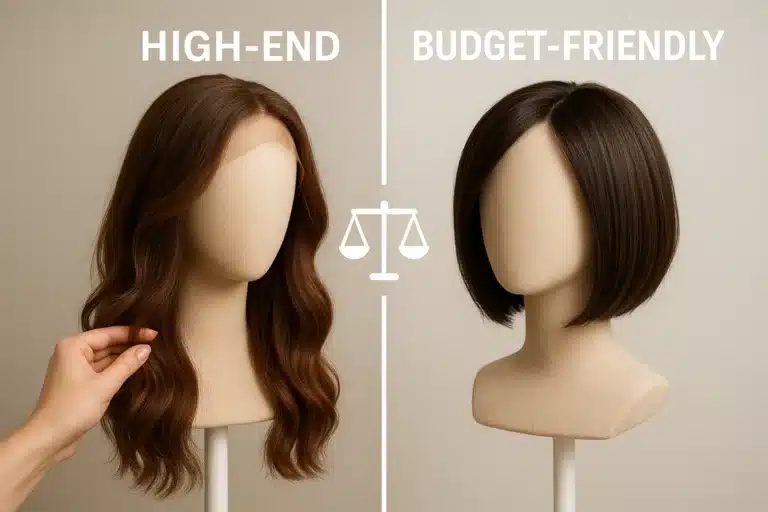
Finding the right wig is often an emotional journey as much as it is a financial one. You want to feel beautiful and confident, but glancing at the price tags of premium pieces can sometimes feel discouraging. It is a common dilemma: you need the realism and comfort of a high-end piece, but your budget feels limited. The good news is that acquiring a beautiful, natural-looking wig doesn’t always require paying full retail price—it requires a shift in strategy.
Think of shopping for hair not as a simple purchase, but as an investment in your confidence. Just as you wouldn’t buy a car solely based on its paint color, you shouldn’t buy a wig based solely on a “50% off” sticker. By understanding how the industry works, you can uncover hidden gems that offer premium features without the premium price tag. This approach is central to budgeting for your perfect wig, allowing you to allocate your resources where they matter most: comfort, longevity, and natural movement.
The Difference Between “Cheap” and “High Value”
Before diving into sales strategies, it is vital to distinguish between a “cheap wig” and a “high-value discount.” A cheap wig is manufactured with low-grade materials to hit a low price point. These pieces often have excessive shine, uncomfortable caps, and fibers that tangle easily.
A high-value discount, however, occurs when a premium wig—constructed with reputable synthetic fibers or human hair—is reduced in price due to inventory logistics. Your goal is to find the latter. To do this, you can utilize a mental “Wig Value Matrix.” When you see a discounted item, weigh the price against the specifications. A $100 price tag is high for a costume wig, but it is an incredible “steal” for a monofilament top wig that originally retailed for $300.
Decoding the Discount Dictionary
Retailers use specific terminology that signals why an item is marked down. Understanding these terms helps you assess the “return risk” spectrum.
Clearance vs. Sale
- Sales are temporary promotions (e.g., “Spring Event”). These items are usually current stock and returnable.
- Clearance items are typically discontinued styles or colors. Manufacturers frequently refresh their color palettes; when a specific shade is retired, high-quality inventory moves to the clearance section. These are often the best places to find premium cap constructions at a fraction of the cost.
Open Box
“Open Box” items are often misunderstood. These are generally wigs that were purchased, tried on briefly by a customer, and returned. Reputable retailers put these items through a rigorous inspection process to ensure they are pristine, unworn, and factory-fresh before reselling them at a deep discount. It is essentially a brand-new wig with a broken seal.
Final Sale
This is the highest risk category. “Final Sale” means no returns or exchanges. You should only venture here if you are intimately familiar with the brand, the specific style, and the color code.
The “Spec-Reading” Skill Set
To successfully navigate the clearance section, you must learn to read the product specifications like a pro. Ignore the model photo for a moment and look at the technical details. This is your “Quality Audit Checklist.”
1. Fiber Identification
In the description, look for specific branded fibers. Terms like “Kanekalon” or “Modacrylic” indicate high-quality synthetic fibers that mimic the movement and texture of biological hair. Be wary of listings that simply say “Synthetic” or “Mixed Fiber” without further detail, as these can sometimes hide lower-grade materials that may look plastic-y under sunlight.
2. Cap Construction
This is where the real value lies. If you find a clearance wig that features a Monofilament Top or a Lace Front, you have found a gem.
- Monofilament: Allows the hair to part in any direction and mimics the look of natural scalp.
- Lace Front: Creates a seamless hairline, allowing you to style the hair away from your face.Finding these features on a deeply discounted item significantly lowers your “Cost Per Wear” because these caps are comfortable enough for daily use.
Timing the Market: The Seasonal Cycle
Many buyers wait for Black Friday, but the wig industry often follows fashion cycles. New collections frequently drop in Spring and Fall. To make room for these new arrivals, retailers often discount “last season’s” styles just before these launches.
Additionally, consider “Loyalty Stacking.” If you find a reputable retailer, stick with them. Loyalty points can often be combined with sales events, compounding your savings. Seasoned wearers use this strategy to buy their staple “daily driver” wigs once or twice a year at significant markdowns.
Validating Quality: The Arrival Audit
Once your discounted treasure arrives, your job isn’t quite done. Especially with “Open Box” or clearance items, you want to verify the integrity of the piece immediately.
Check the fibers for any signs of friction frizz (commonly found at the nape of the neck on used wigs) and inspect the lace front to ensure it hasn’t been trimmed. You can also perform a simple wig test by holding the wig up to the light to check the density and looking at the cap interior for any loose threads. Verifying these details immediately ensures you received the quality promised in the description.
Alternative Avenues: Wig Banks
For those navigating hair loss due to medical reasons where budget is strictly limited, commercial discounts might still be out of reach. In these instances, it is helpful to understand the difference between an “Outlet” and a “Wig Bank.”
While outlets are commercial retailers selling clearance stock, Wig Banks are typically non-profit organizations or charities (like the American Cancer Society or local chapters) that provide high-quality, donated wigs to patients free of charge or for a nominal fee. If you are in a medical crisis, reach out to local support groups to see if this resource is available to you.
Frequently Asked Questions
Is it safe to buy a wig on “Final Sale”?
Only if you are absolutely sure of the fit and color. Since you cannot return it, “Final Sale” is best reserved for restocking a style you already own and love, rather than experimenting with a new look.
What is the “Four Finger Rule” I keep hearing about?
This is a fitting tip often used by beginners. Ideally, your wig should sit about four finger-widths above your eyebrows. If you buy a clearance wig and it doesn’t fit this way, check if the wig has adjustable tabs at the nape—most high-quality wigs do, allowing you to customize the fit even if you bought it off the rack.
Do clearance wigs have a shelf life?
Synthetic fibers are incredibly durable. As long as the wig has been stored correctly (away from heat and direct sunlight) in the warehouse, a clearance wig from two seasons ago will be just as fresh and bouncy as a new arrival.
Can I style a discounted synthetic wig?
It depends on the fiber. Standard synthetic hair cannot be heat-styled. However, if your discount find is labeled “Heat Friendly” or “Heat Defiant,” you can use low heat to change the style. Always check the specs!
Ready to start your search?Now that you understand how to separate price from value, you can browse sales collections with a critical eye. Remember, the goal is not just to save money, but to find a hairpiece that makes you feel like you—at a price that lets you sleep soundly at night. Start by checking the cap construction specs on your favorite styles and waiting for that perfect intersection of quality and opportunity.