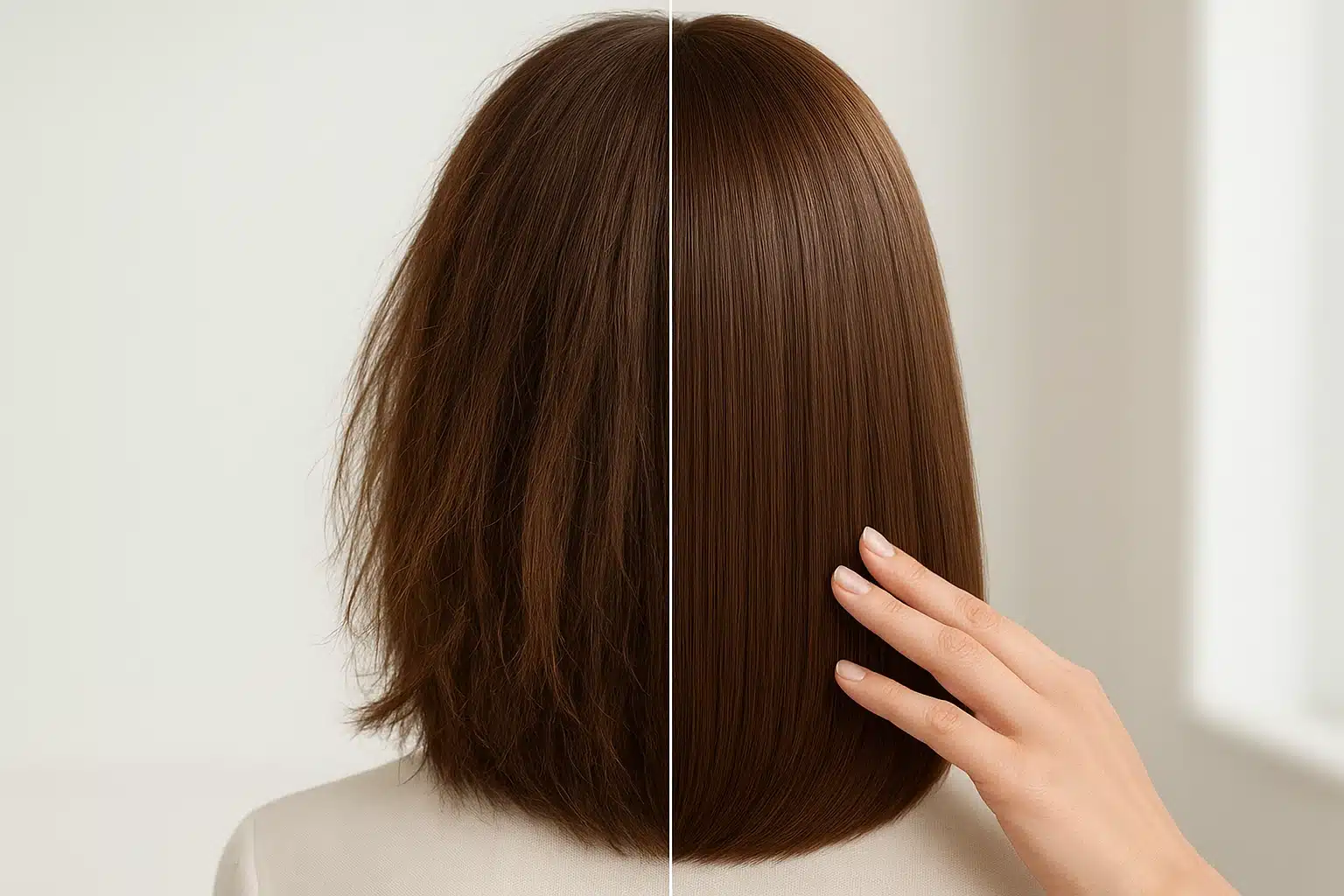
We all have that one wig we just can’t bear to part with. Maybe it’s a classic Noriko bob like the “Sky” that frames your face perfectly, or a long, layered style like “Angelica” that makes you feel unstoppable. But over time, even the highest quality synthetic wigs begin to change. The nape gets a little rough, the shine dulls, and the fibers that once moved like silk start to clump together. It’s a common frustration, but it doesn’t necessarily mean your favorite piece is ready for the trash bin.
Before you resign yourself to tossing your favorite piece, it’s helpful to understand exactly what you’re working with. If you need a refresher on fiber composition or specific cap construction features, our complete guide to Noriko wigs covers the essentials of what makes these pieces unique. Once you understand the foundation of your wig, you can better apply the restoration techniques that follow, turning a “tired” wig into a refreshed favorite.
Understanding the “Crunch”: Why Synthetic Fibers Change
To fix the problem, we first have to understand the physics behind it. Noriko wigs are renowned for using high-quality synthetic fibers, often Kanekalon. These fibers are essentially fine plastic polymers designed to mimic the weight and movement of biological hair.
The “crunchy” texture you feel at the nape of the neck isn’t usually dirt—it’s friction damage. Throughout the day, your wig rubs against your collar, scarf, or the back of your chair. This friction generates heat and static, which slowly degrades the smooth surface of the fiber, causing the ends to frizz and kink. This creates a “Velcro effect” where the hairs grab onto each other, leading to tangles and matting.
The Foundation: The Cool Water Cleanse
Restoration starts with a clean slate, but “clean” doesn’t mean “scrubbed.” One of the biggest mistakes wig owners make is treating synthetic fiber like laundry. Agitation is the enemy of synthetic hair; it roughens the cuticle (surface) of the fiber, worsening the frizz.
To prepare your wig for revival, submerge it in a basin of cool water mixed with a wig-specific shampoo. Let it soak for 10 to 15 minutes, then gently rinse by letting cool water flow in the direction of the hair. Establishing a gentle routine for wig care and maintenance is the first line of defense in preventing future damage.
Intermediate Restoration: The Softness Deep-Dive
Once your wig is clean, you might notice it still feels dry. Unlike human hair, synthetic fiber cannot absorb moisture because it is non-porous. You cannot “hydrate” plastic, but you can coat it to simulate hydration.
The Silicone Solution
The most effective way to restore that silky slip is using products containing silicone. Silicone fills in the microscopic scratches on the damaged fiber, creating a temporary smooth surface. When looking for the best conditioner for synthetic wigs, look for leave-in sprays specifically formulated for synthetic hair that prioritize smoothing agents.
The “Controversial” Fabric Softener Method
You may have heard whispers in the wig community about using fabric softener. Does it work? Yes, but with a major caveat. Fabric softener is designed to reduce static and soften synthetic fibers in clothing, and it can do the same for wigs.
- The Ratio: Mix roughly one part fabric softener to ten parts cool water in a spray bottle.
- The Warning: Use this sparingly. Overuse can lead to a white, waxy buildup that attracts dust, making the wig look duller in the long run. Think of this as an occasional deep treatment, not a daily routine.
Advanced Techniques: Thermal Resetting and Steam
If washing and conditioning aren’t enough to remove the stiffness, it’s time to utilize “Thermal Memory.” This is the concept that synthetic fiber can be reshaped and smoothed using controlled heat.
Note: Most standard Noriko wigs are not heat-friendly in the traditional sense (you can’t use a curling iron). However, you can use steam or boiling water to reset the fiber structure without melting it.
The Steamer Method
A handheld garment steamer is a powerful tool for longevity.
- Place your wig on a canvas block head/stand.
- Comb through the fiber gently with a wide-tooth comb.
- Direct the steam at the frizzy areas (usually the ends and nape) while combing the fiber straight down.
- The heat from the steam relaxes the kinked fibers, and cooling them in a straight position “resets” their memory.
The Boiling Water Dip
For wigs with severe “crunchy” ends, this method is a game-changer.
- Boil a pot of water.
- Crucial Step: Remove the pot from the heat source. You want the water hot (around 180°F-185°F), but not actively rolling.
- Dip only the damaged ends of the wig into the water for 5-10 seconds.
- Remove and lay flat to dry.If you are unsure about handling heat tools, taking time to learn how to defrizz a synthetic wig safely can save you from accidentally damaging the fiber beyond repair.
Navigating Noriko’s Signature Permatease
A unique feature of many Noriko wigs is “permatease”—the short, crimped fibers at the root that provide volume and lift without the weight.
New wig owners often mistake permatease for matting or frizz and try to comb it out or steam it flat. Do not do this. Attempting to straighten the permatease will ruin the structural integrity of the style, causing the wig to lie unnaturally flat against the head. When restoring your wig, focus your efforts on the mid-lengths and ends, leaving the root area largely untouched to preserve that signature Noriko volume.
Frequently Asked Questions
Can I use human hair products to revive my wig?
Generally, no. Human hair products often contain sulfates, parabens, and oils that are too heavy for synthetic fibers. Unlike the process of how to restore a human hair wig, which relies on protein and deep hydration, synthetic restoration relies on surface smoothing and static reduction.
How often should I steam my wig?
You shouldn’t wait until the wig is matted to steam it. Light steaming every 6-8 wears can prevent the “crunch” from forming in the first place, keeping the fibers aligned and smooth.
When is it time to let go?
While these techniques can extend the life of a wig by months, synthetic fibers do have a lifespan. If the fibers are breaking off when you comb them, or if the cap has lost its elasticity, it may be time to retire the piece and explore a new style.
Continuing Your Journey
Reviving an older wig is about more than just saving money; it’s about maintaining a look that makes you feel like you. By understanding the science of synthetic fiber and applying these care techniques, you can keep your Noriko wigs looking salon-fresh for significantly longer.
Remember, every wig tells a story. With a little patience and the right care, you can ensure yours has a few more chapters left to enjoy.