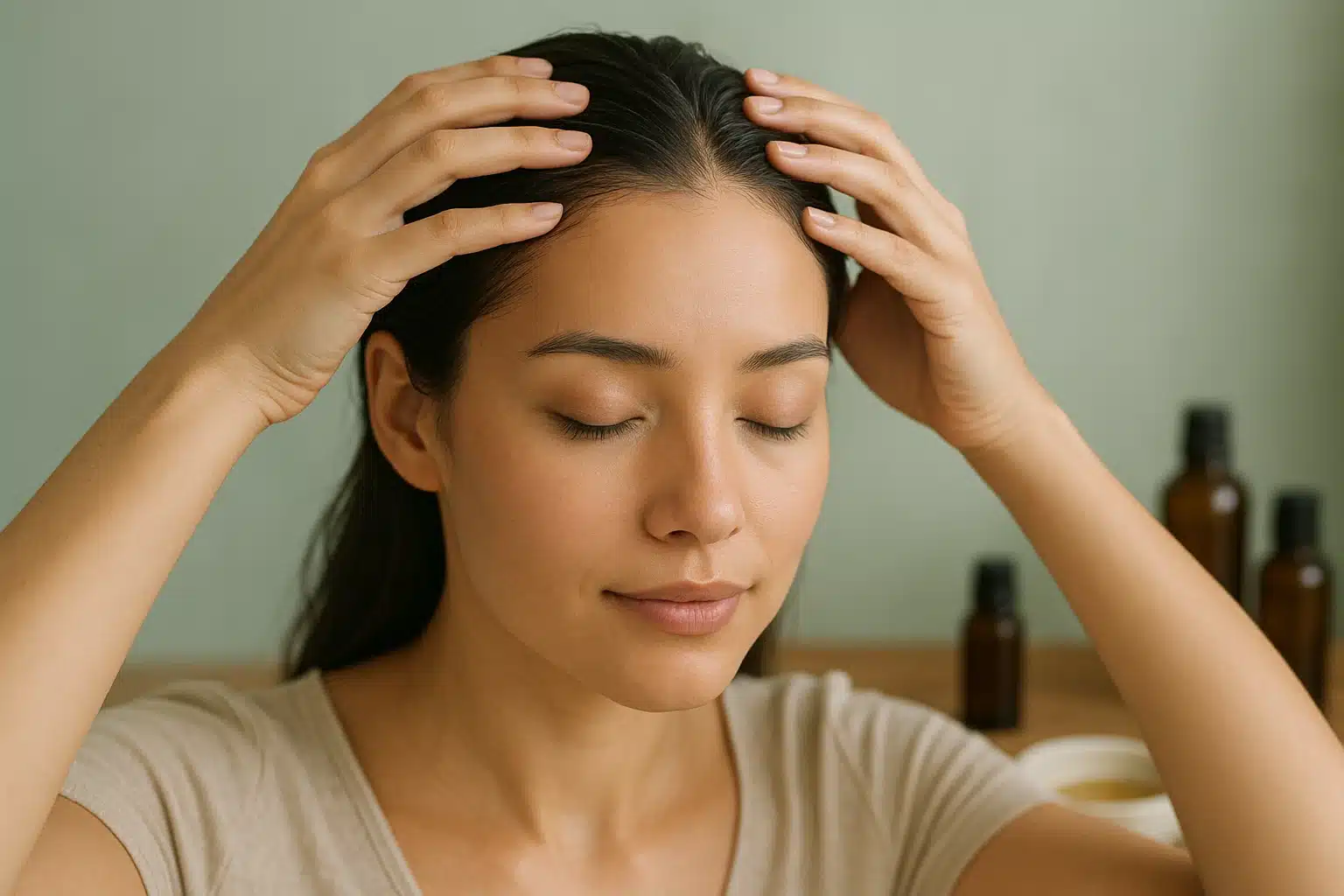
For many experiencing hair loss, the scalp becomes a source of anxiety rather than a place of comfort. We tend to stop touching our heads, fearful that any friction might cause more shedding, or simply because the sensation reminds us of what has changed. It is a natural protective instinct, but it often results in a disconnection from our own bodies.
However, reintroducing touch through a deliberate, sensory-rich ritual can be one of the most healing steps you take. It shifts the narrative from “fixing a problem” to nurturing yourself. By combining the physical benefits of massage with the emotional grounding of aromatherapy, you create a sanctuary of calm. This practice isn’t just about potential hair growth; it is a foundational pillar for cultivating holistic well-being that reconnects you with your body in a compassionate, positive way.
Reclaiming the Ritual of Touch
Why do we instinctively rub our temples when we have a headache or massage our necks when we are stressed? Because touch is a primal language of relief. When navigating hair loss, the scalp often holds a tremendous amount of physical tension and emotional stress.
Reclaiming this area through massage does more than just feel good; it signals to your nervous system that it is safe to relax. By turning a routine maintenance task into a mindful ritual, you move away from the stress of “treating hair loss” and toward the peace of caring for the person experiencing it.
The Science of Soothing: How It Works
To understand why this combination is so effective, we need to look at two distinct biological mechanisms: vascularity and the olfactory response.
1. The Physical: Micro-Circulation
Your scalp is a network of tiny blood vessels that supply oxygen and nutrients to hair follicles. Tension in the scalp muscles can restrict this blood flow. Gentle massage acts as a vasodilator, warming the skin and encouraging blood to surface. While research suggests this mechanical stimulation can support hair thickness over time by stretching the cells of hair follicles, the immediate benefit is the reduction of tightness and the soothing of sensitive nerve endings.
2. The Emotional: The Olfactory Highway
Aromatherapy is often dismissed as just “nice smells,” but it is actually grounded in neurobiology. Your sense of smell is directly linked to the limbic system—the part of the brain that controls emotion and memory. When you inhale specific essential oils during a massage, you aren’t just smelling a fragrance; you are sending a chemical message to your brain to lower cortisol (stress) levels and induce a state of calm.
Your Self-Care Toolkit: Selecting the Right Oils
One of the most common misconceptions in natural wellness is that “natural means safe.” Essential oils are highly potent plant extracts that must be handled with care. To perform a safe scalp massage, you need two components: a Carrier Oil (to dilute and lubricate) and an Essential Oil (for therapeutic benefit).
The Base: Carrier Oils
Think of these as the vehicle that delivers the therapy. They prevent the essential oils from evaporating too quickly and protect your skin from irritation.
- Jojoba Oil: Closest to the skin’s natural sebum; lightweight and non-greasy. Ideal for most skin types.
- Sweet Almond Oil: Rich in Vitamin E and soothing for dry, itchy scalps.
- Coconut Oil: deeply moisturizing, though it can be heavy for finer hair.
The Therapy: Essential Oil Synergy
We recommend choosing oils based on what your body and mind need in the moment. Here is a guide to common oils categorized by their dual benefits:
| Essential Oil | Scalp Benefit | Emotional/Aromatherapy Benefit |
|---|---|---|
| Lavender | Soothes inflammation and itchiness; antimicrobial. | Deeply calming; reduces anxiety and promotes sleep. |
| Peppermint | Stimulates blood flow; creates a cooling sensation. | Invigorating; clears mental fog and boosts energy. |
| Rosemary | Linked to improved cellular generation and circulation. | Enhances focus; reduces nervous tension. |
| Cedarwood | Balances oil production (sebum) on the scalp. | Grounding and stabilizing; helps with emotional stress. |
Safety Note: Always dilute essential oils. A safe ratio for scalp application is typically 2-3 drops of essential oil per tablespoon of carrier oil. Always perform a patch test on your inner arm before applying a new blend to your scalp.
Mastering the Sensory Scalp Ritual
You don’t need to be a professional therapist to reap the benefits. The goal here is consistency and mindfulness, not perfect technique.
Step 1: Set the Environment
Treat this like a spa appointment. Dim the lights, perhaps play some soft ambient noise, and sit in a comfortable chair. This preparation tells your brain that you are stepping out of “busy mode.”
Step 2: The Warm Up
Apply your oil blend to your fingertips. Rub your hands together to warm the oil, releasing the aromatic compounds. Cup your hands over your nose and take three deep, slow breaths. This creates the “olfactory anchor,” signaling your body to relax before you even touch your scalp.
Step 3: The Techniques
Depending on your sensitivity, choose the method that feels right for you today.
- The Gentle Glide (For Sensitive Scalps): If your scalp feels tender or sore, avoid friction. Place your palms flat against the sides of your head. Apply gentle pressure and slowly move the scalp itself against the skull, rather than sliding your hands over the skin. Hold for 10 seconds, release, and move to a new spot.
- The Follicle Awakening (For Invigoration): Using the pads of your fingers (never the nails), make small circular motions starting at the nape of your neck. Work your way up behind the ears, to the crown, and finally the hairline. The pressure should be firm but comfortable.
Step 4: The Wind Down
Finish by running your fingers through your hair (or over your scalp) from front to back in long, sweeping strokes. This helps distribute the oils and signals the end of the active massage.
Addressing Common Concerns & Myths
As you begin this journey, you may encounter information that causes hesitation. Let’s address the most common concerns to ensure you feel confident in your practice.
“Will massage cause my hair to fall out?”
This is the most common fear. You might notice some shedding during or immediately after a massage. It is important to understand that these hairs were likely in the telogen (resting) phase and ready to shed naturally. The massage didn’t “kill” the hair; it simply loosened what was already detaching to make room for new growth. However, if you are concerned, stick to “The Gentle Glide” technique described above to minimize friction.
“My scalp is too oily for more oil.”
Paradoxically, a scalp that is stripped of moisture often overproduces oil to compensate. Using a balancing carrier oil like Jojoba can actually signal your skin to regulate its own sebum production. If you are worried about greasiness, perform your ritual 30 minutes before your scheduled shower.
“I wear a wig daily. When should I do this?”
The best time is in the evening, after you have removed your wig or hairpiece. This allows your scalp to breathe and recover from the day’s wear. It also serves as a perfect transition into a restful night’s sleep. Ensure you wash or thoroughly rinse your scalp in the morning before securing your wig to prevent any oil from affecting the cap or adhesives.
Frequently Asked Questions
How often should I perform a scalp massage?
Consistency beats intensity. A 5-minute massage 3 to 4 times a week is more beneficial than a sporadic 30-minute session.
Can I use wig care products for this massage?
It is best to stick to natural carrier oils for the massage itself. Wig sprays and conditioners are formulated for synthetic or processed human hair fibers, not for the biology of your scalp skin.
Is it safe to mix multiple essential oils?
Yes, creating a custom blend can be wonderful. A popular “Sleep & Grow” blend is Lavender and Cedarwood in Jojoba oil. Just ensure the total number of essential oil drops doesn’t exceed the safe dilution ratio (2-3 drops total per tablespoon of carrier).
What if I feel pain during the massage?
Pain is a sign of inflammation or excessive tension. Stop the massage immediately. If your scalp is inflamed, skip the essential oils and use cool compresses or pure aloe vera until the sensitivity subsides.
Taking the Next Step in Your Journey
Integrating scalp massage and aromatherapy into your routine is a powerful way to reclaim agency over your body. It reminds us that despite hair loss, we still deserve to be pampered, soothed, and cared for.
As you explore what works best for you, remember that this is just one element of a broader landscape of self-care. Whether you are looking for protective styling solutions or seeking more advice on navigating the emotional ups and downs of hair loss, we are here to support your journey toward feeling beautiful and confident again.