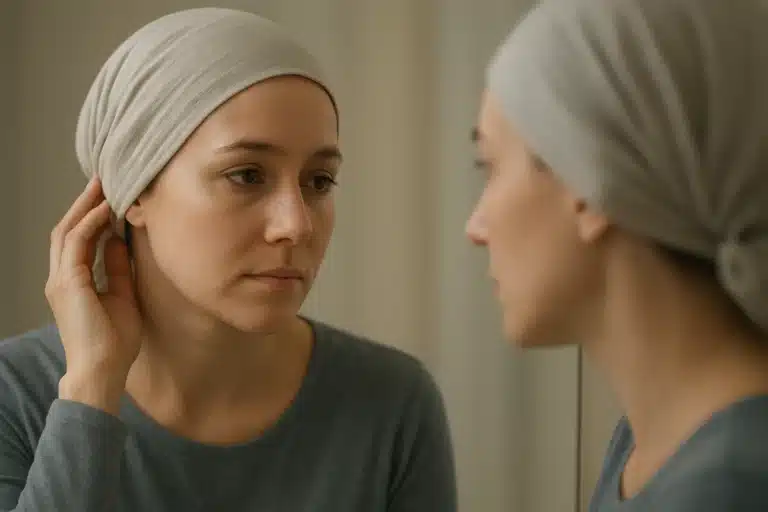
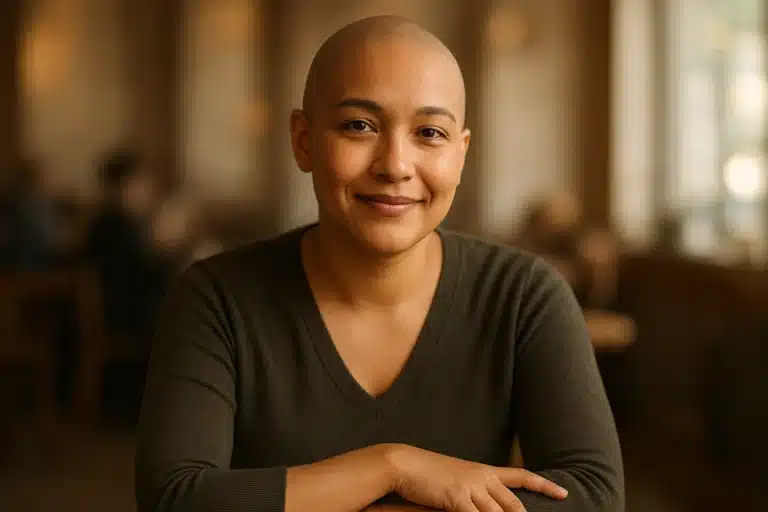
There is a distinct kind of silence that often accompanies the beginning of a hair loss journey. It’s the quiet moment in front of the mirror where you might feel like the only person in the world navigating this specific mix of confusion, grief, and adaptation. But the reality is far different. While the experience feels deeply personal, the path is well-trodden by millions who have stood exactly where you are standing now.
Moving forward requires more than just finding the right hairpiece; it requires addressing the emotional landscape of the experience. True confidence comes from realizing that you don’t have to carry this weight alone. By focusing on cultivating holistic well-being beyond the wig, you open yourself up to a type of healing that products alone cannot provide: the profound relief of shared experience.
The Science of Shared Experience
Why is community so critical? When we keep our struggles secret, shame tends to grow in the dark. Psychologists often refer to the “universality” of experience as a key therapeutic factor. Simply knowing that others share your feelings—whether it’s the anxiety of a windy day or the frustration of a tangle—validates your reality.
Finding the right wig support network transforms “I am weird” into “I am normal.” It shifts your internal narrative from coping with a deficit to managing a lifestyle. However, not all support is created equal. The internet is vast, and finding a space that feels safe, constructive, and educational requires a bit of navigation.
Mapping the Landscape: The Spectrum of Support
Before you join the first group you find on a search engine, it helps to understand the different types of communities available. Each serves a different purpose and suits different personality types.
1. The Large-Scale Directories
Organizations like the National Alopecia Areata Foundation (NAAF) or the American Hair Loss Association are excellent starting points.
- Best for: Finding verified, legitimate resources and local chapters.
- The Vibe: Authoritative, structured, and informative.
- The Limitation: These are often directories rather than active daily conversations. They tell you where to go, but they aren’t always where the daily chatting happens.
2. Online Forums and Message Boards
Platforms like Reddit (e.g., r/wigs or r/alopecia) or specialized forums.
- Best for: The “Researcher” and the Introvert. These platforms often allow for anonymity, letting you ask sensitive questions (“Does this look natural?”) without attaching your name or face.
- The Vibe: Practical, honest, and sometimes blunt.
- The Limitation: Information is user-generated and unvetted, meaning you might encounter conflicting advice.
3. Social Media Groups (Facebook/Instagram)
- Best for: Visual learners and social butterflies. These groups are great for seeing photos of styles on real people, not just mannequins.
- The Vibe: High-energy, visual, and fast-paced.
- The Limitation: Can be overwhelming. It’s important to filter out marketing noise and focus on genuine peer connection.
4. Local In-Person Meetups
- Best for: Deep connection. Sitting in a room with others who have hair loss can be one of the most liberating experiences of your life.
- The Vibe: Vulnerable, emotional, and deeply supportive.
- The Limitation: Requires the courage to show up physically, which can be daunting for beginners.
The Vetting Process: How to Spot a Healthy Community
Just because a group exists doesn’t mean it’s good for your mental health. A healthy wig support group should leave you feeling lighter, not heavier. Use this checklist to vet a potential community before diving in:
- Moderation is Key: Is there an admin or moderator present? Unmoderated groups can quickly descend into negativity or spam.
- Medical Boundaries: Does the group distinguish between peer support and medical advice? A safe community encourages you to see a dermatologist for medical questions rather than diagnosing you via comments.
- The “Venting vs. Solution” Ratio: It is healthy to vent, but if 100% of the posts are complaints without encouragement or solutions, the group may drain your energy rather than restore it.
- Privacy Settings: For social media groups, is the group “Private” (only members see posts) or “Public” (your friends might see your comments)? Ensure the privacy level matches your comfort zone.
Breaking the Ice: Your First Interaction
The “lurker” phase—reading without posting—is a perfectly valid way to start. You are absorbing the culture of the group. When you are ready to introduce yourself, you don’t need to write a memoir.
Try this simple template for your first post:
“Hi everyone, I’m new here. I’ve just started my journey with [Alopecia/Chemo/Thinning] and I’m feeling a bit overwhelmed by the options. I’m looking forward to learning from your experiences. Thanks for letting me join.”
This approach is low-pressure but invites members to welcome you warmly. Remember, every expert in that group was once exactly where you are today.
From Student to Mentor
One of the most beautiful aspects of joining a community is the eventual shift in your role. Initially, you come to take—to take advice, to take comfort, to take knowledge. But over time, you will find yourself answering a question for someone else.
You might say, “Don’t worry, that synthetic fiber is heat defiant,” or “I felt that way too, it gets better.”
In that moment, you transform your adversity into an asset. You are no longer just “dealing” with hair loss; you are using your experience to lift someone else up. This is the ultimate goal of building a support network: empowering yourself to the point where you become a source of strength for others.
Frequently Asked Questions
I’m not ready to tell anyone I wear a wig. Can I still join a group?
Absolutely. Online forums and private Facebook groups are designed exactly for this. You can participate anonymously or with a pseudonym until you feel comfortable. Your privacy is in your hands.
How do I find a group specific to my condition?
Start with broad searches but narrow them down. For example, instead of just searching for “hair loss support,” search for “scarring alopecia support group” or “wigs for cancer patients forum.” The more specific the group, the more relevant the advice will be to your situation.
What if I join a group and don’t click with the people?
Leave. There is no obligation to stay in a digital space that doesn’t serve you. It’s like dating; you might need to visit two or three different groups to find the “tribe” that matches your personality and needs.
Is it better to join a local group or an online one?
It depends on your current emotional bandwidth. Online groups are easier to access and require less vulnerability. Local groups offer stronger emotional bonds but require more effort. Many people find a mix of both works best—daily tips from online groups, and occasional deep connection from local meetups.
Taking the Next Step
Building a support network is an act of self-care. It is a declaration that you deserve to be heard and understood. Whether you start by reading a forum thread tonight or looking up a local chapter of a hair loss organization, you are taking a step toward a more confident, connected version of yourself.
You have handled the logistics of hair loss; now, give yourself permission to handle the human side of it. There is a whole community waiting to welcome you.