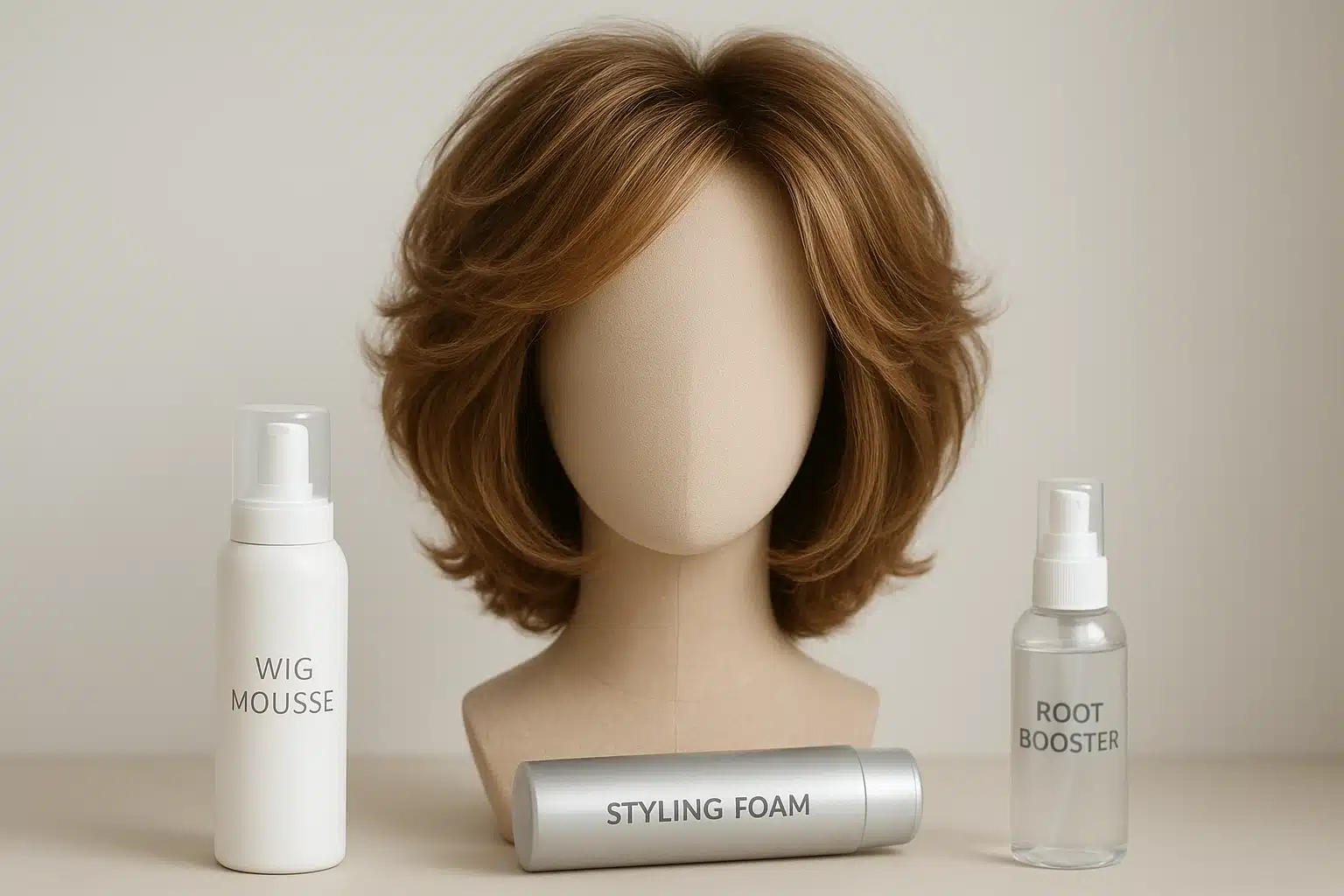
We’ve all experienced that moment of anticipation when unboxing a new wig. The color is perfect, the fiber feels luxurious, and the cut is exactly what you wanted. But when you put it on, something feels just slightly… off. Perhaps it sits a little too flat against the crown, lacking that biological “bounce,” or maybe it feels too heavy and “poofy” in the wrong areas.
This is the “fresh out of the box” reality, and it is completely normal. A wig is a masterpiece of construction, but it requires your personal touch to wake it up. To truly unlock flawless styles, your expert guide to wig-safe tools & products serves as the foundation for every styling session. Understanding how to manipulate volume isn’t just about making hair bigger; it’s about mimicking the natural lift and movement of biological hair to achieve undetectable realism.
The Physics of Volume: Why Your Wig Needs Help
To master wig styling, we first have to understand the difference between “volume” and “bulk.” In the world of alternative hair, these are two very different concepts.
Bulk is the density of the hair fibers sewn into the cap. Many wigs come with high density to ensure the cap underneath doesn’t show, but this can sometimes result in a “helmet” effect that looks unnatural.
Volume, on the other hand, is the lift at the root. It is the airy, suspended quality that natural hair has because it grows out of a follicle with muscle support. Wigs don’t have scalp muscles to hold the hair up; they rely on gravity. Without the right products, the weight of the fiber will always pull the style downward.
Your goal is to use product to build a microscopic “scaffold” around the roots, giving the hair the structural integrity to stand up on its own without looking stiff.
The Chemistry of Fiber: Human Hair vs. Synthetic
Before you reach for the bottle of mousse sitting in your bathroom cabinet, we need to talk about chemistry. The biggest mistake beginners make is assuming hair is just hair.
Human Hair is porous. It absorbs moisture and oils. When you apply product, it soaks in.
Synthetic Fiber is non-porous plastic (polymer). It does not absorb anything. If you use a product designed for human hair that is heavy in oils, sulfates, or parabens, it will sit on the surface of the fiber, creating a greasy, dull film that attracts dust and clumps the hair together.
Even more critical is the alcohol content. Traditional drugstore mousses rely on high alcohol content to dry quickly. On a synthetic wig, this alcohol creates a chemical reaction that can dry out the fiber, leading to friction, tangling, and premature frizz. This is why specialized synthetic wig care requires formulas that are water-soluble and paraben-free.
The Toolkit: Decoding Mousse, Foam, and Root Boosters
Navigating the aisle of styling products can be overwhelming. Here is the breakdown of what each product does and which fiber it serves best.
1. Styling Foam (The Synthetic Hero)
- Best For: Synthetic and Heat-Friendly Synthetic wigs.
- Texture: Light, airy, usually water-based.
- Function: It adds texture and hold without the “crunch.” Because it is water-based, it dries clear and washes out easily without leaving buildup. It is excellent for taming flyaways and defining curls.
2. Volumizing Mousse (The Human Hair Powerhouse)
- Best For: Human hair wigs.
- Texture: Denser, creamier foam.
- Function: Mousse typically contains polymers that coat the hair shaft to make it feel thicker. It provides a stronger hold than foam, making it ideal for styles that need to defy gravity for long periods.
3. Root Boosters (The Architects)
- Best For: Both (check label for alcohol content), but crucial for monofilament tops.
- Texture: Spray or precision nozzle foam.
- Function: These are designed specifically for the first inch of hair. They are heat-activated “setting” agents. They don’t just coat the hair; they stiffen slightly when heat is applied to lock the root in an upright position.
Master Techniques: How to Apply Product Like a Pro
Now that you have the right tools, let’s look at the mechanics of application. We want lift, not stiffness.
The Golf Ball Rule
When using mousse or foam, less is always more. Dispense an amount the size of a golf ball into your palm. Rub your hands together until the product effectively “disappears” and your hands just look wet.
- Why? If you apply a dollop of foam directly to the wig, you create a “hot spot” where the hair becomes rock hard. Emulsifying it in your hands ensures even distribution.
The 4-Finger Rule (For Realism)
When applying volumizing products, never start directly at the hairline. Place four fingers flat against your forehead starting at your eyebrows. This is your “no-volume zone.”
- Technique: Apply your root booster or mousse behind this four-finger mark.
- Why? Biological hair tends to be finer and flatter right at the hairline and gains volume as it moves back toward the crown. If you pump volume directly at the front lace, you expose the wig’s edge and ruin the illusion.
The “Upside-Down” Heat Trick
This is the secret weapon for using root boosters effectively on heat-friendly or human hair wigs.
- Spray the root booster on the root area (crown).
- Flip the wig upside down (or tip your head forward if wearing it).
- Use a blow dryer on low heat/low speed, directing the air at the roots.
- Crucial Step: Let the hair cool completely before flipping it back up.
- The Science: Heat manipulates the fiber’s bond; cooling sets the bond. If you flip it back while it’s warm, gravity will collapse the volume instantly.
Troubleshooting Common Volume Issues
Even with the best wig care products, issues can arise. Here is how to solve the most common volume complaints.
Problem: “My wig looks too bulky and ‘wiggy’.”
Paradoxically, sometimes you need styling products to reduce apparent volume. If a wig feels too thick, don’t just plaster it down. Use a styling foam to section the hair.
- The Fix: Take a pea-sized amount of foam and run it through the mid-lengths to the ends. This groups the fibers slightly, creating separation and seeing “through” the hair, which visually reduces bulk.
Problem: “The volume falls flat after an hour.”
This usually happens because of the “Wet Hair Trap.”
- The Fix: Never style a soaking wet wig. Water makes the fiber heavy. Wait until the wig is 80% dry (damp) before applying your volumizers. This ensures the product isn’t diluted and can bond to the fiber.
Problem: “The wig feels heavy on my head.”
If the wig physically feels burdensome, it might be a cap construction issue or excess density. However, sometimes product buildup weighs the fiber down.
- The Fix: Check if you are layering too many products. If you are experiencing common problems or complaints with wigs, a clarifying wash might be needed to strip old product before trying to style again.
Creating Your “Revamp” Routine
Volume isn’t a one-time fix; it’s part of wig maintenance. By incorporating these steps into your routine, you extend the life of your style.
- Prep: Detangle gently with a wide-tooth comb.
- Boost: Apply root lifter to the crown area only.
- Body: Apply foam/mousse to the mid-lengths for texture.
- Set: Use low heat to lock in the lift (if fiber permits).
- Finish: Use a silicone spray strictly on the ends to keep movement fluid.
Frequently Asked Questions
Can I use dry shampoo to add volume to a synthetic wig?
Yes! Dry shampoo is excellent for removing shine from synthetic wigs, which adds realism. It also adds “grip” to the fiber, allowing you to tease the roots slightly for extra lift. Just be sure to wash it out regularly to prevent buildup.
Why does my mousse make my synthetic wig sticky?
You are likely using a mousse with high sugar or polymer content designed for human hair, or you are applying too much. Switch to a water-based foam specifically formulated for synthetic fibers and use the “Golf Ball Rule.”
How do I get volume without heat on a standard synthetic wig?
Standard synthetic wigs have “memory,” meaning they want to return to their original shape. To add volume without heat, you can use wig rollers. Roll the hair while it is slightly damp with cool water and styling foam, and let it air dry completely (overnight is best). When you remove the rollers, the hair will retain the lift.
Taking the Next Step
Mastering volume is a journey of experimentation. Every wig has a unique personality, and what works for a long, layered style might be different for a short bob. Start with the basics—proper product selection and placement—and watch how small adjustments can transform your look from “wearing a wig” to “rocking a style.”
If you are ready to explore the specific tools mentioned here, browsing a curated selection of professional styling products is the best place to start. Your confidence is worth the investment.