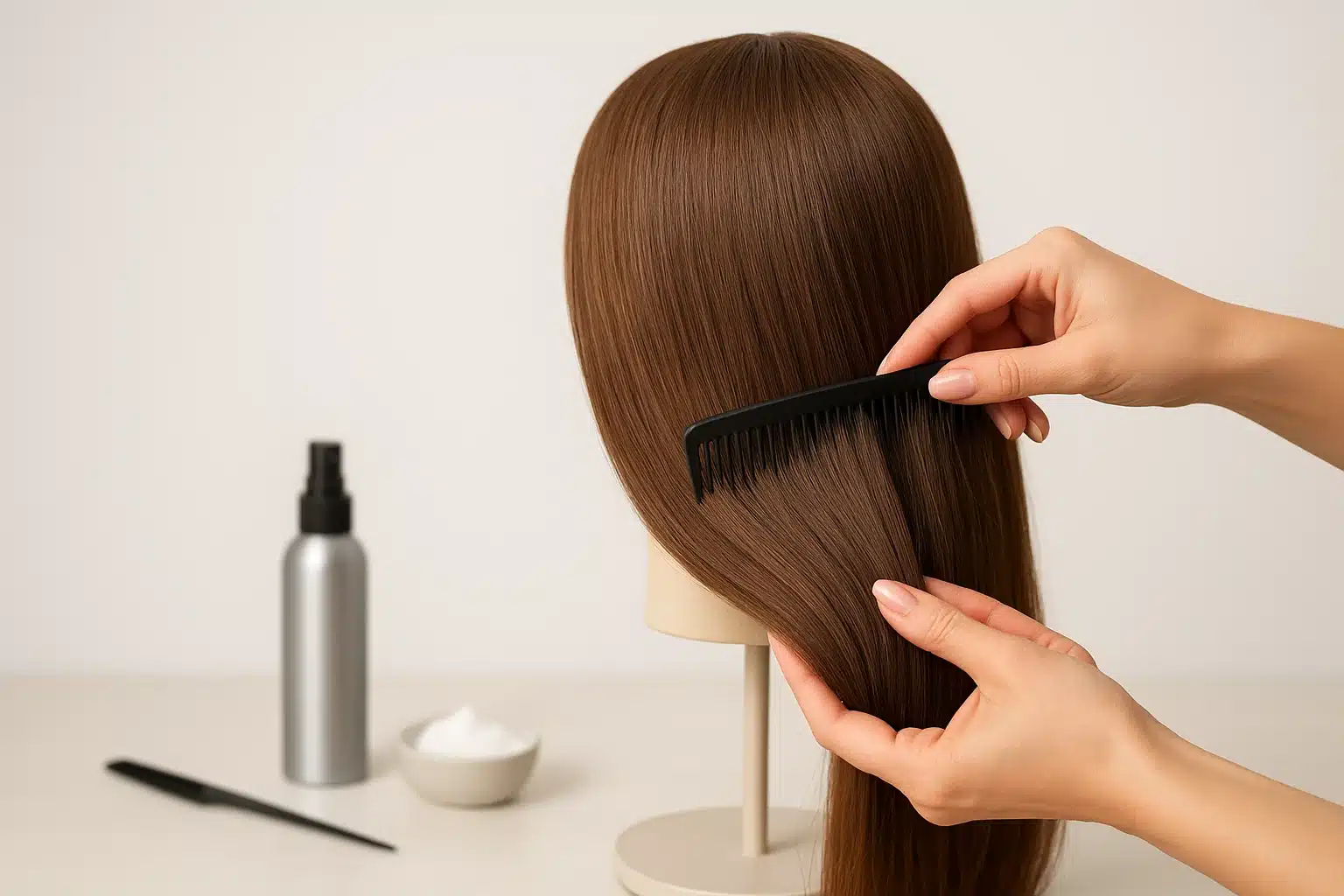
Have you ever found the perfect inspiration photo for a braided crown or a sophisticated chignon, only to have your attempt fall flat—literally? You are not alone. Many wig wearers assume that the secret to a great style lies in complex braiding skills or professional dexterity. However, the real magic happens long before the first bobby pin is placed. Just as a painter must prime their canvas to create a masterpiece, you must prepare your wig fibers to behave exactly how you want them to.
The difference between a style that holds all day and one that frizzes or slips often comes down to three foundational steps: thorough detangling, strategic sectioning, and the precise application of hold products. By mastering these preparatory techniques, you transform your wig from a loose hairpiece into a structured medium ready for art. This guide explores the essential groundwork for intricate wig styling, ensuring your updos, braids, and special occasion looks appear professional and effortless.
The Art of Detangling: Preparing Your Canvas
Detangling is often viewed as a chore—something to rush through so you can get to the fun part. But when prepping for an intricate style, detangling is actually the most critical step. You aren’t just removing knots; you are aligning the cuticles (for human hair) or smoothing the fibers (for synthetic) to ensure the hair has the “slip” necessary for weaving and pinning.
The “Ends-to-Roots” Technique
The golden rule of wig maintenance is patience. Never take a brush straight to the roots of a tangled wig; this causes shedding and can permanently damage the cap construction. Instead, rely on the “Ends-to-Roots” method:
- Secure the Wig: Place your wig on a canvas block head or a wig stand. Secure it with T-pins through the velvet ear tabs (never through the lace!) to keep it stable.
- Lubricate: Lightly mist the hair with a detangling spray suited for your specific fiber.
- Work Upwards: holding a section of hair firmly above where you are brushing to absorb the tension, gently comb out the bottom two inches. Once smooth, move up another two inches and repeat.
If you are working with an older piece that seems dry or unmanageable despite your best efforts, you may need to look into how to restore a human hair wig to bring back its natural bounce before attempting a complicated style.
Why the Nape Tangles (And How to Fix It)
You might notice that the nape area is always the most tangled. This isn’t a defect; it’s physics. The friction from your clothing combined with body heat and movement causes the fibers to mat together. Before styling an updo, pay extra attention here. If the nape isn’t perfectly smooth, the bottom of your updo will look bumpy and unpolished.
Strategic Sectioning: Your Styling Blueprint
Here is the secret that professional stylists use but rarely talk about: Sectioning. When you watch a tutorial, it often looks like the stylist is grabbing hair at random, but they are actually following a mental map.
Sectioning provides control. It allows you to focus on one area at a time, ensuring clean lines and consistent tension. Depending on the look you are achieving, you should section your wig differently:
- The Halo Section: Used for crown braids and half-up styles. Separate the hair in a circle around the crown of the head. This leaves the perimeter loose for braiding while keeping the top volume intact.
- The Quadrant Section: Ideal for pigtails, double buns, or complex braided designs. Part the hair down the center from forehead to nape, then from ear to ear across the top.
- The Mohawk Section: Essential for voluminous updo hairstyles for weddings. Isolate a strip of hair right down the center top. This section usually gets teased or “bumped” for height, while the sides are swept back cleanly.
Mastery: Choosing Your Hold Products
The products you use on your natural hair are often too heavy for wigs. Wigs do not produce natural oils, so heavy waxes or gels just sit on the surface, making the fiber look dull and sticky. For intricate styling, you need a “product wardrobe” consisting of three layers: Foundation, Structure, and Finish.
1. Foundation (Slip and Protection)
This is your detangler or leave-in conditioner. It protects the fiber from the friction of styling tools.
2. Structure (Moldability)
For braids and twists, you need the hair to stick together slightly without being crunchy. A lightweight styling foam or mousse is perfect here. Apply it to your hands and run it through the specific section you are about to braid. This minimizes flyaways and helps the plait hold its shape.
3. Finish (The Hold)
Once the style is in place, you need to lock it in. However, be cautious with standard drugstore hairsprays, which can contain high alcohol content that dries out wig fibers.
If you are unsure which specific sprays or foams are safe for your wig’s fiber type, our Help Center is a great starting point to find recommendations tailored to synthetic or human hair.
Common Prep Mistakes to Avoid
Even with the best intentions, it is easy to make small errors that compromise your style.
- Over-Saturating the Fiber: Wigs absorb product differently than scalp hair. Start with a pea-sized amount of product; you can always add more, but you cannot take it away without washing.
- Ignoring the Hairline: If you are pulling hair back, ensure you are using a wig grip or adhesive to keep the front secure. The tension of an updo can pull the wig back, revealing your natural hairline if not prepped correctly.
- Wrong Tools for the Job: Even simple styles, like easy braids for kids or fun plaits, require the right combs. Use a rat-tail comb for clean partings and a wide-tooth comb for detangling.
Frequently Asked Questions
Q: Should I wash my wig before styling an intricate updo?
A: Ideally, work with “second-day” hair. A freshly washed and conditioned wig can sometimes be too slippery to hold pins and braids effectively. If it’s too clean, use a little texture spray to add grip.
Q: Can I use heat tools to prep my synthetic wig?
A: Only if the wig is labeled “Heat Friendly.” Even then, use a low heat setting and always use a heat protectant. Standard synthetic fibers will melt under heat.
Q: How do I stop flyaways on a synthetic wig?
A: Rub a small amount of wig-safe silicone serum or styling cream between your palms and gently smooth it over the finished style. Avoid using water, as it will just evaporate and leave the frizz behind.
Ready to Style?
Now that your wig is detangled, mapped out with sections, and prepped with the right products, the intimidation factor of those complex styles should disappear. You have built a solid foundation, and your wig is ready to be transformed.
To explore the best sprays, combs, and mousses for your specific wig type, browse our curated selection of the best wig care products. Remember, the most beautiful styles start with the best care. Happy styling!