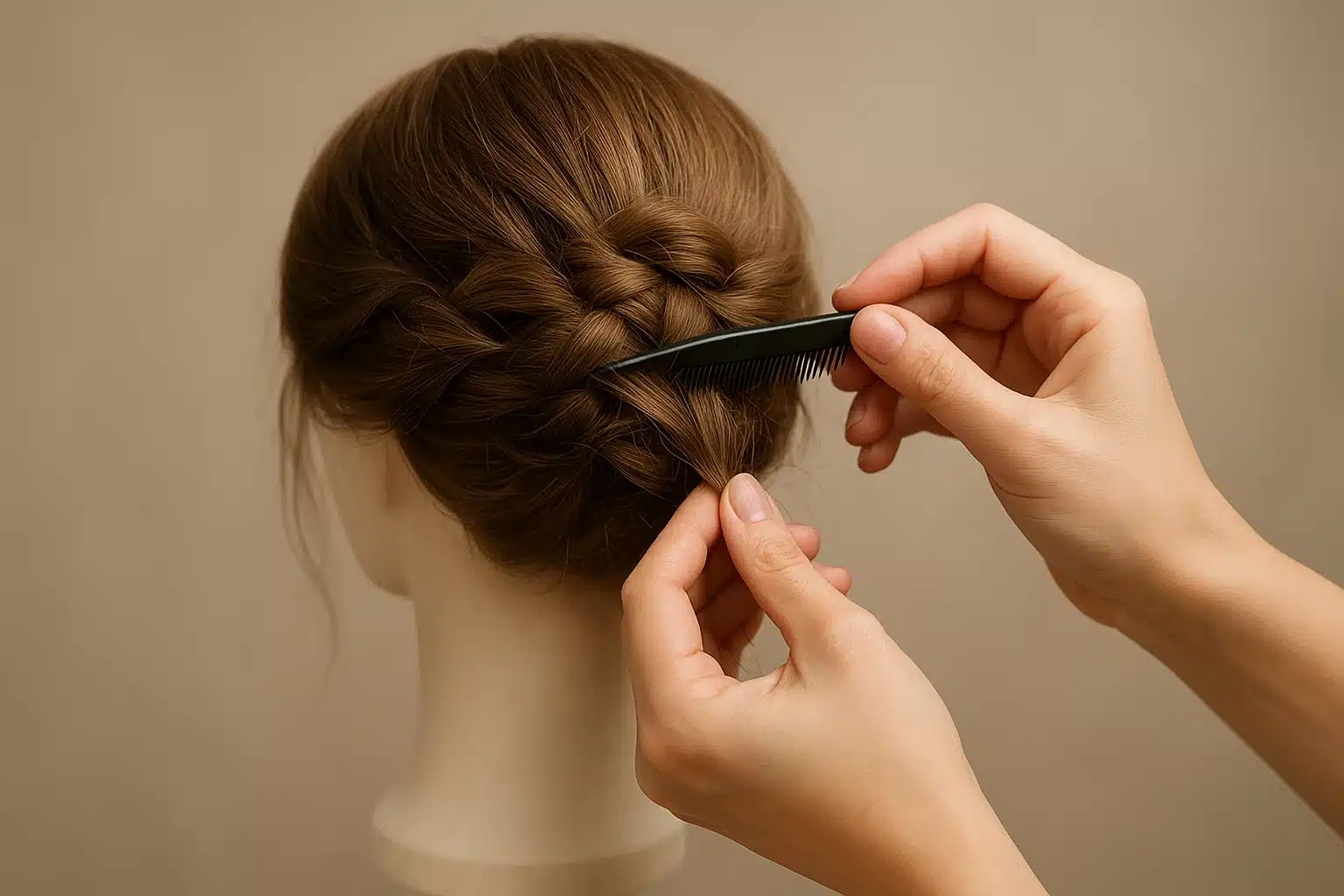
The event was a success. You felt confident, beautiful, and your hair looked absolutely flawless. But now, the heels are off, the makeup is wiped away, and you are left staring at the complex masterpiece on your head. Whether it was a gravity-defying updo or a cascade of bohemian braids, the question is the same: How do I get this out without ruining the wig?
It is a moment every wig wearer faces. While we often focus on the excitement of creating Intricate Wig Styling: Updos, Braids & Special Occasion Looks, the “takedown” process is actually where the long-term life of your wig is determined. De-styling isn’t just about undoing a look; it is a restoration process. Done correctly, it resets the fibers and protects your investment. Done in a rush, it can lead to matting, breakage, and damaged lace.
Let’s pour a cup of coffee and walk through exactly how to transition your wig from “special occasion” back to “everyday ready” safely.
The Mindset Shift: Preservation vs. Removal
The biggest mistake most people make is treating a wig like natural hair during the takedown process. When you take braids out of growing hair, you know your scalp will produce oils to help, and damaged hair will eventually grow out. A wig does not have those luxuries.
Think of de-styling not as a chore to finish quickly, but as a maintenance ritual. You are performing surgery on delicate fibers. The goal isn’t just to get the braids out; the goal is to ensure the cap structure remains intact and the fibers (whether synthetic or human hair) don’t stretch or snap.
![Image of a woman carefully examining a styled wig on a mannequin head, emphasizing the delicate nature of the process. alt=”Woman examining intricate wig braids on a mannequin head”]
The De-styling Toolkit
Before you touch a single bobby pin, you need to assemble your station. Attempting to de-style a wig while it is on your head or balancing on your knee is a recipe for frustration and accidental damage.
- A Canvas or Styrofoam Mannequin Head: This is non-negotiable. You need both hands free to work, and the wig needs to be secured with T-pins (through the velvet tabs, never the lace!) to keep tension even.
- Rat-Tail Comb: For unpicking tight sections and carefully lifting hair bands.
- Wide-Tooth Comb: For the initial detangling of loose sections.
- Small, Sharp Scissors: To carefully snip elastic bands or threads. Avoid kitchen shears; they are too bulky for precision work.
- Detangling Spray or Diluted Conditioner: This creates “slip.” Dry friction is the enemy of wig fibers.
- Sectioning Clips: To keep the unraveled hair out of your way while you work.
The Three Golden Rules of De-styling
If you take nothing else away from this guide, remember these three pillars. They are the difference between a wig that lasts for years and one that ends up in the back of the closet.
1. Lubrication is Life
Never try to unravel a dry braid or comb out hair spray buildup without help. You need a buffer between the fibers. For synthetic wigs, use a spray specifically designed for synthetic fiber. For human hair, a leave-in conditioner or a mix of water and conditioner works wonders. This “slip” allows knots to slide apart rather than tighten.
2. Sectioning Saves Sanity
Looking at a full head of micro-braids can be overwhelming. Isolate one small section to work on and clip the rest away. Focus only on the task in front of you. This prevents the loose hair from tangling with the still-styled hair, creating a “nest” that is impossible to comb through.
3. Patience Protects
If you feel resistance, stop. Do not yank. Pulling tightens knots and stretches the lace base. If a section is stubborn, apply more detangler, use the tail of your comb to gently wiggle the knot loose, and take a breath. Rushing is the fastest way to tear a frontal.
Step-by-Step: The Gentle Takedown
Step 1: Clean the Hairline First
Before you start unbraiding, address the hairline. If you used edge control, Got2B glue, or tape, this area is likely stiff and sticky. Do not try to comb through this crunchiness—you will rip the lace.
- The Fix: Dampen a soft cloth with warm water (or a specific lace cleaner) and gently dab the hairline to soften and dissolve the product. Once it is pliable, you can proceed.
Step 2: Remove Accessories and Fasteners
Hunt for every bobby pin, hair tie, and elastic band. When removing tiny rubber bands used to secure braids, do not try to roll them down the hair shaft. This causes friction burn on the fiber. Instead, carefully lift the band with the tail of your comb and snip it with your scissors.
Step 3: Unravel from the Bottom Up
Start at the very tips of the hair. If the ends were sealed with hot water (common in braiding), you may need to snip the very tip to open the braid.
- Technique: Use the tail of your comb to unpick the last few turns of the braid or twist. Once you have a loose end, you can often gently unwind it with your fingers.
- Crucial Tip: As soon as you finish unraveling one braid, run your fingers through it to remove shed hair, then mist it with detangler and comb it with your wide-tooth comb. Do not wait until the whole head is unbraided to start detangling.
![Image showing a close-up of hands using a rat-tail comb to gently unpick a braid from the bottom, illustrating patience and technique. alt=”Close up of rat-tail comb gently undoing wig braid”]
Step 4: The Shedding “Scare”
As you take down an intricate style, you will notice loose hair coming out. Don’t panic. This is likely not damage. Wigs, like natural hair, accumulate loose strands that are usually trapped in the style. When you release the style, that accumulated “shedding” finally falls free. However, if you see clumps coming from the weft or holes in the lace, you are pulling too hard.
Fiber Nuances: Synthetic vs. Human Hair
The mechanics of unbraiding are similar, but the aftercare differs significantly.
| Feature | Synthetic Fiber | Human Hair |
|---|---|---|
| Friction Sensitivity | High. Braiding creates texture memory. The fiber may look crinkled or frizzy immediately after takedown. | Moderate. Will behave like natural hair but can still snap if dry. |
| Heat Use | Caution. Do not use a flat iron to smooth crinkles unless the fiber is heat-friendly. Use a clothing steamer instead. | Safe. You can blow-dry or flat iron to smooth out the “braid waves” after washing. |
| Product Choice | Water-soluble sprays only. Avoid heavy oils that coat the fiber and attract dust. | Argan oil or light serum can be used to help with detangling. |
Troubleshooting FAQ
Even with the best intentions, things can get tricky. Here is how to handle common de-styling emergencies.
Q: I have a massive knot that won’t budge. Should I cut it?
A: Cutting should be the absolute last resort. Saturate the knot with conditioner or detangler and let it sit for 10 minutes. Then, use the tip of your rat-tail comb to pick at the knot from the outside in, loosening a few strands at a time.
Q: The hair looks like a frizzy explosion after taking out the braids. Is it ruined?
A: Likely not. This is just texture memory. For synthetic wigs, a steamer is your best friend. The moist heat will relax the fibers and return them to their original texture. For human hair, a wash and deep condition will reset the cuticle.
Q: There is white residue stuck in the roots from my styling product.
A: This is product buildup. Once the wig is fully detangled (and only then!), wash the wig using a clarifying shampoo focused on the roots. Use a soft toothbrush to gently lift the residue from the lace if necessary.
Q: Can I wash the wig while the braids are still in?
A: It is generally not recommended. Washing a braided wig prevents the hair inside the braid from getting clean and can trap moisture, leading to odors or mold in the cap. It also makes the post-wash detangling process a nightmare. Always de-style before deep cleaning.
Preparing for the Next Look
Once your wig is unraveled, detangled, and washed, store it properly on a wig stand or in a silk bag. By taking the time to gently de-style today, you ensure your wig is ready to make you feel confident and beautiful for tomorrow’s event.
Remember, the beauty of a wig isn’t just in the style you wear, but in the care you pour into it.