Ever taken off a wig at the end of a long day and felt like your scalp just ran a marathon? The trapped heat, the irresistible urge to scratch, and the dried-out feeling of your natural hair underneath are all incredibly common experiences. Most people naturally blame the density or type of hair on the wig, but the real culprit is usually sitting right against your skin: the wig cap material itself.
We often spend hours agonizing over hair color, length, and wave patterns, completely ignoring the textile science of the base. However, if you look at the evolution of wig craftsmanship & materials, you’ll realize that the journey from basic, stiff netting to today’s high-tech, medical-grade polymers is what truly revolutionized the wearing experience. Understanding the unique properties of these base materials is the ultimate secret to finding a wig that feels as good at 8:00 PM as it did at 8:00 AM.
Beyond “Breathable”: The Hidden Textile Science
If you’ve spent any time researching wigs, you’ve probably seen words like “breathable” and “stretchy” scattered across product descriptions. But in the world of textile science, these terms are often too vague to be genuinely helpful. To truly understand the purpose of wig cap materials, we need to look at how fabrics interact with human skin.
One of the biggest “aha!” moments for wig wearers is understanding the difference between a material that soaks and a material that wicks. Your scalp naturally produces heat, sebum (oil), and sweat. When a wig cap material simply absorbs this moisture, it holds it against your head, leading to discomfort and friction. Conversely, materials engineered to wick moisture actively pull it away from your scalp, allowing it to evaporate.
The “Core Four” Wig Base Materials
When looking past the beautiful hair on top, almost all modern wig foundations rely on four primary material categories. Let’s explore how each one interacts with your scalp.
1. Nylon: The Durable Workhorse
Nylon is the most widely used material in wig construction, but modern wig nylon is a far cry from the scratchy pantyhose material of the past. Today’s nylon mesh is engineered for incredible tensile strength and stretch.
The secret to nylon lies in a measurement called “denier”—a textile term similar to thread count in bedsheets. A 15-denier nylon lace is incredibly fine, virtually invisible against the skin, and highly breathable, but it requires delicate handling. A 30-denier nylon is thicker and far more durable, making it ideal for everyday wear, though slightly more visible. The primary drawback of nylon is that it can draw moisture out of natural hair. If you wear nylon-based caps over natural hair, proper hydration and preparation are essential.
2. Silk Bases: The Ultimate Illusionist
If you want a wig part that looks indistinguishable from a biological human scalp, a silk base is your best friend. However, there is a common “layering myth” in the wig community that assumes more layers equal higher overall quality.
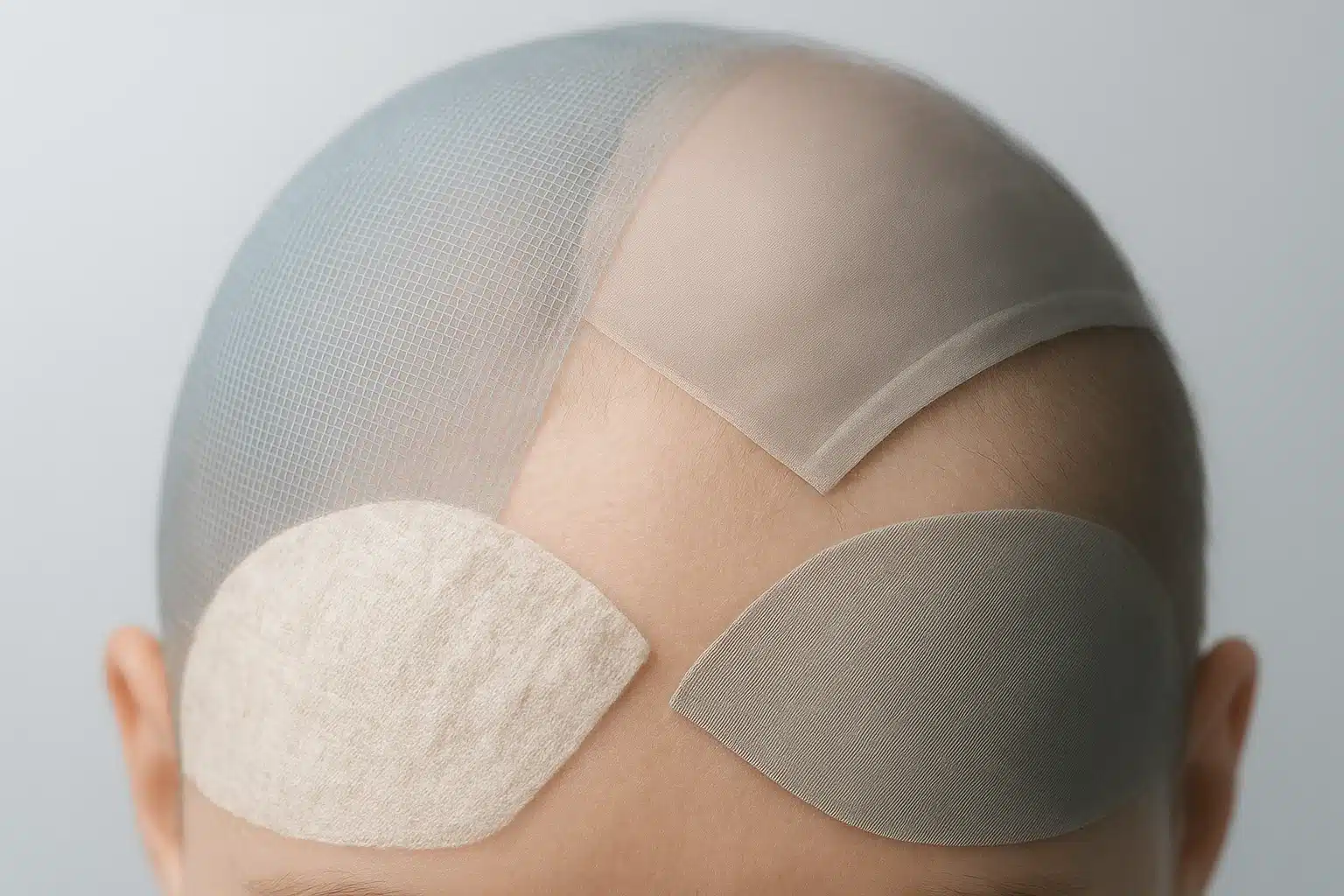
Silk bases achieve their stunning realism through a multi-layered construction: a layer of fine mesh, a layer of silk, and another layer of mesh. The hair is knotted into the bottom layer and pulled through the silk, hiding the knots completely. The trade-off? This triple-layer construction significantly reduces the Cubic Feet per Minute (CFM) of airflow. While they are visually flawless, silk bases trap more heat than single-layer mesh, making them warmer to wear in hot climates.
3. Cotton: The Absorbent Traditionalist
Cotton is universally praised as a natural, “breathable” fabric, leading many beginners to seek out cotton-based wig caps. But in the specific microclimate of a wig, cotton’s greatest strength is actually its biggest weakness: it is highly absorbent.
Cotton soaks rather than wicks. It absorbs the natural oils from your scalp and hair, which can leave biological hair dry, brittle, and prone to breakage. While cotton feels soft initially, it can become damp and heavy throughout the day, making it less than ideal for prolonged wear or active lifestyles.
4. Bamboo and Advanced Blends: The Modern Innovators
For those seeking comfortable wigs for sensitive scalp conditions, bamboo-derived viscose and advanced synthetic blends are the modern gold standard. Bamboo fibers are naturally smooth and round, drastically reducing friction against bare skin.
More importantly, bamboo is a superior moisture-wicking material. It regulates temperature beautifully, keeping the scalp cool in the summer and warm in the winter. Because it resists harboring bacteria, it’s an exceptionally clean, soothing option for those with alopecia or individuals undergoing medical treatments.
The Science of Comfort: Decoding Denier and Airflow
When comparing different types of wig caps, the construction is only half the story; the density of the material makes up the rest.
Think of denier as the thickness of the individual fibers used to weave the cap. When you are looking for exceptional wig cap lace for a seamless, undetectable hairline, you are looking for ultra-low denier materials. These ultra-fine meshes (like HD Lace) disappear into the skin and allow maximum airflow.
However, lower denier means higher fragility. It’s a sliding scale between invisibility and durability. Understanding this helps set realistic expectations: the most invisible, breathable lace in the world will naturally have a shorter lifespan than a thicker, 30-denier monofilament top.
Navigating Sensitive Scalps and Medical Hair Loss
For individuals navigating medical hair loss, the scalp undergoes significant changes. Skin can become hyper-sensitive, dry, and prone to irritation. In these cases, the friction coefficient of your wig cap material isn’t just about comfort—it’s about skin health.
If you have a sensitive scalp, look for caps utilizing hypoallergenic polymers and polyurethane (PU) strips. These materials grip the scalp gently using body heat without the need for harsh clips or combs. They provide a secure fit while maintaining a skin-friendly pH balance, ensuring that the wearer feels secure, confident, and physically comfortable all day.
How to Match Your Lifestyle to the Right Base Material
Choosing the perfect wig material isn’t about finding the “best” fabric; it’s about finding the best fabric for you.
- For High Activity or Humid Climates: Lean toward low-denier nylon meshes or moisture-wicking bamboo blends. Avoid multi-layered silk bases, which will trap sweat and heat.
- For Maximum Scalp Realism (and Cooler Climates): A silk base is unparalleled. The realistic scalp illusion is well worth the thicker construction if you aren’t battling summer heat.
- For Protecting Natural Hair: Avoid pure cotton liners. Opt for smooth, treated nylons or bamboo blends that won’t strip your biological hair of its natural oils.
Frequently Asked Questions (FAQ)
What is the best wig cap material for a sensitive scalp?
Bamboo-derived viscose and soft, hypoallergenic polymer blends are generally the best choices. They offer a smooth, friction-free surface that wicks moisture away from the skin, making them ideal for alopecia or post-chemotherapy sensitivities.
Why does my silk base wig feel so hot?
Silk bases are incredibly realistic because they use a multi-layered construction (usually mesh, silk, and mesh) to hide the hair knots. While this creates a flawless scalp illusion, those extra layers restrict airflow, trapping your natural body heat beneath the wig.
Is bamboo better than cotton for hair loss?
Yes. While cotton is soft, it is highly absorbent and will soak up your scalp’s natural oils and sweat, leading to dryness and potential friction. Bamboo naturally wicks moisture away and has a smoother microscopic fiber structure, making it much gentler on bare skin or fragile natural hair.
What does “denier” mean for wig lace?
Denier is a unit of measurement that describes the thickness of the individual threads used in the wig’s lace or mesh. A lower denier (like 15) means the thread is incredibly fine and nearly invisible, while a higher denier (like 30) means the thread is thicker and more durable.
Understanding the materials that touch your skin is the first step toward a flawless, comfortable wig-wearing experience. When you know how different fabrics perform, you can confidently choose a wig that doesn’t just look beautiful, but feels like an effortless extension of yourself.